Thursday, April 10, 2014

Your Triduum Plans


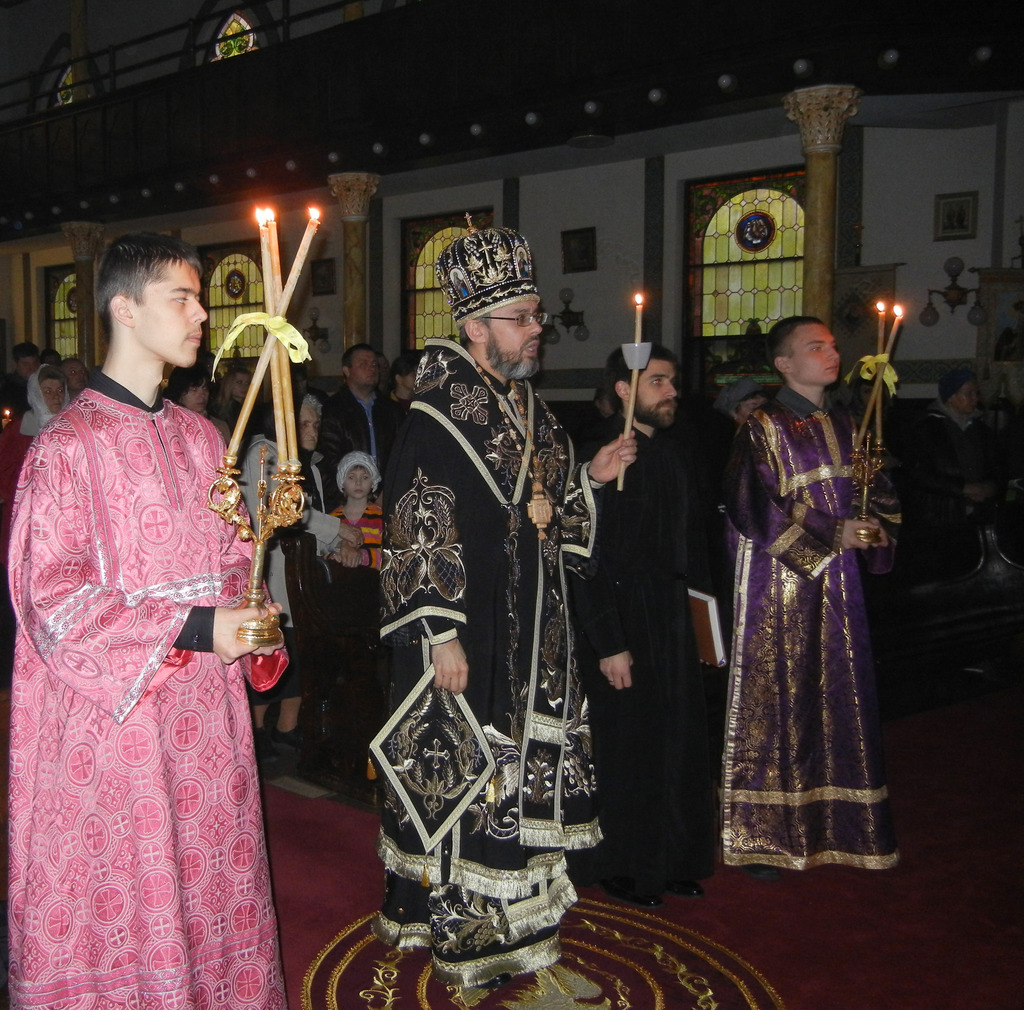
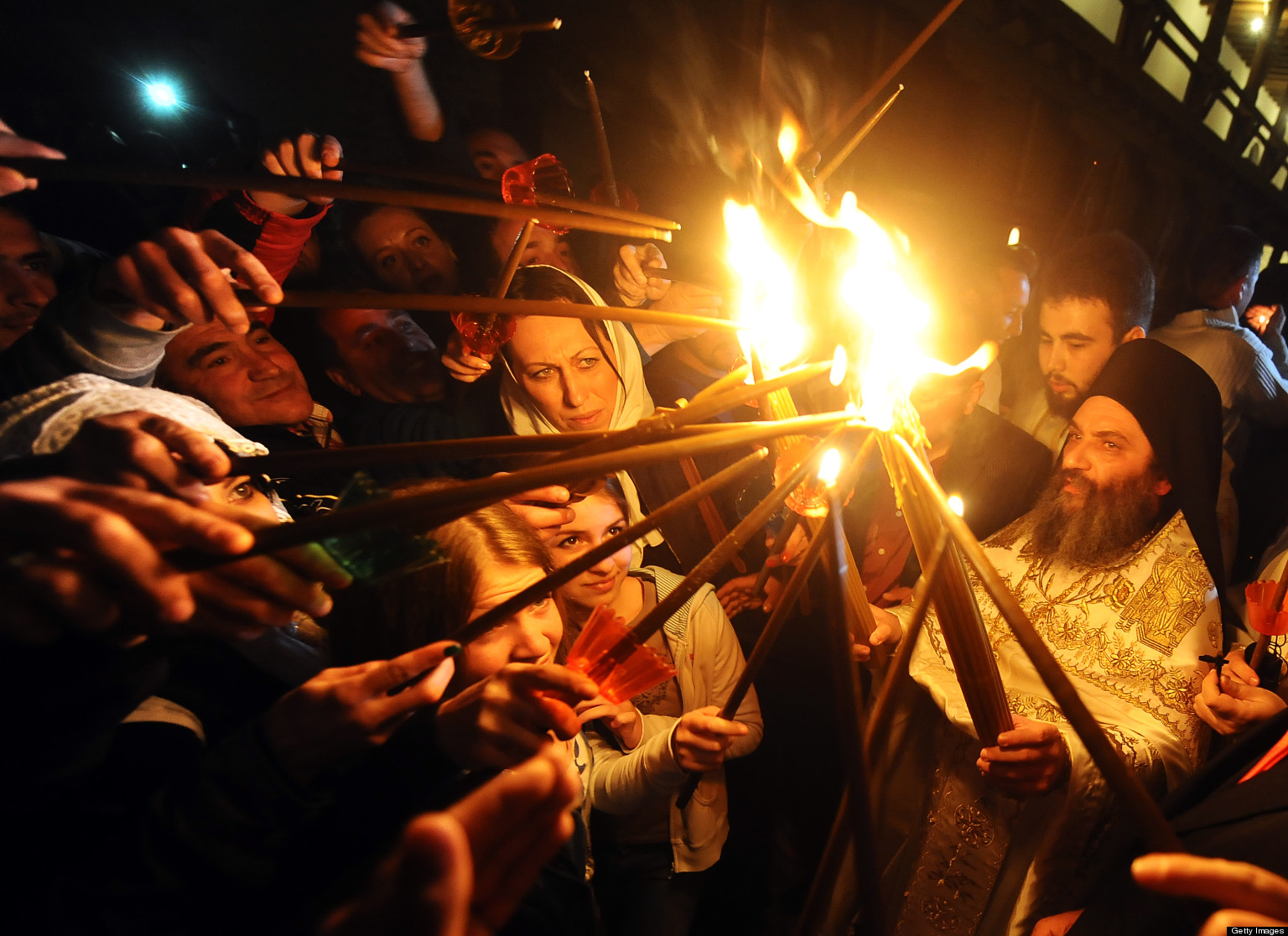
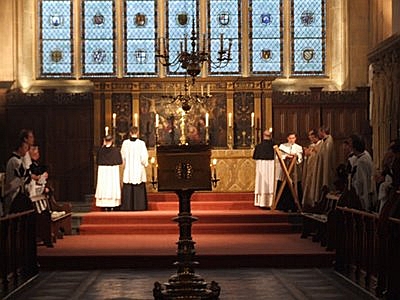
I shall be attending Roman Tenebrae on Wednesday night, the Holy Qurbana of the Syro-Malankara Church on Thursday, Vespers of burial followed by Jerusalem Mattins on Good Friday at a Byzantine Ukrainian parish, and then singing Vespers on Holy Saturday in the morning by myself on account of travelling to Houston that day. I will probably say Paschal Mattins and Lauds Saturday night and then either attend the Divine Liturgy at the Ruthenian Church or find a Latin Mass on Sunday, which ever is time permitting.

What will you be doing?

"The Church"?

"Well, there I'm troubled by the debate over Sacraments and that sorta stuff," said a protestant fellow student to me one night over dinner years back. "There are so many fundamental disagreements in the Christian Church."

"Not as far as I am concerned," replied the Raddiest Trad.

"The Church." It is a term used and abused like none other, but it is rarely given any proper definition. In vogue now is a propensity among practitioners of "high" Christianity to obscure very serious and heartfelt delineations between various parts of Apostolic Christianity—which I define as groups with valid Holy Orders which can be traced back to ancient patriarchal sees—almost to make "the Church" neither black nor white, but every shade of grey. One wonders how people of this tendency would react to St. Polycarp's denomination of Marcion as the "first born son of Satan."

This obscurantism comes after the collapse of several centuries of juridical identification of "the Church," which in turn meant "the Church" was defined by one's patriarchal position. Catholics de facto believed the Roman patriarchate to be "the Church" and all outside of it to be either schismatic heretics or probable "Uniate" would-be heretics. The Orthodox, continuing what was left of the Byzantine Empire, likewise identified communion with Constantinople as "the Church." Non-Chalcedonian Orthodox are tougher to pin down, as no one see defines them nor one cultural tradition, setting them apart from post-Byzantine Eastern Orthodoxy and Counter-Reformation Catholicism. At yet the absence of definite leadership is something of an enduring problem in the non-Chalcedonian Orthodox churches, perhaps the reason why the Ethopian Church re-united with Rome until cultural imperialists masquerading as missionaries bungled the situation beyond repair and Ethiopia returned to non-Chalcedonian Orthodoxy. Indeed, to be in "the Church" could mean to think Latin is heaven's native tongue, to think those born outside of Greek ancestry were un-favored, or that anyone outside of nothern Africa was not to be trusted. The Anglicans, even before the Tractarian days, further complicated the matter by positing themselves to be the via media betwixt "Romish" superstition and continental protestantism. To be English was to be Anglican which was to be authentically Christian.

How things have changed!

Nowadays most protestants believe anyone who professes Christ and attends services at some sort of ecclesial community a few times a month is a member of the "Christian Church." Some Eastern Catholics and Eastern Orthodox, although juridically out of communion with each other, consider each other both fully part of "the Church," a feeling particularly powerful within the Melkite and Orthodox patriarchates of Antioch. Most Roman Catholics and Orthodox admit some degree of communion with each other. Similarly non-Chalcedonian Orthodox and Eastern Orthodox profess a common faith. The hard line Roman Catholics and Russian Orthodox most often play party pooper in ecumenical dialogue. 

Still, this sort of thing is only true to an extent. "Communion" means many things, above all the sharing of Sacraments. It also means fellowship, community, and union with God in the sharing of the Sacraments. There is certainly a high degree of communion shared by the Melkite Catholics and the Antiochian Orthodox (inside Lebanon). Similarly there is some communion, loosely understood, between Rome and the various Orthodox Churches and between the Orthodox who accept and those who deny Chalcedon. But it is not a complete fellowship or communion. These groups normally only share Sacraments under conditions of extreme duress, such as immanent death or danger of death. Painting "the Church" as the collective of these groups—which share much in common—dangerously brushes past their serious differences.

The watery divide between the Greek and Roman Churches, in my opinion, began long before the year 1054 and did not coagulate until after the destruction of Byzantium. If one is to take an honest approach one finds the bickering between Rome and Constantinople began because of the Greek patriarch's imperially subsidized ambition in the late first millennium and became a lasting schism because of Roman stubbornness. Indeed, the anti-legalism and anti-rationalism that has come to define post-Byzantine Orthodoxy contrasts sharply with the juridical and rationalistic approach of Bellarmine and Liguori, more so than Palamas contrasts with Aquinas.

What is the point? "The Church" can, I think, be found on three levels:
  1. What we believe
  2. How we believe it
  3. With whom are we in communion
The third point is often the target of those who were earlier labelled obscurantists (seeing the organizational aspect of the Church as an artificial construct) while the most legalistic persons often focus on the second point (good luck convincing some Roman Catholic clergy that Eastern Catholics just do not have a concept of Original Sin). In the example of the Melkites and Antiochian Orthodox, the first and second points match near perfectly, but the third point is contended. Does that mean we must discount the third point? Certainly not.

The entire point of belonging to a communion is to know where the Church can be found visibly. Schism of course comes from the Greek word for "tear" or "rip." Ripping up the Church is serious business. Schism is not necessarily the same as heresy, but often relates to it. When the Alexandrian Church rejected Chalcedon few outside of Alexandria doubted that the Egyptian patriarchate had separated itself from the Church. Perhaps at that point the Church—which was Latin, Greek, Armenian etc—felt diverse enough that a consensus between her various contingent groups sufficed to define a schism. But what to do when the only remaining portions, the Greeks and Latins, withdraw from each other? What then? Re-define "the Church" to mean all groups regardless of substantial differences? The Church is communion and where communion lacks the Church lacks. Obscuring this obscures the root cause of much schism: the difference in what is believed and how it is believed.

привет!
The most substantial problem, to my view, of glossing over the institutional aspect of "the Church" and the communion which visually defines it is that one would paradoxically call the Church united and divided. Go to a rural Russian village and tell the peasants that they really believe the same things as Katharine Jefferts Schori! The institutional aspect of the Church—which is often a disaster—is still essential because it signals to the faithful where they need to be. If a "house divided against itself cannot stand" why can a Church, in several degrees of schism from itself, continue to be "the Church?" When a couple divorces and the children go off to college the spiritual bonds between the former spouses remain, although they go ignored, yet de facto there is no family any more. Communion and Church cannot be imagined. Christ came to call twelve men who He firmly united in the Holy Spirit and guided in Truth. "The Church," for the welfare of the faithful, must continue this feature, which I believe is essential. Why would one be Coptic Orthodox over Romanian Orthodox unless one was of Egyptian descent? Yet we as Catholics can at least point to Rome as the visible marker of the Church's communion. This facet of Rome may be more important than infallibility of the Pope, given that the Church already understands herself to be infallible in dogmatic matters. If one holds communion with this man, the Pope, the visible marker of the Church, one holds definite communion with the Church of Christ. The Fathers of the Church rarely talk about Matthew 16:18 when they referred to the Bishop of Rome and when they do they speak of him both as the rock and as the marker:
"On him [Peter] He builds the Church, and to him He gives the command to feed the sheep; and although He assigned a like power to all the Apostles, yet he founded a single Chair, and He established by His own authority a source and an intrinsic reason for that unity. Indeed, the others were that also which Peter was; but a primacy is given to Peter, whereby it is made clear that there is but one Church and one Chair. So too, all are shepherds, and the flock is shown to be one, fed by all the Apostles in single-minded accord. If someone does not hold fast to this unity of Peter, can he imagine that he still holds the faith? If he desert the chair of Peter upon whom the Church was built, can he still be confident that he is in the Church?" (St. Cyprian)
It is quite useless to speculate on the would-be opinion of someone deceased, but I think the above passage summarizes why Adrian Fortescue, despite his openness to Greek Christianity at the height of Pius X—a pope he rather disliked, he remained a Catholic and a Roman one at that.

Far from fomenting division, I favor building unity from a realistic point of view. I would like the Catholic Church to cut off all ecumenical dialogue with pagan sects and even with protestants, with whom we have little in common aside from most of the Bible and Baptism. The Church cannot be divided, but it certainly can be built up. If we really must do ecumenical gatherings let it be private, local conferences with Eastern Orthodox and non-Chalcedonian Orthodox. I would not oppose some level of inter-communion with the Orthodox, but I suspect that they would have a hard time selling the idea to their homeland congregations.

Talk about substantial matters and fear not to be one's self. Bishop Nicholas Samra, Melkite bishop of the American eparchy, announced at his enthronement that Melkites must have the courage "to be ourselves." We Romans, after the long overdue collapse of our business corporation hierarchy, have ignored in both liturgy and theology much of our Roman roots. Those must also be recovered to build up communion within the Church and to entice others to communion. 

The Church, by its nature, is not divided, but it certainly is troubled and has been from the beginning. 

"For peace in the whole world, the well being of the holy churches of God, and the union of all, let us pray to the Lord!" -Divine Liturgy of St. John Chrysostom

Tuesday, April 8, 2014

Roman and Byzantine Triduum (repost with new material)

The rites of Holy Week quickly approach us now that we are passing through Passiontide in anticipation of the Passion and Resurrection of Our Lord. Herein is [mostly] a repost of a past article I wrote concerning the striking similarities between the Roman and Byzantine (Eastern Roman if one thinks about it) rites for Holy Week with a few new thoughts interspersed to entice readership. Enjoy!

Awareness of the old Holy Week in the Roman rite has grown since then-Pope Benedict XVI's Summorum Pontificum in 2007, as many eager clergy and faithful sought to understand both the 1962 liturgy and what preceded it. What many do not know, but will in a few moments, is just how close the old Roman Triduum is to the last three days of Great Week in the Byzantine liturgical tradition.

I found this especially jarring when I first realized it, as "restoration" to a more pristine liturgy, as supposedly exists in the East, was often presented as a premise for the Pian and Pauline reforms. It should not be so surprising. Rome and Constantinople are only a few hundred miles apart and were, until the papacy of St. Gregory the Great, under the same cultural and political body. Even after Rome's de facto separation from the Byzantine Empire Constantinopolitan liturgy came to Rome via Milan and via Europe (France and Spain picked up Eastern Roman traditions and practices from North African Christians). The Crusades would have a reciprocal effect centuries later. Contrary to our instinct to view the Rome-Constantinople schism as the compass for liturgy, the two cities probably have more in common than the Byzantine tradition has with the Thomist Christians of India or the Nestorians or the other various non-Chalcedonian Churches we call "Oriental."

Before we look at the specific rites, let us lay down a few basic principles necessary to understanding the commonality of the two rites:
  1. A liturgical day begins the evening prior to the calendar day with Vespers. This derives from the Mosaic tradition (Exodus 29:38-39) of offering sacrifice in the morning and evening. The Temple eventually came to a regular schedule of prayer hours, much like the Divine Office, which is, in most ways, a Christianized version of the ancient Jewish public prayer. Saturday evening Vespers begin Sunday in the Byzantine tradition, as first Vespers begin a feast—and in some sense, Sunday—in the Roman tradition.
  2. The celebration of the Eucharist, call it Mass or Divine Liturgy, is integral to the mysteries and prayer of a given day, but does not encompass all of it. The Divine Office and Eucharist together comprise the observance of a feast, Sunday, or feria.
  3. The entire liturgy comprises the opus Dei, not just the Eucharist or any other one portion of it. Opus Dei does not indicate work men do to glorify God, but rather work He does for us and on our behalf. Indeed the word liturgy comes to us from a Greek term for "work of public service," the service being something God does for the public and not the other way around. With this in mind the Catholic must realize that God is present and "working" among the Church in all the rites of Holy Week
Now, let us look at the Triduum!

Mandy/Great and Holy Thursday

Archbishop Soroka washes feet at Ss. Cyril and Methodius
from: blogs.thetimes-tribune.com
In the Byzantine tradition, dark vestments are used on this day. My parish, which has limited means, uses crimson red. The day begins Wednesday evening with Vespers, with the usual introductory rites and psalm 103 ("Bless the Lord, my soul..."). Psalms 140, 141, and 129 are sung, the emphasis being "crying out" to the Lord. The stichera (hymns), which emphasize Judas' betrayal of the "Creator and Maker of all" to the Jews, are sung thereafter. The emphasis on the guilt of Judas never ceases, which impressed me the first time I heard these hymns. All Christians are aware of the great betrayal, but I never thought of singing "the Apostle and Apostate" and the "spawn of the vipers" as a liturgical act. The Evening Hymn is sung, followed by prophecies from Exodus, Isaiah, and Job. This marks a quiet transition into the Divine Liturgy proper, wherein the institution narrative from St. Paul first epistle to the Church in Corinth is read. The Cherubic Hymn is replaced by the normal communion verse "Make me this day a sharer in your mystical supper, Oh Son of God...." (interestingly, this is sung as the Communion antiphon this day in the Ambrosian rite). These verses are repeated several times, even after Communion. The blessing at the end, which normally speaks of "Our Lord Jesus Christ, Who is risen from the dead," instead reflects on the Lord's humility in washing His Apostles' feet and dying for us and them.

In the Melkite Church, and presumably the Chalcedonian-Orthodox of Antioch, the Sacrament of Anointing of the Sick is given to all the faithful between Vespers and the Divine Liturgy proper. During the periods of time when the Eastern Christians suffered persecution under Islam, or suffered an organizational duress, there were fewer and fewer priests available to give absolution for sins, a faculty which in the Eastern and Western tradition must be given explicitly by the bishop; otherwise one could confess to a priest or any other person, but not receive absolution. As a means of forgiving sins priests would give the Unction of the Sick prior to the Eucharistic Sacrifice during Great Week, interpolating it into the vesperal liturgy for Holy Thursday. As St. John Chrysostom wrote 1,600 years ago, "Is there anyone among you sick? Let him call in the priests of the church, and let them pray over him, anointing him with oil in the name of the Lord. And the prayer of faith shall save the sick man, and the Lord shall raise him up, and if he has committed sins, he shall be forgiven."

In most parishes, but not my small parish, the celebrant washes the feet of twelve men after communion and before the dismissal. If the celebrant is a bishop, he is sure to wash the feet of some clergy. The same goes for an abbot in a monastery. The washing takes place outside of the Royal Doors, in the nave of the church. Mattins on Thursday morning continues the theme of betrayal, which is much stronger than in the Roman rite.

Tenebrae sung at St. Mary's in Norwalk, CT USA, an excellent little parish.
The Roman rite, oddly, does not begin with Vespers, as there are no first Vespers during Holy Week. But it does begin, powerfully, with the Wednesday evening service of Tenebrae—Mattins and Lauds of Mandy Thursday. There are no introductory rites and the psalms are actually ferial, not festal. The lessons from the Book of the Lamentations of Jeremias speak of tragic desolation of a lonely city—quomodo sedet sola civitas. The responsories speak of Christ asking for the cup to pass from Him and of His immanent betrayal. The antiphons on the Mattins psalms speak of fear, silence, disturbance, trembling, and judgment. After each psalm a candle on the hearse is extinguished, eventually leaving the church in darkness. Whereas Mattins and Lauds usually lead us out of the darkness of night into the service of God throughout the day, here we go from day into obscurity and trembling as the Divine Redemption begins to unfold. Lauds begins with psalm 50 and then 89, the antiphon on which says "The Lord was brought as a lamb to the slaughter, and He opened not His mouth." The Miserere psalm is repeated again as part of the would-be suffrages and the remaining candles on the altar are snuffed, darkening the church. The clergy take their books and smash them to create an earthquake-like noise, reminiscent of the one following the Crucifixion.

Mass is sung after None, in practice in the morning. The introit is Nos autem gloriari and the Gloria is sung, but the rest of the Mass pertains to the Last Supper. The Epistle is the same as in the Byzantine liturgy and the Gospel is St. John's account of Christ washing the Apostles' feet. The vestments are white for the Mass but not for the rest of the day. My own cheesy interpretation of this is that it is like a going-away for a beloved friend who you know you will not see again for a long time; festive, but surreal and sad. In reality this is probably a Roman oddity: Byzantium used dark vestments, Milan used black, and the Gallican and Norman rites used red. After Mass a procession brings the Blessed Sacrament to an altar of repose and the Vespers follows. The altars of the church are stripped and washed. At a side altar, in the afternoon, the celebrant washes the feet of thirteen men, after having repeated the Gospel of the Mass. The priest wears a penitential violet for this ceremony, which many once considered a possible Sacrament.

Should the Roman celebrant be a diocesan bishop oils are blessed for use throughout the coming year during the Mass. The Canon of the Mass stops, the only time when this happens in the Roman rite, and olive oil is then blessed and "breathed" on by the bishop and twelve priests, making it a work of Christ's priesthood which he imparted to His Apostles that night. The work of Christ during the Canon of Mass and during the blessing of oils is the same Melchizedek priesthood.

Good/Holy and Great Friday

A typical epitaphios
from: orthodoxytoday.org
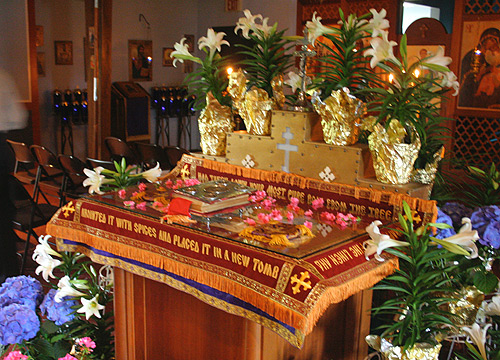
In the Byzantine rite Great and Holy Friday begins with a long Mattins on Thursday evening. The Byzantine rite, which is actually sparse in its Scripture readings compared to the Roman rite, has twelve lessons on this day, beginning with chapters 13-18 of the Gospel of St. John. In some churches twelve candles are lit and gradually extinguish after each reading. A crucifix with an icon-style corpus is placed in the nave and all adore it. A hymn describing Christ as the "Bridegroom of the Church" transfigured by the nails of the Cross  precedes the adoration. After the Little Hours, around 3:00 PM, a Deposition from the Cross service takes place. It is a Vespers service and the Gospel Passion according to St. Matthew, although with interpolations from all the accounts, is sung by the deacon. The reading encompasses Christ's burial in the tomb of St. Joseph of Arimathea. At the end of the service the icon-styled corpus is removed from the Cross and "buried" in an embroidered cloth called the epitaphios, which is placed within a bier. Once again all adore. Compline follows.

In the Roman rite the day once again begins with Tenebrae and the exact same ceremonies as the previous Tenebrae on Mandy Thursday. The last nocturne of Mattins contained excerpts from St. Paul's Epistle to the Hebrews, wherein the Apostle describes the two-edged sword of faith, hopes he maintains his, and emphasizes that faith is a living thing. The versicle before the second Miserere at Lauds adds mortem autem crucis.

On Friday, in the morning or around noon, the Mass of the Pre-Sanctified takes place. Structured like a Mass, the celebrant and his deacons wear their normal vestments, albeit the black of Masses of death, and take their places according to Mass ceremonial. A prophecy from Osee and from the book of Exodus are read. The Passion according to St. John is sung, followed by collects for the needs of the Church and then, in three successive and dramatic stages, a Cross is unveiled for public adoration. The clergy and the people "creep" to the Cross in three double-genuflections. A Blessed Sacrament procession brings the Host consecrated the previous day to the altar and a "Mass" begins with the offertory and incensation of the altar. The Host is elevated and a fragment is mixed with the wine in the chalice. The celebrant consumes the Host and the contents of the chalice and purifies his fingers and the vessels as usual. Vespers follows immediately, as yesterday. Compline is sung in the late afternoon. Around 3:00 PM a deposition service takes place, during which the corpus is removed from the Cross and "buried" in a sepulcher created in  side chapel. Some churches in England and Northern Europe will put a crown of thorns and nails in the tomb.
A Deposition service

[Great and] Holy Saturday

A bishop before the change of vestments
source: uocofuse.org
On the last day of the Triduum the story gets really interesting. Great and Holy Saturday starts Friday evening with Mattins (often called "Jerusalem Mattins," as many Byzantine and Roman ceremonies were inspired or transposed from the Church in Jerusalem), a lengthy service with opening rites, six psalms, and then psalm 118 sung with long interpolations praising Christ's adoration by the angels in the tomb and the conquest of Hades. The Canon follows, concluding with the Laudate psalms from Lauds. The message at the end is that the proscription to rest on the seventh day was a prophecy of Christ's Saturday in the tomb, intimating that the eighth day would be a new creation! A litany, dismissal, and Marian hymn conclude Mattins.

The Vesperal Liturgy, theoretically something in the afternoon of Saturday, in practice takes place in the morning for pastoral reasons. It begins with, you guessed it, Vespers! Black, or whatever dark color is available, is the color of the day thus far. The stichera begin to anticipate the Resurrection of the Lord ("for you alone manifested resurrection to the world!") and the lamentation of Hades ("my power is destroyed"). Fifteen Old Testament prophecies are read and any converts are baptized. The Canticle of the Three Children segues into the Divine Liturgy of St. Basil the Great. Prior to the Gospel, St. Matthew's account of the Resurrection, the clergy change their black vestments for white—quite a sight! A hymn of "silence" and "trembling" replaces the Cherubic hymn. The Hirmos is one of Jesus comforting His Mother rather than the usual "It is truly right...." Bread and figs are blessed at the end. During the Vesperal Liturgy converts are baptized and chrismated into the Church.
The deacon awaiting the Paschal fire in the old Roman Holy Saturday liturgy.
The Roman rite parallels strongly. Tenebrae again commences the liturgical day on Friday night. The Vesperal Liturgy starts Saturday after None, in practice mid-morning. Penitential violet is worn. A fire is blessed outside using three collects and the fire is brought into the church by a triple-wicked candle held by the deacon. The Paschal Candle is blessed and lit by the deacon during the Exsultet. Twelve prophecies from the Old Testament (four of which are to be found in the Byzantine rite) are read, telling of the gradual plan of salvation. The baptismal font is blessed and converts are baptized. The place of the baptisms, in a formerly-empty font, after the reading of the prophecies of old anticipating Christ have an un-mistakable purpose: baptism realizes for us the end of the prophecy and the beginning of the actual salvation; as the church is born anew by blessing, fire, and water from Christ, so too are these converted sinners; they are part of God's eighth day of Creation. The Litany of Saints begins and transitions into the actual Mass, taking the place of the Introit. The ministers change from violet to white vestments. At the Gloria bells are rung in joy. At the Gospel no candles are carried, as Christ's Resurrection, liturgically, is anticipated, but has not actually happened yet. There is no offertory chant and the Agnus Dei is omitted after the Canon. After communion a short Vespers with psalm 116 and the Magnificat are sung. A large [and well deserved] meal follows the Mass with Compline in the late afternoon or early evening.

Pascha

from: Huffington Post

Pascha in the Byzantine rite could be said to start with the Liturgy of St. Basil the Great in the morning, but it is most firmly felt on Saturday evening, usually an hour or so before midnight, when Pascha Sunday is about to begin. After the midnight office the epitaphios with the corpus of the Lord is venerated once again. All lights are extinguished save for the trikirion, a small candlestick on the altar. The celebrant invites all to come and receive the "light not overtaken by night." The people congregate outside after lighting their own candles and are met by the clergy. The constantly repeated "Christ is risen from the dead and by His death He has trampled upon death and has given life to those who were in the tombs" is sung. An account of the Resurrection is then sung and the celebrant, with his blessing cross, knocks on the door of the church and announces the "King of Glory" to the poor man pretending to be the Evil One inside. The procession bursts into the church, bathed in light and fully illuminated. Mattins follows. The Paschal Canon is sung in full with the litany and Magnificat at the end. Twice during Mattins a deacon censes the people and gives them the Paschal greeting "Christ is risen! He is truly risen!" At the end the priest reads the Paschal sermon of St. John Chrysostom. The hours are sung in a very abbreviated form, entirely without psalms, and the Divine Liturgy of St. John Chrysostom follows. After the Liturgy the faithful venerate an icon of the Resurrection rather than a blessing cross.

In Rome Pascha began with the Gloria during the Holy Saturday rites. On Saturday evening Paschal Mattins and Lauds are sung. Throughout Northern Europe the images in the churches would be unveiled and the Cross would be "raised" from the sepulcher and adored once more, as on Good Friday. A procession would then arrive at the high altar, vested with the best frontal and all candles in the church lit. Mattins is just psalms 1-3 and a sermon of Pope St. Gregory the Great. No canticles or hymns. The celebrant and cantors them vest in the best copes and begin Lauds. The antiphons on the first and third psalms commemorate the angel rolling back the stone on the Lord's tomb and the earthquake that followed respectively—we are clearly re-visiting the Resurrection at this moment! Haec dies... "This is the day the Lord has made, let us be glad and rejoice therein" replaces the chapter and there is no hymn before the Benedictus. The dismissal has a double-alleluia and the Regina coeli finally ends the service.

Worth Noting

After these long, and possibly trivial, descriptions the similarities might be obscured by an overload of information, so let us consider the Triduum day-by-day:
  • Thursday: it actually begins Wednesday night, in shadows. The office marks the point of transition between days. The office and Eucharist together form the complete prayer of the Church, as the Mass/Divine Liturgy is limited in what it can say to two readings. Tenebrae contains the full realm of Christ's betrayal, His worries, human fear, darkness, and also the institution of the Eucharist. The same is true in the Byzantine rite, which examines the Agony in the Garden and the betrayal in depth at Vespers. Also notable is that the foot-washing does not interrupt the Mass/Divine Liturgy in either rite and follows the Biblical flow of events by coming after the Eucharist. Lastly, priesthood is diffused and manifested by the use of holy oils. The blessing of oil in the Roman rite and the forgiveness of sins by oil in the Byzantine rite are two sides of Christ's one priestly function which he passed on to His Apostles that night (it also makes the concoction of "Chrism Masses" in the Roman rite something of a travesty).
  • Friday: begins with Mattins on Thursday evening in both rites. A Cross is revealed and adored in both. Vespers precedes the Deposition ceremony in both rites, which are both held when Our Lord has, liturgically, died, at 3:00 PM. The sepulcher and the epitaphios serve the same purpose.
  • Saturday: again begins with Mattins the evening prior, although Tenebrae gets shorter as the Triduum progresses whereas Saturday Mattins in the Byzantine rite is very long. In both rites the Resurrection is anticipated, not outright celebrated. The Byzantine tradition emphasizes the Harrowing of Hades directly while the Roman tradition does so implicitly. The Vesperal Liturgy in both rites would presumably be celebrated in the afternoon but for pastoral reasons is celebrated in the morning. Both include Vespers, a large number of prophecies meant to reveal the story of salvation leading to baptism and God's new Creation in the Resurrection, and a joyful transition from a penitential service into a joyful Mass/Divine Liturgy. The inclusion of Baptism in both rites is also critical. Water, aside from being the "matter" used in Baptism is also representative of matter, creation, the world, and chaos. By blessing it and using it for Baptism, Christ and His Church sanctify it and reserve it and the rest of the restored creation for His use.
  • Pascha: tomorrow still begins tonight! The Cross/epitaphios is venerated one last time and the church is illuminated for Paschal Mattins and Lauds, which is when the Resurrection is actually celebrated.
The Rad Trad hopes his readers got something out of this lengthy piece. The crossover between the two is significant and should give Roman liturgists who flirt with the "East" some reason to re-evaluate how we have done our Triduum in the last few decades, what basic ideas and frames of mind we have put aside, and what needs to be recovered.  Heck, maybe the Latin Mass Society or Una Voce could start doing the old Holy Week on the grounds of ecumenism.... Ironic, is it not, that one is more likely to see the Roman Triduum at an Eastern Catholic or Eastern Orthodox parish than at any Roman Catholic parish? 
Interesting Lecture on Schmemann


Here is a lecture on Russian [Orthodox] liturgical theologian Alexander Schmemann given by [Roman Catholic] Dr. David Fagerberg, a student of Aidan Kavanagh, OSB. Of course there is a tendency in Schmemann to denominate anything modern and bad as "the West," but as one questioner at the end (Taft?) says, part of Schmemann's opposition to the "West" was a euphemism for legalism in his own church. We could learn much from Fagerberg's remarks both about Schmemann and about genuine self criticism.

Sunday, April 6, 2014

Passion Sunday Sermon


Here is an old sermon preached by Fr. Andrew Southwell of the Latin Mass
Society on the significance of the liturgical changes that take place on Passion Sunday.
Notice the red tinted violet vestments and the [welcome] absence of lace on the priest's
person. A good connection between the liturgical and spiritual.

Thursday, April 3, 2014

Divinum Officium et Liturgia Horarum


Let me begin with a clarification concerning my most recent post: it was an April Fools joke, clearly visible at the bottom of the page, and not a serious posture concerning the liturgy, papacy, Ultramontanism, or general Catholic life. Private correspondence has shewn not a little confusion over this post. Next time, just scroll....

Now let us consider one of the most and least discussed aspects of the new liturgy, the transitional liturgy, and the old liturgy: the Office. We talk about the Office often on this blog, particularly as it existed prior to the 1911 reforms. John R and Rubricarius are among those who promote the older Office in some form or another, but discussion of the unreformed Office on this blog usually contrasts it with the Divine Office of Pius XII/John XXIII (same commission made alterations of both popes). The 1961 Office used as the "extraordinary form" is based on the Pian psalter of 1911, a heavily reduced kalendar, fewer patristic readings, and the Missal used at the same time. And the 1961 is very reduced when compared to the 1911 Office, which is itself reduced from the 1570-1910 Office. Consider that this past Monday one using the Tridentine Office would have prayed:
  • 12 psalms at Mattins with 3 readings
  • 8 psalms at Lauds with the preces and psalm 129 and then the Suffrages
  • Mattins and Lauds of the Dead
  • the full little hours
  • 5 psalms at Vespers with the preces and psalm 50 and then the Suffrages
  • Compline with the preces
  • Were one at a collegiate church he would have seen a Lenten ferial Mass and a Mass of the Dead
In the 1961 scheme the preces and Suffrages are gone, 12 full psalms at Mattins and 8 at Lauds are reduced to 9 and 5 fragments respectively. Ditto for Vespers. The Office of the Dead is axed. Previously a private recitation of the Office on a Lenten feria—with the Office of the Dead—would take upward of 90 minutes. The 1961 Office could be prayed in about 45 minutes. Quantity does not equate with quality, but we must admit something has been lost.

This we all know. Let us turn our attention to the Office of Paul VI, the Liturgia Horarum.

The name Liturgia Horarum seems ill-suited for the Office of Pope Paul VI given that it does very little to follow any concept of time. There are comparatively few first Vespers when considered with the ancient Roman Office. Indeed, feasts are rather un-festive and undistinguished from normal days. The ancient Office, and even the Pian Office until 1955, especially emphasized time and creation by extending the great feasts of the Church year for eight days periods called "octaves", signifying the eighth day of creation, the Resurrection, the aeon, the last day of the world. If one were to rank the most important feasts of the older Office theologically and liturgy the top four results in order would likely be:
  1. Pascha
  2. Pentecost
  3. Epiphany/Theophany
  4. Nativity
source: newliturgicalmovement.org
Other great feasts—the Nativity of St. John the Baptist, Ss. Peter & Paul, Assumption of the Blessed Virgin, Corpus Christi, All Saints and more—similarly broke from the brutal ferial psalter to celebrate the work of Christ through these persons and events for eight days, enlightening every mystery by the Resurrection.

The Liturgia Horarum does none of this, reducing the number of octaves to two (!). The 1961 Office has three octaves, including Pentecost. The LH has just two, the two that the secular world often perceives as the most important Christian holy days: "Easter" and the Nativity.

Perhaps the most apparent and arbitrary feature of the LH is its structure of hours, times, and psalms. Whereas the old Office descended from public prayer vigils prior to great feasts and Sundays, replete with psalms and Scripture readings in alternation, the LH, although in theory a restoration, is actual something meant to be read at a desk or in a chair. The old Office of course was usually said privately by clergy outside of monasteries as was the Pian Office, but both retained the structure and concepts of time latent in the Roman tradition. Moreover both the Pian and ancient Offices are singable because of their psalms and hymns. The LH, with its turgid passages and misuse of non-musical texts, is exclusively readable.

The hourly structure of the Pauline Office reveals the rational attitude towards prayer and religious supplication held by its creators. In the older Office(s) the majors and minors hours varied considerably in their character and purpose, and so their formatting both reflected those causes and effected a uniqueness to those hours which the person praying them could anticipate. For example Mattins begins with psalm 94, a hymn, then between three and twelve psalms followed by scriptural pericopes. The other majors hours were structured to have five "psalms", followed by a hymn, a canticle, and the orations of the day. The minor hours held the same structure except for Compline, which is again unique. With the lonely exception of Mattins, rebranded the "Office of Readings"—again betraying its new essence, every hour of the Pauline LH has the exact same structure: opening rites, a hymn, three fragments of psalms, a short reading, another canticle, some responsory prayers, and an Our Father. The hours must be prayed in order, except for the Office of Readings, but not in entirety. One can pray just one of the three daytime hours, the estranged riche nouveau cousins of the little hours of the Roman Office. The psalms themselves are read in fragments of ten to fifteen lines over the course of four weeks rather than one week. Of course the praying of all the psalms is a Roman practice and not a universal one (psalms in the Byzantine Office hardly ever change), but it is Roman. It is our tradition. It is part of our liturgical mind. The LH, by eviscerating any distinction between the hours and by trekking through bits of the psalms at a time, enters time rather than sanctifying it. What distinguishes "Evening Prayer" from "mid-morning prayer?" The title. Psalm 143 was prayed today at Evening Prayer and will not be prayed again for a month, ensuring very little familiarity with it among those who pray it.

One may be tempted to protest these observations and demonstrate the virtues of the LH by highlighting the increased number of laypersons now praying the Office. Surely this is an improvement over the older state of affairs, is it not? No, it is not. The Divine Office is a public prayer, not a private one. Would one be happy if an increased number of priests were celebrating Masses which no one ever attended? Surely not. "Liturgy" comes to us from a Greek word meaning "public service." The service is one provided by God for us and not the other way around. And never before has the Office been celebrated so sparingly in public. Prior to the 1960s one could certainly find Vespers at some church on a Sunday night in a city or major town. Most well staffed churches had Tenebrae during the Triduum. In the local rites Vespers would be interpolated into the Communion rites for the Triduum. Even today in Oxford one could have a pick of Vespers on a Sunday night (Oratory, Blackfriars, Ordinariate). The average parish today however never so much as considers a public celebration of the Office, and why should it? The same things the Rad Trad finds troublesome about recited Mass hold true for the LH: its spoken nature makes following it and praying it exceedingly difficult.

There are some things in the LH which are [mild] restorations. Clement VIII reduced the length of many Mattins lessons in the ancient Office for the convenience of priests. The LH revives the idea of long readings, but not necessarily the longer readings themselves. On the whole, not an inspiring liturgy.

I have prayed the LH on maybe four occasions in my life, all of them times when a friend of mine happened to have his hard copy LH and would not listen to reason. What is your experience?

P/S - for a detailed illustration of the Roman Office in different stages of its existence look here.

Tuesday, April 1, 2014

BREAKING NEWS: Francis Canonizes Pius XII, Consequences for Tradition


I guess it had to happen eventually. The Vatican II Church has canonized and sanctified its founder, Pius XII. I have attempted to reconcile my faith and my trust in my ability to jumble the current Roman mess with the promise that all would be fine by Christ, but this is the last straw. The Congregation for Causes could not even find a credible miracle to canonize Pacelli so Francis resorted to the same method Benedict used to canonize Hildegard of Bingen a few years ago.

Such duplicity and dishonesty is not an act of the Church nor is it an act of God. To canonize the only man who ever openly attempted to change the Church's teaching is a violation of the basic functions of the papacy. Pius XII, you will recall, directly inverted the Church's dogma on the relationship between liturgy, revelation, and doctrine in his encyclical Mediator Dei. I told myself that the Pope is just Bishop of Rome and that the Church is a Communion, not a corporation, but even a Communion has a head in Heaven and a visible one on earth. By raising to the altars a man who did violence to that Communion the so-called modern papacy has exposed its real intentions: to replace Catholicism with fungible Freemasonry.

In light of this I have finally made the decision to reject the purported "popes" from 1903 onward. A comment on the dogmatic nature of Ultramontanism in my most recent post on the topic rent the veil over my eyes. What the Pope says and does reflects the very will of God Himself. The Pope binds and looses and God, as was promised, confirms the decisions of the Pontifex Maximus. But there is also the law of non-contradiction. St. Pius V clearly defined dogma when he promulgated the Roman Breviary and the Roman Mass in the bulls Quod a nobis and Quo primum tempore in 1568 and 1570 respectively. The blatant disregard for these dogmas by the 20th century anti-popes re-enforces my opinion here. Sarto, the so-called "Pope St Pius X," changed the psalter, kalendar, and rubrics for the infallible Roman Breviary, meaning he was a heretic, an apostate, and not possibly the Pontifex Maximus. His successor fifty years later changed Holy Week, changed the kalendar again, and changed teaching. Montini, the most sympathetic of the lot, completed the Masonic undermining of the Mass.

I reject it all and cling to the true Traditional Catholic faith only to be found in a handful of places throughout the world—probably not even in most sedevacantist chapels given that they use the invalid ordination rites promulgated by Pacelli in 1947. I will continue to go to Eastern rite churches to ensure I get valid Sacraments for now, given that grace is like gasoline and I need valid grace to fuel up for the week, but I am on my guard.

I advise you all to do the same....


April fools!