
Thursday, April 14, 2016
Amoris Laetitia

Tuesday, April 12, 2016
Narrow and Stifling
 |
| Sleepy St. Joseph, pray for us! |
I have no intention of commenting extensively on the recent papal exhortation, nor even on reading the thing. It would get in the way of me completing Augustine’s City of God, for one thing. If you’re looking for extensive thoughts on the matter, Mr. Skojec has been providing birds-eye view commentary, and Mr. Bear is examining the document in excruciating detail.
Perusing the document quickly drives one to exhaustion. It has that almost hypnotic effect so indicative of intentionally non-offensive yet passive aggressive rhetoric. It either lulls the reader to sleep or drives him mad.
But I digress. After about half an hour of bored reading, I started running text searches, and my running obsession with St. Joseph paid off in spades. Here is a fascinating little selection from the middle of the document:
No family can be fruitful if it sees itself as overly different or “set apart”. To avoid this risk, we should remember that Jesus’ own family, so full of grace and wisdom, did not appear unusual or different from others. That is why people found it hard to acknowledge Jesus’ wisdom: “Where did this man get all this? Is not this the carpenter, the son of Mary?” (Mk 6:2-3). “Is this not the carpenter’s son?” (Mt 13:55). These questions make it clear that theirs was an ordinary family, close to others, a normal part of the community. Jesus did not grow up in a narrow and stifling relationship with Mary and Joseph, but readily interacted with the wider family, the relatives of his parents and their friends. This explains how, on returning from Jerusalem, Mary and Joseph could imagine for a whole day that the twelve-year-old Jesus was somewhere in the caravan, listening to people’s stories and sharing their concerns: “Supposing him to be in the group of travellers, they went a day’s journey” (Lk 2:44). Still, some Christian families, whether because of the language they use, the way they act or treat others, or their constant harping on the same two or three issues, end up being seen as remote and not really a part of the community. Even their relatives feel looked down upon or judged by them. (Amoris Laetitia 182)
 |
| Jesus listening to people’s stories and sharing their concerns. |
The really interesting language is used to describe what is in fact the popular idea of the Holy Family, in which the threesome of Jesus, Mary, and Joseph make up a kind of self-sufficient unit like an “Earthly Trinity.” P. Francis calls such a small unit “narrow and stifling.”
And he is right! A distorted devotional ideal of the Holy Family is indeed narrow and stifling, and earlier beliefs about the widowed St. Joseph’s children from a previous marriage and the so-called Holy Kinship are great antidotes to this narrowing devotional crutch.
Let us take this opportunity to move past the propagandist devotionalism of the past, and venerate the relatives of Our Lord as tradition tells us they actually were!
 |
| “Even their relatives feel looked down upon or judged by them.” |
Sunday, April 10, 2016
Holy Saturday: Two Last Thoughts
 |
| Does the ICRSS cleric reminisce to his seminary days before 2004? |
I am sure I am as tired of writing about the old Holy Week as readers are tired of seeing it appear on their blogger subscription block, so I will finish with two last thoughts, partially inspired by this fellow's thoughts.
First, the proper time of the Vesperal liturgy on Holy Saturday. There is not one. Yes, Egeria recounts three Eucharistic liturgies celebrated in Jerusalem between Holy Saturday and the morning of Pascha, which does not bode well for the midnight-Massers. Moreover, the ordines and Sacramentaries of the 8th century that recount the Mass portion's nocturnal celebration are limited to the original context of the Mass itself, which pre-dates the development of the so-called Paschal Vigil service itself. Properly understood a vigil is an all-night prayer service that culminates with the celebration of the feast itself. The Office of Mattins was once called the "vigils" and in some monasteries it still is. Given the primitive Roman Church's propensity to celebrate multiple Masses for a feast (Christmas, Circumcision, Nativity of St. John the Baptist, and Palm Sunday among them) one cannot pinpoint a proper time for any one of them. I would like to modify my earlier thesis that the Roman Church integrated a Mass into its all-night vigil service by asserting that, in imitation of Jerusalem, the Romans likely had a Mass between the reception of converts and Vespers. The Mass bifurcated between the traditional lucernarium that began Vespers; in this case, the Roman praxis would be older than the Byzantine. And yet the original context of that service (the reception of adult converts in a Christian city during an all-night watch) ceased to exist by the 9th century and so the service itself changed.
The dichotomy of the Vesperal liturgy is that it places the Exsultet ("o vere beata nox") at the beginning of the service and ends with Vespers, traditionally sung at sunset. From this point, there can be no "right time". The only general rule would be that the service has to conclude by the time Vespers are usually sung. The service could logically begin as early as 10AM or as late as 4:30PM. The earlier celebration in parishes and cathedral permits the celebration of Paschal Mattins, in the middle ages the most important Office of the year, as evidenced by the various Resurrection ceremonies observed then (not during the Saturday Mass), while the later time would be more easily accommodated in monasteries. The variance in time reflected local needs and allowed communities with different resources to celebrate the liturgy as fully as possible.
This brings up the second point, which is that the old Holy Saturday was more "progressive" than either the 1955 or 1970 reforms. Pope Pius warned against "antiquarianism" and then proceeded to fabricate rites that purported to "restore" what we vaguely think was done in the first millennium, in turn implying that what had been done for the preceding century was a corruption. The context of the Holy Saturday rites changed when adult converts were replaced by infant baptisms, which could be done on any day. The ceremony became an independent rite in recognition that it now functioned as a proper vigil in the vernacular sense of the word, a day of watch before the greatest feast. This is how Latin Catholics understood this day for a thousand years. A college friend once derided my interest in restoring the pre-Pacellian Holy Week: "Why don't you just use whatever Mass Peter and Paul practiced, if you can find it? I'm sure that will go over well." The opposite is true. The old rite represents nineteen centuries of liturgical development while the 1955 and 1970 rites are poorly informed historical re-enactments of what some people believe was done in the "early Church," that fleeting epoch of Christian mythology.
Now, no more talk of Holy Week until next year!
Saturday, April 9, 2016
For the Forgiveness of Sins

Our's is a gentle religion. One reads enough Western history to discover a cast of familiar characters: the Church, the Pope, the Saint, the Sinner. One reads what they read, parsing passages of Civitas Dei and Summa Theologiae, until one accepts or rejects their propositions. Provided one accepts them, one becomes a candidate for Baptism. After the regenerative waters one attempts to lead a life in accordance with these passed on virtues and according to the Commandments; if one fails, a five minute trip to the "box" is all that is necessary for another clean slate. It is that simple.
Or is it?
My friend's impending sojourn to the Camino de Santiago stirred a long dormant interest, sitting in the back of my mind for some time, in pursuing something worthwhile in life. The camino has become a tourist attraction in recent years, in part due to the film The Way and in part due to the Eat, Pray, Love/Oprah mentality of self-help seekers.
Yet it still recalls the medieval notion of the pilgrimage. One of the few extant pilgrimages of value is probably the trip the traditionalists make annually from Notre Dame in Paris to Notre Dames in Chartres. A long gone compatriot made the journey with the traditionalists in 2012, sixty miles by foot with three solemn Masses. The sequence of a pilgrimage imitates life itself, commencing with a departure from the known confines of one's birth and well integrated bad habits. What follows is a trip through unknown lands with little help and the risk of loose associations; the pilgrim knows where he wants to go and vaguely how to orient himself, but he is not truly prepared for a journey in a strange place with strange people; some will be friends, some enemies, some pointing the way and some dragging him back. The pilgrim at first utilizes his own devices and skill to survive until the isolation and boredom drive him mad; only when he realizes that he is far from home and turns to God, offering his difficulties and failures as penance, does he progress towards his goal, an earthly glimpse of the heavenly Jerusalem. Eventually prayer is as important as steps on a pilgrimage. The Way of a Pilgrim has inspired Slavic Christians for years, a slim volume about a boy who asks his mentor how to pray without ceasing; the father gives the pilgrim the Jesus prayer and sends him about the various churches and monasteries of Russia. The pilgrimage culminates at the gates of a representative Jerusalem, a foretaste of the eternal kingdom where the Ghost, Father, and Song through endless ages run.
Believers made their ways to holy places to pay homage to what happened there and to obtain the remission of sins, to find heartfelt forgiveness. Egyptians went to places where they believed the Holy Family stayed during the Flight, and they still frequent these places. The most obvious destination of the Church of the Holy Sepulcher in Jerusalem, built over the place of the Crucifixion and burial of Our Lord; pilgrims such as Egeria recounted the liturgical practices in Jerusalem to their home churches and popularized their imitation, giving rise to Holy Week ceremonies (interestingly, Egeria recounts three Eucharistic liturgies between Holy Saturday and Pascha). In the west, devotion to St. Peter flourished and popularized the Roman Office throughout Europe long before Charlemagne imposed the Roman Sacramentary on Frankish clergy.
Pilgrimage multiplied in the second millennium. St. Thomas Becket, the archbishop of Canterbury who held the Church above the state, represented everything noble about the medieval view of order; more pilgrims flocked to his grave than anywhere else in the Christian world until the Reformation, inspiring students from England, Italy and the University of Paris, like Lothar of Segni (Innocent III). Also popular was the Camino de Santiago, the road from the Pyrenees mountains to Compostela where the tomb of St. James resides. The most visible, and notorious, of the medieval pilgrimages was the Crusade. Aside from the disasters of pogroms and the raid of Constantinople, the idea of Crusading, of forfeiting one's self entirely to the will of God and His visible Church transformed Europe, nurtured chivalry, planted the seeds for the vigorous religious orders of the age—departing from the meditative and sedate Benedictines, and inspired the imagination. The Crusade also offered a hope of forgiveness; the Church, to which Christ gave the authority to bind and loose the sins of men, loosened the sins of those who went on Crusade to free the Holy Land from the Muhammadans. Modern historians find it scandalous, but the believer is in no way surprised that those who went on Crusade—criminals, thugs, and generally unsavory individuals—were those most in need of the forgiveness of sins.
Then came the Reformation and the smashing of Catholic culture. Old traditions die hard. In the 16th century St. Philip Neri traversed the seven great basilicas of Rome in a single day with his retinue, all the while singing the Divine Office in Italian and arousing the suspicion of the Inquisition.
There are still pilgrimages, although they can lose their point if done wrongly. A professor in a seminar on Frontier American History mused at the irony of driving to the Rockies or Yosemite. Is there not a similar irony in taking a taxi to St. Peter's Basilica? Aside from Chartres, the St. Peter Fraternity occasionally makes a foot visit to the North American Martyrs and the LMS in England has several day pilgrimages every year. I myself am attempting to convince my friends to adopt the idea of stational churches in our diocese, at least visiting a church named for the saint or mystery on the feast or vigil to say an hour of the Divine Office. But this is a compromise between a 1st century middle easterner religion and an automated 21st century world. True pilgrimage is a re-orientation to God, a change of life as startling as when one first came to believe. It is not "state of grace" religion, but "bone of my bone and flesh of my flesh" religion.
Quo vadam?
Friday, April 8, 2016
Revisiting The Work

Like most Opus Dei centers, this one was nicely furnished and decorated with good taste. From the outside it appears far more modest, as a faded brick building without much to indicate what’s inside. The Work’s inclination towards privacy is interpreted by some as excessive secrecy, and sometimes that is difficult to argue. I wasn’t there to write an exposé, but to visit an old friend.
Old in more ways than one. Prof. G— was well into his 80s and retired from teaching philosophy for about a decade. I hadn’t seen the old professor since moving to Dallas, but before I left town he was the closest thing I had to a mentor. He had been a numerary with The Work since his younger years, and when spiritual direction with the Opus Dei priests was threatening to become worse than useless, he stepped in and encouraged me to work on my intellectual life.
He emboldened my growing interest in what we call the “Great Books” in the States. I had just started reading books from the Classical era, and the professor’s input was invaluable for contextualizing them. He introduced me to Josef Pieper and was the first Opus Dei member I had met who thought I should read books not published or approved by the prelature.
Upon being led up to his room, I was disheartened but not surprised to witness his declining health. He had lost none of his mental faculties, and we talked at great length on all manner of topics—our personal lives, whether such and such bishop was good, how some books are so thorough that they can be written only once, that my idea of St. Joseph had come to differ from Josemaría Escrivá’s, Pope Benedict’s love for cats, and Roman pilgrimages—until we were both exhausted. We parted feeling nostalgic and refreshed.
If, as St. Dionysius intimates, part of the blessedness of the Celestial City is in being illumined by the light of the other saints as they themselves have perceived the Godhead, there must similarly be a kind of heavenly pleasure in discoursing soul-to-soul on spiritual matters. Like Augustine and his mother anticipating Paradise in their garden, so it is when two Christian minds dialogue on matters of the Faith. There are few greater works than that.
“Those in love do not know how to say good-bye: they are with one another all the time.”
—St. Josemaría Escrivá
—St. Josemaría Escrivá
Thursday, April 7, 2016
Comb Overs
 |
| source: sthughofcluny.org |
Just as Rorate took down one article on the ancient Roman liturgy, so they have added another, this concerning the proper postures and rubrics for high Mass. Ceteris paribus, an attempt to introduce these guidelines at the local FSSP parish would likely cause a revolt: no kneeling for forever, standing during the prayers before the altar and after the consecration of the chalice (Irish piety dies hard), popular singing of the Introit—expanded beyond the solitary psalm verse—as the true "opening hymn", and approach of the communion rail during the Agnus Dei are all quite foreign in this area. Traditional Benedictine monasteries seem to be making headway, but their influence ends at their walls. This writer, for one, thinks such an approach would lighten the showcase-like rubricism of many old rite Masses and encourage popular involvement without resorting to Faith of Our Fathers or the Missa de Angelis. I am told Fr. Ronald de Poe Silk printed Mass leaflets following the old instruction to stand after the elevations; perhaps there is hope yet!

In other news, the leading candidate for the Republican nomination for the presidency, Donald "Make America Great Again" Trump, and his bugaboo, "Lyin' Ted" Cruz, are both making remarkable strides for that emetic fashion of post-middle age, the Comb Over. Trump's is more obvious, less a comb over than a comb forward; a man I knew who played golf with the Donald c.2003 said his biggest danger in life was a gust of wind that would open his head like a tin can. Cruz's comb over is more subtle, covering an emerging patch rather than an existing bald spot. Trump's double in London, Boris Johnson, simply has terrible hair, as though a Chinese takeaway fried it in peanut oil without adding something to help the strand caramelize.
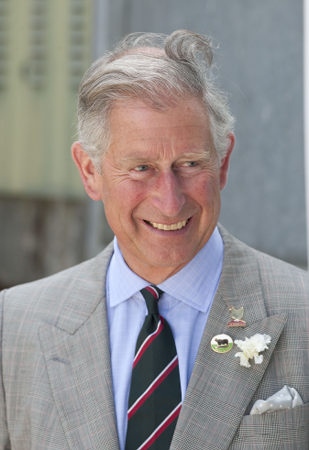
The gentleman's comb over is on its way out, the last stylish practitioner of it being Prince Charles. The comb over was once a standby hairstyle of preppy New England and the Old World. Once a man thinned on top he could simply and gracefully part his hair lower and lower, gradually reaching a point of reasonable protection from the elements. Post-military short hair and post-hippie long hair render the post-middle age comb over antiquated.
And yet some comb overs perplex us. William F. Buckley Jr. looked like a man with something to hide on his program Firing Line, particularly in the 1970s, when he sported a frayed weave to the side opposite his low hair line. However, as ridiculous as it looks, he sported the same hairline when he served as an infantryman in World War II at the age of 21. What was Bill Buckley's secret? In time we may never know....

More serious material is in the cards....
Sunday, April 3, 2016
To Come....
 |
| From the FSSP Roma Facebook page (no, I don't have Facebook) |
Personally, I found Augustine's warning to retain our Lenten sobriety during this celebratory period very helpful, as too much feasting undoes the benefits of the fasting!
Subscribe to:
Posts (Atom)