Tuesday, October 7, 2014

Papal Prudence

The ordinary Ordinary
The debate over the concept of obedience and papal encyclicals continues to rage over at Magisterium. I would encourage you all to go over and read J.'s latest offerings. 

I would also like to expand upon J.'s adumbration of the lines from Pastor Aeternus about "ordinary jurisdiction." This does not mean papal rule over a diocese is in any way to be considered normal. What is does mean is that when the pope intervenes in a diocese, he possesses the same power as the local ordinary bishop. An "ordinary" is the cleric in charge of a community, not necessarily even a bishop. Msgr. Keither Newton is just a priest and presides over the Ordinariate of Our Lady of Walsingham (please do not call it the "Anglican Ordinariate"). The same is true of Msgr. Steenson in America. In large dioceses and archdioceses, there are often multiple bishops, the ordinary and the auxiliaries—whose function is sacramental. The pope has the same power as the local ordinary when he exercises it, but the ordinary rule of a diocese belongs to the ordinary. Get it?

It seems that in both cases of papal intervention and in exercises of ex cathedra teaching, the pope is bound by prudence and respect for the bishops of the rest of the church who possess ordinary ruling and teaching power in their local churches. Were a Roman dicastry to begin issuing directives, programs, daily schedules, and making decisions for each diocese in the world, the pope would be abusing his power severely. Similarly, infallibility must know limits beyond the conditions laid down in Pastor Aeternus. Were the pope to define that 2+3 equals 5, he would do so infallibly, but pointlessly. I for one always wondered what the point was behind Pius XII's non-definition of the Assumption of Our Lady, given that the Assumption was never disputed within the Church. The sinlessness and the conception of Our Lady were in question for quite some time until a lid was put on it during the Renaissance and Pius IX closed the issue definitively. 

It may all be a moot point now. The Roman part of the Catholic Church is in a malaise created, in part, by a wild papacy, but that is no longer the problem. Bad bishops and an overgrown bureaucracy reign now. The pope is a luminary and high profile figure, but less of an active figure in Vatican activities than say Pius XII or Pius X. One could say that the Church was once like a great orchestra, wherein all the talented players were obscured by a strong willed conductor. Now we are more like a rock band: big name, high publicity players mismanaged by an ever growing machine, each gear looking to get greased.

Sarum Christmas Mass


Above is a recording of the full midnight Mass in the Sarum rite according to the ordinary and propers of the Sarum chant tradition (minus readings and orations). A few things to notice:

  • In the Roman rite, the Introit is: verse A, verse B, Gloria Patri, verse A. In Sarum it goes: verse A, verse B, verse A, Gloria Patria, verse A
  • The Kyrie is Sarum can be "troped" (interpolated with exclamations) according to the season. Christmas season called for Deus Creator Omnium
  • Christmas has three sequences, one for each Mass. Midnight warrants Nato canunt omnia
  • The Creed is Credo I as found in the Roman rite. It is the oldest surviving Credo in continuous use and enjoyed popularity throughout Europe
  • The chant at the Preface sounds a bit off key, but it is not. These chants were meant to be sung by priests of any vocal quality, so the chants accommodated their capabilities. The preface dialogue resembles that of the Roman rite on ferial, simple, and funerary days
  • The method of singing is more robust and deeper than the Solesmes method continued by the various Solesmes congregations scattered throughout the world and the Institute of Christ the King. I like this method better.
  • It is much better than the Missa de angelis!

Monday, October 6, 2014

Carthusian Mattins Invitatorium


The various monastic groups' chants are actually simpler than the Roman chant so that all the monks, even the less talented, may sing. Here are the opening rites and psalm 94 from the Carthusian Mattins/vigil. The psalm begins at 5:20. Well worth the listen.

Last Word on Neo-Gallican Rites & Upcoming Posts

First, the beginning of the [long delayed] series on the early traditionalist movement is a few weeks away, but close. The first three entries with be on Msgr. Alfred Gilbey, Mrs. Mary Ball-Martinez, and AbbĂ© Quintin Montgomery-Wright. The last two have proven challenging objects of research, particularly the obscure Mrs. Martinez. We will also be reviving our series on the Lesser Known Fathers next week with the challenging Shepherd of Hermas. 

Reproduced below is a cleaned up version of an e-mail to a reader who wanted to know about the emergence of the neo-Gallican "Jansenist" rites of France. It represents the final thoughts I have on the matter. My thoughts can only apply to the Missals. The breviaries departed more heavily than the Missals from the received tradition, particularly with regard to the distribution of psalms, which inspired the 1911-1913 reforms (did Papa Sarto violate Quo primum's older brother, Quo a nobis I wonder?):
The neo-Gallican rites are complicated. France had local rites galore. I am starting to think that the Norman liturgical family (which includes Sarum, Rouen, York, Dominican, maybe Braga and many others) may be somewhat distinct from the Roman. See here.
I am unsure as to just how different the rite of Paris was, for instance, from the others originally. If you go through some of my older posts on the Parisian rite—for instance—you will find that I compared some of the propers (variable daily texts) from a Missal from 1300 with the 18th century books and found considerable variance. While the Sarum/Dominican/Norman tradition often had unique texts on the great feasts, the Parisian Mass was almost exactly the same as the Roman rite that was codified in 1570 and used until the mid 20th century, word for word! This suggests that the Parisian rite was perhaps a distinct rite from the Roman in other regards (ceremonies, the Divine Office etc), but used the Roman texts originally. However, this may not necessarily be the case. In the Middle Ages—hell, everywhere before Trent—Mass differed diocese to diocese and sometimes even within single churches. Priests in monasteries and cathedrals would be assigned one altar in perpetuity for their daily Masses and would celebrate as they wished at that altar (the fact that no one dared touch the Roman Canon for 14 centuries should show you just how strong their sense of tradition was). We have no idea where in Paris that Missal was used or by whom. The University of Paris was constantly at odds with the local Archbishop, so the popes placed the university under the Holy See's direct jurisdiction and protection (St Thomas Aquinas and Innocent III were both students). Could the Missal have been used by the University in school services as part of their patronage under Rome? Could it have belonged to a Roman priest studying there? Could the Roman rite have been used everywhere in Paris? Not enough remaining manuscripts to come to a conclusion. 
Regardless, the Parisian and French rites were closer to the Roman rite originally than the books I examined in my blog series (all 18th and 19th century). The books I examined had either been altered in text (many propers changed) or in translation (ditching the Old Roman psalms for the Vulgate psalms of St Jerome). The Ordo Missae of Rouen and Paris are the Roman Ordo Missae with French modifications, not the Norman/Sarum/Dominican Ordo Missae.
What I think happened was that after Trent most of France took on the Roman books because bishops did not want to have to monitor and approve liturgical changes when some office of monsignori in Rome could do it, leaving the bishops to their own devices. Over time, the people and clergy of those various dioceses using the Roman books became disillusioned for many reasons and sought to return to their heritage or to insert new content. Some features like the available alternative readings for ferial days (when the Sunday Mass is repeated during the week) would be restorations of the Norman practice. Others are interpolations of Norman features into the Roman Mass (like the archbishop giving the pontifical blessing during the Canon of the Mass and reciting the Last Gospel in the recession to the sacristy rather than at the altar). And some others are just different altogether (see the Secrets and post-Communion chants for many weekdays and feasts). While Gueranger cried Jansenism, I see no evidence for it (and plenty textual evidence against it) other than the [puzzling] octave of St Augustine, which was only strange but not heretical by any means. What I think happened was a conflux of:
1-a resurgence in classical education and Latin literacy being expressed in very vivid new texts
2-a revived liturgical interest in the local clergy and the people of the dioceses, wanting their own traditions back
3-desire on the part of the bishops to curry favor with the kings of France by demonstrating their independence from Rome
4-boredom with the existing, rather tame ceremonies (compare a Roman high Mass with the Pontifical Mass in the Lyonese rite that I described here)
Clearly, the neo-Gallican books were justifiably called neo-Gallican and not just Gallican. Some of their changes were bad, but I think many were good for their local tradition (like the Palm Sunday rites in Paris). While the texts had some anti-Roman elements (like the psalm translations), that means the books needed adjusting, not discarding. Roman wanted to end the neo-Gallican uses for some time, but could never quite do it until the middle to late 19th century. Whether it was because of centralization or orthodoxy, I cannot say. I am inclined to say that the neo-Gallican books do continue a unique tradition in those dioceses because Roman could not entirely apply Quo primum, which bans liturgies less than 200 years old, to those rites. They may have been rites similar to Rome's initially, yet still unique enough to call rites. Pius VII officially recognized those rites as part of his peace with Napoleon. Then came the Liturgical Movement, Gueranger etc.
All right. End of rant. Does that clear things up?

Saturday, October 4, 2014

Latin Offertory

source: newliturgicalmovement.org
An interesting and brief article on the history of the various offertory prayers used by priests through the history of the Latin Church. Well worth the five minutes to read about the creation and spread of offertory rites throughout the Middle Ages.


Friday, October 3, 2014

Laudate Dominum de caelis....

One of our readers is having a parish problem, the contraction of the Divine Office within his parish. Weekly Compline, Vespers once in a while, and Terce before the high Mass on Sundays were formerly sung. The Compline group, Vespers, Terce, and high Mass on Sundays all require a choir. Thus far, they have one paid cantor and a vacillating group of volunteers. The parish is mostly disinterested in the liturgy, but not entirely. They have tried and failed to form a choir, never quite connecting with the "single-male-liturgical nerd" demographic so essential to liturgical excellence. Any advice? Any creative ideas from experience? Any outlandish ideas for this fellow which might work?

Magisterium


Open question: what is the significance of papal encyclicals? To what extent are they binding teaching, especially where they contradict each other? Are we to look at them as loquacious pastoral letters concerning whatever happens to be on the pope's mind?

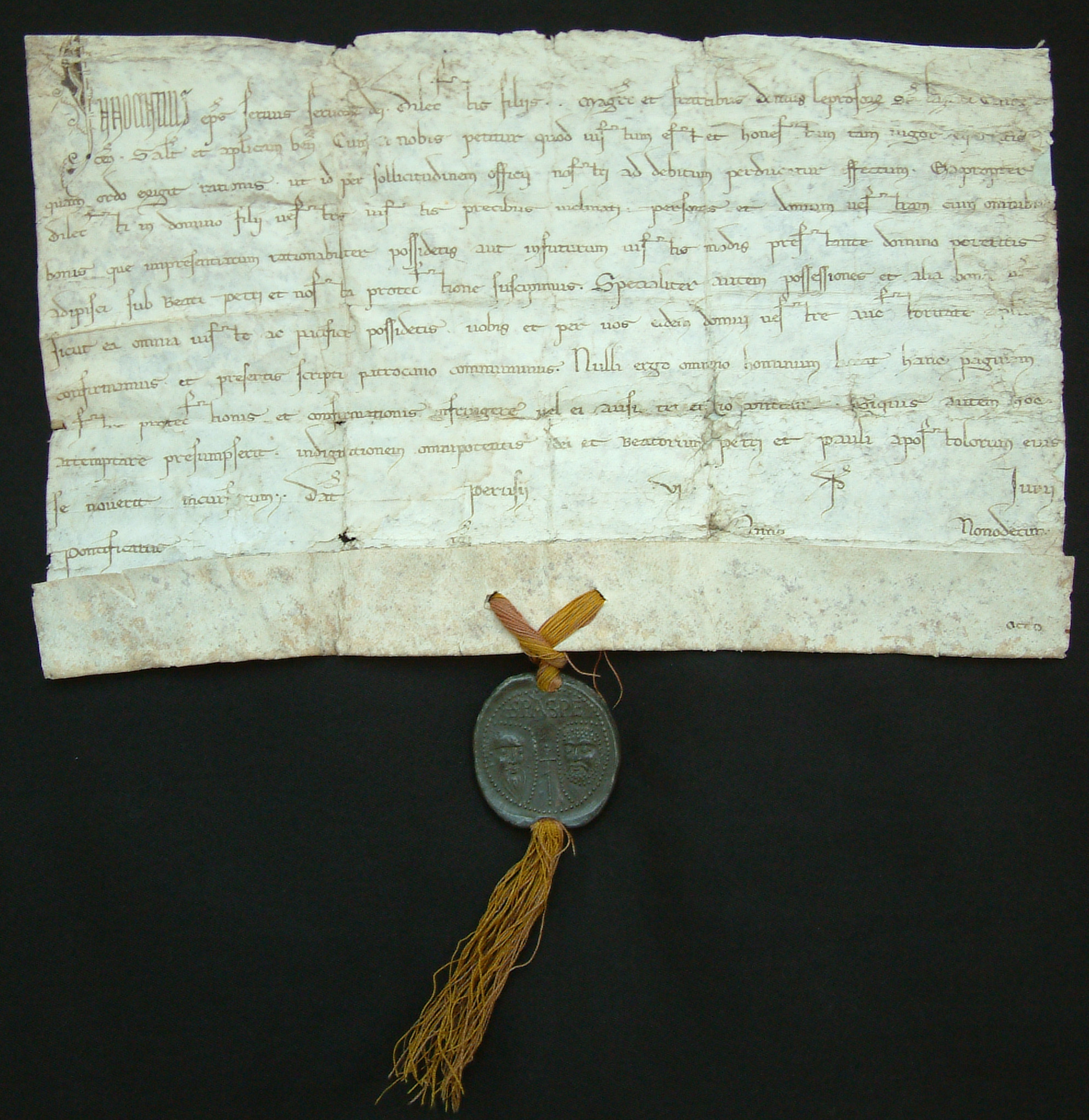
The difficulty is that the encyclical replaced the papal bull around the time of Gregory XVI. Previously, popes would write "bulls" to the bishops and priests of the Church to legislate with regard to a particular problem or a binding teaching to clarify a matter of dispute. Then came the Italian unification movement and the popes began to write about more general issues. The culture of the time and the rather dull theological outlook were not conducive to considering the contents of encyclicals, only receiving them. Indeed, when traditionalists speak of "traditional Roman Catholic theology" they mean the encyclicals of Gregory XVI, Pius IX, most of Leo XIII, Pius X, Pius XI, and Pacelli. These letters were to be taken as typical Catholic teaching on all matters much as how neo-conservatives take John Paul II and Francsis' encyclicals to be gospel, as well as Humane Vitae (which we must admit is not a teaching, but a re-iteration of a long standing teaching). Then Cardinal Burke caused a small firestorm by suggesting Francis' first unique encyclical was not "Magisterium."

Another problem is that, regarding papal bulls, prior to Vatican I, one is not entirely clear as to how binding bulls were. Some were purely legislative. Some, like Benedictus Deus, were clearly didactic and binding. And others, like Unam Sanctam, were shameless political posturing. We can dangerously read into formulae like "we define" and "we declare" a level of authority generally used in one era, but bound to signify invocations of infallibility in a later era. Is the fine for mis-printing the Roman Missal stated in Quo primum tempore a dogma of the faith?

In all the centralization and bureaucracy, no one seems very keen on separating the essentials of teaching from what is pastoral care and what is just irrelevant. Thoughts?