Showing posts with label shepherd of hermas. Show all posts

Wednesday, January 21, 2015

Lesser Known Fathers X: The Shepherd of Hermas IV


This will be the fourth and final installment on the obscure patristic text The Shepherd of Hermas, which follows a series of mystical visions about the end times and the nature of the Church given to Hermas, a freed Roman slave and brother of Pope St. Pius I. These parables are, to say the least, esoteric and abstract, which, along with the failed end times prediction, probably impeded its entry into the the canon of Scripture. This work still makes for great spiritual reading and need not be read sequentially. As a Lenten exercise, I would recommend spending some time with the first book of the Shepherd. We resume with the four final parables:

In the seventh parable the angelic shepherd explains to Hermas why he must suffer on account of the sins of his family, their loss of faith or presumed apostasy in a period of persecution. It is fitting, the angel says, for the head of the house to suffer for the sins of its inhabitants, to render satisfaction for the ills of the whole. Our modern ears hear offence at the idea of justice issued communally, but in these times entire peoples suffered for the sins of a few or many of them, if not for aiding those sins then for not condemning them. "The person who repents," the angel teaches, "must torture his own soul, and must be thoroughly humble in his every action.... and if he endures the afflictions which come upon him, then assuredly He Who created all things and endowed them with power will be moved with compassion and will bestow some remedy." 

The eighth is the parable of the willow tree. Hermas watches the shepherd lop off many branches of an enormous tree and, amazed that the tree can survive such extensive pruning, watches the angel distribute them. Some remain green, some whither, some are eaten by moths, but a few grow shoots and even fruit. The angel sends the holders of these branches to the tower that represents the Church. Hermas, still confused, asks for an explanation. The angel unravels the mystery. The tree that can survive indefinite pruning is the Law of the Son of God, which provides shade to His people, who are protected by the archangel Michael. This Law many ignore, many abuse, but many accept and even allow to flourish within them. These last men are the ones with the fortuitous branches. Some of the withered and cracked branches repair, overcoming Hermas and the shepherd with joy, but others remain broken, just as some sinners repent and bring joy unto God in doing so while others betray the Church in their sins and apostasy. Among those who keep the laws of God and repent there "is no place for rivalry" as to who is the greatest, for all should be happy to be within the tower that is the Church. The latter group, those who live partially in the world and partially in the Church, those with the somewhat withered branches, may be either saved or lost depending on their will move into one camp or another, to claim the fruit of their deeds.

The angel leads Hermas to a plain between twelve hills—some green, some brown, some burned, one lush, and one beautiful. On a mountain adjoining the plain virgins build a familiar great white tower, beginning with six stones, then ten, then twenty-five, and so on. Virgins, those weak and naive to the world, are the strong builders and pillars of the Church and of heaven in the eyes of "the Master," who comes to inspect the tower and finds some of the stones cracked and wanting. He discards of them as He discards of those who leave the Church and invites new stones in their places. Some of these new stones are not cuts, still round. These rest on the sides of the tower and are not forced into slots just yet.

Hermas and the angel inspect the tower and complete its surroundings with plaster, seal it, and clean the detritus. The angel then departs Hermas, who is perplexed that he is being left alone in the event the Master returns. The angel returns at morning after Hermas and the virgins spend the night in prayer. Why, Hermas inquires, is there a gate and a rock at the tower? The rock, the shepherd explains, is the Son of God, anciently predating the Creation of the Father and hence an "adviser" in the Creation by the Father. The gate, however, is not new, but only known now in the last stages and the consummation of the world. "No one shall enter the kingdom of God," the angel concludes, "unless he accept the name of the Son of God." The kingdom of the God is a city like those which existed at the time of Hermas and today exist only for tourists: walled all around, with the exception that the kingdom of God has but one gate. The stones cast away were those unworthy of entering through the gate because they held not the name of the Son of God—the shepherd never says "Jesus" or any linguistic variation of "Christ." The Son of God, the rock upon which the tower is built, "sustains the world" which rests upon Him, echoing the phrase "the stone the builders have rejected has become the cornerstone." Some stones cracked and turned black because they are like unto those who know God and sin against Him, a greater offence than not knowing God and sinning against natural reason. Again, the angel pastor admonishes Hermas to repent and forfeit guile, grudges, and urges to sow seeds of disunion within the Church.

Then follows the last of the parables and the end of the work. The shepherd and another angel visit Hermas after writing the preceding work and remind him that God has power over repentance. They know Hermas is not about to live a life of full repentance immediately, but that he wants to do so and to follow the commandments of God. As an enduring test, they leave the virgins from the tower with Hermas. If he follows God in purity, they will remain in his abode. If he deviates, they will leave. How the soul and grace are the same!

Sunday, November 16, 2014

Lesser Known Fathers X: The Shepherd of Hermas Part III

Let us return to the account given by Hermas, the second century brother of Pius I, who was given several visions of the nature of the Church and its relationship to personal sin. The last and longest segment of the Shepherd of Hermas is that of the parables. While some of them are quite lengthy, the first six are pithy and so we shall consider them here.

First Parable


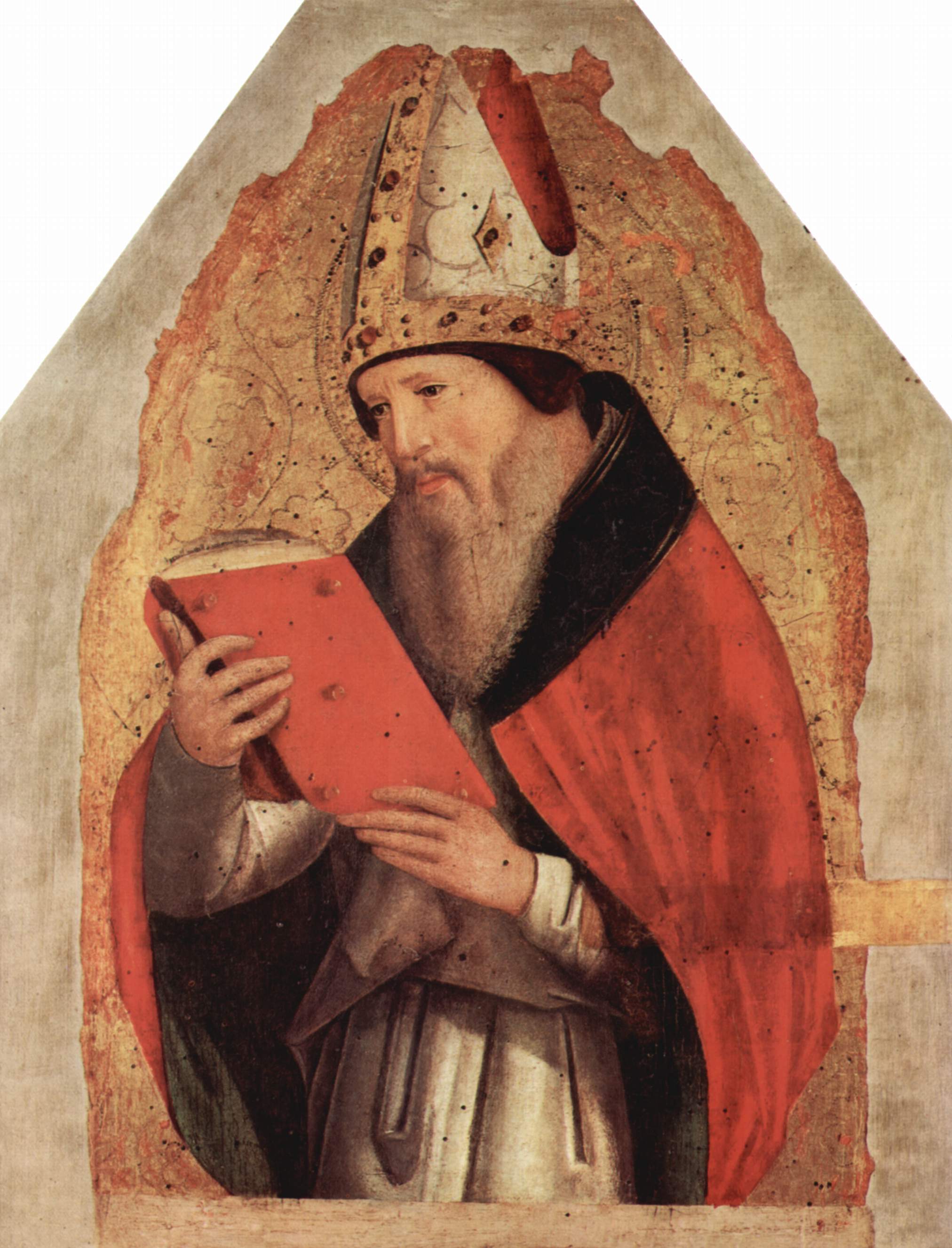
"You know that you, who are servants of God, are dwelling in a foreign land; for your city is far from this city," begins the first vision. This vision contrasts our true home, the Church and heaven, with the city in which we currently dwell. These cities are not St. Augustine's City of God and the City of the Pagans, which offer two competing visions of reality in a Christianizing society. The angel's parable to Hermas reflects the displacement of the Christian, who must live indefinitely in a strange place before he is called to his Maker at the end of his days. Because of the transitory nature of things, he must not fall too deeply in love with the place of his temporary residence. Instead, he must cleave to the laws and customs of his real homeland, even if he cannot touch it yet, for adapting to the laws and customs of the city of residence rejects the laws and customs of the real homeland city. 

"For the sake of thy fields and the rest of thy possessions wilt thou altogether repudiate thy law, and walk according to the law of this city? Take heed, lest it be inexpedient to repudiate the law; for if thou shouldest desire to return again to thy city, thou shall surely not be received, and thou shalt be shut out from it. Take heed therefore; as dwelling in a strange land prepare nothing more for thyself but a competency which is sufficient for thee, and make ready that, whensoever the master of this city may desire to cast thee out for thine opposition to his law, thou mayest go forth from his city and depart into thine own city and use thine own law joyfully, free form all insult."

Second Parable


Hermas sees an elm tree and a grapevine while ambling through a field and takes the time to meditate on them. The angelic shepherd asks Hermas upon what he meditates. Hermas replies that the vine and elm are "excellently suited the one to the other." The shepherd explains that the grapevine yields much fruit while the elm tree yields none. The imagery reminds the faithful to the dicta of Our Lord "I am the vine and you are the branches" and "By their fruits you shall know them." Contrary to instinct, this parable does not primarily concern either of these two things. Rather, Our Lord's warning that "It is easier for a camel to pass through the eye of a needle than for a rich man to enter the kingdom of heaven" more readily relates to the shepherd's words. The shepherd explains that a grapevine cannot yield fruit alone. It must climb so that its fruit may bud, grow, and hang well. So, the grapevine latches on to the tree and climbs its sides, giving fruit on its branches which cling to the tree. The same is true with the rich and the poor. The rich concern themselves with the things of the world, with wealth and luxury, making their efforts before God scant. However, the rich can use their resources to help the poor, who are close to God in their poverty and desperation. If the rich man helps the poor man with all his effort, the poor man might make gratuitous intercession before God for his helper and so aid in the rich man's salvation. "Blessed are the rich," the shepherd says, "who understand also that they are enriched from the Lord. For they that have this mind shall be able to do some good work." Such was the mind of many well off saints such as Thomas More and kings like Louis IX. Salvation is not solitary, but an act of cooperation.

Third Parable


The shepherd shows Hermas withered winter trees, naked and without leaves. Hermas is told that some of these trees represent the unjust while others symbolize the righteous. The angelic figure explains to Hermas that in this world "neither the just nor the sinners are distinguishable, but they are all alike." This is healthy warning for those who judge the souls of other people or sanctimoniously lecture others on their actions or even who suggest the damnation of particular people. In the end, only God knows whether or not a tree has truly withered.

Fourth Parable


Suddenly, some of the trees begin to bud. "By their fruits you shall know them" suddenly springs to relevance in the mind of the devout reader. These trees are in the summer of God's radiant mercy. They show signs of life here and will spring permanently in the life to come. Sinners and the "Gentiles"—a generic term for those who do not wish to know God in the Shepherd—will burn, however, on account of their lack of repentance. Bear fruit and abstain from thinking too deep;y about past sins, which leaves one distracted about one's own business and unable to serve the Lord.

Fifth Parable


Hermas is fasting and keeping a vigil of prayer when the angelic shepherd again appears to him and condescends Hermas for his vanity in fasting. Fasting should not be mechanical abstention, but an effort to maximize one's devotion. He recommends that Hermas fast on bread and water, giving the money saved from the day's food to the poor. Unable to grasp the greater concepts behind fasting, the shepherd tells Hermas a fifth parable. A vintner leaves on a trip and gives charge of his estate to a servant with the command to do nothing to the estate, only to return it in the condition in which the master left it. The servant maintains the fences, but notices overgrowth in the vines and other defects on the property. He takes the time to clean the estate and improve the plantings. Upon return, the renewed condition of the property elates the master, who frees the servants and makes him a co-heir with his own son to his estate. The other people of the estate are elated and share the servant's joy.

Primitive Trinitarianism underlies this parable about fasting. The shepherd explains to obdurately dense Hermas that the property is the world, the master is God, the fence is the angels, the vines are the people within the world, and the servant is the Son of God. Christ was given reign over the world by His Father and did not keep it as it was, but rather redeemed it by His blood and infused it with a new life in Him. He did not please the Father by following a set pattern, but rather by doing the most on behalf of Creation as He could. How was he able to do this, Hermas asks. The shepherd replies that the "Holy pre-existent Spirit, which created the whole world," imparted to the servant a perfect holiness and purity by dwelling in him. The pre-existence of the Holy Spirit and the notion that the Spirit made the world would rattle those scholars who think Christ's divinity and the Trinity were Constantinian concoctions. Genesis speaks of the spirit of God hovering over the black, un-molded wasteland of the world, but does not assign the "spirit" a personhood which creates. Hermas does and goes further by making the Spirit the agent of the servant's renewal of the vineyard and hence of Christ's renewal of Creation. The characterization of the Holy Spirit as the love between the Father and the Son may well originate in second century Rome. This parable does not fit that characterization perfectly, but then again this parable is about fasting.

Sixth Parable

Our last parable today is one of shepherds. The angelic shepherd shows Hermas several shepherds tending different flocks of sheep. Some sheep are playful and frolic in the fields. Others sit in one place and eat. Others still are caught in thorns and suffer greatly. This last herd is the the one guided by a just shepherd, the Angel of Punishment who "presides over just punishment." We must keep in mind that these parables pertain to fasting and repentance, not all of the Christian outlook; a thoroughly morose saint is no saint. The former flocks were too immersed in self-indulgence, but will have to pay a penalty of repentance equal to their time spent sinning eventually whereas those in penance now will enjoy eternal life without pain. The shepherd then disabuses Hermas of some of his erroneous notions, such as his idea that an hour spent in over-indulgence requires more than an hour of penance and punishment. Punishment, the shepherd reminds our narrator, is always more painfully and feels longer than enjoyment. This last parable should deepen in our minds a fading understanding, that God's justice and mercy are not in contradiction, and His punishments will fit our sins, nothing more or less.

Conclusion


We will cover the longer parables at a later time. Some of the parables may seem to contradict our doctrines of penance, purgation, and the Trinity. These differences ought not alarm us. These teachings were believed in a less defined manner, but are clearly still present in the Shepherd of Hermas, a work which emphasizes repentance and returning to the Church with sincerity. The parables and visions match with this point and may use language or allegories which do not match perfectly with later teachings, but certainly do not contradict or contravene them.

Saturday, October 18, 2014

Lesser Known Fathers X: Shepherd of Hermas Part II

At some point after the initial visions, the Angel of Repentance explains commandments to Hermas, who, it seems, had begun living a life of genuine repentance after the shocking visits from the Church-woman.

The Commandments

The commandments of the Shepherd of Hermas emphasize a spiritual balance, with God at the forefront and a mind focused on the avoidance of excesses which twist the mind and the soul into the weight of sin.

The first commandment is the First Commandment, to love the Lord God as the only god, He Who "comprehends all things, and is alone incomprehensible," He Who "brought all things out of non-existence into being", a phrase which endures in the Byzantine Divine Liturgy.

The second commandment is to avoid speaking or hearing slander. Instead, clothe one's self with simplicity and be generous.

Third, "Love truth, and let nothing but truth proceed from your mouth, that the Spirit that God made to dwell in this flesh, may be found true in the sight of all men." The Angel's third mandate is a psychological version of lex orandi lex credendi. As one prays, one believes; so as one speaks and acts, one thinks. Lying and misdeeds make one "robbers of the Lord" and alienate one not only from the community of believers, but from God Himself. This last point sends Hermas into disconsolate spirits. The Angel strengthens Hermas neither with self-help tips nor with affirmations of his inner good. Instead, the Angel continues teaching, "it behooves you as a servant of God to walk in truth, and no complicity with evil should abide with the Spirit of Truth," as he segues into the fourth commandment.

Fourth, the Angels relays God's demands for absolute purity and fidelity to Him within the bounds of marriage. Hermas' family lost the faith, either through disbelief, fear of persecution, or some other alienation to which the Angel alluded in the Visions. The spirit of fornication pollutes the heart and is death unto God. Hermas asks if a man whose wife is found in adultery is himself guilty of adultery. The Angel replies that so long as the husband lives with her in knowledge of her sin, he himself is an accomplice to her sin. "Let him divorce her," the Angel of Repentance teaches, "and let the husband abide alone: but if after divorcing his wife he shall marry another, he likewise commits adultery." Should the wife repent, the husband is bound under the pain of sin to accept her back into the marital union.

During the fourth commandment Hermas misspeaks in his assumption that the Lord "held me worthy" to receive special revelations about His value of repentance. The Angel disabuses Hermas of this misperception: "to repent is to understand." Repentance, the return to God, is a great understanding of sin and of God which compels the sinner to avoid sin for ever after. For modern readers, we may think of the immediate availability of forgiveness in Confession. Early Christians were not so easily persuaded with regard to forgiveness. Many thought Baptism should be enough to live a flawless life from the immersion in water until death. Forgiveness of sins after Baptism might be impossible. The Angel says that is not so. Remission of sins belongs to Baptism, but repentance and return to God is still possible for the baptized. This repentance is serious and not to be taken lightly. Repeated and abused repentance reflects insincere repentance and a double-mindedness, the stumbling block to God:
"But I say unto you," he said, "if after this great and holy calling any one, being tempted of the devil, shall commit sin, he has only one (opportunity of) repentance. But if he sin off-hand and repent, repentance is unprofitable for such a man; for he shall live with difficulty."
"Be long in suffering and understanding," begins the fifth commandment, "and you shall have mastery over all evil deeds, and shall work righteousness." Suffering purges one from the temptations and proclivities towards sin in the world, freeing one from sin and leaving one in cheer to serve the Lord. The Christian must avoid the "angry temper" of the devil, opting for the "long suffering" of God. Dwelling in both is, again, the troublesome double-mindedness. Suffering insinuates the heart and protects it against the trivialities and superficial concerns of the world for comforts, foods, and vain affairs.

The sixth commandment is a short parable about an angel of righteousness and an angel of wickedness, whose works in men speak for their causes. Hermas is to take their works at face value and, in accordance with the words of the Lord, to judge actions and works in order to understand them. By their fruits you shall know them, indeed.

Fear the Lord, but not the devil. This is the seventh mandate. One should fear and avoid the works of the devil, but for those who dwell in the Lord, there is nothing to fear of the person of the devil.

The eighth command is to show "no restraint" in doing good and severe restraint in luxury, drunkenness, and the works of evil. The unrestrained good's duty is:
"to minister to widows, to visit the orphans and the needy, to ransom the servants of God from their afflictions, to be hospitable (for in hospitality benevolence from time to time has a place), to resist no man, to be tranquil, to show yourself more submissive than all men, to reverence the aged, to practice righteousness, to observe brotherly feeling, to endure injury, to be long-suffering, to bear no grudge, to exhort those who are sick at soul, not to cast away those that have stumbled from the faith, but to convert them and to put courage Into them, to reprove sinners, not to oppress debtors and indigent persons, and whatsoever actions are like these."
"Remove yourself from a doubtful mind," is the ninth of twelve commandments. God does not bear petty grudges as men do, but loves to multiply His blessings upon His servants. Those who waver in their hearts merit little reward in prayer because their prayer is tepid. For "they that are complete in the faith make all their petitions trusting in the Lord, and they receive, because they ask without wavering, nothing doubting; for every doubtful-minded man, if he repent not, shall hardly be saved."

Tenth, put away sorrow, the "sister of double-mindedness." Sorrow is the worst of the passions of the world because it "destroys a man.... and crushes out the Holy Spirit." Sorrow is doubly crippling to the soul because:
"the sad man is always committing sin. In the first place he commits sin, because he grieves the Holy Spirit, which was given to the man being a cheerful spirit; and in the second place, by grieving the Holy Spirit he does lawlessness, in that he doth not intercede with neither confess unto God. For the intercession of a sad man hath never at any time power to ascend to the altar of God."

The eleventh commandment forbids the consultation of false prophets, who answer empty questions according to the emptiness of the enquirers, always mingling his falsehoods with an iota of truth to mask his duplicity and lend credibility to his advice. The Spirit of God speaks for itself and needs no consultation. Of all things other than the Spirit of God, men should be "aloof."

The final mandate concerns wicked desire and good desire. Wicked desire appeals to sex and luxury, yet it flees at the fear of God, which the repentant man inculcates into his heart.

The Angel then tells Hermas that he will depart. Hermas' nerves get the better of him and he pleads with the Angel's commandments. How can anyone really and thoroughly keep these commandments? The Angel's response, again, is very robust: if you do not believe these commands can be kept, then you will not keep them. If you do believe that they can be kept, then you will keep them. The Angel then quiets his consternation and returns to a more gentle approach. God is a God of strength, whereas the devil can only persuade by means of fear. The Lord's Angel of Repentance is with Hermas—and, presumably, with all who repent—that he may
"make you strong in faith. Trust Godthen, you who on account of your sins have despaired of life, and who add to your sins and weigh down your life; for if you return to the Lord with all your heart, and practice righteousness the rest of your days, and serve Him according to His will, He will heal your former sins, and you will have power to hold sway over the works of the devil. But as to the threats of the devilfear them not at all, for he is powerless as the sinews of a dead man."

The message of the commandments is to keep God at the forefront of a temperate mind, by which the faithful servant will abide in the Lord and avoid sin. Those who ignore the commandments of God or deem them impossible to follow weigh themselves down by their sins and make the works of the devil apparent to the faithful. How relevant Hermas remains to us today.

The last installment will be on the parables.

Friday, October 17, 2014

Lesser Known Fathers X: The Shepherd of Hermas Part I

Introduction

source: wikipedia
The Shepherd of Hermas is an account that answers two fundamental questions: what is repentance and what is the Church? The length and depth of Hermas' story prompts us to break it into three sections so that we may treat each composite part with due dignity. 

The early Church received The Shepherd of Hermas' prophecy with the utmost respect, reading it both for personal edification and during the celebration of sacred rite. So esteemed was the Shepherd, Ss. Clement of Alexandria and Irenaeus of Lyon, along with Origen and Tertullian (before he became a Montanist) considered the Shepherd to be worthy of Holy Writ and included the account in their canons of Scripture. As time passed, the Shepherd's apocalyptic and prophetic elements wore thin, gradually depleting the popularity of the ancient text. Ss. Ambrose, Augustine, and Jerome still regarded the Shepherd as worthy reading in the fourth and fifth centuries, but the councils of Rome and Carthage saw the text unfit for the Bible. St. Jerome even recounted that the Greek Christians of the eastern empire persisted in reading the Shepherd during Divine services.

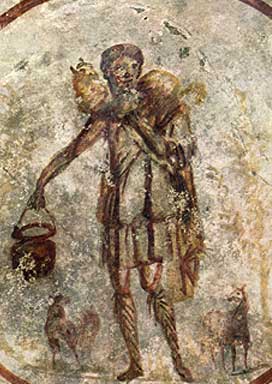
Hermas tells his story of sin and repentance, of the drift away from God and the reunion with Him through His Church. The Shepherd is not the Good Shepherd Jesus, nor is it a shepherd in a place called Hermas. The Shepherd of Hermas is the "Angel of Repentance" who guides Hermas through his visions and Divinely revealed allegories.

St. Pius I, Pope and brother of
Hermas. source: wikipedia
Our text itself was clearly written by one man and just as clearly not all written in one effort. The structure of the Shepherd of Hermas betrays the chronology of Hermas' visions and his recounting of them on paper: first "Visions," then the "Commands," and finally the "Similitudes." The last of these represents a maturity of thought and a clarity of vision not entirely present in the more direct early chapters.

Who was Hermas and when did he write? Dr. Brian Fitzgerald reminds us that Origen, born in 185AD, revered Hermas as canonical Scripture, suggest that the text pre-dates him by some time. The Muratorian fragment, one of the oldest extant lists of Scriptural Christian texts, dates to about 170AD and says of the Shepherd:
"But Hermas wrote The Shepherd very recently, in our times, in the City of Rome, where his brother Pius was occupying the chair of the church of Rome. And therefore, it ought indeed be read, but it cannot be read publicly to the people in Church or among the Prophets, whose number is complete, or among the Apostles, for it is after their time."
The notoriously unreliable Liber Pontificalis confirms the other texts in its passage on St. Pius I:
"While he was bishop, his brother, Hermas, wrote a book in which he set forth the commandment which the angel of the Lord delivered to him, coming in the garb of a shepherd."
Hermas does mention an "elder" in the beginning of the Shepherd. Our text was originally written in Greek, the literary language of the time. The Greek words for elder usually come to us as episkopos (bishop), presbuteros (priest), or poimen (shepherd). Hermas, at the end of the second vision, mentions the name of an elder named Clement. This may reference St. Clement, the pope at the end of the first century, or a priest in Rome named Clement. Despite the probable dating of the Shepherd to the mid-second century, it is not implausible that Hermas received his early visions during his youth, under the leadership of Clement of Rome.

The Visions

Hermas' story begins with a series of five visions that reveal a rough draft of sin and repentance within the Church. Hermas one day meets his former mistress and owner, Rhoda, bathing in the Tiber river. He assists her and, in passing thought, thinks to himself that he would like a woman like her for a wife. Some time later Hermas was traversing the road to Cumae, south of Rome, when he saw a vision of Rhoda. His former mistress told him that he had sinned against God and her, that she would accuse him before Lord, but the accusation had not yet come to pass. A despondent Hermas is then visited by an elderly woman who asks him why he is sad. He tells her that he thinks Rhoda will accuse him of lust. The old woman corrects him, telling him:
"God is not angry with you on account of this, but that you may convert your house, which have committed iniquity against the Lord, and against you, their parents. And although you love your sons, yet did you not warn your house, but permitted them to be terribly corrupted. On this account is the Lord angry with you, but He will heal all the evils which have been done in your house. For, on account of their sins and iniquities, you have been destroyed by the affairs of this world. But now the mercy of the Lord has taken pity on you and your house, and will strengthen you, and establish you in his glory."
She tells Hermas to repent with all his heart, as those whose names are written in the "book of the Saints" repent with all their hearts. Hermas agrees to repent, reform, and return to God. His sin was not a violation, but a neglect of his family's loss of faith, a faith which he still held.

A year later Hermas again walks to Cumae and again sees the old woman escorted by six angelic looking boys. She reminds him that his "seed have sinned against the Lord and blasphemed against the Lord." He must make the message of repentance known to his wife and his children and to the entirety of the Church. This last point establishes Hermas as a visionary and a prophet of sorts for the Church's ears. After re-iterating the impending importance of repentance the elderly woman departs. An angel visits Hermas in his dormancy. He queries the angel as to the woman's identity. Is she a pagan oracle? "The Church," the angel replies. "She was created before all things; therefor she is aged; and for her sake the world was framed."

In the third vision the elderly woman shows Hermas a great, square based stone tower being built with stones by the six young angelic boys from the previous visions, stones delivered by other humanoid beings. The angels build the tower not on a foundation over land, but over an islandless water. The outer most stones fit together so snugly that one cannot see a crease or line in the side. These stones were brought from the deep of the water in perfect condition. Stones brought from land can fit inside the outer casing, but only after masonry and cutting. Some stones are rejected for their shape or size. Among these, some are kept near the tower, some are thrown far away, some tossed back to the deep, and others outright burned. She explains that the tower represents the Church and the stones represent people. The watery foundations are the waters of Baptism which save. The angels who escort the Church-elder woman and who build the tower are the same angels whom God charged with care of His creation. The perfect stones are the Apostles, prophets, bishops, teachers, and deacons who exercised their offices blameslessly and without corruption. The stones from the water are those who suffered "for the holy Name" of God. The rougher stones placed within the framework are the youthful and less temperate in faith who, although good, required warnings from angels throughout their lives. The stones rejected and left near the tower are sinners who, although they separated themselves from the Church by sin, can still be saved if they repent. This point would especially have interested ancient readers, who hitherto would have been greatly concerned about the future of those who had left the faith through loss of faith or for fear of death. 

The woman does warn Hermas, "If the building shall be finished, they will have no more place, they will be castaways." Those thrown afar were the lawless in life. Some stones are both white and round. These are those who have the faith, but are similarly disposed to earthly passions and wealth. They can be fitted to the tower, but must have their excess cut away. Those burned have "rebelled from the living God and it entered no longer into their hearts to repent." Those stones outside the tower can not be within it, yet they may still be saved and put within the interior after "they have undergone torments, and have fulfilled the days of their sins." One Orthodox commentator begrudgingly concedes that this might be read as a precedent for the Latin concept of a purgatorial intermediate state. 

Holding up the tower are seven women: Faith and her daughter, Continence, and her successive descendants, Simplicity, Knowledge, Guilelessness, Reverence, and Love. Their power flows from the oldest to the youngest, but are inseparable from each other. She again entreats Hermas to repent and to lead others to repent before the tower the angels complete the tower, at which point the world will end and repentance will no longer be possible.

The angel tells Hermas that the woman appeared in different ways because of his double-mindedness. Double-mindedness is a common theme in the Shepherd. Contrary to the translation, it is not speaking out of both sides of the mouth, but an internal conflict springing from having a foot in the door and a foot out. This internal conflict leads to disparate actions displeasing to God. The fervent Christian does not waiver in his devotion.

Hermas' fourth vision begins like the previous, with him stopping his travels to pray and to confess his sins. A voice tells him to rid himself of his "doubtful mind." Hermas is taken aback. How could he be of doubtful mind when the Lord so clearly engages him? Suddenly a cloud of dust kicks up and Hermas assumes a cattle stampede. Emerging from the cloud was not a herd, but a great beast. In spite of his timidity, Hermas passes the beast unharmed. He notices the beast's head is black, red, gold, and white. On the other side he again see the Church-woman, this time dressed as a virgin with a white turban. She tells the seer that the beast is a "type" of the end times, of the beast of the apocalypse which will wreak havoc. The black on the beast is the world, the red its impending suffering, the gold those who escaped, and the white those purified in the tower. She commands Hermas not to tarry any longer, but to make his visions finally known—he seems to have neglected this task several times.

The last and shortest vision takes place in Hermas' house. While reclining on the soda and luxuriating, a shepherd who claims to have been sent "from the most holy angel" enters Hermas' abode and salutes the resident. Hermas at first wonders if this is a temptation, but relents to the shepherd's veracity. The pastor angelicus then tells Hermas not to be confounded, but to write down the commands and parables that he is about to reveal. You, dear readers, will have to read our next post to find out what the commands are!

Monday, October 6, 2014

Last Word on Neo-Gallican Rites & Upcoming Posts

First, the beginning of the [long delayed] series on the early traditionalist movement is a few weeks away, but close. The first three entries with be on Msgr. Alfred Gilbey, Mrs. Mary Ball-Martinez, and AbbĂ© Quintin Montgomery-Wright. The last two have proven challenging objects of research, particularly the obscure Mrs. Martinez. We will also be reviving our series on the Lesser Known Fathers next week with the challenging Shepherd of Hermas. 

Reproduced below is a cleaned up version of an e-mail to a reader who wanted to know about the emergence of the neo-Gallican "Jansenist" rites of France. It represents the final thoughts I have on the matter. My thoughts can only apply to the Missals. The breviaries departed more heavily than the Missals from the received tradition, particularly with regard to the distribution of psalms, which inspired the 1911-1913 reforms (did Papa Sarto violate Quo primum's older brother, Quo a nobis I wonder?):
The neo-Gallican rites are complicated. France had local rites galore. I am starting to think that the Norman liturgical family (which includes Sarum, Rouen, York, Dominican, maybe Braga and many others) may be somewhat distinct from the Roman. See here.
I am unsure as to just how different the rite of Paris was, for instance, from the others originally. If you go through some of my older posts on the Parisian rite—for instance—you will find that I compared some of the propers (variable daily texts) from a Missal from 1300 with the 18th century books and found considerable variance. While the Sarum/Dominican/Norman tradition often had unique texts on the great feasts, the Parisian Mass was almost exactly the same as the Roman rite that was codified in 1570 and used until the mid 20th century, word for word! This suggests that the Parisian rite was perhaps a distinct rite from the Roman in other regards (ceremonies, the Divine Office etc), but used the Roman texts originally. However, this may not necessarily be the case. In the Middle Ages—hell, everywhere before Trent—Mass differed diocese to diocese and sometimes even within single churches. Priests in monasteries and cathedrals would be assigned one altar in perpetuity for their daily Masses and would celebrate as they wished at that altar (the fact that no one dared touch the Roman Canon for 14 centuries should show you just how strong their sense of tradition was). We have no idea where in Paris that Missal was used or by whom. The University of Paris was constantly at odds with the local Archbishop, so the popes placed the university under the Holy See's direct jurisdiction and protection (St Thomas Aquinas and Innocent III were both students). Could the Missal have been used by the University in school services as part of their patronage under Rome? Could it have belonged to a Roman priest studying there? Could the Roman rite have been used everywhere in Paris? Not enough remaining manuscripts to come to a conclusion. 
Regardless, the Parisian and French rites were closer to the Roman rite originally than the books I examined in my blog series (all 18th and 19th century). The books I examined had either been altered in text (many propers changed) or in translation (ditching the Old Roman psalms for the Vulgate psalms of St Jerome). The Ordo Missae of Rouen and Paris are the Roman Ordo Missae with French modifications, not the Norman/Sarum/Dominican Ordo Missae.
What I think happened was that after Trent most of France took on the Roman books because bishops did not want to have to monitor and approve liturgical changes when some office of monsignori in Rome could do it, leaving the bishops to their own devices. Over time, the people and clergy of those various dioceses using the Roman books became disillusioned for many reasons and sought to return to their heritage or to insert new content. Some features like the available alternative readings for ferial days (when the Sunday Mass is repeated during the week) would be restorations of the Norman practice. Others are interpolations of Norman features into the Roman Mass (like the archbishop giving the pontifical blessing during the Canon of the Mass and reciting the Last Gospel in the recession to the sacristy rather than at the altar). And some others are just different altogether (see the Secrets and post-Communion chants for many weekdays and feasts). While Gueranger cried Jansenism, I see no evidence for it (and plenty textual evidence against it) other than the [puzzling] octave of St Augustine, which was only strange but not heretical by any means. What I think happened was a conflux of:
1-a resurgence in classical education and Latin literacy being expressed in very vivid new texts
2-a revived liturgical interest in the local clergy and the people of the dioceses, wanting their own traditions back
3-desire on the part of the bishops to curry favor with the kings of France by demonstrating their independence from Rome
4-boredom with the existing, rather tame ceremonies (compare a Roman high Mass with the Pontifical Mass in the Lyonese rite that I described here)
Clearly, the neo-Gallican books were justifiably called neo-Gallican and not just Gallican. Some of their changes were bad, but I think many were good for their local tradition (like the Palm Sunday rites in Paris). While the texts had some anti-Roman elements (like the psalm translations), that means the books needed adjusting, not discarding. Roman wanted to end the neo-Gallican uses for some time, but could never quite do it until the middle to late 19th century. Whether it was because of centralization or orthodoxy, I cannot say. I am inclined to say that the neo-Gallican books do continue a unique tradition in those dioceses because Roman could not entirely apply Quo primum, which bans liturgies less than 200 years old, to those rites. They may have been rites similar to Rome's initially, yet still unique enough to call rites. Pius VII officially recognized those rites as part of his peace with Napoleon. Then came the Liturgical Movement, Gueranger etc.
All right. End of rant. Does that clear things up?