Showing posts with label St. Augustine. Show all posts

Wednesday, June 21, 2017

Salt of the Earth


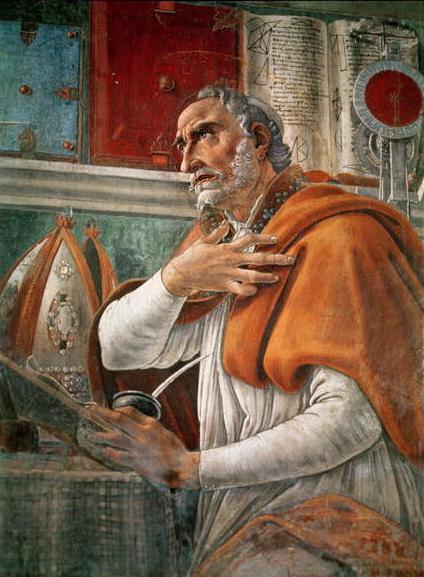
"As a boy, then, I had already heard of eternal life promised us through the humility of the Lord our God stooping to our pride; and even from the womb of my mother, who hoped greatly in Thee, I was sealed with the sign of the Cross and salted with His salt," wrote Saint Augustine in his Confessions.

Salt is the fix for flavorless food, although too much can ruin a good thing. More conventionally, it was a means of preserving meats, fruits, and a few other foods that could spoil before the concoction of refrigeration. Cardinal Newman, among others, wrote that growth was the only the only sign of life. Salt kept and improved what it touched; what it did not touch decayed and rotted.

So, like water which cleansed and satiated, or bread with nourishes, or wine which "gladdens the heart of man", salt was hallowed by Christ in Christian language. The Christian is the salt of the earth, which gives the earth its savor and which the Christian sins in hiding from others. Salt is Christian charity and goodness, purified by Baptism an enlightened by the Beatitudes.

By the time of Saint Augustine, salt had become a tool of blessing and exorcising those things ridden in darkness. The catechumens or the ailing un-baptized would be anointed with holy oil and signed with salt for the cleansing of their ailments and the expulsion of evil in the hope that those pagans would eventually enter the waters of Baptism. From his Confessions one might surmise that the Doctor from Hippo was salted at the behest of St. Monica after birth and, perhaps, once more during a near-fatal sickness. The aspiring rhetorician lived to be baptized properly and the Church is better for it, perhaps through the healing Christ granted in this uniquely Latin sacramental.

Only after consulting Fr. Capreolus did I discover salt has been exorcised from the deformed new rite of Baptism. Baptized a Methodist at age one, I was unaware of current Roman praxis. Eastern clergy often applaud vernacular in the new Roman liturgy, but retain qualms about the gutting of the Baptismal service.

In an era of innovation and fakery, when even a three Michelin star chef like Marco Pierre White urges us to use artificial substitutes in cooking, we ought not be surprised that the same has happened in our liturgy. Perhaps Paul VI should have revised the Sermon on the Mount to read, "You are the Knorr Beef Stock Cube of the earth."

Thursday, October 13, 2016

Consolation of Philosophy & Would Be Catholics


In an ideal world there are no lapsed Catholics who need to revert and every heretic knows that he must convert. Until the Second Coming in glory we are unlikely to live in an ideal world, despite the best efforts of Bernie Sanders, and so we find adult reversions of Catholics who lapsed as students as common if not more common than outright conversion. One of our long time readers, Marco, has blogged about the Bragan use for some time, but about a year ago expanded his writings to encompass non-liturgical aspects of Catholic life, among them the search for illumination in the Fathers after his own reversion. He writes that ten years ago he was "a man searching for meaning, for the meaning of life, and a meaning to my life." Like Saint Augustine of Hippo he dabbled in mystical religions and formulaic philosophies. None of this would be especially remarkable if not for the mention of one name, that of Nietzsche.

Every bad idea in history has come from Germany or resided there for some period of time for devilish refinement: Nazism, Communism, Protestantism, beer, the music of Wagner, sauerkraut, and more. Nietzsche unknowingly bridged the atomistic, bond breaking world created by the Reformation and French Revolution to the movement driven age of Statism and nationalistic ideology. Like the men before him he acknowledged man to be intellectually and morally self-sufficient without cause for social ties or religion, at least in theory. But, the German would say, few have the stamina to break the constraints of religion and custom; only the "super men" could realize a satisfied, individual existence, men like Napoleon Bonaparte and Ayn Rand's John Galt. Nietzsche's philosophy has offered a semi-spiritual consolation to searching for a religious view to life but for whom the leap of faith is a stride too long. It also tantalizes none other than Roger Scruton.

Roger Scruton is a philosopher of aesthetics and one of the rare men who does not read Burke for his Reflections on the Revolution in France. Scruton may well be the most renowned conservative thinker in the world. In Scruton there is something akin to George Santayana, someone who wishes the old things were true, but some hitch prevents an embrace of past ideas. Most today do not seek any truth, just Groupons for restaurants and the mall. The irreligious elect will seek consolation and virtue in philosophy, much like Dr. Scruton, who has always held Christian forgiveness and social values in high regard, despite his hesitancy to embrace them. Instead he has generally turned to Nietzsche in full knowledge that he is not the übermensch. Yet there is much Catholic in his ideas of musical aesthetics and the influence of beauty on popular culture, popular culture understood as culture for the populace and not kistch. He even once condemned Albino Luciani for replacing the most stunning of all ceremonies, the Mass of Papal Coronation, in a fit of false humility. In reading his more abstract works one sees more than a hint of a religious mind behind felicities of German philosophy.


Recently Scruton has embraced certain aspects of religious community and value. He once quipped that he preferred Christianity among religions if only because it purported to turn his favorite thing, wine, into God. Although he now resides in Virginia, he manages to spend some time as an organist in an Anglican parish when he finds himself on his native soil. While one writer doubts the authenticity of his interest in religion because of his political history, a more serious stumbling block obstructs the professor: he cannot quite bring himself to believe in the Resurrection of Our Lord. Through the Cross and His death for His friends, Scruton reasons, Jesus managed a sort of spiritual, Nietzschean manner of afterlife. Unlike most, Scruton is not scandalized by the Cross; but in the Greek sense of scandal (skandalon meaning "stumbling block"), he is scandalized by the literal Resurrection that the Apostles themselves did not see.

Disillusionment has replaced Coming of Age as the pivot moment in maturation. One discards the creeds and lessons of upbringing without replacing them. Severance from childhood, like any divorce, is a jarring thing, and rather than looking to the Church for guidance a few keen minds who the Church has seemingly failed look to philosophy for consolation. Not always, but often the thoughtful mind who turns to the comfort of philosophy is not someone who was raised in the authentic practice of the faith, not because they would know better, but because they would think differently. Disillusionment follows disappointment and is rarely followed by illumination, just frustration. Philosophy can give comfort, only God can give rest.

Thursday, July 28, 2016

Tolle Lege

A page from the Hungarian "Biblia Pauperum"

Recently I spoke with a priest about the disintegration of society and how this fall is confirmed more in the collapse of many small things than in any one major collapse. The inability of people to keep their appointments, the apathetic rudeness of drivers, and the loss of basic reading comprehension are all indicators of a culture falling apart. Signs of the times. I observed that my Protestant grandfather, a long-passed farmer from an immigrant family, used to read the Bible every day and share reflections about his reading at the dinner table. He was not extensively educated, and his bookshelf was small, but the books he did own were of good quality and well-read.

Later that night I began to grieve the loss of Bible-reading, not just in the larger culture, but in my own regular habit. In a time when practicing Catholics obsess about hearing the voice of God in their religious practice and in the discerning of life-altering choices, very few of us read the Scriptures often enough to call to mind the words of Christ, the apostles, or the prophets in times of trial. (I was recently complimented by a Catholic on using the metaphor of straining a gnat out of a cup of soup, while swallowing the camel which had been bathing therein. He did not realize it was actually a dominican aphorism from the Gospels.)

Even a basic literary acquaintance with the Gospels and the Psalms is lacking. Familiarity with the Psalms can be obtained by regularly praying the hours of the Breviary. Familiarity with the Gospels and Epistles is usually begun by attentively listening to the daily Mass readings, but one will not gain any depth here without regular, intentional, extra-liturgical reading. The Old Testament is a magnificent beast that can only be tackled by habitually cracking open that dusty Bible in the quiet of one’s own home.

When King Josias heard the words of the Mosaic law for the first time, he realized how greatly God’s anger had been kindled against Israel for their willful ignorance (cf. II Kings 22). The hearing of God’s word is not the softly consoling feather bed of a weekend retreat, but a chastisement: “The great wrath of the Lord is kindled against us, because our fathers have not hearkened to the words of this book, to do all that is written for us.”

Likewise, when St. Augustine was inspired to pick up the Holy Writ and read by some nearby playful children, it reoriented his soul in irreversible ways:
So I quickly returned to the bench where Alypius was sitting, for there I had put down the apostle’s book when I had left there. I snatched it up, opened it, and in silence read the paragraph on which my eyes first fell: “Not in rioting and drunkenness, not in chambering and wantonness, not in strife and envying, but put on the Lord Jesus Christ, and make no provision for the flesh to fulfill the lusts thereof.” I wanted to read no further, nor did I need to. For instantly, as the sentence ended, there was infused in my heart something like the light of full certainty and all the gloom of doubt vanished away. (bk. viii)
Take up and read.

Fra Angelico

Wednesday, March 16, 2016

Finger-Pointing While Rome Smolders: A Lenten Reflection


Reading through Augustine’s City of God, one inevitably begins to draw parallels between the Fall of Rome to the Descent of the West in modern times. Catholics might also see similarities between the ancient Fall of Secular Rome and the Auto-Demolition of Catholic Rome in the last half-century. As Rome’s glory was unceremoniously snuffed out, the finger-pointing began in great earnest. Those attached to the previous religious tradition (so to speak) accused the newfangled Christians of removing the supernatural protection that Rome had once enjoyed from the pagan deities. Augustine calmly explains that Rome had experienced many such calamities at the time when Terminus and Jupiter supposedly protected her from all harm, and exposes the inanities of the neo-pagans’ nostalgia.

More realistically, attributing the cause of the Fall of Rome was not as simple as pointing to this or that religious cult. Augustine notes that God sometimes allows the destruction of worldly kingdoms as an opportunity for their citizens to detach themselves from the world and to begin attaching to the heavenly kingdom. He also suggests, in keeping with the more ancient Hebrew prophets, that the sins of the citizens may cry out for vengeance so much that their kingdom is taken from them utterly.

I don’t wish to go too far in comparing the neo-pagans of Augustine’s time with the traditionalists of today, but it cannot be denied that Tradistan is popularly an eclectic museum of half-baked devotions and ideas that are mistakenly thought to have composed the foundation of a vigorous and stable religious society. The way back is not necessarily the way forward, and the Tradistani belief in the restorative power of St. Joseph Feast Day Celebrations (sponsored by the parish homeschool group), Creationism Seminars, and the mere celebration of the Latin Mass is evidence that there is a fundamental failure to build a culture based on reality.

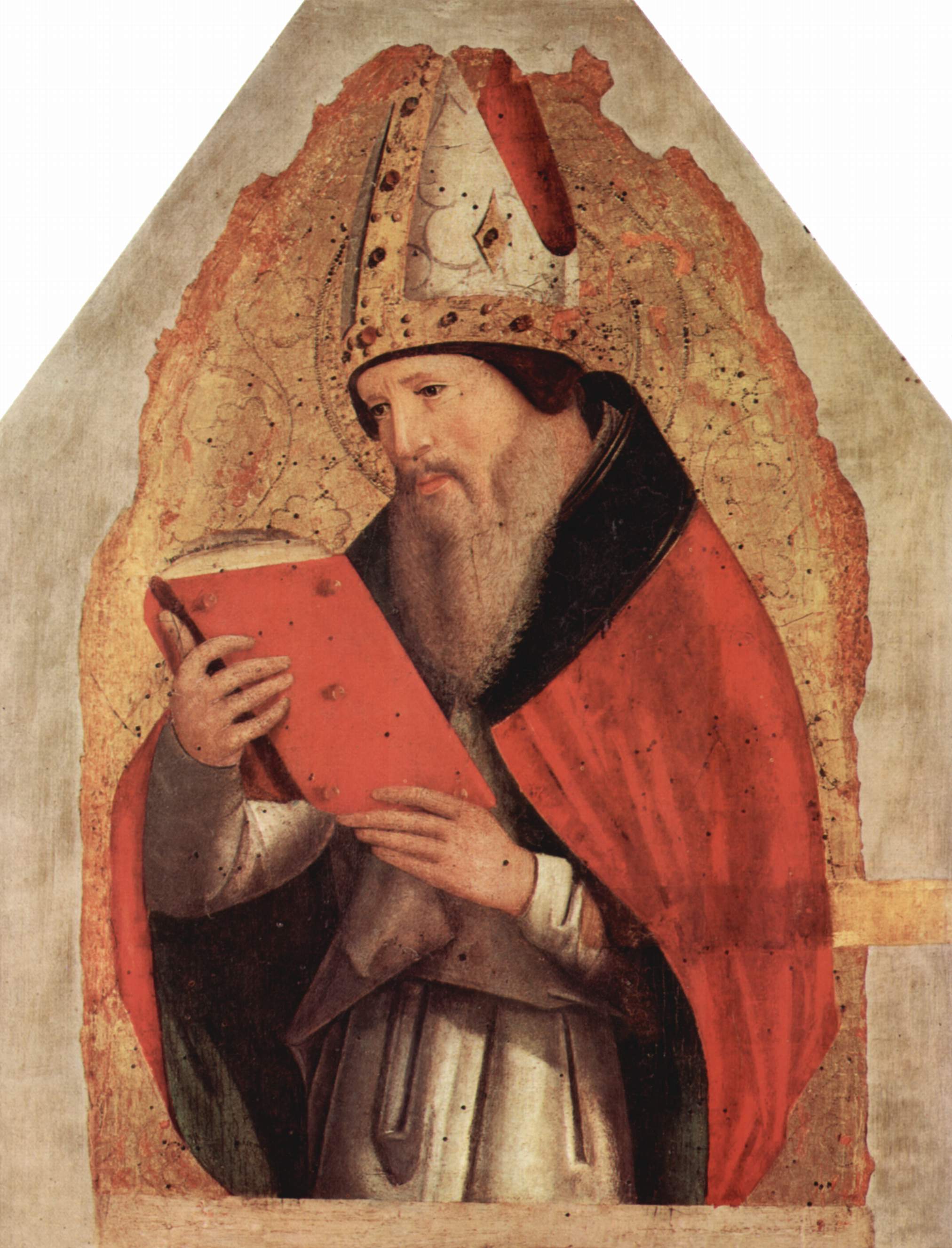
St. Augustine was no crude triumphalist, except in the belief that the City of God would prevail eternally while the City of Man would finally crumble into futility. He had no particular illusions about the earthly glory of the Church, and was quick to point the blame at least in part at Christians:
What, then, have the Christians suffered in that calamitous period, which would not profit every one who duly and faithfully considered the following circumstances? First of all, they must humbly consider those very sins which have provoked God to fill the world with such terrible disasters; for although they be far from the excesses of wicked, immoral, and ungodly men, yet they do not judge themselves so clean removed from all faults as to be too good to suffer for these even temporal ills. For every man, however laudably he lives, yet yields in some points to the lust of the flesh. Though he do not fall into gross enormity of wickedness, and abandoned viciousness, and abominable profanity, yet he slips into some sins, either rarely or so much the more frequently as the sins seem of less account. (i.9)
The contraceptive practices, for instance, of Western Catholics mimics the rest of the world, and our own population collapse is as inevitable as the world’s. It might be that traditionalist Catholics “win” the liturgical wars simply because we are the only ones bearing and rearing children, but it will surely be a Pyrrhic victory. “How doth the city sit solitary that was full of people,” Jeremiah laments. Christians are suffering the judgment that is coming upon the world because we sin just like the rest of them.

There are no winners in the finger-pointing game of Catholicism’s collapse. Humility, penance, and friendship are the only ways forward towards rebuilding. We could certainly do with a new Augustine to provide us with a fresh vision of the City of God for today’s Catholic, as well.

Thursday, March 10, 2016

Some Light Political Commentary


But the worshippers and admirers of these [pagan] gods delight in imitating their scandalous iniquities, and are nowise concerned that the republic be less depraved and licentious. "Only let it remain undefeated," they say, "only let it flourish and abound in resources; let it be glorious by its victories, or still better, secure in peace; and what matters it to us?

"This is our concern, that every man be able to increase his wealth so as to supply his daily prodigalities, and so that the powerful may subject the weak for their own purposes. Let the poor court the rich for a living, and that under their protection they may enjoy a sluggish tranquillity; and let the rich abuse the poor as their dependants, to minister to their pride. Let the people applaud not those who protect their interests, but those who provide them with pleasure.

"Let no severe duty be commanded, no impurity forbidden. Let kings estimate their prosperity, not by the righteousness, but by the servility of their subjects. Let the provinces stand loyal to the kings, not as moral guides, but as lords of their possessions and purveyors of their pleasures; not with a hearty reverence, but a crooked and servile fear.

"Let the laws take cognizance rather of the injury done to another man's property, than of that done to one's own person. If a man be a nuisance to his neighbor, or injure his property, family, or person, let him be actionable; but in his own affairs let everyone with impunity do what he will in company with his own family, and with those who willingly join him.

"Let there be a plentiful supply of public prostitutes for every one who wishes to use them, but specially for those who are too poor to keep one for their private use. Let there be erected houses of the largest and most ornate description: in these let there be provided the most sumptuous banquets, where every one who pleases may, by day or night, play, drink, vomit, dissipate.

"Let there be everywhere heard the rustling of dancers, the loud, immodest laughter of the theatre; let a succession of the most cruel and the most voluptuous pleasures maintain a perpetual excitement. If such happiness is distasteful to any, let him be branded as a public enemy; and if any attempt to modify or put an end to it let him be silenced, banished, put an end to.

"Let these be reckoned the true gods, who procure for the people this condition of things, and preserve it when once possessed. Let them be worshipped as they wish; let them demand whatever games they please, from or with their own worshippers; only let them secure that such felicity be not imperilled by foe, plague, or disaster of any kind."

What sane man would compare a republic such as this, I will not say to the Roman empire, but to the palace of Sardanapalus, the ancient king who was so abandoned to pleasures, that he caused it to be inscribed on his tomb, that now that he was dead, he possessed only those things which he had swallowed and consumed by his appetites while alive? If these men had such a king as this, who, while self-indulgent, should lay no severe restraint on them, they would more enthusiastically consecrate to him a temple and a flamen than the ancient Romans did to Romulus.


(St. Augustine of Hippo, The City of God ii.20)

Sunday, November 8, 2015

7s and 8s for the Octave of All Saints

Seven candle laid before the altar in the Leonian Triclinium during
the Fourth Lateran Council, Innocent III presiding.
"And on the seventh day God ended his work which he had made: and he rested on the seventh day from all his work which he had done. And he blessed the seventh day, and sanctified it: because in it he had rested," begins the second chapter of Genesis. Biblical numbers used to occupy a more prominent place in the world of conspiracy theories and listeners of the Art Bell Show, but to a believer Three, Seven, Eight, Twelve, and multiplication by thousands still carries importance. Seven remains a popular number in common life because a week is seven days long, the resting day preceding a return to work. A former coworker of mine named her son Seven—poor lad.

Seven and Eight occupy a prominence in the Church, both in Holy Writ and in the liturgical life of Christians. While Three arrantly refers to the Holy Trinity and the days before the Resurrrection, and while Twelve recalls the tribes of Israel and the Apostles, Seven and Eight are less immediately obvious and the most inseparable of these numbers, not least because they are sequential in every way.
Count 'em: seven on the top.
Seven is conspicuous throughout the tradition of the Church, being found in Scripture and in the celebration of sacred rites. According to Genesis, God created the world in seven "days," the last of which He did not create anything, but instead rested and sanctified that day by His rest. He dedicated the day to Himself. Seven is also reiterated throughout the Apocalypse of St. John: seven candles, seven spirits, seven seals. In the old rite of Papal Mass, acolytes set seven candles in front of the altar, imitated in the Lyonese rite. The "Tridentine" Roman liturgy, a pontifical Mass celebrated by a bishop in his own diocese mandates seven candles on the altar rather than the conventional six, or whatever the rank of the day dictates. Many Byzantine Holy Tables will support a tabernacle ornamented with seven candles, too.

Seven is perfection. It is fulfillment. It is rest for God, but not for man. By sanctifying the seventh day unto Himself, God made Himself man's duty on that day rather than the work he earned by the merit of his sin. The seventh day is meant for the worship and adoration of God, to plead for the forgiveness of sins and for clemency in all man's needs. 

Man's Fall impairs his worship of the Creator. Abraham's summoning to the mountain initiated the Jewish tradition of sacrificing small animals, vital sources of sustenance—milk, meat, textile materials, for God's ignorance of sin. The Law came through Moses. Grace and Truth—and the realized remission of sin—came through Jesus Christ. Christ's death on the Cross remitted the sins of those who follow Him, just as His Resurrection from the dead empowered His Apostles to heed the command to repeat the offering of bread and wine "for the anamnesis of me," revisiting, not repeating, His sacrifice.

The significance of Seven did not end with the Cross, rather it realized it final potential and deeper meaning. St. Paul's much abused adage "the letter kills, but the Spirit gives life" (2 Corinthians 3:6) excuses most Christians from meeting their duties by dismissing their potential detractors as legalists. The real meaning of this phrase could not be further from its modern reception. The letter, meaning the Law of Moses, was a meeting point between the Divine plan and man's fallen nature. Since the Passion of Christ and the coming of the Holy Spirit, the Law has become antiquated in light the coming of the Spirit. Adherence to the Law yields death, adherence to the Spirit yields life. The significance of the signs of the Law did not vanish with Christ; they became more powerful.

God's reservation of the seventh day makes Seven a Temple number, both in the Old Testament and in the New. A young animal was fit for sacrifice when it was seven days old (Exodus 22:30). Visibly there were seven lamp stands in the Temple, an image continued in the Apocalypse of St. John. In a passage of Scripture read at Mattins for the feast of All Saints, the writer described the court of the Almighty:
"And from the throne proceeded lightnings, and voices, and thunders; and there were seven lamps burning before the throne, which are the seven spirits of God" (Apocalypse 4:5)
God no created nothing new on the seventh day, yet Genesis delineates the end of Creation on the seventh day. The seventh day is perfect, it is completion. The use of seven in the Apocalypse may relate a vision to the reader, but it may also communicate to the reader that the eternal liturgy in the heavenly court is the Christian's final destination, his perfection, his fulfillment. If true, this imbues the liturgy with an apocalyptic nature, a preview of what eternity is supposed to be. The tradition of the seven lamps remained a feature of Papal Mass until Paul VI discontinued the rite in 1964. The use of Lyon retained the tradition until adopting Pope Paul's reforms. Greek churches still often display seven candles above the altar. The recent loss of this tradition does not neglect what appears to have been the conventional interpretation of this number by the Church according to her sacred rites, that adoration of God in sempiternal beatitude in the un-ending end of the faithful.


Alas, Seven is succeeded by Eight, and it is time to move on.

If Seven is clear and explicit, Eight is hinted and implicit. Christ entered Jerusalem on Palm Sunday the day after the Sabbath and was put to death the day before the Sabbath. A good Jew, he rested on the Sabbath and rose the next day, a unique and extraordinary event in human history never to be repeated. Our Lord did not rise in a new body, nor the old as it was, but in the old body glorified, so resplendent and transformed that His own Apostles did not recognize Him. Understanding this, St. Paul writes to the Philippians, "Who will reform the body of our lowness, made like to the body of his glory, according to the operation whereby also he is able to subdue all things unto himself" (3:21). Christ rose on the first day of the new week, a new first day of Creation, in the "body of his glory."

"Our Redeemer's visible presence," wrote St. Leo the Great, "has passed into Sacraments." The Sacrament most readily associated with the Resurrection and with the renewal of mankind is Baptism, which St. Augustine often calls the Sacrament in his Confessions (my emphasis). Baptism is the Sacrament of regeneration, where what Christ did physically comes to the catechumen spiritually now and physically in eternity.

The great ancient feasts, Greek and Latin, have two commonalities: an extended liturgical celebration and the celebration of Baptism. Pascha, Pentecost, and Epiphany/Theophany are the greatest of all feasts in the Church, feasts liturgically observed for an octave of days and which relics of the older practice of Baptism on the feast vaguely remains. Pascha and Pentecost were preceded by a vigil in older times that became its own liturgical day in the middle ages. On those vigils, Baptism is still celebrated with the reading of prophecies, the blessing of water, and the Sacrament itself. Epiphany/Theophany no longer sees Baptism on the day of its celebration, but water is blessed and distributed by vials or by sprinkling among the faithful there gathered.

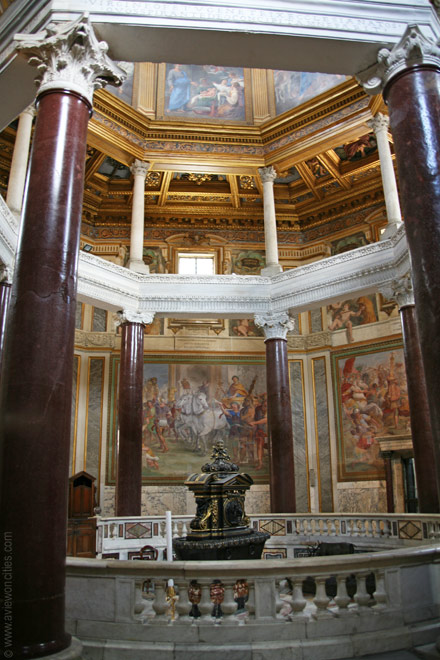
Lateran Baptistery
The extended liturgical celebration of Christ's regenerative mysteries is the octave, the eight day long week. In lesser feasts, the octave day repeats the feast day. In these three feasts, however, the octave day is unique from the feast itself. Pascha has Low Sunday (Thomas Sunday for the Greeks). Epiphany/Theophany is capped with the Baptism of the Lord (or a leave-taking in Byzantium). Pentecost does not have a strict octave day, but its semi-festive vigil can reasonably make Ember Saturday an octave day; Trinity Sunday could also be read as an accidental octave day, celebrating the complete revelation of the Trinity, the Third Person of Whose revelation was observed the prior week (Greeks do not have a formal octave, but they do call the week after Pentecost Sunday "Trinity Week," during which there is no fasting).

Eight not only appears in liturgical times of Baptism, but also in space. Baptisteries traditionally have eight sides, again signifying the Resurrection on the eighth day of the week, the first day of the new Creation. Even smaller churches without dedicated Baptisteries often possess an octagonal font. The local FSSP parish—despite the prevalence of plaster statues, blue wall paper, and young St. Joseph—has a proper Baptistery, octagonal in shape.

For the Jew, the only eighth day was the eighth day of the Feast of Tabernacles. Those under the Mosaic Law would build tents of palms and offer sacrifices for seven days, recalling the cycle of Creation. The entirety of the seven days was an extension of the Sabbath, the seventh and perfect day, wherein no servile work was performed. On the eighth day, a solemn celebration would resume and sacrifices would be offered communally. "On the first and eighth day shall be a sabbath, that is a day of rest" (Leviticus 23:39). This was a penitential cycle, attached to the Day of Atonement, the day the people would project their sins onto a "scapegoat" and offer sacrifices according to their means. For the Christian, the Sacrifice has been made by Christ, the Lamb Who took on the sins of the world. The celebration is a celebration not only in the sense of observance, but also in joy.

Unfortunately, the significance of Eight, octaves, and Baptism became obfuscated by the decline in liturgical observance in the Latin Church and the suppression of almost all octaves, save three, by Pius XII in 1955. Paul VI would unwittingly suppress Pentecost in 1970, after his mentor, Pius XII, removed its vigil and Baptism rites 15 years earlier.

Seven and Eight are sequential, as the fullness of Creation in one gives way to the new Creation in another. God created us to His end, from which we fell away on the seventh day and to which He restored us on the eighth. We are meant for Him, both now and forever. There is no new revelation, no new progression along the Biblical number line. We live in the final age, the last aeon (one could write a post on the meaning of "unto the ages of ages" in prayers). There will be no more progression in our knowledge of God until the end, when we will no longer see Him gradually lifting the veil, but instead see Him and He is. To end this numeric article, Msgr. Alfred provides the faithful with another mathematical insight on the Almighty in the first chapter of We Believe:
"The analogy or comparison which I personally find useful is to think of eternity as the point at the center of a circle. You know from your geometry that a point has no extension in space: it simply exists. In the same way, eternity has no extension in time: it simply exists. When we say of Almighty God in our limited language that He was, is and always will be, it would be far more correct to say—since in eternity there is no succession of events—that He always is. Now, if you think of time as the circumference of that circle, with every single point on the circumference equally and simultaneously present to the center, you may see what we mean when we say that the whole of time is likewise equally and simultaneously present to Almighty God. But to us the succession of events in real indeed: we are successively encountering what is simultaneous to Almighty God."
Seven and Eight can make you a saint! A happy octave day to all.

Monday, September 21, 2015

Divine Office in Augustine


I am embarking on my annual reading of the Confessions of St. Augustine of Hippo. In book nine, which recounts his immersion in the regenerative waters of Baptism and his early days as a Catholic, he describes what is most likely the origin of the Ambrosian Office:
"And how I cried out to you, my God, when I read the Psalms of David, those songs of faith, whose pious music will not admit the haughty spirit, while yet untutored in your true love and a catechumen...." (9.4.8)
"Nor, during those days, could I be satiated with the wondrous sweetness of contemplating the depth of your counsel for the salvation of mankind. How  wept at the hymns and sacred songs of your Church, how moved was I at its tuneful voices! Those voices flowed in through my ears, and the truth, pressed and trained out of them, entered my heart and from my heart a pious longing came boiling up and overflowed. My tears ran; I wept, and it was well with me.
" It was not long since the Church at Milan had instituted this manner of strengthening and encouraging themselves, with brothers thronging together, full of zeal, singing with voices and hearts in harmony. There was a year, not much more, during which Justina, mother of the boy king Valentinian, was persecuting Ambrose, the man of God, in the interests of her own heresy; she had been seduced by the Arians. The devout populace mounted watch in the church, ready to die with their bishop, your servant. My mother, your handmaid, was there, and took her stand as one of the foremost in those anxious vigils, living on prayers. I too, though as yet unwarmed by the heat of your Spirit, was none the less excited by the consternation and uproar in the city. It was then that the custom was established of singing hymns and psalms after the Eastern fashion, to keep the people from growing weary and faint-hearted; and the custom then established has been maintained, and many if not all your flocks throughout the rest of the world have imitated it." (9.6.14-9.7.15)

Wednesday, June 3, 2015

Corpus Christi: "Being Himself Man So That Men Might Become Gods"


"He that eateth My Flesh, and drinketh My Blood, dwelleth in Me, and I in him." To dwell in Christ, therefore, and to have Him dwelling in us, is to "eat of that Bread and drink of that Cup," and he which dwelleth not in Christ, and in whom Christ dwelleth not, without all doubt doth not spiritually eat His Flesh nor drink His Blood, although he do carnally and visibly press the Sacrament with his teeth but, contrariwise, he " eateth and drinketh damnation to himself," because he dareth to draw nigh filthy to that secret and holy thing of Christ, whereunto none draweth nigh worthily, save he which is pure, even he which is of them concerning whom it is said " Blessed are the pure in heart, for they shall see God." St. Augustine of Hippo 26th Tract on John (third nocturne of Mattins)

Sunday, November 16, 2014

Lesser Known Fathers X: The Shepherd of Hermas Part III

Let us return to the account given by Hermas, the second century brother of Pius I, who was given several visions of the nature of the Church and its relationship to personal sin. The last and longest segment of the Shepherd of Hermas is that of the parables. While some of them are quite lengthy, the first six are pithy and so we shall consider them here.

First Parable


"You know that you, who are servants of God, are dwelling in a foreign land; for your city is far from this city," begins the first vision. This vision contrasts our true home, the Church and heaven, with the city in which we currently dwell. These cities are not St. Augustine's City of God and the City of the Pagans, which offer two competing visions of reality in a Christianizing society. The angel's parable to Hermas reflects the displacement of the Christian, who must live indefinitely in a strange place before he is called to his Maker at the end of his days. Because of the transitory nature of things, he must not fall too deeply in love with the place of his temporary residence. Instead, he must cleave to the laws and customs of his real homeland, even if he cannot touch it yet, for adapting to the laws and customs of the city of residence rejects the laws and customs of the real homeland city. 

"For the sake of thy fields and the rest of thy possessions wilt thou altogether repudiate thy law, and walk according to the law of this city? Take heed, lest it be inexpedient to repudiate the law; for if thou shouldest desire to return again to thy city, thou shall surely not be received, and thou shalt be shut out from it. Take heed therefore; as dwelling in a strange land prepare nothing more for thyself but a competency which is sufficient for thee, and make ready that, whensoever the master of this city may desire to cast thee out for thine opposition to his law, thou mayest go forth from his city and depart into thine own city and use thine own law joyfully, free form all insult."

Second Parable


Hermas sees an elm tree and a grapevine while ambling through a field and takes the time to meditate on them. The angelic shepherd asks Hermas upon what he meditates. Hermas replies that the vine and elm are "excellently suited the one to the other." The shepherd explains that the grapevine yields much fruit while the elm tree yields none. The imagery reminds the faithful to the dicta of Our Lord "I am the vine and you are the branches" and "By their fruits you shall know them." Contrary to instinct, this parable does not primarily concern either of these two things. Rather, Our Lord's warning that "It is easier for a camel to pass through the eye of a needle than for a rich man to enter the kingdom of heaven" more readily relates to the shepherd's words. The shepherd explains that a grapevine cannot yield fruit alone. It must climb so that its fruit may bud, grow, and hang well. So, the grapevine latches on to the tree and climbs its sides, giving fruit on its branches which cling to the tree. The same is true with the rich and the poor. The rich concern themselves with the things of the world, with wealth and luxury, making their efforts before God scant. However, the rich can use their resources to help the poor, who are close to God in their poverty and desperation. If the rich man helps the poor man with all his effort, the poor man might make gratuitous intercession before God for his helper and so aid in the rich man's salvation. "Blessed are the rich," the shepherd says, "who understand also that they are enriched from the Lord. For they that have this mind shall be able to do some good work." Such was the mind of many well off saints such as Thomas More and kings like Louis IX. Salvation is not solitary, but an act of cooperation.

Third Parable


The shepherd shows Hermas withered winter trees, naked and without leaves. Hermas is told that some of these trees represent the unjust while others symbolize the righteous. The angelic figure explains to Hermas that in this world "neither the just nor the sinners are distinguishable, but they are all alike." This is healthy warning for those who judge the souls of other people or sanctimoniously lecture others on their actions or even who suggest the damnation of particular people. In the end, only God knows whether or not a tree has truly withered.

Fourth Parable


Suddenly, some of the trees begin to bud. "By their fruits you shall know them" suddenly springs to relevance in the mind of the devout reader. These trees are in the summer of God's radiant mercy. They show signs of life here and will spring permanently in the life to come. Sinners and the "Gentiles"—a generic term for those who do not wish to know God in the Shepherd—will burn, however, on account of their lack of repentance. Bear fruit and abstain from thinking too deep;y about past sins, which leaves one distracted about one's own business and unable to serve the Lord.

Fifth Parable


Hermas is fasting and keeping a vigil of prayer when the angelic shepherd again appears to him and condescends Hermas for his vanity in fasting. Fasting should not be mechanical abstention, but an effort to maximize one's devotion. He recommends that Hermas fast on bread and water, giving the money saved from the day's food to the poor. Unable to grasp the greater concepts behind fasting, the shepherd tells Hermas a fifth parable. A vintner leaves on a trip and gives charge of his estate to a servant with the command to do nothing to the estate, only to return it in the condition in which the master left it. The servant maintains the fences, but notices overgrowth in the vines and other defects on the property. He takes the time to clean the estate and improve the plantings. Upon return, the renewed condition of the property elates the master, who frees the servants and makes him a co-heir with his own son to his estate. The other people of the estate are elated and share the servant's joy.

Primitive Trinitarianism underlies this parable about fasting. The shepherd explains to obdurately dense Hermas that the property is the world, the master is God, the fence is the angels, the vines are the people within the world, and the servant is the Son of God. Christ was given reign over the world by His Father and did not keep it as it was, but rather redeemed it by His blood and infused it with a new life in Him. He did not please the Father by following a set pattern, but rather by doing the most on behalf of Creation as He could. How was he able to do this, Hermas asks. The shepherd replies that the "Holy pre-existent Spirit, which created the whole world," imparted to the servant a perfect holiness and purity by dwelling in him. The pre-existence of the Holy Spirit and the notion that the Spirit made the world would rattle those scholars who think Christ's divinity and the Trinity were Constantinian concoctions. Genesis speaks of the spirit of God hovering over the black, un-molded wasteland of the world, but does not assign the "spirit" a personhood which creates. Hermas does and goes further by making the Spirit the agent of the servant's renewal of the vineyard and hence of Christ's renewal of Creation. The characterization of the Holy Spirit as the love between the Father and the Son may well originate in second century Rome. This parable does not fit that characterization perfectly, but then again this parable is about fasting.

Sixth Parable

Our last parable today is one of shepherds. The angelic shepherd shows Hermas several shepherds tending different flocks of sheep. Some sheep are playful and frolic in the fields. Others sit in one place and eat. Others still are caught in thorns and suffer greatly. This last herd is the the one guided by a just shepherd, the Angel of Punishment who "presides over just punishment." We must keep in mind that these parables pertain to fasting and repentance, not all of the Christian outlook; a thoroughly morose saint is no saint. The former flocks were too immersed in self-indulgence, but will have to pay a penalty of repentance equal to their time spent sinning eventually whereas those in penance now will enjoy eternal life without pain. The shepherd then disabuses Hermas of some of his erroneous notions, such as his idea that an hour spent in over-indulgence requires more than an hour of penance and punishment. Punishment, the shepherd reminds our narrator, is always more painfully and feels longer than enjoyment. This last parable should deepen in our minds a fading understanding, that God's justice and mercy are not in contradiction, and His punishments will fit our sins, nothing more or less.

Conclusion


We will cover the longer parables at a later time. Some of the parables may seem to contradict our doctrines of penance, purgation, and the Trinity. These differences ought not alarm us. These teachings were believed in a less defined manner, but are clearly still present in the Shepherd of Hermas, a work which emphasizes repentance and returning to the Church with sincerity. The parables and visions match with this point and may use language or allegories which do not match perfectly with later teachings, but certainly do not contradict or contravene them.

Wednesday, April 16, 2014

Quomodo Sedet Sola Civitas


I just returned from Tenebrae, over two and a half hours of psalms and lessons. Really the depth of the old Triduum Office is beyond comprehension. The psalms are about battle, liberation, forgiveness, and defeat of one's enemies. The first lessons are the Lamentations of Jeremiah for the fall of the chosen people, of Jerusalem. The second are of St Augustine on how God can redirect evil for the good. And the first are form St Paul on the Last Supper and the Eucharist. The responsories paint the darkness of Judas' betrayal behind the broader themes of the night and contrast strongly with the festive, celebratory nature of the Mass of the day. And of course the extinction of the candles, leaving us in darkness and the "earthquake" (smashing books) that ends the night. It made quite an impression on myself and many others.

During the strepitus a friend bashed a book containing hymns such as Holy God We Praise Thy Name while I took out my rage lamented Christ's betrayal with a 1962 Missal, possibly damaging the spine.

Tomorrow off to the Maronites for Mandy Thursday, the washing of feet, and a night of Confession. Good Friday Vespers with the shroud burial and Jerusalem Mattins of Holy Saturday the following night. And Divine Liturgy of Pascha with the Melkites in Houston Saturday night/Sunday morning.

Saturday, March 8, 2014

Modern Arians, the Fathers & the Trinity?

When first reading the Fathers of the Church one may be tempted to smile at the quaintness of those phenomenological writers of old and to congratulate more recent theologians for advancing from simplistic and obvious tenets of faith, like the Divinity of Jesus, to more complex and intellectually challenging fields like the mechanisms of justification and the temporal exchanges of merit concerning purgatory. Vatican I quoted St. Vincent of Lerins' Commonitory which gives a brief exposé on the development of doctrine, a concept which also influenced John Henry Newman in his conversion. 

However, intellectual fulfillment and spiritual piety will profit very little from advanced schools of theology in the modern day. Knowing the concept of a sacramental form and how to deduce it for Confirmation will not profit the soul of modern man, whose religious experience rarely extends beyond an occasional Christmas Mass and whose education is confined to the dullest and most monotonous of topics (specialized training, business courses, IT etc). What could appeal to these people?

The Church Fathers are the most obvious choice. The Fathers, particularly the Apostolic Fathers, did not rely as heavily on technical terms, particular philosophical traditions, and an established Christian culture as did the Scholastics, the casuists, the neo-Scholastics, and the manualists. Their own culture was marked by either persecution or confusion. A few of them came from neo-Platonist backgrounds (St. Augustine, Origen, and St. Dionysius), but even those writers' influence is inessential to accepting their claims. Another advantage of the Fathers is that they did not live in an orthodox Christian society. They were either persecuted by the Empire, fighting heresy, and persecuted by heretics. Their appeals were to laity in homilies and letters, and to other thinkers in tracts, although even their educated audiences were not "theologians" in the later sense of the word. Consequentially their language, framework, and approach is much more intuitive for modern readers, appealing to instinct rather than specialized traditions of logic. Also, their claims are easier to check. Every American home owns some sort of Bible and dozens of Bibles are available for free online in English alone. Finding a chapter of Mark is much easier for the lax modern man than finding and understanding the Common Doctor.

Perhaps the greatest strength of the Fathers is that the bulk of their tracts and polemics focus on the consubstantiality of the Trinity and the Divinity of Jesus Christ. The Church may have settled this matter in the year 325AD, but Arianism is far from gone. One might say that the error of Arius is as prevalent now as it was in the time of Diocletian, and Christianity is more hated now than it has been in any time since Diocletian. Why should Catholics focus their sights on the Fathers and the Trinity? Because sacramental forms, transubstantiation, indulgences, propitiation, and Papal infallibility are all quite useless without a proper understanding of Who God is and Who Jesus Christ is. Case in point a dear friend of mine.

My friend, let us pretend his name is George, grew up in a gay household, was nominally Catholic, never received any form of religious instruction whatsoever, served 15 years in the military, was stationed at Ground Zero for the two weeks following 9/11, received a very prized but specialized education, and now works in the political sphere to promote American imperialism. What he has kept from the Church is an understanding of guilt. George is a good man and a good friend, but his understanding of Christ and Christianity is quite troubled. Like most modern Americans he accepts the existence of God and calls Jesus the "Son of God," but cannot identify Him with God. "Jesus" is George's "buddy" while "God" is George's maker. I once shared with George that haunting Byzantine petition "That the end of our life may be painless, unashamed, Christian, and peaceful, and for a good answer before the awesome judgment seat of Christ, let us ask! Grant this, O Lord!" "God" will judge George, but "Jesus" will intervene and assure George of his salvation.

Unlike the Arians, whose theological malice existed among a world familiar with Scripture and the Sacraments, George has no religious education and has been trained by the world to have no familiarity with the humanities or with the religious imagination. George has been molded in ignorance, but ignorance will not split the Trinity into three separate creatures. When I shared with George that eternal sentence of Our Lord's "Before Abraham was I am" (John 8:58) and intimated that, with no material objects Jesus could not have been fashioned but rather was "begotten," the poor man was horrified. He has thought, and might still, that "Jesus" was a super-special "Son" made by "God" for our benefit. The concept of Three Divine Persons in One God nearly caused his mechanistic, rational mind to explode—quite an accomplishment considering George's high IQ. He pondered the matter for a short time and then, as the world trains modern men to do, he swept the matter under the rug and forgot about it.

I have attempted the rationalized explanation of the Trinity before with George and gotten no where with it. A mind trained in logic normally can only function according to the assumptions accepted in its era. Although right wing politically, the assumptions of Goerge's era descend from the materialism of Marx, Engels, and the Capitalists, and from the science of Darwin, and from the pseudo-scientific "social sciences" of economists such as Keynes and the neo-classicists. The best path in my experience is to appeal to more basic and human elements when discussing the Divine, elements shared by most people. My conversations with the un-churched and un-believing are the primary sources of my frustration with legalistic theology which I voice here so often. St. Gregory Nazianzen's concept of the Trinity based on the process of thinking—wherein the Father is the mind, the Son is speech and words, and the Holy Spirit the breath flowing from the mouth—has been far more successful with George than most methods of teaching the Trinity since then. Similarly, explaining the Incarnation to George became easier with that aphorism from St. Athanasius, "God became man so that man might become God." After assuring himself that God had not smited us for such a "disturbing" thought, he began to understand the Church's teaching on the two natures of Christ and on the Trinity. Is this obsession over the Trinity too harsh given George's upbringing? Perhaps, but we Catholics must not forget that the un-revised Creed of Nicaea ended with "But those who say: 'There was a time when he was not;' and 'He was not before he was made;' and 'He was made out of nothing,' or 'He is of another substance' or 'essence,' or 'The Son of God is created,' or 'changeable,' or 'alterable'—they are condemned by the Holy Catholic and Apostolic Church."

As the world becomes increasingly secular few people will have the concerns of past times. In 1960 America, when Ike was cleaning out his desk draws to make room for Kennedy, most people asked whether the Catholics or the protestants were right about what Christianity is. These days the few curious people are asking if God even exists. Those who accept the existence of God construct a fitting God in their minds and a fitting Jesus, too. Lost in all this is the Trinity and the Jesus of the New Testament. Lost is God as He is. Before we can discuss the Immaculate Conception we must be able to communicate the most basic and absolutely fundamental parts of the faith, above all, Who God is. The Fathers can help.

Wednesday, February 5, 2014

Reading and Re-Reading


Regardless of what I read, I notice two books—aside from Scripture and the Divine Office—that I re-read every year: Brideshead Revisited by Evelyn Waugh and Confessions by St. Augustine of Hippo. 

What does this say about me? I do not know. A friend of mine began reading Confessions for a class and attempted to dissect the book into a Trinitarian structure through which he could deduce a neo-Platonic Christian message. I told him he had missed the point. Under the polemics against the Manichean heresy, and it is a polemic in some places, Confessions is the story of a soul, of a man whose life can be summed up in those words from psalm 50: "I am well aware of my iniquity and my sin is before me always." Augustine turned away from sin after a long captivity within its snares and entered the Church through Baptism. And yet his conversion did not stop there. His focus shifts from sin to Truth, to Christ in the last books of Confessions. We all must turn away from evil, but we still not see anything if we keep our eyes closed before Christ.

The other book, which I reviewed here, is Evelyn Waugh's Brideshead Revisited. Rubricarius tells me there is an extraordinary form of Brideshead, which was never abrogated and was good reading then and good reading now. I shall have to track it down one day. The abridged and standard version is still fantastic reading. Waugh's descriptions excite an aesthetic sensation similar to mixing a recording of Victoria's Tenebrae responsories with good wine. Above all I love the characters of Brideshead because I know some of them and I am some of them. The way in which God works among the characters aptly reflects how He works in most of our lives, letting us go in sin to the ends of the world only to be brought back to Him by a "twitch upon a thread." I also recommend the 1981 serialization of Brideshead staring Anthony Andrews and Jeremy Irons, which is usually available for instant viewing on Netflix. An hour of free time could be worse spent.

What do you re-read?

Tuesday, January 21, 2014

The Parisian Missal V: the Feast of St Augustine

I had intended to finish the series on the Parisian Missal today (and I might still finish it tomorrow), but when searching in the back for the votive orations I came across this beautiful feast day Mass for St. Augustine of Hippo. Note that he has an octave for his feast. As is common in the Parisian Missal there are different readings given for some days within the octave.

Enjoy!


Saturday, January 18, 2014

Evangelii Gaudium 247 & the Good Friday Prayer for the Jews


Pope Francis' latest work/document/encyclical/bull/exhortation/stream-of-consciousness, Evangelii Gaudium, has in some circles re-ignited the 1960s and 1970s debate concerning the [in]validity of the Old Covenant. As the Byzantine Paschal Gopsel pericope says "The Law was given by Moses; grace and truth came through Jesus Christ" (John 1:17). The words of St. John are enough for me on this matter. A better, and more detailed, summary of the Church's general outlook on modern Judaism and the idea of Covenant can be found in Fr. John Hunwicke's series on the Vatican II document Nostra Aetate, which, Hunwicke reminds us, has not earned the wrath of the SSPX, a group more than willing to pounce upon any perceived deviations within the documents of the most recent Church council.

On an entirely unrelated note, the first time I heard of Evangelii Gaudium was in the confession box at a local parish. I had to confess a sin concerning the lending of money at interest. The priest, a professed union member, spent five very long minutes telling me about "the Holy Father's latest letter. In it, and it's hundreds of paragraphs long, he really lays out how everything in our society and in our economy is just so unfair." I got three Hail Mary's.

I mention the papal document in order to opine on a liturgical and theological topic that come to my mind once and year and which I have never considered "on paper" before now. One reason is absence of opportunity. Another is that my judgment on this matter has evolved over the last four years or so. The matter is the Good Friday prayer for the Jews that existed mostly prior to Papa Ratzinger's change in 2008 and Papa Roncalli's change in 1960. The prayer that caused so much consternation is as follows:
Orémus et pro pérfidis Iudaeis: ut Deus et Dóminus noster áuferat velámen de córdibus eórum; ut et ipsi agnóscant Iesum Christum, Dóminum nostrum.
Omnípotens sempitérne Deus, qui étiam iudáicam perfídiam a tua misericórdia non repéllis: exáudi preces nostras, quas pro illíus pópuli obcæcatióne deférimus; ut, ágnita veritátis tuæ luce, quæ Christus est, a suis ténebris eruántur. Per eundem Dominum nostrum Iesum Christum filium tuum, qui tecum vivit et regnat in unitate Spiritus Sancti, Deus, per omnia saecula saeculorum. Amen.

Unlike the other solemn intercessions on Good Friday the clergy and people make no genuflection between the announcement of the intention and the actual collect.

Initially I did not think this prayer bigoted, but I did consider it unnecessarily inflammatory given the use of the term "pro perfidis Iudaeis." That all changed when then-Pope Benedict issued a shiny new prayer for the Jews to be used during 1962 rite Good Friday services. A friend of mine reacted positively to the new prayer, saying it brought us away from "tribal hate" and towards a more brotherly outlook on our antecedent religion. At this point I began to re-consider my position. Benedict's prayer, although different from the traditional one, at least asks for conversion, in stark contrast to the vague platitude in the Pauline Missal's Holy Week.

The first clue in my re-evaluation was the true contextual meaning of that term "perfidis," which does not mean "perfidious" in the modern understanding (wretched, wicked, evil), but rather "faithless." This ought not be anti-Semitic. It is merely a deduction. Anyone who does not believe in Christ lacks proper faith.

The next, and most profound, point makes the loss of this prayer a liturgical, historical, and theological travesty. The intention asks that God might "remove the veil from their hearts," which the collect proper continues to petition that the Jews might "acknowledge the light of Your Truth, Which is Christ" and that they may be "rescued from their darkness." To understand the deeper meaning and truth of this prayer we must recall what happened at the end of the Crucifixion.

"Jesus, when He had taken the vinegar, said: 'It is consummated.' And bowing His head he gave up the ghost" (John 19:30). In tract 119 St. Augustine writes "What, but all that prophecy had foretold so long before? And then, because nothing now remained that still required to be done before He died, as if He, who had power to lay down His life and to take it up again, had at length completed all for whose completion He was waiting." Our Lord's death on the Cross completes everything the Father promised in the Old Covenant and which He appointed His Son to do for our sake. The prophecies and promises are, at this point, fulfilled. Fulfillment, in the Church, does not mean something finished. Rather it means something brought to fruition.

Consequently, the covenant God made with the Jews did not vanish entirely, but became something else, something greater and, as the angel told the shepherds when He was born, a great thing "for all peoples" (Luke 2). The God Who dwelt only among the Jews and Who only revealed His intentions to them and Who only acted among them now dwells and reveals Himself and acts among all people and for the good of all. "Salvation is of the Jews" (John 4:22), but not limited to the Jews. The Old Covenant, now something greater, ends as it was. The Temple veil "was rent in two from the top even to the bottom" (Matthew 27:51). The veil, which concealed the awesome qualitative presence of God within the Temple, is entirely torn when a new, and greater, covenant is sealed in the Blood of Christ. Here is a New Covenant for all people. God, no longer hidden behind the Temple veil, is now accessible to all people. St. Paul reflects on this in his epistle to the Hebrews (9:1-8):


"The former indeed had also justifications of divine service, and a worldly sanctuary. For there was a tabernacle made the first, wherein were the candlesticks, and the table, and the setting forth of loaves, which is called the holy. And after the second veil, the tabernacle, which is called the holy of holies: Having a golden censer, and the ark of the testament covered about on every part with gold, in which was a golden pot that had manna, and the rod of Aaron, that had blossomed, and the tables of the testament. And over it were the cherubims of glory overshadowing the propitiatory: of which it is not needful to speak now particularly. Now these things being thus ordered, into the first tabernacle the priests indeed always entered, accomplishing the offices of sacrifices. But into the second, the high priest alone, once a year: not without blood, which he offereth for his own, and the people' s ignorance: The Holy Ghost signifying this, that the way into the holies was not yet made manifest, whilst the former tabernacle was yet standing."

We have come halfway to understanding the significance of the older Good Friday prayer, but only halfway.

What does a veil, curtain, or wall do? It keeps something concealed, but also protects that something from exterior elements, usually light. Our Lord said "I am the light of the world: he that followeth me walketh not in darkness, but shall have the light of life" (John 8:12). The Jewish leaders persuaded the crowds gathered in the Roman praetorium to reject Jesus and ask for the release of a bad man. After dissolving themselves of the Savior promised to them Jerusalem fell and the Temple, the place of God's covenant with them, burned to the ground. What survived was not Judaism in the pre-Christian sense, but a new sort of Judaism meant for scattered local communities and based on the Jewish people's experiences as the minority in an increasingly Christian world (the so-called "modernist" George Tyrrell wrote an interesting letter on this subject, concluding that Catholicism is the real continuation of Judaism). Rabbis replaced priests; synagogues replaced the Temple; and the Talmud became a new holy book to the Jewish people rather than the New Testament books. This reformed, leaner Judaism would help Jewish culture survive its coming difficulties and would also insulate Jewish people from the light of Christ—as it was founded partially in reaction to what Christ did. When the Father tore down the Temple veil to reveal Christ's light to all a new veil ascended to shield that light.

No one should conclude that this is anti-Semitic. Fr. Hunwicke points out that Arabs are Semites, too. This prayer is about Judaism, not Jews as an ethnic group. On some level the concepts "faithless" persons and of hiding the light of Christ with a "veil" applies to all non-believers. And yet the Jewish people, given their unique place in the chain of event that led to Christ's Incarnation, Passion, and Resurrection, surely warrant a unique place in the liturgical prayers, particularly given their once exclusive covenant with God.

I have never felt comfortable with the description of practitioners of post-Temple Judaism as our "older brothers" in the faith, given that the Judaism which preceded Catholicism no longer exists. I suspect the shift in attitude towards Judaism and the eventual revision of this prayer results from [humanly understandable] European guilt that followed the Holocaust. The pope who initially altered this prayer (John XXIII) aided Pius XII's efforts to obstruct deportations of Jews in Turkey. The pope who introduced the 1970 prayer (Paul VI) served the same Pius XII as his secretary during the War. And the pope who issued a new prayer for the 1962 Missal (Benedict XVI) was a young German man during the War and who, certainly, has a greater cultural association with the Holocaust than the other two.

And yet I maintain that the loss of this prayer is something worthy of re-consideration. It contains a wealth of lessons about covenants, the meaning of the Crucifixion, the openness of Christ's grace, and the danger of veiling Christ's light. During the first fourteen or so centuries, or more, of this prayer's use no one decided to attempt mass extermination of the Jewish people. Hitler's anti-Semitism had nothing to do with Catholicism. His was a neo-pagan, racially-based hatred steeped in the eugenicist delusions pervading secular culture in the early 20th century—not that modern "intellectuals" have disowned the spirit of this delusion. Axing this prayer added very little and pushed aside very much.

Wednesday, August 28, 2013

Sequence and Preface for St. Augustine


One of our readers wrote to me this morning from the Iberian peninsula, where St. Augustine has a lasting presence owing to the Canons Regular of the Holy Cross. In Portugal local sanctoral kalendars feast of St. Augustine has a unique sequence after the alleluia and a preface, which are reproduced below in Latin and English. Happy feast!

Sequence (by Adam of St. Victor):

De profundis tenebrarum 
Mundo lumen exit clarum 
Et scintillat hodie: 
Olim quidem vas erroris, 
Augustinus vas honoris
Datus est Ecclesiae.

Verbo Dei dum obedit, 
Credit errans et accedit 
Ad baptismi gratiam; 
Quam in primis tuebatur, 
Verbis, scriptis exsecratur 
Erroris fallaciam.

Firmans fidem, formans mores, 
Legis sacre perversores 
Verbi necat gladio; 
Obmutescit Fortunatus; 
Cedunt Manes et Donatus 
Tante lucis radio.

Mundus marcens et inanis, 
Et doctrinis doctus vanis 
Per pestem hereticam, 
Multum cepit fructum ferre, 
Dum in fines orbis terre 
Fidem sparsit unicam.

Clericalis vite formam 
Conquadravit juxta normam 
Cetus apostolici: 
Sui quippe nil habebant; 
Tanquam suum dividebant 
In commune clerici.

Sic multorum pro salute 
Diu vivens in virtute 
Bona tandem senectute 
Dormivit cum patribus. 
In extremis nil legavit 
Qui suum nil estimavit, 
Immo totum reputavit 
Commune cum fratribus.

Salve, gemma confessorum, 
Lingua Christi, vox celorum, 
Tuba vite, lux doctorum, 
Presul beatissime;
Qui te patrem venerantur, 
Te doctorem, consequantur 
Vitam in qua gloriantur 
Beatorum anime. Amen. 

English (Digby S. Wrangham):

From the depths of dark obscurest 
Comes forth light, which shines, the purest, 
On the earth to-day from heaven: 
Once a vessel, truth mistrusting, 
Now for honour made, Augustine  
To the Church of God was given.

He, the Word of God obeying, 
Now believes, once from it straying, 
And for grace to baptism comes: 
He those errors, once commended, 
And in youth with words defended, 
Reprobates in written tomes.

Faith confirming, precepts framing, 
Those, against Christ's law declaiming, 
Slays he with the Word's sharp sword: 
Fortunatus' utterance faileth. 
Manes with Donatus quaileth, 
'Neath such radiant light outpoured.

Earth, made void and fast expiring, 
But vain doctrines' lore acquiring, 
Through the pest of heresy, 
To produce much fruit commences, 
As the one Faith he dispenses 
To its furthest boundary.

Rules he made for priestly living; 
As their pattern, to them giving 
The Apostles' company: 
Nought their own these priests computed, 
But whate'er seemed theirs devoted 
To the whole community.

Thus, for many's welfare striving, 
Many years in virtue living. 
At a good old age arriving, 
With his sires he slept at last. 
No bequests he left, when dying, 
Who, its ownership denying, 
Thought his wealth should be supplying 
All with whom his lot was cast.

Hail, Confessors' gem bright burning! 
Tongue of Christ! heaven's voice of warning!  
Trump of life and light of learning! 
Prelate high amongst the blest! 
May those, Father! who revere thee, 
'Neath thy guidance that life near thee 
Gain, where joys the truest cheer thee 
In the Saints' all-glorious rest! Amen.

Preface:

Vere dignum et justum est, æquum et salutare, nos tibi semper et ubique gratias agere, Domine, sancte Pater, omnipotens æterne Deus. Quia vas electionis tuæ, et lux doctorum, mellifluus Augustinus, toto terrarum orbe radio miræ claritatis infulsit; et Ecclesiam sanctam Fidei orthodoxæ, vere Augustinus illustravit: destruxit hæreses, errores repulit: hæreticosque prostravit: ac status fidelium universæ christianæ vitæ Augustinus moribus decoravit: clericos docuit: laicos monuit, devios in viam veritatis reduxit: cunctorumque conditionibus salubriter providendo, tuam in hoc mari naviculam Augustinus provide gubernavit. Et ideo cum angelis et archangelis, cum thronis et dominationibus, cumque omni militia cœlestis exercitus, hymnum gloriæ tuæ canimus, sine fine dicentes:
Sanctus...

English:

It is truly meet and just, right and wholesome, for us at all times and in all places to give thanks unto thee, Lord, holy Father, almighty everlasting God. For the vessel of thy election, and the light of doctors, the honey-tongued Augustine, shone upon the whole world by reason of the ray of his wonderful glory: and truly did Augustine enlighten the holy Church of the orthodox Faith: destroy heresies, drive away errors: put heretics to flight: and the manner of the whole Christian life of the faithful did Augustine adorn by his example: he taught clerks: he admonished laymen: he brought back wanderers to the way of truth: and by providing in wholesome wise for the necessities of all men, did Augustine carefully pilot thy ship in this [life's] sea. And therefore with angels and archangels, with thrones and dominations, and with every company of the heavenly host, we sing the hymn of thy glory, saying without ceasing:
Holy...


Sunday, May 26, 2013

Anticipating Corpus Christi

from: eucharistia.us
....With St. Augustine:

By use of meat and drink men would fain that " they shall hunger no more, neither thirst any more," and yet there is but one Meat and one Drink, Which doth work in them that feed thereon that " this corruptible must put on incorruption, and this mortal put on immortality," namely communion with that general assembly 2 and Church of God's holy children, who are "kept in perfect peace," and are "all one," fully and utterly. And therefore it is, as men of God before our time have taken it, that our Lord Jesus Christ hath set before us His Body and His Blood in the likeness of things which, from being many, are reduced into one. In one loaf are many grains of corn, and one cup of wine the juice of many grapes. And now He giveth us to know how that which He spake cometh to pass, and how indeed " this Man can give us His Flesh to eat," and His Blood to drink.
He that eateth My Flesh, and drinketh My Blood, dwelleth in Me, and I in him." To dwell in Christ, therefore, and to have Him dwelling in us, is to "eat of that Bread and drink of that Cup," and he which dwelleth not in Christ, and in whom Christ dwelleth not, without all doubt doth not spiritually eat His Flesh nor drink His Blood, although he do carnally and visibly press the Sacrament with his teeth but, contrariwise, he " eateth and drinketh damnation to himself," because he dareth to draw nigh filthy to that secret and holy thing of Christ, whereunto none draweth nigh worthily, save he which is pure, even he which is of them concerning whom it is said " Blessed are the pure in heart, for they shall see God.
As the living Father hath sent Me, and I live by the Father, so he that eateth Me, even he shall live by Me." This is as though He said: The Father hath sent Me into the world and I have emptied Myself [and taken upon Me the form of a servant, and being found in fashion as a man], I have My life from the Father, as One That is greater than I. He that eateth Me, even he, by thereby taking part in Me, shall live by Me. It is as having humbled Myself that I live by the Father, but he that eateth Me, him will I raise up,and so he shall live by Me. It is said "I live by the Father " that is to say, He is of the Father, not the Father of Him, and yet not so, but that the Father and the Son are co-equal together. Also it is said "So he that eateth Me, even he shall live by Me," whereby He showeth the gracious work towards His people of Him Who is the " one Mediator between God and man," and not that He Which is eaten and he which eateth Him are co-equal together.—26th Tract on the Gospel of St. John