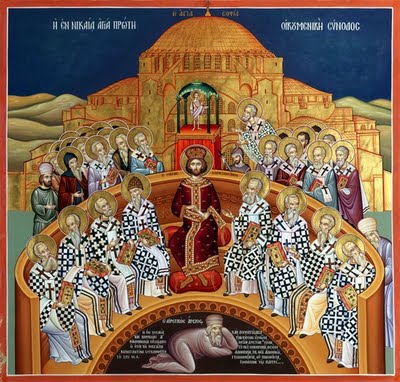
Since I ventured outside of the common Church establishment into the traditionalist movement and now into Byzantine Christianity one question simmers in the background, never quite coming to a boil, but always on heat: how many ecumenical councils have there been?
 |
| Fr Gregory Hesse |
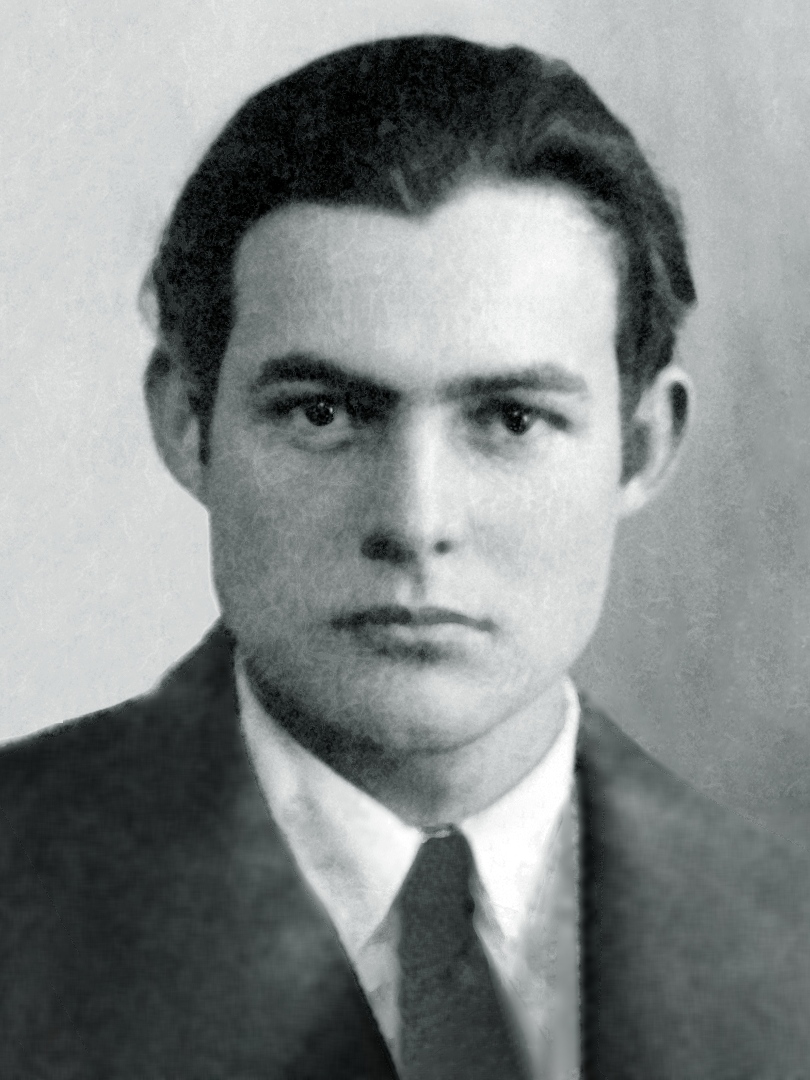
Most Catholics, traditionalists of most shades included, would say that there have been twenty-one councils, from the first Nicene gathering until the Second Vatican Council. Some of the more fringe-edged traditionalists like the FSSPX are divided on the matter. Many, like Bishop Bernard Fellay believe Vatican II to be an awful council, a council they would like voided, but a council by legal definition nonetheless. Others, such as the late Fr. Gregory Hesse, adamantly maintained that Vatican II, by not defining doctrine and by teaching heterodoxy, was not a valid council.
A debate along different lines continues within Byzantine Catholicism. The non-Byzantine eastern Catholic churches—the Maronites, Malankara and Malabar, Copts etc—seem at ease with the councils of the last millennium. The Greek Churches do not. Something I have heard commonly in Greek Catholic churches, particularly from clergy, is that there are only seven ecumenical councils, the first seven that the Eastern Orthodox recognize (long having renounced Constantinople IV, Lyon II, and Florence). The reason generally given for their dismissal of the more recent councils is that neither they nor their Orthodox counter-parts were represented at those gatherings.
At first there is a logic to this. Can one be bound to that which one did not consent or agree? Were the Byzantine churches even invited to Trent?
After some further thought on the matter I have come to wonder if the Byzantine view currently in vogue about the recent councils is an allergic reaction to three centuries of Latinization by lunatic Franciscan missionaries and American eastern Catholics suffering from an inferiority complex after Fr. Alex Toth's scandalous debacle with Msgr. John Ireland.
Perhaps the first seven councils reign high in the Byzantine mind because they occurred when Byzantium dominated the Church. Councils from within and without Byzantium met at the emperor's calling. The orthodox Greek Fathers with their keen insight into neo-Platonic philosophy and their pastoral zeal always found an expression of true doctrine. Monks and ascetics formed the fluid Greek spiritual life. The Church of Constantinople itself was a battlefield for heretics and true worshippers, the victory of the latter always confirming and strengthening the existing taxis. One could say Nicaea II and the defeat of iconoclasm was the birth of the Orthodox church. Then it all slowly came apart. The empire decayed under the duress of Muslim, Latin, and Serbian presence. The Latin church developed its own theological tradition during the middle ages. The papacy in Rome underwent an immense spiritual and political revival, returning to a level of prominence lost since the days of Gregory the Great. The newer councils adopted Latin terminology and were focused around the person of the pope rather than the emperor. The paradigm shifted and the Greek Christian world receded.
This begs deeper questions. Can Byzantines be bound to accept concepts beyond their theological vocabulary? I have never met a Byzantine Catholic who believed in Original Sin, a transmitted stain or guilt. Without variance, they believe in the Fall, making us all, to quote one Ukrainian deacon, "spiritual crack babies." Josef Ratzinger famously stated that the Greeks cannot be bound to believe anything unaccepted in the first millennium. The reasoning seems logical at first, but has flaws upon historical inspection. How could Coptic, Latin, or Indian Christians be bound to the Creed of Nicaea? The idea of "essence" is hopelessly tied up in Greek philosophy as is "consubstiantiality." Are those optional for the Syro-Malabar Catholics?
There are even liturgical implications to this question. A great number of Byzantines missed many of the medieval and Counter-Reformation councils, but did reconvene with the Roman Communion in the 18th century. These Byzantines continue to this day to revere post-schism Greek saints like Gregory Palamas, John Cabasilas, and Theophan the Recluse. Some even venerate Mark of Ephesus as a saint! If we take Eugene IV's Cantate Domino at face value then a sizable portion of the Church is venerating in the liturgy and imitating in life the damned.
Fr. Hunwicke some time ago pointed out that Robert Taft, SJ goes un-censured in his rejection of post-8th century councils. Does Rome take any recent councils other than Vatican II—the birth of the modern political establishment in Rome—seriously? I think if they did we would have more firm criteria as to what constitutes a council and the degree to which it binds the constituent parts of the Catholic Church.