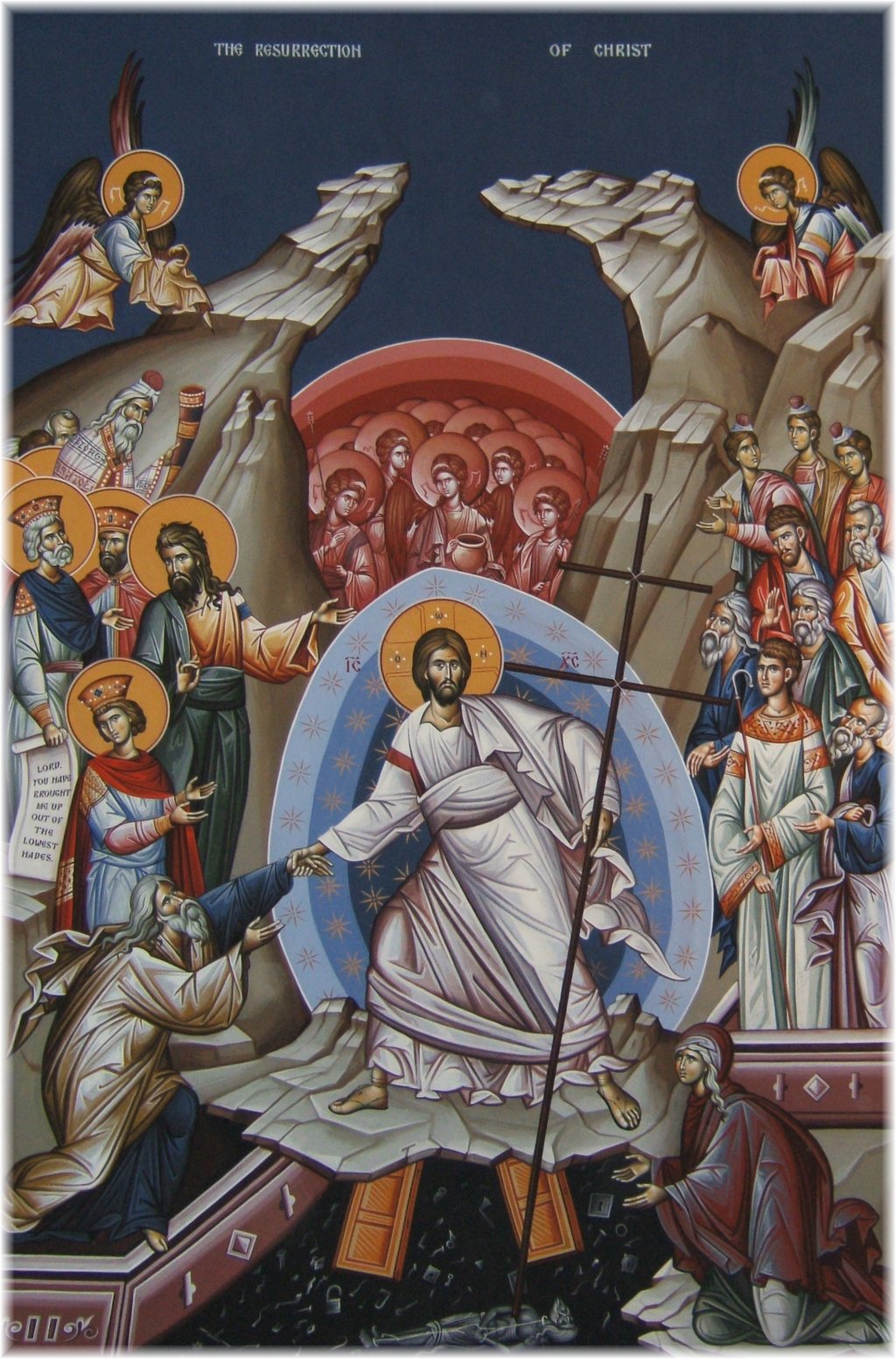
Wednesday, April 29, 2015

Nostalgia or Tradition?

We are bound by tradition, not by nostalgia. Tradition is, of course, the passing on of some genuine and discernible thing—be it an idea, an action, a view—while nostalgia is a yearning for a golden age that did not exist. The religious parallels are obvious, but do we not appreciate this distinction everywhere?

Brideshead Revisited, a novel I mention often on this blog, is often panned by critics writing both from their armchairs and from desks of prominent journals for its supposed nostalgia, its gilded and impossible vantage point of the fleeting Christian and aristocratic era. Brideshead Revisited is many things, but not that. There is a yearning, more to youth and better times with friends than for the age of the Dukes' of Marlborough and Buckingham real world significance. I can sympathize with this preference. We all can. It is quite real.

Contrast this with some pockets of Old Believer Russians. As far as scholarship says, the Old Believers were right in asserting that the then-used Slavic liturgical books were closer to the original Byzantine liturgy than the contemporary Greek Church's, which were foisted upon them and which caused many deaths, an unhealed schism, and discontent among the laity whose main means of encountering the Almighty was the exercise of the liturgy. Today, however, the most notable Old Believers are "Russian Amish," those vagrant communities clinging to 17th century Russian clothing and bread making methods, not those who use the old Greek rite. They may use it as far as they can (priestless or priest-full), yet their main function is to preserve Russian life as it was at the time of Nikon and Alexei. This is nostalgia for a pure Russia that never was.

We value traditions everywhere: in the Church, family, and in other aspects of life. Compare the modern phenomenon of electric bell towers with this chime duet played at my old university, where the students have taught each other the craft year after year, class after class for over a century.


In all aspects of life pass on the good things you have received.

NB: A great many Old Believers have reconciled with either the Greek Orthodox Church, ROCOR, or the Russian Catholic Church (yes, there is one). I think we can say that their motivation was primarily religious.

Saturday, April 25, 2015

New Series: Missing Octaves


Since J.'s recent liturgical addendum to the Josephology series sparked discussion and corrections concerning the feast and octave of "St. Joseph, Patron of the Universal Church," I thought it appropriate to begin a little series of my own on the missing octaves of the modern Roman kalendars, both 1962 and 1970. I would cover the subject in part on:
  • The octaves of the Comites Christi: Ss. Steven, John, and the Holy Innocents
  • Epiphany and its octave day, the Baptism in the Jordan
  • Octaves of the Virgin (Assumption and Nativity, later Immaculate Conception, too)
  • Holy men of the Lord, the lost octaves of St. John the Baptist and Ss. Peter & Paul
  • Octaves of the Lord, Corpus Christi and Ascension
  • The greatest Roman octave: Pentecost
  • Local octaves: patronal feast of the parish etc.
Look for words on the Comites Christi in the near future!

Wednesday, April 22, 2015

Josephology Sidebar: St. Joseph's Defunct Octave

While March 19 was the only feast day given for St. Joseph in the West since the 10th century, P. Pius IX saw fit to add an extended celebration that would not consistently fall within the season of Lent. On September 10, 1847, he added a solemn octave of the "Patronage of St. Joseph" starting as a double feast of the second class to be celebrated a few Wednesdays after Easter. It was eventually raised into a first class feast in 1870. This feast and its accompanying octave remained in place until P. Pius XII replaced it in 1955 with the feast of "St. Joseph the Worker."

The breviary readings for these feast days can still be found at the Divinum Officium site. Unlike the rather banal readings for the Pacellian feast, the 19th-century feast's readings are quite interesting and are drawn mainly from typological Old Testament passages about the Hebrew patriarch Joseph, ruler of Egypt. This octave begins today for those using the pre-Pacellian missal.

It is interesting how difficult it has been for new Josephite feasts to stick in the Roman missal. Pacelli's own feast was demoted a mere fourteen years later in the 1969 revisions to an optional memorial, and John XIII's 1962 insertion of Joseph's name into the canon was similarly lost in the tide of aggiornamento. Will P. Francis' reinsertion of St. Joseph into the Novus Ordo eucharistic prayers result in a similar deletion within a few decades?

Monday, April 20, 2015

Josephology Part 6: Jerome Contra Patres

“Good job, James!”
 “Anyone who speaks about St. Joseph in the early Church should begin with a warning to his hearers: don’t expect too much. For the first millennium of Christianity, St. Joseph was all but ignored in preaching, liturgical celebrations, martyrologies, and theological writing.... To our knowledge, no Father of the Church ever preached a homily on St. Joseph.” –Joseph T. Lienhard, S.J., St. Joseph in Early Christianity
I will be relying somewhat on Fr. Lienhard’s short work throughout this post. He was a strong promoter of Josephite devotion, and he has scoured the patristic era for even the slightest hint of positive writings on St. Joseph. Likewise, the Oblates of St. Joseph have a similar collection of texts, beefed up with endless commentary on their website. Promoters of the “young and pure” version of St. Joseph are at a loss to find their beliefs in the early Church, but will stretch any inch into a mile.

When Joseph is mentioned at all in patristic texts, it is almost always as an ancillary character in their Nativity sermons. A few of the Fathers go out of their way to argue that Joseph was the true husband of Mary, and not just her betrothed or her protector (e.g., Irenaeus, Ambrose, Augustine), although some argue explicitly against theirs being a true marriage (“She is called the mother of Christ... not the wife of Joseph, for that she was not” –St. Hilary, Commentary on Matthew). The Fathers are, however, unanimous in stating that Joseph and Mary never shared marital relations, and that Mary remained virginal in all their time together.

Those few Fathers who did write about Joseph were largely in agreement about his great age and his previous, fruitful marriage. The OSJ website gives this list of Fathers who wrote that the “brethren of the Lord” were Joseph’s natural children from a former marriage: Origen, Epiphanius, Gregory of Nyssa, Cyril of Alexandria, Theopylact, Theodoret, Chrysostom, Ambrose, and Hilary of Poitiers.  A few selections from these theologians follow:
“They thought, then, that He was the son of Joseph and Mary. But some say, basing it on a tradition in the Gospel according to Peter, as it is entitled, or The Book of James, that the brethren of Jesus were sons of Joseph by a former wife, whom he married before Mary. Now those who say so wish to preserve the honour of Mary in virginity to the end.... And I think it in harmony with reason that Jesus was the first-fruit among men of the purity which consists in chastity, and Mary among women; for it were not pious to ascribe to any other than to her the first-fruit of virginity.” –Origen (c. 184-253), Commentary on Matthew, 17. 
“If there had been sons of Mary who were not rather produced from a previous marriage of Joseph’s, Mary never would have been transferred to the apostle John as his mother at the time of the Passion.” –Hilary of Poitiers (c. 300-368), Commentary on Matthew, 1.4. 
“And in Bethlehem he came to a house with his own mother and Joseph, who was an old man but was Mary’s companion.” –Epiphanius of Salamis (c. 310-403), On the Incarnation, 1.5.
“Joseph took his first wife from the tribe of Judah and she bore him six children in all, four boys and two girls, as the Gospels according to Mark and John have made clear.” – Epiphanius, Against Antidicomarians, 7.6.
“The ‘brethren of the Lord’ could have been born from Joseph and not from Mary.  This indeed anyone will find if he looks at the question more diligently.” –Ambrose of Milan (c. 340-397), On the Birth of the Virgin and the Perpetual Virginity of Mary, 6.43.
“But as he considered that he had a share in the august titles of the Apostles, he exalts himself by honoring James; and this he does by calling him the Lord’s brother, although he was not by birth His brother, but only so reputed.” – John Chrysostom (c. 349-407), Homily 1 on Galatians.
“The reputed brethren of the Saviour not yet recognizing God the Word indwelling in His Holy Flesh, nor knowing at the time when they are saying these things, that He was made Man, have still petty conceptions of Him and think far too little of the grace and excellence that is in Him, seeing nothing more than the rest, deluded by the common opinions of Him, thinking that He too was in truth begotten of their father Joseph, and not seeing the hidden provision of the Mystery.... Very watchfully did the Prophet [Jeremiah], having named His brethren, profitably add, ‘The house of Thy father,’ lest they too should be supposed to have been of the blessed Virgin, rather than of His father Joseph alone.” –Cyril of Alexandria (c. 376-444), Commentary on John, IV.461-2.
“The Lord had brothers and sisters, the children of Joseph which he begat by the wife of his brother Cleopas. For when Cleopas died childless, Joseph took his wife in accordance with the law and had six children by her, four boys and two girls, Mary, who was called the daughter of Cleopas, in accordance with the law, and Salome.” – Theophylact (c. 1050-1108), Explanation of the Gospel of Matthew, 13.54-57.
“‘Mary the mother of James and Joses’ means the Theotokos, the Virgin Mother of God, for James and Joses were the sons of Joseph by his first wife. And since the Theotokos was called the ‘wife’ of Joseph, she is rightly called the ‘mother’ of his children, meaning ‘stepmother.’ The mother of the sons of Zebedee was named Salome. They say that she also was a daughter of Joseph.” –ibid., 27.54-56.
All these patristic witnesses are supposedly swept away by the authority of St. Jerome (c. 347-420) in one tract he wrote defending the virginity of Mary, Against Helvidius:
If we adopt possibility as the standard of judgment, we might maintain that Joseph had several wives because Abraham had, and so had Jacob, and that the Lord's brethren were the issue of those wives, an invention which some hold with a rashness which springs from audacity not from piety. You say that Mary did not continue a virgin: I claim still more, that Joseph himself on account of Mary was a virgin, so that from a virgin wedlock a virgin son was born. For if as a holy man he does not come under the imputation of fornication, and it is nowhere written that he had another wife, but was the guardian of Mary whom he was supposed to have to wife rather than her husband, the conclusion is that he who was thought worthy to be called father of the Lord, remained a virgin. (21)
But this must be taken in context, for Jerome was writing in response to an outrageous heretic who was claiming all manner of impropriety against Our Lady: to wit, that she had engaged in marital relations with Joseph and had herself borne many more children, who are listed in the Gospels as the “brethren of the Lord.” Jerome’s tone is over the top in its counterclaims, and this is evident even from his first paragraph:
It is a difficult matter to maintain the truth and refute an ignorant boor who has scarce known the first glimmer of learning.... There was the further consideration that a turbulent fellow, the only individual in the world who thinks himself both priest and layman, one who, as has been said, thinks that eloquence consists in loquacity and considers speaking ill of anyone to be the witness of a good conscience, would begin to blaspheme worse than ever if opportunity of discussion were afforded him.... The axe of the Gospel must therefore be now laid to the root of the barren tree, and both it and its fruitless foliage cast into the fire, so that Helvidius who has never learned to speak, may at length learn to hold his tongue. (1)
His anger is well-founded, but in his zeal to defend Mary’s honor he invents many arguments for the “brethren” to be the cousins of Christ (thus giving Mary a wide berth), attacks events from the Proto-Gospel of James as “the ravings of the apocryphal accounts” (10), presumes that this book is the only reason for the belief in Joseph’s previous marriage, and then discards the belief itself entirely. Much in the way that modern-day Josephites claim that belief in Joseph’s previous marriage and older age was concocted merely in order to preserve Mary’s virginity, so does Jerome remove it in order to preserve the very same thing! He wants the “brethren” a safe distance away in the family tree, and so eliminates the necessity for Joseph to have been married previously, making him a virgin at his betrothal to Mary.

Thus does Jerome create a virginal St. Joseph out of thin air.

“What?”
There is no clear evidence that St. Augustine (354-430) agreed with Jerome, in spite of claims to that effect. However, in his Exposition of the Epistle to the Galatians he writes that “James the brother of the Lord should be taken either as one of the sons of Joseph from another wife or as one of the relations of Mary his mother” (8.5), thereby leaving open the possibility that the “brethren of the Lord” were not the sons and daughters of Joseph. That seems to be the closest thing to agreement that Jerome found among his patristic peers.

Needless to say, the East was unchanging in the tradition that Joseph was a widower and a father before his betrothal to Mary. In the survey by Fr. Florent Raymond Bilodeau on the OSJ website, however, we get a bit of Latinizing peevishness in this regard:
This list [of Fathers], at first sight, seems to outweigh the evidence we have just presented. However, a closer look at the statements of these men gives us a different impression. First of all it is important to note that most of them, save Ambrose and Hilary of Poitiers, were Greek Fathers. The Eastern Fathers were highly influenced by the Apocrypha, a group of writings of a religious character which at times made pretensions to divine authority. These writings elaborate on Saint Joseph. Very little of what they say is of historical value. (source)
It is unfortunate to see an apologetical work treat the Eastern “lung” of the Church as a bunch of gullible chumps. There may be an Eastern theologian here or there who speculates on the possibility of the Lord’s brethren having sprung from someone other than Joseph, but the overwhelming majority retain the traditional belief to this day. If for no other reasons than ecumenical ones, we should take that seriously.

Next time, we will make a survey of those few theologians who were convinced of Jerome’s novelty before it was more widely popularized by St. Thomas Aquinas.

St. Joseph, bemused by all this attention, pray for us!

Saturday, April 18, 2015

Divine Office: For God's Sake Alone

After Spy Wednesday evening's Tenebrae services, I conversed with a small clique about our upcoming plans for the rest of the Triduum. We agreed to attend one of the area's Byzantine rite churches on Friday for Vespers, the procession, and the burial service (Slavic tradition, different from the Greek and Arab praxis). A woman proximate to us inquired as to what the service entail. After explaining it, she asked, "So what, there's no Communion? I'll go to [Tradistan] instead. There's Communion here." Retrospectively, this was a formative moment in my understanding of why the Divine Office's popularity tapered off in recent generations: because we expect something whenever we go to church.

In the Mass or Divine Liturgy, we take bread and wine and the Lord gives us His Body and Blood which we offer "for the sins of all Christians, living and dead" (Roman offertory), "we offer You Your own from what is Your own, from all and for all" (Anaphora of St. John Chrysostom). In return, we are permitted to partake of the Lord's mystical supper and benefit definitely from the propitiatory sacrifice made. The result satisfies our prehensile souls. 

The Divine Office has no such trait. In it we pray for many things, including the specific intentions of the litanies of the Eastern rites as well as the preces and suffrages of the Latin tradition. Still, nothing concrete is given in return, which we have grown accustomed to expect. For centuries people attended weekday low Masses in the Western Church without any distribution of Communion at all. Perhaps this was a deviation from the purpose of confecting the Sacrament, but the point stands: the congregants attended the Mass not because they were expecting something to be given to them, but because they wanted to see the "Miracle of the Mass," they believed that the action itself had value before God. 

The same is true of the Office. Nothing tangible and immanent should be expected in return for praying it. Praying the Divine Office is praising God for God's own sake alone. 

Or I could be wrong!

Wednesday, April 15, 2015

Paschaltide Musings: John 20


The following beginning verses from chapter 20 of St. John's gospel were read during the octave last week at Mass and the Office. I attended the Divine Liturgy for Monday of Bright Week. The pericopes there, the priest explained, already anticipate the mission of the Church and the coming of the Holy Spirit. Indeed, the Byzantine tradition has a unique focus on the Trinity and the Holy Spirit which is not found in the Roman Church. The Roman rite, solidified in its fundamental elements when the fluid Byzantine Church was the battle ground of heresies, glosses over many of the matters concerning the Godhead mentioned in the Greek liturgy. Instead, the Roman liturgy is very Christ-centered, centered on Christ as God and as Man. This Scriptural pericope is quite fitting for the Roman tradition:

"And on the first day of the week, Mary Magdalen cometh early, when it was yet dark, unto the sepulchre; and she saw the stone taken away from the sepulchre. She ran, therefore, and cometh to Simon Peter, and to the other disciple whom Jesus loved, and saith to them: They have taken away the Lord out of the sepulchre, and we know not where they have laid him. Peter therefore went out, and that other disciple, and they came to the sepulchre. And they both ran together, and that other disciple did outrun Peter, and came first to the sepulchre. And when he stooped down, he saw the linen cloths lying; but yet he went not in. Then cometh Simon Peter, following him, and went into the sepulchre, and saw the linen cloths lying, And the napkin that had been about his head, not lying with the linen cloths, but apart, wrapped up into one place. Then that other disciple also went in, who came first to the sepulchre: and he saw, and believed. For as yet they knew not the scripture, that he must rise again from the dead."

At face value, the Evangelist recounts the startling news given to the Apostles that the tomb in which Jesus once laid was now empty and that "they believed." What did they believe? Nothing that we would recognize, at least not yet. Before the descent of the Holy Spirit, the Apostles were faithful and foolish friends, quick to sing the Lord's praises and endear themselves to Him, but not entirely sure why. One thinks of them squabbling over who would have a place of honor in the kingdom of heaven. Even after the Resurrection they seem no better off that before, asking at the Ascension if Christ would finally become the terrestrial and material Messiah for which the Jews longed, one who would free them from Roman oppression and begin a tangible reign of the kingdom of God on earth. When John says "they believed," we are not unfair to ask "What did they believe?"

Living two thousand years later, we enjoy the wisdom of the Fathers, the teachings of the popes, bishops, and their convened councils, as well as the accumulation of centuries of common sense. We know that miracles were outward acts of mercy on the part of Our Lord to point people to His Divinity, to draw people to His teachings and His words. Peter and the rest might have understood the miracles to have shown His favor with God, but not that He was God. Peter's confession of faith was that Jesus was the "Christ, the Son of the living God." None of the brethren understood that He was God made Man or that He must rise from the dead, as the last verse of the Johannine passage reveals. 

It would not be unlikely that Peter and the other apostle, likely John, saw the empty tomb, which had been guarded by soldiers from the Sanhedrin's forces, and presumed an assumption of Christ's body into heaven like that of Elijah when he was alive and possibly Moses after his death. Christ may, to them, have been the greatest and most amazing of all the prophets, those witnesses to God. Yet what could Jesus have accomplished as a prophet, a man, who worked miracles, died a gruesome death at the hands of his own people, and was then bodily removed from the earth? They "believed" without understanding what they believed because they could not possibly know without seeing Him and touching Him that He was God and that, unlike the miracles of prophets of old, He rose from the dead without the prayers of another man. Later, He appeared to the Apostles and to Thomas, and there He revealed His divinity most explicitly.

This is the Catholic paradigm of God. God is Who He is ("I am Who I am" is His name in Hebrew) regardless of what we want God to be. We encounter Him and He tells us about Himself if we listen. We can know about God by reason. We cannot know Him intimately without knowing Him as a person though. "The Lord is God and has revealed Himself to us" from Byzantine Mattins always seemed plain to me until I considered that it was an adaptation to refer to the "Lord" God as a master, a personhood Who comes before creatures of far lesser capacity to understand and tells us what we need to know about Him. This is the Incarnation! This is the purpose of the great condescension! Without this great consideration we demote Christ and the faith to an intellectual proposition, not what "faith" is—a word that shares a Latin root with the same word that means "loyalty." Peter had not understanding, but when he saw the empty tomb his loyalty returned and prepared him to meet his master, risen from the dead.

Tuesday, April 14, 2015

Josephology Part 5: Patron of Holy Deaths (or, Joseph Gets a Feast Day)


I first came across the History of Joseph the Carpenter narrative through a post on Taylor Marshall’s blog. (For those who don’t already know, Dr. Marshall is a frequent apologist for the “young-and-pure” version of St. Joseph, and he has written rather voluminously on the point.) The text of the History is interesting not only as an early testimony to the saint’s old age and peccability, but also to a developing Josephite devotion.

The History is dated anywhere from the 4th to the 7th century, depending on the scholar. It appears to be largely an Egyptian/Coptic work. Indeed, we seem to find the earliest evidence of Josephite devotion among the Egyptian Christians, perhaps even as far back as the 4th century. Most likely it flourished there because of the stories about the Flight into Egypt, and the recognition of many locations along the Flight’s route as pilgrimage sites.

The Narrative of the History

The bulk of the text purports to be a first-hand account of the life and death of Joseph as told by Jesus himself to his disciples on the Mount of Olives before the Crucifixion (1). The early life of Joseph and his betrothal to Mary is a much shorter version of the Proto-Gospel story (2-9). Then begins a longer account of his illness, death, judgment, and burial (10-29). What we find here is not so much a collection of possibly apocryphal fantasies, but a fully-developed theology of preparation for a holy death.

As with other important events in his life, Joseph is visited by an angel to inform him of his impending death at the age of one-hundred and eleven (12). He is described as working in his carpentry shop with “youthful vigor” (10) even in his extreme old age, so this death would otherwise have been unforeseen. Fearing judgment, he goes to the Temple and pours out his soul to God in a kind of proto-Dies Irae:
If now my days are ended, and the time draws near when I must leave this world, send me, I beseech You, the great Michael, the prince of Your holy angels: let him remain with me, that my wretched soul may depart from this afflicted body without trouble, without terror and impatience. For great fear and intense sadness take hold of all bodies on the day of their death, whether it be man or woman, beast wild or tame, or whatever creeps on the ground or flies in the air.... Now therefore, O Lord and my God, let Your holy angel be present with his help to my soul and body, until they shall be dissevered from each other. And let not the face of the angel, appointed my guardian from the day of my birth, be turned away from me; but may he be the companion of my journey even until he bring me to You.... And let not demons of frightful aspect come near me in the way in which I am to go, until I come to You in bliss. And let not the doorkeepers hinder my soul from entering paradise. And do not uncover my sins, and expose me to condemnation before Your terrible tribunal. Let not the lions rush in upon me; nor let the waves of the sea of fire overwhelm my soul—for this must every soul pass through—before I have seen the glory of Your Godhead. O God, most righteous Judge, who in justice and equity wilt judge mankind, and wilt render unto each one according to his works, O Lord and my God, I beseech You, be present to me in Your compassion, and enlighten my path that I may come to You; for You are a fountain overflowing with all good things, and with glory for evermore. (13)
One is inevitably reminded of the medieval Ars Moriendi devotionals and more recent popular moral guides concerning preparation for death. The invocation of St. Michael and one’s guardian angel are very important in this preparation, as is the renunciation of the devils who hope to pull the dying soul into Hell.

Joseph returns to Nazareth and immediately falls ill. He continues his prayers with a general confession of sins:
Woe to the day on which I was born into the world! Woe to the womb which bare me! Woe to the bowels which admitted me! Woe to the breasts which suckled me! Woe to the feet upon which I sat and rested! Woe to the hands which carried me and reared me until I grew up! For I was conceived in iniquity, and in sins did my mother desire me. Woe to my tongue and my lips, which have brought forth and spoken vanity, detraction, falsehood, ignorance, derision, idle tales, craft, and hypocrisy! Woe to my eyes, which have looked upon scandalous things! Woe to mine ears, which have delighted in the words of slanderers! Woe to my hands, which have seized what did not of right belong to them! Woe to my belly and my bowels, which have lusted after food unlawful to be eaten! Woe to my throat, which like a fire has consumed all that it found! Woe to my feet, which have too often walked in ways displeasing to God! Woe to my body; and woe to my miserable soul, which has already turned aside from God its Maker! What shall I do when I arrive at that place where I must stand before the most righteous Judge, and when He shall call me to account for the works which I have heaped up in my youth? Woe to every man dying in his sins! Assuredly that same dreadful hour, which came upon my father Jacob, when his soul was flying forth from his body, is now, behold, near at hand for me. Oh! How wretched I am this day, and worthy of lamentation! But God alone is the disposer of my soul and body; He also will deal with them after His own good pleasure. (16)
Thus the writer of the History insists upon the necessity of making a good confession when death is approaching. Soon after this prayer, Jesus arrives at the deathbed, and Joseph confesses to him his original suspicion of Mary’s virtue:
You are altogether my God; You are my Lord, as the angel has told me times without number, and especially on that day when my soul was driven about with perverse thoughts about the pure and blessed Mary, who was carrying You in her womb, and whom I was thinking of secretly sending away.... Do not for this cause wish me evil, O Lord! For I was ignorant of the mystery of Your birth. (17)
Mary joins Jesus at Joseph’s side (19), holding Joseph’s hands as he passes out of this life. Death arrives with the armies of Hell behind him, but Christ holds them back until Michael and Gabriel can safely carry his soul “into the dwelling-place of the pious” (23).

(Paolo de Matteis)
At the burial Christ promises that Joseph’s body will remain incorrupt until the Final Judgment, and describes all the blessings that will be given to those who keep a hearty devotion to his earthly father:
And whosoever shall make an offering on the day of your remembrance [the 26th day of the month of Abîb, according to the text], him will I bless and recompense in the congregation of the virgins; and whosoever shall give food to the wretched, the poor, the widows, and orphans from the work of his hands, on the day on which your memory shall be celebrated, and in your name, shall not be in want of good things all the days of his life. And whosoever shall have given a cup of water, or of wine, to drink to the widow or orphan in your name, I will give him to you, that you may go in with him to the banquet of the thousand years. And every man who shall present an offering on the day of your commemoration will I bless and recompense in the church of the virgins: for one I will render unto him thirty, sixty, and a hundred. And whosoever shall write the history of your life, of your labour, and your departure from this world, and this narrative that has issued from my mouth, him shall I commit to your keeping as long as he shall have to do with this life. And when his soul departs from the body, and when he must leave this world, I will burn the book of his sins, nor will I torment him with any punishment in the day of judgment; but he shall cross the sea of flames, and shall go through it without trouble or pain. And upon every poor man who can give none of those things which I have mentioned this is incumbent: viz., if a son is born to him, he shall call his name Joseph. So there shall not take place in that house either poverty or any sudden death for ever. (26)
It’s a list reminiscent of the promises attached to certain later devotions to Mary and to the Sacred Heart. I don’t know enough about early Catholic devotions to say if lists of promises (especially concerning a holy death) were common, or if this is one of the earliest examples.

The story closes with one final compliment to Joseph’s physical stamina, even at the end of his life: “Never did a tooth in his mouth hurt him, nor was his eyesight rendered less sharp, nor his body bent, nor his strength impaired; but he worked at his trade of a carpenter to the very last day of his life” (29). The text then recounts some peculiar but unrelated speculations about the details of the eschaton, and that’s the end.

The Influence of the History

The most obvious influence of the History of Joseph the Carpenter is in his place as patron of the dying. It is a reasonable assumption that Joseph died in the presence of Christ and Mary, even without a clear tradition to that effect. In his preparation for death, the Joseph of the History admits his sinfulness and begs for the mercy of God, then places himself in the care of Jesus and the holy angels to carry his soul to Paradise. What better way to learn the art of dying than by this example?

A more indirect influence is the clear celebration of an annual feast for St. Joseph on Abîb 26 (July 20 on the old Julian calendar, or August 2 on the 1582-revised Gregorian calendar), and this feast seems to have continued uninterrupted into modern times with the Coptics. The various minor feasts of St. Joseph in the West fell on different days than this, and would not develop until much later. The earliest western Josephite feast I can find is a March 20 commemoration for a Benedictine abbey in the eighth century.

Still, this document falls neatly into the Patristic era, and it should be weighed accordingly. Recognition of St. Joseph as the patron of holy deaths is early enough to avoid any potential scruples concerning it, and it is fully in line with the older tradition that Joseph was elderly and subject to concupiscence.

Next time, I will move away from the legends and stories to look at what the Church Fathers wrote about St. Joseph.

St. Joseph, protector of the Blessed Virgin, pray for us!