Showing posts with label Brideshead Revisited. Show all posts

Wednesday, November 22, 2017

The Age of Hooper

Illustration from Ship of Fools
“Hooper was no romantic. He had not as a child ridden with Rupert’s horse or sat among the camp fires at Xanthus-side; at the age when my eyes were dry to all save poetry—that stoic, red-skin interlude which our schools introduce between the fast flowing tears of the child and the man—Hooper had wept often, but never for Henry’s speech on St. Crispin’s Day, nor for the epitaph at Thermopylae. The history they taught him had had few battles in it but, instead, a profusion of detail about humane legislation and recent industrial change. Gallipoli, Balaclava, Quebec, Lepanto, Bannockburn, Roncevales, and Marathon—these, and the Battle in the West where Arthur fell, and a hundred such names whose trumpet-notes, even now in my sere and lawless state, called to me irresistibly across the intervening years with all the clarity and strength of boyhood, sounded in vain to Hooper. He seldom complained.” —Evelyn Waugh, Brideshead Revisited

So is described Mr. Hooper, a young officer in the Army despised for his lack of culture and imagination by the novel’s narrator. The problem with Hooper is not so much wickedness as it is insensibility. He is, in terms of being a man of Western formation, neither hot nor cold, but passive-aggressively lukewarm.

Sadly, we all know too many Catholics similarly uncultured in their own past. We have an excess of flowchart-smart apologists, but few who have pondered the depths of Augustine’s De civitate Dei contra paganos. Our artists chase after every faddish movement, but few contemplate much less venerate the depths of our iconographic tradition. Lovers of the old Roman Rite too frequently possess an irrational hatred of oriental rites. Devout laymen glory in thoughtless repetition of things written in books meant for the formation of children. Yeats was assuredly correct concerning passionate intensity.

Would not our compatriots in religion be better served with stories of saints and sinners than with mere catechesis? In preconciliar times Catholic youth could rattle off their Baltimore, but was their historical education anything beyond sanitary hagiography and polemics against the enemies of the Church? I do not know what young Catholics today actually learn, but my brief experience with teenage preparation for Confirmation suggests that it is nothing much beyond vague sentimentalities about God’s love.

Hooper would not be roused to joy at the justice of Phinees against the initiates of Beelphegor. Hooper would not laugh at Elias's mockery of the prophets of Baal. Hooper would not weep at the self-effacement of David. Hooper would be barely sensible to the shipwrecks of Paul, the exile of Athanasius, the trial of Formosus, the conversion of Augustine, and the death of Joan of Arc. Annoyance and sentimentality are the only passions left to the Hoopers of the world. Greatness is quite literally unimaginable to them, whether that greatness be heavenly or hellish; Paradise is bland and the Inferno desolate. Heroism and hedonism alike hold no appeal for Hooper.

The intellectuals of Christendom were set alight by the verses of Virgil, seeing in them the preparation for the salvation of the Gentiles and a symbol of our own spiritual conquests. The poets of Europe sought to imitate Virgil and build upon his foundation, reviving the epic form for retellings of the crusades and the legends of Charlemagne’s court. The Roman poet ends his invocations to the gods in the Georgics with, “Look with favor upon a bold beginning.” How can we inspire our fellow Catholics to boldness in deed and thought? Charles Ryder despairs at the arrival of the Age of Hooper as if it were the destruction of Jerusalem, and he is not roused to action against it. What can be done to convince the Hoopers of the Pews that there is an immense scope of being beyond what they have comfortably accepted?

Virgil himself explains the fate of the indifferent damned to the Christian poet Dante, “This miserable mode / Maintain the melancholy souls of those / Who lived withouten infamy or praise.” But fear of punishment is not an effective motivator for our Hoopers; they have too many defenses against it. One hopes they will be attracted to the immensity of the Good when it is shown to them more clearly, but this is difficult to predict. If these things are not imposed upon them in their formative years, it is doubtful they will expand their appetites as they age.

I do not have much in the way of recommendation. In my own experience, the unimaginative and lazy are heroically valiant in their rejection of change, like the Trojan women burning the ships of Aeneas in Sicily so that they can cease their difficult journeying. But probably no one is entirely immune to wonder, that species of fear which is the catalyst for great change. Probably.

Sunday, August 23, 2015

A Waughful Novel: The Players of Brideshead Revisited


The Rad Trad: 

"All the world's a stage, and all the men and women merely players," said Jacques in As You Like It. In Evelyn Waugh novels, all the men and women are players in his settings except for the protagonist. Waugh's protagonists are, with minor variation, dull witnesses to more interesting events and personas floating around his decadent restaurants, clubs, country homes, and ocean liners. Charles Ryder is no exception.

One must constantly keep in mind when reading Brideshead that the author is not attempting to advance "Rome-ish propaganda", although he admits that it is "steeped in theology.... [even if] theologians won't recognize it" (letter to AD Peters; May 20, 1944). He is not advocating a systemic view of human nature. He is examining how God's grace works in the lives of a dozen or so rather underwhelming individuals. With that in mind, Charles Ryder's passive outlook becomes a wholly understandable lens for the novel.

Ryder is not, despite the claims of some critics over the years, a social climber. He was "looking for love in those days," an enchanted and vivacious world apart from the well to do rearing he had with his dull father. The eccentricity of Sebastian Flyte mesmerizes him.

Charles views the Church as a relic from a past age of debatable value in modern Britain. While first he admittedly views the Catholic faith as a "foible," he later comes to see it as "nonsense" which impedes the happiness of most of the family: it causes Sebastian to drink, Julia to rebel, Bridey to become sanctimonious, and Lady Marchmain to embody suffering. One concludes that, aside from Sebastian's younger sister, there is not one happy Catholic in the novel and that Charles notices this. What Charles does not notice is that there are no happy non-Catholics either. The characters cannot be taxonomized in simple religious lines.

But since Charles is the least interesting, let us think about some of the more compelling characters.

Sebastian and his father, Lord Marchmain, are really two faces to the same person, something we learn from Lord Marchmain's mistress. Sebastian's father married Teresa, later Lady Marchmain, and converted to the Catholic faith. At some point, he melted down, lost his faith, went off to fight in the First World War, and never returned to England, where his wife continued to live and breath the air. She represented to loss of his "illusions of boyhood": God, love, innocence. Sebastian is similarly unable to let go of his own boyhood and innocence, carrying his teddy bear with him on the High Street in Oxford and visiting his childhood nanny on the weekend. Lady Marchmain wanted both men to grow up. Both instead turned to the drink, which dilutes the rage they feel for Teresa Marchmain while sober. 

And then there is Teresa Marchmain. She may be the most compelling and un-discussed character in the novel. Most secular readers side with Sebastian against her and most religious reader gloss over her. Was Cordelia right? Was she a saint? Or was she, in the words of our co-blogger, an overbearing matriarch? We are told less about Lady Marchmain than about any of the other family characters. Her presence is ubiquitous and we are left wondering how bitter she is over the loss of her three brothers in the war, but we cannot tell much about her character. Is she a conventional aristocrat who patronizes intellectual hangers-on like "green ass Samgrass" or is she genuinely intelligent? Is she a pious simpleton none the wiser for age, as exemplified by her measures to stop Sebastian's drinking? Or is she an adroit mother who has learned the lessons of her husband? Was Cordelia right about her or was Anthony Blanche?

And then we come to Anthony Blanche, the Virgil of Brideshead Revisited, the wise pagan with greater insight into human nature than many Catholics. Reading Eliot's Waste Land in his introductory scene, the reader quickly identifies Blanche as the seer of the novel, witnessing the gradual disillusionment of the vain, post-War generation. This cosmopolitan "dago" and aesthete is the only clear homosexual in the novel. Many accusations of a sexual relationship between Sebastian and Charles derive from the camped scenes between them in the first and second episodes of the BBC mini-series (although Waugh's own background doesn't improve matters). Blanche warns Charles about the allurement of the English aristocracy, its politeness, its charms, its cleverness, all of which mask a vapidity that "kills love, kills art", and nearly kills Charles. The aesthete is able to look at the world's players and understand the characters they play as well as the playwright. Blanche understands Sebastian, Lady Marchmain, and Charles perfectly, however incompletely. Charles only advances in the novel because he was unwise to ignore the advice Blanche gave him over Chartreuse, but Blanche's astute reading of the characters is still flawed by his lack of faith. He cannot understand Lady Marchmain's bitterness, Sebastian and his father's loss of innocence and yearning to have it back, or Charles's resistance to God, which, like his art, hides underneath his newly adopted English charm.

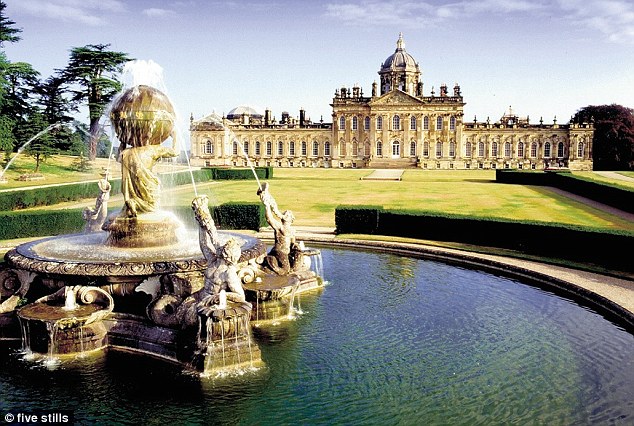
Then there is a more general question about a particularly family of players in this modern English tragedy, the Flyte family: does the aristocracy matter? Waugh himself sympathizes with them and laments their decline. They are the custodians and patrons of the arts. Charles's first serious aesthetic thought occurs when Sebastian reads from Clive Bell's Art. Brideshead Castle is a monument to baroque architecture and Marchmain House is London is the most beautiful house Charles has ever seen. Sebastian dissuades Charles from thinking too much about the period of the fountain or the architect behind the dome on the castle. What does it matter if it's pretty? The old money guard beauty for beauty's sake. It may not even matter within the context of the novel. The denouement of Brideshead suggests to this reader that the Flyte line has reached its ultimate generation.

Critics of the aristocracy are embodied in the middling tomfool of an office, Mr. Hooper, whose modern mind for "business" and "efficiency" at the sake of heritage and ornament reflect that of a changing Britain. In the chapel, towards the end of the final scene, Charles reflects on the house:
"The builders did not know the uses to which their work would descend; they made a new house with the stones of the old castle; year by year, generation after generation, they enriched and extended it; year by year the great harvest of timber in the park grew to ripeness; until, in sudden frost, came the age of Hooper; the place was desolate and the work all brought to nothing; Quomodo sedet sola civitas. Vanity of vanities, all is vanity."
Athwart his arrant sympathy for the aristocracy, Waugh has difficulty justifying them in the exchange between Lady Marchmain and Charles on whether the rich can enter heaven. Aristocrats provided soldiers for the king and regional administration in exchange for royal endowment in past ages. Modern aristocrats make no such contribution; instead they live off what accumulated wealth has not been spent by the previous generation. The Flytes are no different. Their wine stores were emptying out when Charles first visited Brideshead in the 1920s. If I am ever invited, I hope they kept a bottle of Chateau Peyraguey, although it might need to breath before it is drinkable....

Beneath their icy exteriors, the players of the Brideshead drama are individuals cooperating with God, resisting Him, or ignoring Him amidst their own personal strife. Some are clouded, some clairvoyant; some are clear people, some ambiguous. One is tempted to say that these characters are meant for a gradual conversion, not an immediate and shocking conversion like that of St. Paul, but then again St. Paul was only thrown off of his horse by the light. He was not baptized until several days later and would not begin preaching for some time after that. St. Paul did not convert in a day and Sebastian neither lost not regained his faith in an instance.

J:

Yes, I have listened to the ravings of thy pride against me, and now a ring for thy nose, a twitch of the bridle in thy mouth, and back thou goest by the way thou didst come." –Isaias

"God save me from long-faced saints!" –Teresa of Avila

A standalone novel could be written about every character that Charles follows around inBrideshead. Maybe not every character deserves a novel, but there is enough history and personality in each of them to fill one, should Waugh have chosen to do so. Waugh was not writing a psychological novel primarily, but a novel about the inner workings of grace. Here is how he attempted to describe its meaning to a movie studio:


1. The novel deals with what is theologically termed, "the operation of Grace", that is to say, the unmerited and unilateral act of love by which God continually calls souls to Himself;

2. Grace is not confined to the happy, prosperous and conventionally virtuous. There is no stereotyped religious habit of life, as may be seen from the vastly dissimilar characters of the canonised saints. God has a separate plan for each individual by which he or she may find salvation. The story of Brideshead Revisited seeks to show the working of several such plans in the lives of a single family;

3. The Roman Catholic Church has the unique power of keeping remote control on human souls which have once been part of her. GK Chesterton has compared this to the fisherman's line, which allows the fish the illusion of free play in the water, and yet has him by the hook; in his own time the fisherman by a "twitch upon the thread" draws the fish to land.

In other words, how is the grace that leads to salvation embodied among the different character types found within the same family? Does the narrative of Brideshead Revisited succeed in dramatizing this "fisherman's line" of the Holy Ghost? All other artistic perfections or imperfections must be judged as secondary to this standard, it seems.

Let us put Charles aside. Not being a part of the family, he is not strictly within the parameters of Waugh's intent. He is an outsider, a narrative conceit to allow the reader a way in to the otherwise restricted world of the Flyte family. That he himself partakes in the workings of grace by the novel's end is incidental, although not wholly unimportant.

Lady Marchmain does not receive the twitch upon the thread, but attempts to twitch the thread of her own children. She is much like the older brother of the Prodigal Brother who had never fallen away, but also without any of the obvious bitterness of the brother. Is she heavy-handed in her threading? Charles does not have the proper perspective to see clearly one way or the other.

Cordelia Flyte is a counterpoint to her mother, but is also her doppelganger. While Lady Marchmain seems to be dragging along the grief of her brothers' deaths and her husband's abandonment, Cordelia is more sanguine and happy to be working hard for the spiritual good of others. Her faults are minor, mainly consisting of her tweaking Julia's hapless fiancé, and she never requires any serious twitch upon her thread.

Brideshead might be the closest figure to the Prodigal's older brother, although he does not despise his siblings once they make a return to the Faith. He is a being without much imagination or liveliness, too phlegmatic to be either a great saint or a great sinner. His condemnation of Julia's affair is made without any real hatred or love, just as a matter of fact. One actually wishes to see Bridey's thread twitched, if only to force him out of his torpor. Perhaps his clearly disastrous marriage plans could lay the groundwork for a proper twitching, but this is never seen in the novel.

So much for the Catholics who remained faithful to the Church. What of those who have fallen away, and upon whom the Church exercises a kind of "remote control"?

Of these, Julia Flyte is the most successful example of a caught fish. The narration exposits her faithful period, her falling away, her turning back, and her life of penance. She is downright Magdalenic. In terms of spiritual drama, Julia's is the only complete story. Her disastrous marriage to Rex Mottram is largely a means to her spiritual ends. As for Rex, he is so caught up in his own superficial world of business, that even the near prospect of conversion finds no purchase in the rocky soil of his soul.

Lord Marchmain is the second-clearest example of a thread-twitching. While we learn little of his younger years and of the falling out with his wife, his fallen away state and his deathbed conversion are both portrayed with clarity and intensity. The Holy Ghost blows strongly through his and his daughter's souls.

Sebastian Flyte is the fly in the story's ointment. Perpetually childishly melancholic, Sebastian wallows in self-loathing when he is not loathing his mother and brother. He takes the burden of religion upon himself bitterly, hating it with every step he walks. He tries to be very sinful, but since he cannot do so cheerfully, he returns to the Faith repeatedly much in the same way he returns to the bottle. He is addicted to the Faith, and despises his inability to be rid of it. There is some inner turmoil that we can never quite discern in Sebastian, some spiritual drama that we cannot see but desperately wish we could.

But what bothers me about Sebastian is the romanticizing of his story arc and of his character. He is very much like the tortured souls drawn by the Romantic poets and their novelistic imitators. Charles is overcome with nostalgia to think of those Arcadian days with Sebastian and his teddy bear, encouraging the reader to overlook his moral offenses. Even Cordelia gets a little soft in the head when she imagines what is surely the most romantically Catholic death possible for a deadbeat drunk:

Then one morning, after one of his drinking bouts, he'll be picked up at the gate dying, and show by a mere flicker of the eyelid that he is conscious when they give him the last sacraments. It's not such a bad way of getting through one's life.... No one is ever holy without suffering. It’s taken that form with him.... I've seen so much suffering in the last few years; there's so much coming for everybody soon. It's the spring of love.

While it is not impossible to imagine this kind of final repentance for a drunk like Sebastian, there is nothing morally attractive in his life before that point. Cordelia and Charles both want to be sentimental about their brother. One could posit that this is a reaction to Lady Marchmain's harsher approach to her youngest son, in the hopes that soft touches might be more efficacious than the occasional slap.

More distressingly, there is nothing in Cordelia's imaginative death scene to suppose that it will be correct. Sebastian might simply die in a bar fight, or gripping a bottle in a ditch far away from the monastery and its priests, cursing his mother's name. We never quite see what first drove Sebastian to his inner turmoil, we only see a little bit into his head through Charles, and we do not know how he finally dies. He is the greatest spiritual enigma of the novel, the one on whom the "twitch of the thread" has the effect of causing discordances. His soul has no melody or harmony, only a tonal whirlwind. He is the story's great loose end, the narrative thread that makes the novel ultimately unsatisfying to me.

Does the failure of Sebastian's story to conclude ruin the entire novel? Not completely, since there are many other characters worth exploring; Julia especially. I think that he is dropped from the narrative in part because of Charles' questionable "ladder of ascent" from Sebastian, to Julia, to God. Once Sebastian has served his purpose in Charles' recollections, he becomes far less central in his heart.

(This theory or practice of ascent from lower creatures to higher creatures, and from them to the divine, has more to do with pagan contemplative theory than with Christian charity. It ruined Petrarch and it almost ruined Dante. The command to love one's neighbor is not obliterated by the movement away from sinful creaturely loves.)

Perhaps I am alone in my discontent. Perhaps I want another novel about Sebastian where we learn the sources of his discontent and see him through to the resolution of some kind of choice. Throughout Brideshead he is like the damned souls of the indecisive in the Inferno, blowing here and there in the wind: "Accents of anger, words of agony, / And voices high and hoarse, with sound of hands, / Made up a tumult that goes whirling on / For ever in that air for ever black, / Even as the sand doth, when the whirlwind breathes." I find myself wishing for Sebastian to choose finally for Heaven or Hell, for there is a kind of peace even in choosing damnation.

Friday, August 7, 2015

A Waughful Novel: The Idea of Brideshead Revisited

The Rad Trad:

J. and I hold competing views of Evelyn Waugh's lush novel, Brideshead Revisited. Mention a certain author's name and one masterpiece comes to mind. Fitzgerald? The Great Gatsby. Harper Lee? To Kill a Mockingbird. Melville? The protracted and monotonous Moby Dick. Evelyn Waugh's name instantly conjures the title Brideshead Revisited. The Waugh aficionado realizes that Brideshead is a curio among the author's extensive bibliography. Aside from the novela Helena, a travel diary, and a biography of Msgr. Ronald Knox, Waugh wrote satire. While Brideshead retains much of Waugh's biting wit and critical outlook on the newly moneyed classes, it is not a humorous novel at heart. Lord Marchmain's death possesses a gravity that little Lord Tangent's death at the hand of a starter pistol lacked in Decline and Fall.

As lovers of Waugh, I propose J. and I spend some time discussing the merits of Brideshead as literature, as a Catholic book, and where it stands in Waugh's legacy.

In this post, let us consider the literary setting of Brideshead. The novel begins in about 1923 and was written in 1943 following an injury its author incurred in military service. Waugh's ambition in writing Brideshead was to adumbrate "the operation of divine grace on a group of diverse but closely connected characters." This theme departs from the literature in vogue at the time the novel was set and written. The Romantic era of the late 19th century was in essence a reactionary movement against the rationalism wrought by the Industrial Revolution, Darwin, and the violent democratic movements. This escapist line of thought, if it can be called a line of thought, sought simpler times, more moral times, more meaningful times. Walter Scott's protagonist in Waverly is the archetype Romantic: a man who has read too many books without any direction as to what he has read, bored with the dull drums of country life, who goes on what he knows is a fool's errand in support of Bonnie Prince Charlie. In Ivanhoe Scott revived medieval chivalry a century after Burke declared it dead. American painters eschewed cities in favor of grand outdoor scenes, wherein the people where the ornaments, not the focus. It was an irreligious yearning for a more religious age. Then came the First World War. World War I's scorched earth legacy left nothing behind except the nihilistic ashes of Existentialism and the rare few who broke free of its lures, men like Hemingway.

Brideshead is a unique novel in that a major author wrote a mainstream work on a theme that would long be considered outmoded. It was an unusual work for the time. Like Hemingway's The Sun Also Rises, none of the characters of Brideshead are particularly likable—either a reflection of Waugh's apodictic personality or a trait of modern literary style. Brideshead has no "good guys" and "bad guys," only real people. "Lit students say everything is subversive," one Literature tutor at Jesus College, Oxford told me. He likely did not intend it, but Brideshead subverts modern literature by adopting its forms and style to tell a very Catholic and outmoded story. Waugh lamented that he lost favor in his previous circles and gained a great deal of unwanted fan mail because of Brideshead. The contrast between the style and content lead many Catholics to hate the book because of its characters and many disbelievers to love the book until the ending.

Your thoughts, J?

J.: Evelyn Waugh's peculiar form of choleric genius usually found expression in an evisceration of modern culture that went (somewhat incorrectly) under the name of satire. His fiction was funny and mean, but not always artistically disciplined. The publication of Brideshead Revisited proved that there was more to Waugh than a morally outraged funnyman. Dripping with nostalgia and a baroque prose style, this novel could have reinvented Waugh's career if he had not taken his critics to heart. As it ended up, this work stands mostly alone among a forest of angry criticisms and platitudinous narratives.

However, my introduction to Brideshead was as a potential convert, long before nuanced literary criticism was a twinkle in my eye. Anyone who has been reading my posts about conversion on this site will conclude that this was a tumultuous time for me, characterized by confusion and almost blind hope rather than certitude and a gradual relaxation of tension. In the midst of the uncertainty about such a life-altering decision as conversion, one well-meaning Catholic suggested I read some English-language Catholic novels by Flannery O'Connor, Walker Percy, and Evelyn Waugh. Brideshead was, as it turned out, the only Waugh novel suggested, and it was the only book of his I would read for quite some time.

Among the flux of real-world sex scandals, confusing papal pronouncements, and other sources of cognitive dissonance from clergy and laity alike, Brideshead was never going to get a fair reading from me. I saw in this decades-old novel a reflection of contemporary chaos and sanctioned winking at immorality. To wit:
  • Lady Marchmain seemed to be an overbearing matriarch who laid insupportable burdens upon her children without any care for their actual well-being, much like the way Holy Mother Church seemed to be operating.
  • Lord Marchmain was a mere pleasure-seeker who chased his own happiness at the expense of his children's, much like the clergy of today.
  • Sebastian and Julia Flyte were both unhappily stifled by the rules and doctrines they were born into, much like the Catholic laity I saw all around me, and the siblings' methods of leaving the Faith behind were all too common in reality.
  • Bridey was a stuck-up prude lacking true empathy for others, much like the innumerable pedantic Catholics I had met online and elsewhere. (Celia made a similar impression, but not much of one, although she seemed slightly more heartfelt.)
  • Rex was an empty-headed convert who sought membership in the Church for purely selfish reasons, much like some other potential converts I had met.
  • Charles... well, let's talk about Charles.
Mr. Ryder was an enigma to me. He came from a boorish middle-class family and was attracted to the Flytes mostly for superficial reasons intermixed with loneliness. I could understand his attraction to the wealthy estates, the endless bottles of wine, and the learned company of this family. I could even understand his attraction to the family's disintegration, both moral and social. (It is a common fact that people are morbidly moved to gaze at decaying things, whether they be Roman ruins or friendly alcoholics.) In spite of this, Charles remains in the Flytes' social orbit for so long primarily because of the companionship—however imperfect—they have to offer. He possessed precious little companionship before meeting them, and dearly holds on to the little more they give.

But why does Charles Ryder convert to the Catholic Faith? There is nothing on a first reading to convince the reader that this conversion is particularly plausible. Perhaps he does it out of boredom or idle curiosity about the ancient religion that mysteriously influenced his old, lost friends. The logic of his conversion seems only sensible to those who already possess faith and can recognize the invisible tugs upon the "string" that Chesterton writes about.

In the end, I put this novel aside as an example of mutation of attachment and affection. The Flytes, with the except of Celia, appeared to me as grotesques. Outside of Charles' deep need for companionship, I could not understand the attraction to such moral delinquents. Most importantly from the subjective side, I could not understand why the novel was recommended to me to read as a potential convert. There was nothing within it to form my moral or aesthetic sensibilities in such a way that Catholicism would become more attractive by experiencing the story.

None of which was to say that the characters were poorly-drawn, or that the prose was not luxurious, or that I was unable to empathize with some of the characters. I recognized much of the novel's artistry even then, but if anything it served to deepen my disgust for the real-world Catholic moral milieu that assaulted me at every turn. I could sympathize with Charles Ryder's need for Sebastian's friendship, but there was not therefore anything attractive in Sebastian's religion.

It would be years before I could approach Brideshead Revisited with a less prejudicial eye, and then only after coming to appreciate the rest of Waugh's fiction on other merits. Indeed, my longtime unfairness towards Waugh's most artistically lush novel has been a cause of great annoyance to others. While I usually gain more immediate pleasure from reading his early satires like Decline and Fall or Scoop, time and distance have gained for me a newfound appreciation of Brideshead, even to the point of being disappointed that his later literary career did not follow the aesthetic trajectory it would suggest.

Wednesday, September 17, 2014

Romantic Friendships


My life is in something of a nadir, which elicits an unoriginality in my interests, owing to a horrific development in the life of a friend of mine. Real friendship is something quite rare and very special. Frs. Chadwick and Hunwicke have already put in their two cents, so I thought I would share mine. 

The term "Romantic friendship" is largely forgotten today, or only recalled in a re-constructionist setting meant to justify modern homosexual relations. Historically it was not so much the opposite of that, but something entirely un-related. I have a few friendships that in past times, say a century or two centuries ago, would have been called "romantic." A romantic friend is someone who is a friend for the sake of the soul and not the setting. In our day, we often acquire friends because of common personalities, common activities, common workplaces, and the like. Once those circumstances tergiversate, the friendship fades to grey and blackens into a long lost memory. Romantic friendships are rare in history and even rarer today because they delve past the external shells of the person and enjoin people in a very personal way. Romantic friendships are not sexual precisely because they are experientially different from husband-wife love, which reflects the creative love of God and the practical need for friendship to maintain a family. These friendships are vital because they allow us to know other people and for them to know us at the same level of a spouse, but in a way which a spouse cannot. Indeed, the care for one another latent in deep friendship ought to prepare one for the greater, vocational love of marriage.

Romantic friendships usually develop during formative education years, or at least mine did, when people's souls are cracking the egg their parents laid over them. Friends who have little externally in common can become quite close and hew even closer as they share the same growth, ingraining one into another's essential memories of life. Even if that friend disappears, he will remain omnipresent in the survivor's mind, who still recalls the various parts of his life, his schooling, his trips, his triumphs, his defeats. Friendships like these do not require continuous presence, but can be resumed at differing stages of life. I rather think Orson Welles' friendship with Ernest Hemingway was like this, even if one would not call it "romantic" in my use of the term. In these friendships, I have often bought dinner or been given a cigar not because anyone owes the other anything, but rather because we view each other as extensions of parts of ourselves. One such friend furnished me with a very generous number of [real] Cohiba (Cuban, not the American) cigars!

These friendships are often mistaken for homosexual relations because modern society is thoroughly incapable of seeing the world through spiritual eyes instead of material eyes. American neo-puritans cringe at the sight of the human body. During the second Bush's administration the statue of the Spirit of Justice was curtained off because its exposed breast bothered Attorney General John Ashcroft. American liberals, like their European counterparts, cannot fathom friendships beyond in-the-moment encounters nor can they understand sex outside of a casual, existentialist expression. No wonder most modern readers think Charles and Sebastian from my favorite novel, Brideshead Revisited, were gay. Sebastian? Certainly. Charles? Certainly not! They were two people emerging from their molds and whose eyes were not yet stained with the dirt of worldly pursuits. Their friendship ended when Sebastian's mold threatened to re-encase him and Charles' artistic interests partitioned him from the Flytes (Lady Marchmain did not help). The sexual perceptions of this kind of friendship by modern[ist] eyes never fails to amaze me. It was not until I moved to Texas that I discovered that one man touching another (the sort of jovial arm-around-the-shoulder one used to see in photographs) was now perceived as lustful or queer. One wonders if this is because today one's friend from the office is primarily a friend because he works in the office? Or if one's friend from the golf course is primarily a friend because he plays the same eighteen? Is friendship in the more serious, penetrative expression of past times really so obliterated and buried?

My own experience with "romantic" friendships tells me otherwise. I am far from convinced that we live in any sort of renaissance of traditional relationships between persons—far from it. Yet, as the functional view of friendship and the hyper-sexual love relationships pervades, it will become a bore for a concentrate minority that includes myself and many of the people dearest to me, and perhaps even you!


photo credit: Michael Maher

Wednesday, February 5, 2014

Reading and Re-Reading


Regardless of what I read, I notice two books—aside from Scripture and the Divine Office—that I re-read every year: Brideshead Revisited by Evelyn Waugh and Confessions by St. Augustine of Hippo. 

What does this say about me? I do not know. A friend of mine began reading Confessions for a class and attempted to dissect the book into a Trinitarian structure through which he could deduce a neo-Platonic Christian message. I told him he had missed the point. Under the polemics against the Manichean heresy, and it is a polemic in some places, Confessions is the story of a soul, of a man whose life can be summed up in those words from psalm 50: "I am well aware of my iniquity and my sin is before me always." Augustine turned away from sin after a long captivity within its snares and entered the Church through Baptism. And yet his conversion did not stop there. His focus shifts from sin to Truth, to Christ in the last books of Confessions. We all must turn away from evil, but we still not see anything if we keep our eyes closed before Christ.

The other book, which I reviewed here, is Evelyn Waugh's Brideshead Revisited. Rubricarius tells me there is an extraordinary form of Brideshead, which was never abrogated and was good reading then and good reading now. I shall have to track it down one day. The abridged and standard version is still fantastic reading. Waugh's descriptions excite an aesthetic sensation similar to mixing a recording of Victoria's Tenebrae responsories with good wine. Above all I love the characters of Brideshead because I know some of them and I am some of them. The way in which God works among the characters aptly reflects how He works in most of our lives, letting us go in sin to the ends of the world only to be brought back to Him by a "twitch upon a thread." I also recommend the 1981 serialization of Brideshead staring Anthony Andrews and Jeremy Irons, which is usually available for instant viewing on Netflix. An hour of free time could be worse spent.

What do you re-read?

Friday, November 8, 2013

Book Review: Brideshead Revisited

source: Wikipedia.org
"But you can't believe things because they're a lovely idea."
"But I do. That's how I believe."
 
Thus replies Lord Sebastian Flyte, half English Catholic lord and "half heathen," to mild-aesthete and agnostic Charles Ryder, the narrator and central figure of Evelyn Waugh's Brideshead Revisited. This novel, written by Waugh during his convalescence following an injury during the Second World War, is a lush aesthetic education, an impossibly nostalgic lament at the decline of a great English family, and a two-decade long memory of the narrator's slow cooperation with God's grace.

Brideshead follows the "sacred and profane" memories of Captain Charles Ryder, a former architectural painter who finds himself "homeless, childless, middle-aged, and love-less" during the Second World War. His company constantly changes locations in England, each move a supposed venture into action in African later exposed as a false alarm. Eventually Ryder and his company find themselves put up in a palatial house called Brideshead, the residence of the Flyte family. Ryder tells his assistance—the boring, modern, tasteless 20th century middleclass vulgarity incarnate, Mr. Hooper—that he has been to the house before. Thus begins a reminiscence twenty years back to Oxford in 1923, and some of the most beautiful post-Victorian prose to be found in English literature:
"Oxford—now submerged and obliterated, irrecoverable as Lyonnesse, so quickly have the waters come flooding in—Oxford, in those days, was still a city of aquatint. In her spacious and quiet streets men walked and spoke as they had done in Newman's day; her autumnal mists, her gray springtime, and the rare glory of her summer days—such as that day—when the chestnut was in flower and the bells rang out high and clear over her gables and cupolas, exhaled the soft airs of centuries of youth. It was this cloistral hush which gave our laughter its resonance, and carried it still, joyously, over the intervening clamor."
The narrator introduces the reader to his dear friend, the charming Sebastian Flyte, a handsome, somewhat dull, but charming young man raised in a strictly Catholic family. Sebastian, who meets Charles by eructating in his dormitory through his window in an inebriated stupor, brings the narrator and the reader into the flamboyant world of the Oxonian aesthetes. Here and at Sebastian's ancestral residence Charles learns to see the world through what is beautiful, although he is not entirely converted to the aesthetes' ways. Charles resolves to become an artist and quits Oxford while his dear friend develops a problem with alcoholism and disappears from the novel for several chapters.

Charles also becomes acquainted with the Flyte family, both in England and abroad. Ryder meets the pious, apparently pharisaical mother; the pious, but doltish brother, who looks like an Easter Island head; the two sisters, one a mildly arrogant and a beauty, the other quite devout and simple-minded; and the father, who, in his detestation of the mother, lives in Venice with his mistress. With this family Charles encounters the Catholic world view and receives it with tremendous difficulty. The mother, the most devout of the lot, is cold and unapproachable, while the warmest of them, the young sister Cordelia, has no imagination beyond the teachings of the penny catechism.


Charles meets the aesthetes

As Sebastian fades his sister, Julia, illuminates and take center stage for much of the rest of the story. Julia eventually falls away from her nominal faith and marries a dubious opportunist from Canada looking to use the Flyte fortune and prestige to launch a career in English politics. Amidst Julia's struggles, Charles has several fallings out with the Flyte family and goes for years at a time without seeing them, although they do give him a start as an artist by commissioning him to paint one of their soon-to-be-demolished houses. Years later, after a long, lucrative, and lifeless career as an artist he re-unites with Julia aboard an ocean liner and begins an affair with her which will run until the end of the novel, at which point Charles' life is finally shocked into sensation again.

Brideshead's structure is non-linear and is told in several gradations of flashbacks. Indeed a New York Times review from 1945 goes as far as to suppose memory is the central point of the novel. There are too many themes in this wonderful novel to enumerate, but memory is certainly one of them.

Another major point is the conflict between genuine beauty and "simple, creamy English charm," a polite imposter for beauty. Charles is sanguine within the walls of the baroque masterpiece of Brideshead, built from the stones of a medieval castle, and within the walls of Oxford. Even his early paintings had a semblance of genuine life and beauty. But eventually his life withers and he reduces his quality to that of crowd-pleasing, highly acceptance, charming work. Sebastian's personality is, if anything, charm through and through. Oppressed by his religious family Sebastian escapes by being charming and likable to others, but also indulges in drink and becomes a dipsomaniac. Both eventually free themselves of English charm and, finally, embrace real human emotion at great personal cost.


Catholicism is not so much preached as it is presented in Brideshead Revisited. The faith, to which Waugh was a mature convert by the time he penned his magnum opus, is the eyeglass through which Charles must see the world at Brideshead. The grace and providence of God is a given, and the reader is given subtle reminders such as an offhand description of a room that has a painting of the Sacred Heart or Seven Dolors hanging on the wall, or a passage of a Fr. Brown novel being read in the background. One passage from Fr. Brown is integral to the entire story: "I caught him, with an unseen hook and an invisible line which is long enough to let him wander to the ends of the world, and still to bring him back with a twitch upon the thread." God is a given, not an intellectual exercise, which agnostic Charles is wont to understand.

A final theme of the book—there are too many to enumerate in detail, like the decline of the aristocracy and rise of the "middle class"—is renewal. The house itself is built of stones from an old castle and is slowly augmented by succeeding generations. During the War Brideshead is conscripted into service by the military and left "desolate" and "brought to nothing." Yet, even Charles finds some genuine renewal at the very end of the novel. Some have suggested this house, which died and was rebuilt and is the place of so much of Charles' slow acceptance of God's grace, is an icon or a type of Christ Himself or of the Church. The house's name entertains such a thesis.

Charles Ryder dines with Anthony Blanche (BBC adaptation)

One real treasure of Brideshead is the cast of secondary characters. Charles is actually a very boring, dim, and unemotional person until the end of the story. He is more a witness to what happens around him. The characters around him, particularly the non-primary characters, add oceanic depth to Waugh's novel. The father's mistress, Carla, coldly analyzes the nature of Sebastian and Charles' relationship from a distance and the disposition of Lord Marchmain, who is hiding in Venetian charm and avoiding the human reality of his failed marriage. Lady Marchmain, initially cold and calculating, eventually becomes a sympathetic character, perhaps a good soul made protective and bitter by the disappointments of her life; she is saintly, but not a saint. And a personal favorite is Anthony B-b-blanche, the eccentric ringleader of the aesthetes who, in the end, is the actual voice of wisdom and reason amidst Charles' descent into a loveless life from which he eventually arises.

The last endearment of this novel is the prose and words and descriptions contained within its very pages. Many of the descriptions are reminiscent of those of James Fenimore Cooper and Walter Scott, although considerably shorter and evoking more specific thoughts rather than merely painting a mental image of a great landscape. Waugh's writing engages the imagination and all the senses through nothing but simple paper. He describes enough to enthrall the reader and gives ample enough dialogue for readers to construe the moods and actions of the characters without narrating every move as many modern works do, no doubt in imitation of modern film. Waugh's sense of humor provides subtle opportunities for laughter in certain moments of the book, often at the expense of Mr. Hooper and the lower classes. Waugh did not confine his humor to class though. At one point, when Charles and Julia begin their affair, Waugh refers to their first sexual encounter in risibly stark words: "Now on the rough waters there was a formality to be observed, no more. It was as though a deed on conveyance of her narrows loins had been drawn and sealed. I was making my first entry as the freeholder of a property I would enjoy and develop at leisure."

Brideshead Revisited is a wonderful story of a man who remembers finding the grace of God, a house in which he is welcomed, and he came there through the efforts and trials and tears of the house's builders. The novel is both romantic and realistic, lush and lugubrious, nostalgic and pressing onward. Buy a copy!

As a post script I would like to note that the clips in this review are taken from the BBC miniseries Brideshead Revisited, possibly the best television program ever made. The miniseries takes no liberties other than compressing some dialogue and is, in effect, a serialization of Waugh's novel. The acting is spectacular and the visuals faithful to the book. Read the novel and then watch the series. All the episodes are available on YouTube.

Sunday, October 6, 2013

Brideshead, Revisited

source: NYTimes.com
This week the Rad Trad intends to publish the next posts in two series, the Lesser Known Fathers and the examination of the French usages of the Roman rite. The Lesser Known Fathers will delve into St. Theodore the Studite's defense of holy icons, which builds on the solid foundation of St. John of Damascus' earlier writings on the same subject. In the series on French liturgy we shall have an overview of the Holy Week and Pascha Sunday Masses in the Parisian Missal. Stay tuned.
 
The Rad Trad is also re-reading Evelyn Waugh's nostalgic classic Brideshead Revisited. Doubtless, many readers are familiar with this prosaic masterpiece, which weaves a personal narrative and a long ago social setting into a story of God's grace. The brand of post-modern literature, to which most of us were exposed by our universities, lacks the aesthetic verbosity of Waugh, whose style re-fashions settings and moods on paper. The Word of God was spoken and the world came to be. The word of Waugh was written and an embracing reflection comes about. Waugh describes the Oxford of 1923 in the second paragraph of the first chapter:
"Oxford—now submerged and obliterated, irrecoverable as Lyonnesse, so quickly have the waters come flooding in—Oxford, in those days, was still a city of aquatint. In her spacious and quiet streets men walked and spoke as they had done in Newman's day; her autumnal mists, her gray springtime, and the rare glory of her summer days—such as that day—when the chestnut was in flower and the bells rang out high and clear over her gables and cupolas, exhaled the soft airs of centuries of youth. It was this cloistral hush which gave our laughter its resonance, and carried it still, joyously, over the intervening clamor."
Oxford devolved into a destination for upper-middleclass American tourists long before J.K. Rowling's harebrained, hackneyed Harry Potter stories. Whilst a student there the Rad Trad enjoyed deceiving fellow Americans on holiday. With one exception, they always enquired as to where the nearest Harry Potter attraction could be found: the library (Bodleian library), the dining hall (Christ Church College), the hallways (Theology faculty), and whatever else they could want. The Rad Trad obliged their requests, with either a heavily affected Yorkshire or Oxonian accent—depending on his mood. Often, after carrying down the High Street toward their destination, these poor site-seekers would chirp within the Rad Trad's earshot "Ooooh Jawhnny, don't you just love that English accent" or "Wasn't that a fancy voice" or even "I could just listen to British people talk all day." The bars are the only other form of entertainment in Oxford.
 
There is also an amusing description of the family house's chapel, 19th century art nouveau kitsch:
"The whole interior had been gutted, elaborately refurnished and redecorated in the arts-and-crafts style of the last decade of the nineteenth century. Angels in printed cotton smocks, rambler-roses, flower-spangled meadows, frisking lambs, texts in Celtic script, saints in armor, covered the walls in an intricate pattern of clear, bright colors. There was a triptych of pale oak, carved so as to give it the peculiar property of seeming to have been molded in Plasticine. The sanctuary lamp and all the metal furniture were of bronze, hand-beaten to the patina of a pockmarked skin; the altar steps had a carpet of grass-green and gold daisies."
 
Brideshead has developed a modern following focused on the sexual tension between its two main male characters, Charles Ryder and Lord Sebastian Flyte. These modern pseudo-aesthetes usually neglect or deride the main theme of the book, God's grace, or the various characters who act of God's instruments—Cordelia and Lady Marchmain. Others who understand and appreciate the theme often cite Sebastian and Cordelia as the good souls of the novel and ignore Lady Marchmain. A letter by Waugh to A.D. Peters, published in the back of the Back Bay Books edition, sheds some light on the matter:
"Yes, Lady Marchmain is an enigma. I hoped the last conversation with Cordelia gave a theological clue. The whole thing is steeped in theology, but I begin to agree that theologians won't recognize it.... I am steaming ahead with the novel. It is becoming painfully erotic."

A review might be forthcoming.