Friday, August 14, 2015

Holy Smoke


According to one anecdote, two American journalists visited GK Chesterton in one day. At the beginning of the first interview, the portly journalist opened his box of cigars, took one out, lit it, drew on it, and offered another to his counterpart. "No," he replied. "I will not have such a filthy habit." Chesterton repeated his hospitality during the second journalist's visit. This time the journalist sheepishly said, "I see we both share this habit."

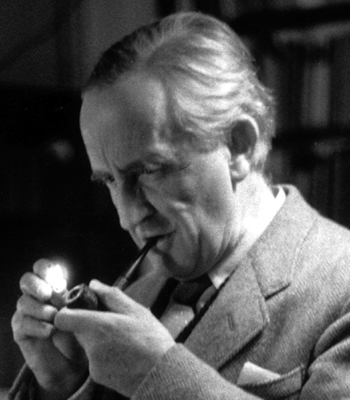
Am I a smoker? Perhaps, but not quite. I enjoy a few cigars a month, usually after the Sunday liturgy and breakfast. "J" has a similar routine with his pipe. A cigar enjoyed properly is not unlike wine: the producer perfects growing and nurtures a crop; the fruits of labor are fermented and stored for years; the assembly is a handed down art rather than a science; and one enjoys it for the flavors, not the chemical effect. Cigar crafting is a special skill handed down from one roller to another. Before the revolution, the great cigar makers of Cuba were run by families in a fashion similar to the esteemed vintners of France. One does not inhale cigar smoke. A draw populates the mouth with a waft of rich smoke that should drift out like incense from a thurible, leaving behind a progressively simpler array of tastes on the palate. A cigar is also a social event, a reason for friends to gather round with a drink and revel in committing the two great sins against the Baptist religion.... Which is why the puritanical American outlook on all smoking is annoying.

The occasional cigar smoker and pipe smoker (defined statistically as someone who smokes less than once a day) is constantly lumped with those chemical addicted fiends, dragging everyone ounce of burning tar into their decaying lungs at $6 a pack. The cigarette smokers. No, they are not bad people, but cigarettes, unlike other manners of smoking, do actually cause addiction, and because of they way they are consumed, they are highly correlated with a great many ailments. To most Americans, it is all the same filthy habit. By syllogy, the alcoholism of a lush getting smashed on $10 a bottle "vodka" necessarily condemns those who would have Chateau Rayas.

This attitude has found its way into the hearts of many American Catholics. Go to "Catholic Answers Forum" (no, don't.... ever) and ask about smoking. Some will say it is suicide incarnate and hence a mortal sin. Others will insist that since Ss. Pius X and John Bosco were tobacco users, that it was not sinful then, before the health effects of smoking were known, but that it is a sin now. 

Snuff was popular among wealthy clergy. Benedict XIII, Benedict XIV Lambertini, and Pius IX all enjoyed a hint of nasal stimulation. Snuff became so popular that papal edicts against the presence of snuff boxes on the altar were needed. Recent John XXIII and Benedict XVI were cigarette smokers. Pius X and XI liked cigars, although Pius X had a stronger penchant for cigarettes (one account of him in the sacristy, atop the sedia gestatoria with tiara and all, has him puffing furiously before Mass with a deacon holding an ash tray for him). Smoking was allowed during Mass at St. Peter's basilica to avoid the migration of men in and out of the temple. Then came American Catholicism.

Some compassion is due to cigarette smokers. The government attempts to tax their behavior and redirect it towards healthier activities. But cigarette smoking—most common among blue collar, lower income Americans—is usually an addiction, which effectively punishes people for their poverty. The behavior is inelastic relative to the taxation, and Uncle Sam knows it.

Still, to those who would damn we cigar and pipe puffers, either with the cigarette crowd or on our own, I say that we have Tolkien, Waugh, Belloc, Chesterton, Pius X, Russell Kirk, and Bill Buckley on our side. The puritans are blowing a distinctly different sort of smoke out a distinctly different place.


Sunday, August 9, 2015

New Series: The Whole Sarum


We will begin a new series of posts—atavistically published, perhaps monthly to ensure quality—on the Sarum liturgy. It will follow the structure of our posts on the neo-Gallican "Jansenist" French rites, with a look at the rubrics, ordinary texts, feasts, and time per annum, however we intend to go into greater depth. Resources in Latin and English abound on Sarum, both primary and secondary texts.

We will endeavor to examine Sarum's origins, its setting in a medieval and Catholic England, its cathedral celebration, and its actual words. The series will take advantage of the various editions of the Missal, Office, processional books, mystery plays (cultural presence of the liturgy), devotions, and commentaries published in liturgical histories since the Ritualist Movement in the 19th century.

Look for an initial post on the origins and setting of Sarum in September. Look for another post on Brideshead Revisited this week.

Friday, August 7, 2015

A Waughful Novel: The Idea of Brideshead Revisited

The Rad Trad:

J. and I hold competing views of Evelyn Waugh's lush novel, Brideshead Revisited. Mention a certain author's name and one masterpiece comes to mind. Fitzgerald? The Great Gatsby. Harper Lee? To Kill a Mockingbird. Melville? The protracted and monotonous Moby Dick. Evelyn Waugh's name instantly conjures the title Brideshead Revisited. The Waugh aficionado realizes that Brideshead is a curio among the author's extensive bibliography. Aside from the novela Helena, a travel diary, and a biography of Msgr. Ronald Knox, Waugh wrote satire. While Brideshead retains much of Waugh's biting wit and critical outlook on the newly moneyed classes, it is not a humorous novel at heart. Lord Marchmain's death possesses a gravity that little Lord Tangent's death at the hand of a starter pistol lacked in Decline and Fall.

As lovers of Waugh, I propose J. and I spend some time discussing the merits of Brideshead as literature, as a Catholic book, and where it stands in Waugh's legacy.

In this post, let us consider the literary setting of Brideshead. The novel begins in about 1923 and was written in 1943 following an injury its author incurred in military service. Waugh's ambition in writing Brideshead was to adumbrate "the operation of divine grace on a group of diverse but closely connected characters." This theme departs from the literature in vogue at the time the novel was set and written. The Romantic era of the late 19th century was in essence a reactionary movement against the rationalism wrought by the Industrial Revolution, Darwin, and the violent democratic movements. This escapist line of thought, if it can be called a line of thought, sought simpler times, more moral times, more meaningful times. Walter Scott's protagonist in Waverly is the archetype Romantic: a man who has read too many books without any direction as to what he has read, bored with the dull drums of country life, who goes on what he knows is a fool's errand in support of Bonnie Prince Charlie. In Ivanhoe Scott revived medieval chivalry a century after Burke declared it dead. American painters eschewed cities in favor of grand outdoor scenes, wherein the people where the ornaments, not the focus. It was an irreligious yearning for a more religious age. Then came the First World War. World War I's scorched earth legacy left nothing behind except the nihilistic ashes of Existentialism and the rare few who broke free of its lures, men like Hemingway.

Brideshead is a unique novel in that a major author wrote a mainstream work on a theme that would long be considered outmoded. It was an unusual work for the time. Like Hemingway's The Sun Also Rises, none of the characters of Brideshead are particularly likable—either a reflection of Waugh's apodictic personality or a trait of modern literary style. Brideshead has no "good guys" and "bad guys," only real people. "Lit students say everything is subversive," one Literature tutor at Jesus College, Oxford told me. He likely did not intend it, but Brideshead subverts modern literature by adopting its forms and style to tell a very Catholic and outmoded story. Waugh lamented that he lost favor in his previous circles and gained a great deal of unwanted fan mail because of Brideshead. The contrast between the style and content lead many Catholics to hate the book because of its characters and many disbelievers to love the book until the ending.

Your thoughts, J?

J.: Evelyn Waugh's peculiar form of choleric genius usually found expression in an evisceration of modern culture that went (somewhat incorrectly) under the name of satire. His fiction was funny and mean, but not always artistically disciplined. The publication of Brideshead Revisited proved that there was more to Waugh than a morally outraged funnyman. Dripping with nostalgia and a baroque prose style, this novel could have reinvented Waugh's career if he had not taken his critics to heart. As it ended up, this work stands mostly alone among a forest of angry criticisms and platitudinous narratives.

However, my introduction to Brideshead was as a potential convert, long before nuanced literary criticism was a twinkle in my eye. Anyone who has been reading my posts about conversion on this site will conclude that this was a tumultuous time for me, characterized by confusion and almost blind hope rather than certitude and a gradual relaxation of tension. In the midst of the uncertainty about such a life-altering decision as conversion, one well-meaning Catholic suggested I read some English-language Catholic novels by Flannery O'Connor, Walker Percy, and Evelyn Waugh. Brideshead was, as it turned out, the only Waugh novel suggested, and it was the only book of his I would read for quite some time.

Among the flux of real-world sex scandals, confusing papal pronouncements, and other sources of cognitive dissonance from clergy and laity alike, Brideshead was never going to get a fair reading from me. I saw in this decades-old novel a reflection of contemporary chaos and sanctioned winking at immorality. To wit:
  • Lady Marchmain seemed to be an overbearing matriarch who laid insupportable burdens upon her children without any care for their actual well-being, much like the way Holy Mother Church seemed to be operating.
  • Lord Marchmain was a mere pleasure-seeker who chased his own happiness at the expense of his children's, much like the clergy of today.
  • Sebastian and Julia Flyte were both unhappily stifled by the rules and doctrines they were born into, much like the Catholic laity I saw all around me, and the siblings' methods of leaving the Faith behind were all too common in reality.
  • Bridey was a stuck-up prude lacking true empathy for others, much like the innumerable pedantic Catholics I had met online and elsewhere. (Celia made a similar impression, but not much of one, although she seemed slightly more heartfelt.)
  • Rex was an empty-headed convert who sought membership in the Church for purely selfish reasons, much like some other potential converts I had met.
  • Charles... well, let's talk about Charles.
Mr. Ryder was an enigma to me. He came from a boorish middle-class family and was attracted to the Flytes mostly for superficial reasons intermixed with loneliness. I could understand his attraction to the wealthy estates, the endless bottles of wine, and the learned company of this family. I could even understand his attraction to the family's disintegration, both moral and social. (It is a common fact that people are morbidly moved to gaze at decaying things, whether they be Roman ruins or friendly alcoholics.) In spite of this, Charles remains in the Flytes' social orbit for so long primarily because of the companionship—however imperfect—they have to offer. He possessed precious little companionship before meeting them, and dearly holds on to the little more they give.

But why does Charles Ryder convert to the Catholic Faith? There is nothing on a first reading to convince the reader that this conversion is particularly plausible. Perhaps he does it out of boredom or idle curiosity about the ancient religion that mysteriously influenced his old, lost friends. The logic of his conversion seems only sensible to those who already possess faith and can recognize the invisible tugs upon the "string" that Chesterton writes about.

In the end, I put this novel aside as an example of mutation of attachment and affection. The Flytes, with the except of Celia, appeared to me as grotesques. Outside of Charles' deep need for companionship, I could not understand the attraction to such moral delinquents. Most importantly from the subjective side, I could not understand why the novel was recommended to me to read as a potential convert. There was nothing within it to form my moral or aesthetic sensibilities in such a way that Catholicism would become more attractive by experiencing the story.

None of which was to say that the characters were poorly-drawn, or that the prose was not luxurious, or that I was unable to empathize with some of the characters. I recognized much of the novel's artistry even then, but if anything it served to deepen my disgust for the real-world Catholic moral milieu that assaulted me at every turn. I could sympathize with Charles Ryder's need for Sebastian's friendship, but there was not therefore anything attractive in Sebastian's religion.

It would be years before I could approach Brideshead Revisited with a less prejudicial eye, and then only after coming to appreciate the rest of Waugh's fiction on other merits. Indeed, my longtime unfairness towards Waugh's most artistically lush novel has been a cause of great annoyance to others. While I usually gain more immediate pleasure from reading his early satires like Decline and Fall or Scoop, time and distance have gained for me a newfound appreciation of Brideshead, even to the point of being disappointed that his later literary career did not follow the aesthetic trajectory it would suggest.
Thursday, August 6, 2015

Transfiguration


It is worth considering that of the three prophets assumed by God in the Old Testament, two of them appeared with the glorified Christ on Mount Tabor: Moses, giver of the Law, and Elias, who slew false prophets on Mount Carmel. The message God entrusted to both of them was that God demanded due reverence in worship and deportment from His people. The message of Christ, more difficultly, was that God asked something proactive of mankind, to love God with all one's heart and one's neighbor as one's self. 

Christ's Transfiguration displayed His albescent divinity, what St. Gregory Palamas called the "uncreated divine energies" (today that phraseology would be dangerously New Age). Perhaps we should recall that His divine also illuminated our humanity....

"For we have not by following artificial fables, made known to you the power, and presence of our Lord Jesus Christ; but we were eyewitnesses of his greatness. For he received from God the Father, honour and glory: this voice coming down to him from the excellent glory: This is my beloved Son, in whom I am well pleased; hear ye him." (2Peter 1:16-17, first nocturne of Mattins)
"Of this metamorphosis the chief work was to remove from the hearts of the disciples the stumbling at the Cross. Before their eyes was unveiled the splendour of His hidden majesty, that the lowliness of His freely-chosen suffering might not confound their faith. But none the less was there here laid by the Providence of God a solid foundation for the hope of the Holy Church, whereby the whole body of Christ should know with what a change it is yet to be honoured. The members of that body whose Head hath already been transfigured in light may promise themselves a share in His glory." (Pope St. Leo the Great, second nocturne of Mattins) 

Wednesday, August 5, 2015

Josephology Sidebar: St. Bridget on the Assumption of Joseph


“Know, too, that there is no human body in Heaven but the glorious body of my Son and mine.”
–Saint Bridget of Sweden, Revelations to St. Bridget (TAN Books, 1984) p. 69


St. Joseph, disembodied with the best of them, pray for us! (source)

Wednesday, July 29, 2015

St. Martha in Tradition


Last Wednesday marked the feast of St. Mary Magdalen the Penitent. Today is her sister Martha’s feast day, the woman known by most only for asking her apparently lazy sister to help her prepare a meal. A selection from the medieval Golden Legend of Bl. Jacobus de Voragine is in order for presenting a fuller picture of this saint.
Saint Martha, hostess of our Lord Jesu Christ, was born of a royal kindred. Her father was named Syro and her mother Encharia. The father of her was duke of Syria and places maritime, and Martha with her sister possessed by the heritage of their mother three places, that was, the castle Magdalen, and Bethany and a part of Jerusalem. It is nowhere read that Martha had ever any husband ne fellowship of man, but she as a noble hostess ministered and served our Lord, and would also that her sister should serve him and help her, for she thought that all the world was not sufficient to serve such a guest. After the ascension of our Lord, when the disciples were departed, she with her brother Lazarus and her sister Mary, also Saint Maximin which baptized them, and to whom they were committed of the Holy Ghost, and many others, were put into a ship without sail, oars, or rudder governail, of the paynims, which by the conduct of our Lord they came all to Marseilles, and after came to the territory of Aquense or Aix, and there converted the people to the faith. Martha was right facound of speech, and courteous and gracious to the sight of the people.

Lesser known in our age is the story of how St. Martha destroyed a dragon that was afflicting the French people:
There was that time upon the river of Rhone, in a certain wood between Arles and Avignon, a great dragon, half beast and half fish, greater than an ox, longer than an horse, having teeth sharp as a sword, and horned on either side, head like a lion, tail like a serpent, and defended him with two wings on either side, and could not be beaten with cast of stones ne with other armour, and was as strong as twelve lions or bears; which dragon lay hiding and lurking in the river, and perished them that passed by and drowned ships. He came thither by sea from Galicia, and was engendered of Leviathan, which is a serpent of the water and is much wood, and of a beast called Bonacho, that is engendered in Galicia. And when he is pursued he casts out of his belly behind, his ordure, the space of an acre of land on them that follow him, and it is bright as glass, and what it toucheth it burneth as fire. To whom Martha, at the prayer of the people, came into the wood, and found him eating a man. And she cast on him holy water, and showed to him the cross, which anon was overcome, and standing still as a sheep, she bound him with her own girdle, and then was slain with spears and glaives of the people. The dragon was called of them that dwelled in the country Tarasconus, whereof, in remembrance of him that place is called Tarasconus, which tofore was called Nerluc, and the Black Lake, because there be woods shadowous and black.

St. Martha, industrious housekeeper, traveler by sea, converter of the French, and destroyer of evil serpents, pray for us!

Monday, July 27, 2015

Roman Feasts

Interior of St. Lawrence by Francesco Diofebi
source: schwarzgallery.com
Each rite and usage has its own peculiar and particular feasts which characterize the diocese of that rite's origin, be it Greek, Latin, or Assyrian. The Greeks have their feasts, like "Mid-Pentecost" and the "Protection of the Theotokos." We Latins have a number, too, many of which are coming up next month.

The month begins with St. Peter in Chains, recalling the chains that held St. Peter while he was imprisoned under Herod and Nero, the Jewish and Gentile persecutors of the Church, as well as the cardinatial church that holds two links of those chains. Pope Julius II's tomb, bearing Michelangelo's Moses, resides in this church. The Greeks have a feast commemorating the chains in January, but Rome possesses the actual church with these relics. Rome held a unique place among the churches of Christendom in that it could claim the two foremost Apostles of Christ as its fathers in faith, prompting the city to do its best to multiply their presence throughout the seven hills for stational liturgies.

Next is the feast of the Dedication of Our Lady of the Snows—the "Liberian basilica" of St. Mary Major. The Constantinian basilicas of Rome were dedicated to Our Lord (Lateran cathedral) and Ss. Peter & Paul, but the Virgin had no church dedicated to her. Snow began to fall over one rectangular space in the city, which St. Liberius took as a sign. The saintly pope began construction on the basilica, which is the Roman stational church for the Nativity of Christ and Pascha.

Lastly, Rome enjoys a vigil and an octave for St. Lawrence, the deacon of Rome who teased his torturers and entered eternal life with true Christian joy (I imagine that were he a martyr, St. Philip Neri would have died in a similar manner). His octave and vigil remind us that prior to Pius XII, the local church occupied a place of liturgical prominence: a Double of the First Class with an octave was observed for both the dedication of a parish and its patron saint. St. Lawrence enjoyed a similar place as a foundational saint for the spirit of the Roman church. When the popes wore the maniple on their left arms, it always bore gold and red thread. Gold for the joy of the Byzantine Church, red for the martyrs of the Roman Church.

In the Apostle Peter, the Roman Church recalls the place given to her by the Prince of the Apostles. In the miracle of Our Lady, she recalls that Our Lady laid the cornerstone of her own enduring presence in the Eternal City. In St. Lawrence, she recalls her happy witness to Christ. These feasts do not celebrate Biblical events nor do they teach theological lessons. These feasts are acts of worshipping God for God's own sake, for thanking Him for counting the saints as the closest intimates of the city of Rome, for showing gratitude for His continuing presence in the Roman Church. August, as much as June 29, is an appropriate time to sing O felix Roma.