Saturday, November 9, 2019

Feast: Dedication of the Lateran Archbasilica & Cathedral of Rome

*    *    *

Today is the feast of the dedication of the Cathedral of Our Savior, commonly known as the Archbasilica of St. John Lateran, the cathedral of the diocese of Rome and hence the foremost Church in the world. The cathedral has probably been re-built half a dozen times due to fires, earthquakes, and the Avignon papacy, yet some of the original building remains, which traces its origins to the Emperor Constantine. I had re-published an old post showing some pictures I took of the Cathedral during my visit there a few years ago. I think this better than posting images available from the internet because the display the "flow" of the cathedral and lend themselves to an appreciation of the look and scale. At the end I have added a video of the consecration of the FSSP seminary chapel in Nebraska which, although done to the 1962 rite, is textually very close to how the Mass part of the rites would have been done at the Lateran during its several re-consecrations. Happy feast!—one of my favorite of the year.

The image of Christ dominates this great cathedral built in His name
The Archbasilica of Our Savior has also been known as St. John Lateran since Sergius III re-consecrated the building once, adding the patronage of the Evangelist and the Beloved Apostle; the primary patronal feast is the Ascension of Our Lord Jesus Christ. This church is great not so much for its size, grandeur, history, or architecture—although all are quite impressive, but because this church is the cathedral of Rome and, hence, the foremost church in the world. It is the Pope's cathedral, although people often mistake St. Peter's for this honor.

The throne of the Bishop of Rome
Christian worship existed at this location in the southeastern corner of Rome, near the walls of the old City, since the first century, when Ss. Peter and Paul themselves were present there. After Christianity was permitted to crawl out of the Roman woodwork Emperor Constantine began to build several major churches on behalf of the Christians. Contrary to popular opinion, Constantine did not give too much preference to Christianity over paganism during this period. He gave the Church and the Bishop of Rome considerable real estate, like the Lateran Palace, where the popes resided until the reign of Pius IX, but not in prime locations.

The Church of Our Savior eventually became the main seat of the Bishop of Rome due to its proximity to the Lateran Palace. Important stational days during Holy Week—particularly Palm Sunday, Maundy Thursday, and Holy Saturday—which are communal in nature take place here. The consecration of the Bishop of Rome, and his coronation as Pope, and special blessings took place at this cathedral, emphasizing the Pope's role as a bishop for the City. During one Maundy Thursday Pope St. Gregory the Great was performing the mandatum (re: foot-washing ceremony) and after washing twelve men's feet and thirteenth appeared. This man's luminous face was described as perfect by the Pope. The man immediately disappeared. St. Gregory concluded it was an angel, or perhaps even Our Lord Himself. This is why in the old Roman rite thirteen men's feet were washed in Maundy Thursday as opposed to the instinctive twelve.

The Cathedral of Our Savior was subjected to barbaric invasions by the Goths in the sixth century, by the Saracens in the ninth century, and earth quakes throughout. By the reign of Sergius III (r. 904-911) the Cathedral had fallen into such disarray it required a re-model, including a new roof. It was re-dedicated by Pope Sergius and given a consecration to Ss. John the Baptist and John the Evangelist, hence its vulgar name "St. John Lateran."

In the late first millennium through the high Middle Ages the Lateran dominated the Latin Church's liturgical understanding of Christian worship as the fulfillment of the Law in light of Calvary. It was the "Mother and Head of all churches in the City and the world", the new Temple. At an altar in the confessio were held several false relics of the Ark of the Covenant and the Rod of Moses, kept mainly for the amusement of pilgrims until better judgment won out and the items were confined to the Lateran's museum, where they still reside to this day.

More intriguing was the Lateran's liturgy for Mandy Thursday, which by the 11th century combined the festive Mass (sung after Terce in the Ordo Romanus I) of the Roman tradition with the penitential Gallican view all under a praxis unique to the Lateran church. According to Bonizo, bishop of Sutri, and Bernardus, the 12th century rector of the Cathedral, Mass was sung at 3PM, after None and in much the same manner as Papal Mass until the papacy of Paul VI. The cardinal bishops of the suffragan sees, along with the cardinal priests and deacons of the major churches, vested for Mass and sat around the Lord Pope in the apse of the cathedral according to rank, with the cardinal bishops on the top row and nearest the Bishop of Rome and the cardinal deacons near the floor. The readings were sung in both Latin and Greek by the Latin and Byzantine monks of the City. At the conclusion of the Nicene Creed, newly introduced to the Roman Church's liturgy at that point, the Mass would come to a full stop and the monks would remove the mensa from the high altar and place it in a cave-like recess at the altar of Saint Pancras, near where the Blessed Sacrament chapel is today in the south transept. The Pope would then process from the apse to the mensa at the chapel of Saint Pancras and show the people assembled a relic containing the Precious Blood, their Communion for the day much as the creeping to the Cross was their Communion on Good Friday. The Lord Pope would then sing Mass alone, without the aid of any cardinals save the cardinal deacons and he alone would communicate the Sacred Species after the Canon (the deacons would communicate later). The parallel was unmistakable: the Pope was the heir to the Apostles in the Lateran, and he partook of Christ's feast, His Sacrifice, and His priesthood in the Upper Room that day.

As in the pre-Pius XII rites of Holy Week, the Mass would stop during the Canon and the Pope would be brought vials of olive oil to hallow. Olive oil recalls the olive branch the dove brought Noah after the Flood, that peace finally followed the purification of Mankind; a similar peace would flow into the catechumens, in the unlikely there were any in that more Christian age, after the living waters of Baptism in two days. Much like the Canon's recitation away from the high altar, the solitude of the consecration of the Holy Oils reflected the Pope's exercise of Christ's priesthood and living transmission of His ministry. Moreover, it mystically rhymed with the Old Testament, when the high priest would enter the Holy of Holies once a year to offer sacrifice for the people. This act was so unique to both the Pope and the Lateran that if either the Pope were unavailable or the Mass had to take place at Saint Peter's Basilica instead the transmission of the mensa was omitted, Mass was celebrated as normal at the high altar, and the oils were presented for consecration on a table behind the altar, exactly as in the Curial and Tridentine books celebrated until 1955.

The Lateran Cathedral as seen from the square
In the first millennium the square in front of the Lateran Cathedral and Palace hosted the election of the Pope. After the death of the previous Pontiff the clergy would gather all Roman citizens, the cardinals (originally the priests and deacons of Rome) would elect nominees from among themselves, and the candidate with the greatest yell from the crowd would be the new Bishop of Rome. In the late first millennium violence often resulted and which faction could gain entrance to the Cathedral, consecrate its candidate, and enthrone him would have the Pope! During the middle ages the Archbasilica hosted five ecumenical councils, the Papal Court, and the public square of Rome. Pope Innocent III famously received St Francis of Assisi here, after first suggesting that the poor saint preach to the pigs in the public market—a suggestion which the saint immediately followed, and also saw the friar holding up the Cathedral, which was crumbling under the sins of the Church.
Pope Benedict XVI enthroned after election

As the Popes moved to Avignon, the Cathedral fell again into disarray and was partially destroyed due to a fire. It was re-modeled during the Renaissance and again during the 18th century, when the statues in the niches were added. Today the Popes still use this great Cathedral for Maundy Thursday, Ascension Thursday, Corpus Christi, pastoral visits, and enthronement after election.

I was blessed by God to be able to visit this awesome place a year and a half ago, whilst in Rome during Lent. My two friends and I, one Catholic and one then-searching, thought the Lateran to be an interesting one hour stop we could make on our way to the Colosseum. We spent five hours in the Lateran and two in the Colosseum.

The facade, a baroque addition, is impressive, but not as impressive as the one gracing St. Mary Major. I was not impressed with the Lateran until I stepped inside. What first struck me was the sheer scale of the place. I have been to St. Patrick's Cathedral in New York City several times, a larger church, but less open and hence smaller in scale.

The imposing Cosmatesque floor
My feet were sore from walking the Eternal City in boating shoes, so I ended up dragging the pads of my feet without intending to do so. This had the most spectacular effect. One can feel the texture of the mosaic floor in this Cathedral. Every bump and tile has character to it. History seeps from the ground of this place and the Spirit of God encompasses it. The words of the introit are verily said of this house of God:
Terrible is this place and This is none other than the house of God; this is the gate of heaven; and it shall be called the court of God.—Genesis 28:17
We made our way through the various side chapels over the course of an hour or two, before coming to the Chapel of St. Francis of Assisi, shown below. The five piercings on the heart held by the angel simultaneously recall the stigmata of St. Francis and the devotion to the Five Wounds, popular during Francis's time.


The Blessed Sacrament Chapel is next to the Papal Altar. There is a grand tabernacle surrounded by four statues of Popes and crowned with an ethereal image of the patronal feast, the Ascension of Our Lord Jesus Christ. Interestingly the Popes are vested as deacons, indicating that they too are just servants at the altar of the High Priest, Christ. May his holiness, Francis, wear the pontifical dalmatic and find himself in the same self-effacing service as past pontiffs.


In the center of the Cathedral is the Papal Altar, topped by a canopy and reliquary which, although ornamented with busts of St. John the Baptist and John the Evangelist, contains the head of St. Paul. Imagine that almost every Pope from the fourth century has celebrated Mass in this place, surrounded by St. Paul and Our Lord Himself.


The Papal Altar

And the ciborium with the reliquary:


Across from the altar is the great apse of the Cathedral. A massive back wall is topped with gold mosaics containing icons of Our Lord, Our Lady, Ss. John the Baptist and John the Evangelist, and other Biblical figures. One must also recall the organic continuity of this cathedral. Icons of Ss. Francis and Dominic were not-so-deftly inserted at a later time! At the end of a long aisle, containing an organ, balconies for the cantors, and choir stalls for clergy in attendance, is the throne of the Supreme Pontiff:


Beyond the apse is a gift shop. Horrifically, the tomb of Pope Innocent III, the most powerful man of the Middle Ages, is a cross beam for the door frame! How passes the glory of the world!


Something striking about this place is the color in it. The nave is a bland white, as per Italian baroque style for public places, but the sanctuary and other locations from the early Christian era, Middle Ages, and Renaissance is thriving with life and color. Even niches between icons and mosaics were treated as opportunities to paint images, images which literally pop out into a third dimension:


The nave for contrast:


The layout is distinctly Roman, the floor is medieval, the ceiling Renaissance, the chapels Baroque, and place entirely Catholic.

The ceiling is a wonder

The Cathedral's altars, chapels, aisles, and niches are a testament to the on-going effort that is the Gospel of Christ, one held by sinners and saints, which must endure every trial and be maintained and expressed through every age. This aisle towards the entrance contained numerous chapels under renovation.


I will leave on a light note. One of my companions was quite taken with the statues of the twelve Apostles in the nave, which are gargantuan in this size given the scale of the Cathedral. Upon arriving at St. Matthew, my friend decided that since the former tax-collector no longer needed his gold, there was no excuse to let is sit unused.

Gimme!
Lastly, across from the Lateran Cathedral is the Scala Sancta, the Holy Stairs from Pilate's palace. Christ was tried atop these steps and descended them to take up His Cross for us. One may only ascend these steps on one's knees. More on them another time....


VIDEO:


Wednesday, November 6, 2019

Jerome Bertram, CO (RIP)

source: flickr.com/photos/josephshaw
It was great sadness yesterday that I learned of the passing of Fr. Jerome Bertram of the Oxford Oratory. I beseech each of you, kind readers, to offer a prayer for the soul of this kind and Godly man who nurtured me greatly during my time at the University of Oxford.

There is a detailed obituary of Fr. Jerome available here, which contains much information I myself did not know about him. He was a very unassuming man, humble by nature but always, even in Oxford, one of the cleverest people in any room; he just rarely let anyone in on that secret.

Upon meeting him one encountered a slightly unkempt man, the barrel "French" cuffs of his shirt always a bit black and his hair never staying quite staying where his comb asked it to spend the day. He had a slightly gasping manner of speech, as though exhaling and winding downwards at the end of every sentence. He came across as very introverted until one made a comment to him and he became the most loquacious new acquaintance one could ask for.

According to his obituary, his parents were Anthony and Barbara Bertram. His father was a literary critic who ran a intelligence network for the French Resistance during the Second World Way; his mother, Barbara Bertram née Randolph came from the same family which started the hotel a block south of the Oratory in Oxford.

While most of the Oxford Oratorians come from all over the Commonwealth—England, British Africa etc—Fr. Jerome was an Oxonian at heart. He could identify which statues on a building were original and had survived the Reformation, even which ones on Queens Lane retained their original paint. He had a special interest in brass plates and calligraphy. At Coughton Court, a Recusant Catholic manor home, he spent ten minutes staring down a Sarum Missal and asking himself whether it belonged to the 16th century given its bold type face.

Despite being an older man when I knew him during the 2010-2011 academic year, he attracted a significant number of young people to his counsel. He had a calming manner in the Confessional and always gave inquiring minds his full time and attention, even if he did not want to. I distinctly remember his jealousy on Good Friday toward the Oratorians who were taking part in the liturgical service and not sitting in the Confessional for three hours.

A true son of Saint Philip Neri, he was a man of prayer and a Patristic outlook with a sharp wit. He never commented on the Schoolmen nor on the manualists, but in his conferences to the Brothers of the Oratory he always made use of the early Latin Fathers and his own mentor in the faith, John Henry Newman. He seemed intoxicated by prayer and drifted into irreproachable peace during the singing of the seasonal Marian antiphons. Not a legalistic fellow, he was quite happy to pray the Rosary or Office at rapid speed, consigning the actual words to "background noise" while directing his own soul to God.

As a son of Philip, he had a biting sense of humor, but that bore him some trouble at least once. For the uninitiated, Oxford in inundated with homeless. In June of 2011, Fr. Jerome kept coming across one particular drunk who would ask him for money and then scold him after not receiving an immediate yes. One evening Fr. Jerome ejected myself and another friend from the rectory after tea as he saw the miscreant charging the door. Father parted with, "Goodnight [Rad Trad]! And goodnight, Crazy Man!" A few days later, on Corpus Christi, Father stood outside the church greeting people after Mass only to be socked in the chest by "Crazy Man". Startled and shocked out of his equilibrium, Father Jerome thought to have his assailant stand on the sidewalk, and unable to claim church grounds as sanctuary, until the police arrived.

Although an Oratorian, and hence willing to serve any who entered the Oratory's doors, he was essentially a man of the old rite. He also referred to the old Mass as "the real thing", at least to me, and believed that at one point within the next generation it would become the de facto Sunday Mass of the Oratory.

It was he, and a fellow Oratorian, who taught me to serve the old low Mass and who happily brought me into their private chapel for Mass three or four days a week. It was there, in that narrow, red room, that I first learned to treat the old Mass as prayer. He always whispered the prayers at the foot of the altar, as if they were his personal supplication to God, which they are. He would bounce slightly and almost drift off in bliss at the Introit, particularly for the greater feasts (Resurrexi et adhuc tecum sum, alleluia!). When reading the Gospel his attention focused, especially on the words of Christ Himself, as if Our Lord spoke directly to him. He never did the Leonine prayers, but on Sundays would have me repeat the Prayer for the Queen within him until I knew it by heart.

It was also Fr. Jerome who taught me about the importance of understanding Latin to serving the old Mass. Although I had instruction in Latin and can read it well enough, his celebration of the Mass underscored that he understood everything he was doing as much as he understood breathing. In the above picture, Fr. Jerome, acting as deacon at the Trinity Term Mass for the Newman Society (with myself as one of the acolytes), his face opened with foreboding at the words "videbitis coelum apertum, et angelos Dei ascendentes, et descendentes supra Filium hominis."

Despite his love for the old Mass, he was not a "liturgical" person nor was he interested in liturgy wars. Perhaps due to his terrible singing voice, he never acted as the celebrant at high Mass in either the new or old rite, although he would act as deacon at either and sing his parts in recto tono. During the above Mass he forgot that clergy could genuflect on the top step other than at the beginning and end of Mass; he seemed about to keel over by the end of the Canon. At the end of Mass the organist played the elaborate melody of the dismissal from the Missa Regia. Father rolled his eyes, tuned out immediately, and gave the Ite, missa est from Mass XV (the flat one) while we attempted to contain our laughter.

While he favored the old Mass and even asked for his funeral in the old rite, he never spoke ill of the new Mass in front of people who did not share his view and even happily related to me last year his joy that attendance at their Novus Ordo Mass had dipped due to other churches in the archdiocese of Birmingham imitating the Oratorian praxis.

He did briefly hold an interest in reviving the Sarum rite with then-fellow Oratorian Sean Finnegan and acquired the permission of the Archbishop to celebrate Candlemas in the Merton College Chapel. After two such celebrations, during which he gave the sermon, the whole thing fell apart when someone wrote to Rome about the "Saint Osmond Society," which Fr. Bertram always called the Donny Osmond Society, and lamented they had not called themselves a "Group" or anything that sounded less like the FSSPX.

He held custody over the physical care of the Oratory, both church and rectory, a position which made him think very little of the Jesuits. During a re-painting of the church he discovered that the walls were indeed stone and marble, and that the Jesuits who ran Saint Aloysius until the '80s had painted over it in plain white to give the appearance of sterility. When they moved the altar forward during Vatican II they took care to remove the foundations and floor buttressing where the altar had been, against the wall of the apse, so that it could not be moved again without great effort and cost. Worst of all, he lamented the great number of relics, donated to Saint Aloysius parish by Pius IX, were destroyed in a bonfire, including the entire body of a martyr named Saint Pacificus. He fondly remembers getting the remaining relics in the mail, piece by piece, from parishioners who wisely lifted them from the church in the middle of the night back in the day. Although everything somewhat worked out in the end, he always referred to the Jesuits as "the Taliban."

He instructed not a few friends of mine in the faith, always privately and with the Roman Catechism, and was always encouraging me to take up Orders. He had considerable gifts, but always gave them back to God. He never drew attention to himself despite things which would give him some degree of notoriety in the Catholic world, like being the altar boy in Archbishop Sheen's This is the Mass. He was an excellent priest, a strong mentor, and a true son of Saint Philip Neri. Do pray for him.

Fr. Jerome's funeral
source: oxfordoratory.org.uk

Friday, November 1, 2019

Omnium Sanctorum

source: nationalgallery.bg


"Dearly beloved brethren: This day we keep, with one great cry of joy, a Feast in memory of all God's holy children; His children, whose presence is a gladness to heaven; His children, whose prayers are a blessing to earth; His children, whose victories are the crown of the Holy Church; His chosen, whose testifying is the more glorious in honour, as the agony in which it was given was the sterner in intensity, for as the dreader grew the battle, so the grander grew the fighters, and the triumph of martyrdom waxed the more incisive by the multiplicity of suffering, and the heavier the torment the heavier the prize. And it is our Mother, the Catholic Church, spread far and wide throughout all this planet, it is she that hath learnt, in Christ Jesus her Head, not to fear shame, nor cross, nor death, but hath waxed lealer and lealer, and, not by fighting, but by enduring, hath breathed into all that noble band who have come up to the bitter starting-post the hope of conquest and glory which hath warmed them manfully to accept the race."

Thursday, October 31, 2019

After the Synod: Dominus quasi vir pugnator?

Does the New Testament taint our view of God? No, not exactly. There is, however, a temptation, fully realized by the Manicheans, Gnostics, and Cathars, to bifurcate God in the Old Testament from the New in light of the New.

Jesus Christ, as God made Man—and remaining divine, healed the sick, illuminated the blind, fed thousands with a gesture, and proclaimed the Kingdom of God to be at hand, that is, immediately accessible and no longer distant as it was to the Hebrews.

Among the stark contrasts between the New and Old Testaments are the role of miracles. While on earth Our Lord performed miracles as rewards for faith, whether it was the faith of the cot-bearers who passed their friend through a roof or the "righteous"* Centurion whose faith was greater than Israel's. Miracles are common and are embedded in every page of the Gospels other than the longer discourses (Bread of Life, Sermon on the Mount) and the Passion narratives.

By contrast, the Old Testament has plenty of miracles, but they seem to be of a qualitatively different nature and far less common than in the Gospels. Miracles under the various covenants of the Old Testaments may seem as numerous as those in the Gospels, but the Old Testament comprises 90% of Sacred Scripture and several millennia of salvation history, whereas the New Testament only recounts a few decades and half the text is devoted to epistolary teaching.

Miracles could be salvific—as they were in the case of the Israelites following a pillar of flame out of Egypt, crossing the Red Sea, or peering up at a bronze serpent—but they could just as easily be damning, as they were in the case of the apostate Israelites who fell into the earth, the perverts of Sodom and Gomorrah who tasted fire from heaven on earth, and the false prophets who witnessed the presence of the One True God before Elijah slew them. Unlike in the Gospel, where the presence of God is straightforward, visible, and something demanding a response of faith that results in a miracle, the miracles of the old covenant only occasionally relate to the faith of those who receive them and often are not petitioned. Indeed, they are often unilateral acts of God, through the agency of a prophet, upon a people who know neither what they need nor what they deserve.

In Christian times miracles have become associated with the acts of the saints and reflect their relationship with God. Saint Francis and Padre Pio bore the signs of Christ's Passion; Gregory Thaumaturgus became so renown for God's work through him he became "the Wonderworker"; Peter healed the lame, as Christ did, and Mary was taken bodily into heaven. What we have forgotten is that God may not be as pleased with the Church as a whole as He is with His saints.

In reading the Lauds for today's vigil, I came across the Canticle of Moses. Dominus quasi vir pugnator, the bearer of the Law sings. God fought for the Israelites who were often too foolish and too weak to maintain fidelity to Him. In forty years through the desert they saw a pillar of fire lead them out of Egypt, they followed it across the parted Red Sea, saw their heretics fall into the depths of Hell, saw God give them refuge in an oasis, and found God's cure in the lifted bronze serpent, yet they still strayed. All told the miracles they encountered were meant to protect them and to inspire their faith rather than reward them as Christ's miracles were meant to do. There is more Sinai about Fatima than there is Assisi.

When the Church strays God uses miracles sparingly and to teach a point, and occasionally teaches a point by withholding a miracle. As those headed to Babylon prayed for deliverance, so did the people of Rome in the 5th century and Constantinople in the 15th century, but their prayers went unanswered. In all cases, a structure for society and religion that had outlived its use and become displeasing to God was then liquidated so that something purified by fire might take its place. One thinks of the great Catholic writers and mystics of the 19th and early 20th century (Chesterton, Belloc, Newman, John Bosco, Garrigou Lagrange, the Marian apparitions). One thinks of prior times as more religious, but were the de facto Deistic years of foppish, decadent pre-Revolutionary France really more pious than the same place a century later?

Today's structures have seriously outlived their use to the Catholic Church and to God. The corporate structure of the Church hierarchy and Ultramontane papacy had their roots in protecting the faithful from the very things they are now propagating. Orthodox Catholics will be bothered but not disheartened by the Amazon Synod. More "conservative" Catholics may find it difficult to continue the intellectual calisthenics of recent years, the mantra to which is "Everything's different/Nothing's changed". We may well pray Pope Francis writes something in line with Christian orthodoxy now that the Pachamama festival has ended, but it is quite possible God will not intervene in such a way as He did with Paul VI. The papacy may be of Divine origin, but our interest in it belongs to the 20th century, and God may see fit to kill it. While He will not deny the means of salvation to any faithful servant, the Church itself may not need to be saved from the Pope as much as it needs to be purged of people like him. I recently turned 30 and will spend the rest of my life watching the influence of these sycophants wane as they accelerate the decline of their institutional foundation, much like how 18th century France and 15th century Byzantium slipped into free falls. God may well save us, but He will do with the Church what He wants rather than what we want.

The Masses of the recent Summorum Pontificum pilgrimage were celebrated by Mgr. Dominique Rey of Toulon in France. His modest diocese boasts two dozen religious orders, a hundred seminarians, a Charismatic movement, traditional-rite ordinations, and liberality toward the old Mass. The reason why is not that Mgr. Rey is following a formula, it is because he is following the Holy Spirit where others will not. Do any modernistist dioceses have such a future to anticipate?

The Church today survives off the fumes of pre-Conciliar Catholicism's power and prestige. In Mitre and Crook, Bryan Houghton observed, through his fictional Bishop Forester, that the pews were not full of people after the new religion, but people who kept coming fueled by the old. The centralized, organized, fully rational Church given to us by the Tridentine Fathers has fallen into disuse and has been vitiated by the Churchmen of the last two generations. A younger, better generation is poised to succeed them and inherit a very different Church. What the current generation aspires to do is to destroy the Christianity of their youth, and God may let them succeed in taking down the edifice so that he may rebuild upon the foundations.

==================================================
* - "righteous" in Biblical times usually denoted a Gentile who had not converted to Judaism, but who kept the Law and precepts to the best of his ability and who venerated God alone

Tuesday, October 22, 2019

A Church with a Riparian Face: The First Commandment


Did your heart elate the other morning when video surfaced of a man in Rome who held to the first commandment of the Mosaic Decalogue and who took it seriously? Does it not astound you, reader, to wonder how many forms thirty pieces of silver can take?

Modern political respectability, approval by feminists, delusions of "integral ecology" and the like can all be obtained by ceasing to have "any strange gods before" the One True God. In a like vein, one need not commit genocide or sexual assault to merit damnation. One need only do anything other than love the Lord with one's whole heart, mind, and soul.

While the latest robber synod, with no authority to do anything, persists on the grounds where Saint Peter came to martyrdom, a man faithful to God entered Santa Maria in Transpontina, gathered up a few kitsche fertility statues, and sent them down to see poor Pope Formosus's fingers. Considering the relative modesty of this one action, it has resounded far more loudly around the world than the approach of some orthodox Cardinals, who seem to think writing a strongly worded letter and posting it by certified mail is a legitimate means of opposing heterodoxy.

No, the fellow who sent Pucker Mama for a dip had the right idea. Indeed, his actions reminded me of a night in my own life seven years ago which followed similar lines. One fine May night in Ithaca, New York, a few months prior to graduation and commencement weekend, a Cornell society to which I belonged invited a high ranking member of the Bush administration to speak to us and have dinner. This particular individual, who will not be named, had a great deal of involvement in the execution of the Iraq War.

Prior to the events a friend and I had drinks at the Statler Hotel bar on the ground floor. I drank a few martinis while he gunned down straight Hendricks, cucumbers and all. My friend, let us call him Pete, was a lapsed Greek Orthodox fellow who continued to curse his way through Divine Liturgy on Sundays for cultural reasons, but he was an over all atheist. Pete and I ran in the same circles and usually found ourselves in mutual competition for jobs, club posts, ladies' attention, and honors.

With Pete three sheets to the wind, we made our way to Mr. War Man's speech and then had a second round of drinks with him and some others atop the newly completed Physical Sciences building, a modern and ugly edifice which nonetheless offered a spectacular view of Lake Cayuga and the hills at dusk. People took their turns making irrelevant small talk with the figure: "Did I mentioned I speak three words of Arabic? I'd love to use that at your think tanks!" "I also have a great interest in the semiotics of democracy in the Middle East and I'd love to share my thoughts on that" "I'm a poli sci major and can't wait to make a difference the way you did!" I spoke to him about biking with a friend around the lake. He smiled and thanked me for not asking for a job. I thanked him for not re-instituting the draft, as I have little interest in physical exercise.

A similar view to where we were
source: visitithaca.com
At dinner the guest of honor somehow had surprisingly little to say. The subject immediately turned to religion when a Jewish frat boy seated across from my setting took notice to my making the Sign of the Cross prior to taking food.

"Do you guys really believe there are demons in your food?"
"What?"
"It just seems like you guys are into demons and vampire movies and snuff stuff."
"It's a prayer for a blessing, an act of Thanksg—"
"Guys!" interjected Peter. "It's a bunch of nothing! [The Rad Trad] is fine."

The table politely laughed but still, the frat boy persisted.

"I just don't understand some of your stuff. The things you Catholics are into is just so different from what everyone else is into."
"I don't think so. In fact I believe Christ fills a lot of basic human wants and desires. Things to aspire to, truth, beauty, purpose—"
"No, not what I mean."
"What do you mean?"
"Like your Communion. I mean, what's the point in that?"
"It's the Body of Christ."
"Yeah, but I don't get why you'd want that."
"Well, the Mass is a Sacrifice, like in the Old Jewish Covenant. It's the Cross made present again."
"I get that part. It's the eating part, dude. Like why would you want to eat some guy's flesh?"
"It's Communion with God, though. It's not cannibalism, but a way of—"
"Sounds like something was lost in translation. Some kind of symbolism."
"Not really. In fact the Greek word Saint John uses for 'eat' is—"
"Guys!" Pete interjected again, "He just got finished making some bread and told his buds to have something! Nothing more to it!"

The water glass left my hand and found its way into Pete's face. The frat boy was a fool, but Pete was a friend and knew better. An awkwardly silent moment passed, water dripping down Pete's drenched, curly Greek hair and onto his dinner jacket. With all eyes on him he leapt from his, grabbed me by the collar, and started to drive me to the wall. I took hold of his lapels and twisted the both of us to the floor. Before the first proper blows could be struck the police separated us and gathered statements.

A bureaucratic investigation followed. Friends put in calls to administrators on both sides to ensure there would be no hiccups concerning graduation. We were separately investigated by the university police, the real police, and school administrators, who ultimately decided our punishment. In America's most liberal town—Nader beat Bush in Ithaca during the 2000 election—every authority figure I encountered was a Catholic who voiced some degree of empathy with my actions. I was told to write a one paragraph paper.

Pete was less fortunate and was given twenty hours of community service and a ten page paper, all to completed by graduation in two weeks time. All this in the throes of final exams.

The man who threw Pansymama into the Tiber was not a hateful person. On the contrary, a fiery regard for truth ignited his actions, a disdain for seeing good and scared things trampled upon for misguided human respect. His deeds may in fact inspire the downtrodden faith of others.

Seven years later, Pete has returned to the Greek Orthodox Church.

Wednesday, October 16, 2019

Clerical Inculturation


The Amazon Synod. Do we care? Perhaps a little, but there are more pressing matters for Catholics, like the impending feast of an Apostle in two days and the gradual winding down of the liturgical season. It is perhaps worth saying something about the Amazonia Extravaganza, but other more commentators more competent in worrying will do that for me.

We hear from bishops of the Amazon with German names who recount the horrors of Christendom in that region. We have civilized these people by getting them to desist from human sacrifice, so logically they may begin to demand the same things post-Modern German bishops demand. Right?

Only if the Amazon is the Latino foto of the German Church. Why is, that after many decades of targeted missionary work, the Amazon still does not have their own education system but even their own bishop? The region has gone from a high-volume Catholic missionary zone to the former-home of urbanized and Protestantized ex-Natives. Such obsolescence cannot be attributed merely to the insufficiency of clerical numbers. It must be attributed to the insufficiency of the clergy there in general.

One priest remarked in a conversation that "Wherever missionaries are not making zealous converts, it is because they are morally compromised that the people know it." What a contrast to the former Archbishop of Dakar and Apostolic Delegate to French Africa, Msgr. Lefebvre. Say what you will of the FSSPX and their aliturgical ways, he was the most successful missionary bishop of our times. In a few decades he baptized tens of thousands of people personally, founded two seminaries, initiated numerous religious orders into his diocese, and built a full cathedral. By the time he transferred from Dakar to the bishopric of Tulles he left behind an independent diocese with a completely indigenous clergy. There is inculturation.

Sincerity and zeal can be misdirected, as they would occasionally be later in Msgr. Lefebvre's life, but one cannot dispute that those traits served him well as a missionary and brought many to Christ. Would that the kraut bishops of the Amazon learn from such a man.

Thursday, October 10, 2019

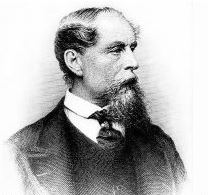
When Charles Dickens Went to Mass


Recently I was reading the gruesome story of an ex-Catholic-turned-Orthodox bishop named Joseph Semashko who assisted Tsar Nicholas in the persecution of Ruthenian Catholics. Charles Dickens wrote an account of Bishop Joseph's gradual killing of nearly an entire convent of Ruthenian nuns in his periodical. In the archives I came across an unrelated series of accounts of his visit to Rome, where he had the opportunity to attend Papal Mass during the pontificate of Gregory XVI.

Rome, at this point, was a city of less than 100,000 people. A purely plainsong Mass had not been sung in Saint Peter's Basilica for centuries and the remaining plainsong followed the Medici-Ratisbonne method. There was no Msgr. Marini to ensure seminarians from PNAC acting as sacred ministers stood upright with their hands folded; think more Cardinal Dante, who, still oblivious to television cameras, simply put ministers in their places and asked them to sing their assigned texts.

The great Petrine Basilica in Rome, completed two centuries earlier, belonged to an architectural fad just passed and recently deemed ostentatious. Dickens, perhaps ignorant of the rites of the Curia and the long traditional of basilica liturgy, likens the rites to theater, perhaps in derision of the baroque influence on the Mass.

On Sunday, the Pope assisted in the performance of High Mass at St. Peter's. The effect of the Cathedral on my mind, on that second visit, was exactly what it was at first, and what it remains after many visits. It is not religiously impressive or affecting. It is an immense edifice, with no one point for the mind to rest upon; and it tires itself with wandering round and round. The very purpose of the place, is not expressed in anything you see there, unless you examine its details--and all examination of details is incompatible with the place itself. It might be a Pantheon, or a Senate House, or a great architectural trophy, having no other object than an architectural triumph. There is a black statue of St. Peter, to be sure, under a red canopy; which is larger than life and which is constantly having its great toe kissed by good Catholics. You cannot help seeing that: it is so very prominent and popular. But it does not heighten the effect of the temple, as a work of art; and it is not expressive--to me at least--of its high purpose.
A large space behind the altar, was fitted up with boxes, shaped like those at the Italian Opera in England, but in their decoration much more gaudy. In the centre of the kind of theatre thus railed off, was a canopied dais with the Pope's chair upon it. The pavement was covered with a carpet of the brightest green; and what with this green, and the intolerable reds and crimsons, and gold borders of the hangings, the whole concern looked like a stupendous Bonbon. On either side of the altar, was a large box for lady strangers. These were filled with ladies in black dresses and black veils. The gentlemen of the Pope's guard, in red coats, leather breeches, and jack-boots, guarded all this reserved space, with drawn swords that were very flashy in every sense; and from the altar all down the nave, a broad lane was kept clear by the Pope's Swiss guard, who wear a quaint striped surcoat, and striped tight legs, and carry halberds like those which are usually shouldered by those theatrical supernumeraries, who never can get off the stage fast enough, and who may be generally observed to linger in the enemy's camp after the open country, held by the opposite forces, has been split up the middle by a convulsion of Nature.
I got upon the border of the green carpet, in company with a great many other gentlemen, attired in black (no other passport is necessary), and stood there at my ease, during the performance of Mass. The singers were in a crib of wirework (like a large meat-safe or bird-cage) in one corner; and sang most atrociously. All about the green carpet, there was a slowly moving crowd of people: talking to each other: staring at the Pope through eye-glasses; defrauding one another, in moments of partial curiosity, out of precarious seats on the bases of pillars: and grinning hideously at the ladies. Dotted here and there, were little knots of friars (Frances-cani, or Cappuccini, in their coarse brown dresses and peaked hoods) making a strange contrast to the gaudy ecclesiastics of higher degree, and having their humility gratified to the utmost, by being shouldered about, and elbowed right and left, on all sides. Some of these had muddy sandals and umbrellas, and stained garments: having trudged in from the country. The faces of the greater part were as coarse and heavy as their dress; their dogged, stupid, monotonous stare at all the glory and splendour, having something in it, half miserable, and half ridiculous.
Upon the green carpet itself, and gathered round the altar, was a perfect army of cardinals and priests, in red, gold, purple, violet, white, and fine linen. Stragglers from these, went to and fro among the crowd, conversing two and two, or giving and receiving introductions, and exchanging salutations; other functionaries in black gowns, and other functionaries in court- dresses, were similarly engaged. In the midst of all these, and stealthy Jesuits creeping in and out, and the extreme restlessness of the Youth of England, who were perpetually wandering about, some few steady persons in black cassocks, who had knelt down with their faces to the wall, and were poring over their missals, became, unintentionally, a sort of humane man-traps, and with their own devout legs, tripped up other people's by the dozen.
There was a great pile of candles lying down on the floor near me, which a very old man in a rusty black gown with an open-work tippet, like a summer ornament for a fireplace in tissue-paper, made himself very busy in dispensing to all the ecclesiastics: one a-piece. They loitered about with these for some time, under their arms like walking-sticks, or in their hands like truncheons. At a certain period of the ceremony, however, each carried his candle up to the Pope, laid it across his two knees to be blessed, took it back again, and filed off. This was done in a very attenuated procession, as you may suppose, and occupied a long time. Not because it takes long to bless a candle through and through, but because there were so many candles to be blessed. At last they were all blessed: and then they were all lighted; and then the Pope was taken up, chair and all, and carried round the church.
I must say, that I never saw anything, out of November, so like the popular English commemoration of the fifth of that month. A bundle of matches and a lantern, would have made it perfect. Nor did the Pope, himself, at all mar the resemblance, though he has a pleasant and venerable face; for, as this part of the ceremony makes him giddy and sick, he shuts his eyes when it is performed: and having his eyes shut and a great mitre on his head, and his head itself wagging to and fro as they shook him in carrying, he looked as if his mask were going to tumble off. The two immense fans which are always borne, one on either side of him, accompanied him, of course, on this occasion. As they carried him along, he blessed the people with the mystic sign; and as he passed them, they kneeled down. When he had made the round of the church, he was brought back again, and if I am not mistaken, this performance was repeated, in the whole, three times. There was, certainly nothing solemn or effective in it; and certainly very much that was droll and tawdry. But this remark applies to the whole ceremony, except the raising of the Host, when every man in the guard dropped on one knee instantly, and dashed his naked sword on the ground; which had a fine effect.