Thursday, January 22, 2015

Rights & Privileges


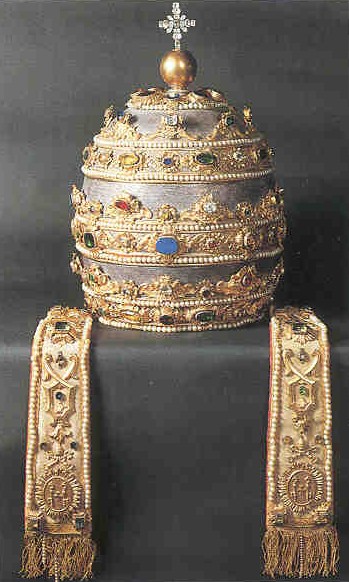
A moment of lucid self-criticism has occurred in the comments here about the relationship between the Pope and the other patriarchs and bishops throughout the Church. There is a dispute as to whether or not the reference to the Council of Florence about the rights and privileges of the Eastern Churches applies to Pastor Aeternus, the document on the papacy. If it is not part of the document I do not see how it is anything less than an interpretive note that clarifies the teaching's place in light of Florence and the historical relationship between the Pope and other bishops as well as between the Pope and the various Eastern patriarchs.

What most reflective Roman Catholics and all Eastern Catholics find troublesome in Pastor Aeternus is not the infallibility portion, but the "universal ordinary jurisdiction" point. "Ordinary" does not mean normal, it means ordinary in the sense that the bishop of a diocese is its ordinary rather than auxiliary. Cardinal Hergonrother's clarifying document Pasce agnos states:
“The Pope is circumscribed by the necessity of making a righteous and beneficent use of the duties attached to his privileges. He is also circumscribed by the respect due to the General Councils and to ancient statutes and customs, by the rights of bishops, by his relation with civil powers, by the traditional mild tone of government indicated by the aim of the institution of the papacy itself: ‘to feed’."
The "customs" and "rights of bishops" have never, to my knowledge, met a Conciliar definition. The bishopric of Constantinople hopped ahead of Antioch and Alexandria at a council in the line of patriarchs. The pentarchy of Rome, Constantinople, Antioch, Alexandria, and Jerusalem was proclaimed at two general councils. Sacramental orders were defined at Trent. Yet no binding teachings—again, to my knowledge—exists in depth about the rights of bishops. Patriarchs are even more difficult because, regardless of their historic value and fatherhood over theological and liturgical traditions, they are human inventions and not divine institutions like the episcopacy and the Petrine succession. The function of prudence is thus difficult to explain. 

One must remember that, irrespective of the Ultramontanist fervor of the 19th century, papal "ordinary jurisdiction" can never be normal. Indeed, it is the historical exception, from the earliest days onward. Some interventions were not welcomed, such as the deposition of the imposter Photios from the archbishopric of Constantinople and Clement's seemingly uninitiated letter to the Church a Corinth. Others, like the various judgments over the validity of Baptisms, the admission of controversial figures to Communion, and legal matters, were invited by others, suggesting that the initiating bishops and patriarchs thought the Bishop of Rome both had sufficient power to make episcopal adjudications outside his patriarchate and that such an occurrence was not the norm. 

The balance between Rome and the rest fell away for a variety of reasons: the Chalcedonian schism, the permanent alienation of the Greek patriarchate and its re-invention after 1453, the [positive] outcome of the Investiture Controversy, the Reformation, and the loss of the Papal states. As the various non-Latin Churches, with few exceptions, separated from the larger Church, less leverage existed to check Rome's behavior and keep the diversity of traditions at the forefront of her mind. Justinian calls to mind an formerly-exempt bishopric in Spain, exempt in that it was once free of an archbishopric above it until Pius IX gave into regal requests. Local elections of bishops were once approved by the pope and almost always revolved around local candidates. In the modern day, bishop Michael Olson of Fort Worth is abnormal in that he is from Forth Worth.

Neglecting that a balance did once exist and forgetting that human constructs exist in the Church amid Divine institutions (the Papacy and the Vatican are only the most obvious of this interplay) lets one slip into thinking "It's either 19th century Ultramontanism or nothing." This is folly. Prudence. Prudence wins out. Unfortunately, prudence is not a doctrine, nor can it ever be. I would favor a strong, exactingly worded understanding about the relationship between the Bishop of Rome and the non-Latin patriarchs. Would this be a teaching though? I doubt it. Like the pentarchy of yesteryear, it would establish human interactions with Divine things, namely bishops.

In the mean time, read Fortescue's The Early Papacy. It is valuable, not only a historical reference book, but also as an insight as to how the ancient Church understood Rome's role and how popes should behave relative to the universal Church. Lastly, take cues from the ancient church, but do not idolize a golden age. The good Dr. Fortescue said it best himself:
"Go and teach all nations, until Photius is intruded at Constantinople; and I am with you all days, even to the year 451."

Wednesday, January 21, 2015

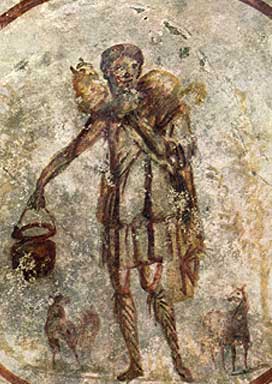
Lesser Known Fathers X: The Shepherd of Hermas IV


This will be the fourth and final installment on the obscure patristic text The Shepherd of Hermas, which follows a series of mystical visions about the end times and the nature of the Church given to Hermas, a freed Roman slave and brother of Pope St. Pius I. These parables are, to say the least, esoteric and abstract, which, along with the failed end times prediction, probably impeded its entry into the the canon of Scripture. This work still makes for great spiritual reading and need not be read sequentially. As a Lenten exercise, I would recommend spending some time with the first book of the Shepherd. We resume with the four final parables:

In the seventh parable the angelic shepherd explains to Hermas why he must suffer on account of the sins of his family, their loss of faith or presumed apostasy in a period of persecution. It is fitting, the angel says, for the head of the house to suffer for the sins of its inhabitants, to render satisfaction for the ills of the whole. Our modern ears hear offence at the idea of justice issued communally, but in these times entire peoples suffered for the sins of a few or many of them, if not for aiding those sins then for not condemning them. "The person who repents," the angel teaches, "must torture his own soul, and must be thoroughly humble in his every action.... and if he endures the afflictions which come upon him, then assuredly He Who created all things and endowed them with power will be moved with compassion and will bestow some remedy." 

The eighth is the parable of the willow tree. Hermas watches the shepherd lop off many branches of an enormous tree and, amazed that the tree can survive such extensive pruning, watches the angel distribute them. Some remain green, some whither, some are eaten by moths, but a few grow shoots and even fruit. The angel sends the holders of these branches to the tower that represents the Church. Hermas, still confused, asks for an explanation. The angel unravels the mystery. The tree that can survive indefinite pruning is the Law of the Son of God, which provides shade to His people, who are protected by the archangel Michael. This Law many ignore, many abuse, but many accept and even allow to flourish within them. These last men are the ones with the fortuitous branches. Some of the withered and cracked branches repair, overcoming Hermas and the shepherd with joy, but others remain broken, just as some sinners repent and bring joy unto God in doing so while others betray the Church in their sins and apostasy. Among those who keep the laws of God and repent there "is no place for rivalry" as to who is the greatest, for all should be happy to be within the tower that is the Church. The latter group, those who live partially in the world and partially in the Church, those with the somewhat withered branches, may be either saved or lost depending on their will move into one camp or another, to claim the fruit of their deeds.

The angel leads Hermas to a plain between twelve hills—some green, some brown, some burned, one lush, and one beautiful. On a mountain adjoining the plain virgins build a familiar great white tower, beginning with six stones, then ten, then twenty-five, and so on. Virgins, those weak and naive to the world, are the strong builders and pillars of the Church and of heaven in the eyes of "the Master," who comes to inspect the tower and finds some of the stones cracked and wanting. He discards of them as He discards of those who leave the Church and invites new stones in their places. Some of these new stones are not cuts, still round. These rest on the sides of the tower and are not forced into slots just yet.

Hermas and the angel inspect the tower and complete its surroundings with plaster, seal it, and clean the detritus. The angel then departs Hermas, who is perplexed that he is being left alone in the event the Master returns. The angel returns at morning after Hermas and the virgins spend the night in prayer. Why, Hermas inquires, is there a gate and a rock at the tower? The rock, the shepherd explains, is the Son of God, anciently predating the Creation of the Father and hence an "adviser" in the Creation by the Father. The gate, however, is not new, but only known now in the last stages and the consummation of the world. "No one shall enter the kingdom of God," the angel concludes, "unless he accept the name of the Son of God." The kingdom of the God is a city like those which existed at the time of Hermas and today exist only for tourists: walled all around, with the exception that the kingdom of God has but one gate. The stones cast away were those unworthy of entering through the gate because they held not the name of the Son of God—the shepherd never says "Jesus" or any linguistic variation of "Christ." The Son of God, the rock upon which the tower is built, "sustains the world" which rests upon Him, echoing the phrase "the stone the builders have rejected has become the cornerstone." Some stones cracked and turned black because they are like unto those who know God and sin against Him, a greater offence than not knowing God and sinning against natural reason. Again, the angel pastor admonishes Hermas to repent and forfeit guile, grudges, and urges to sow seeds of disunion within the Church.

Then follows the last of the parables and the end of the work. The shepherd and another angel visit Hermas after writing the preceding work and remind him that God has power over repentance. They know Hermas is not about to live a life of full repentance immediately, but that he wants to do so and to follow the commandments of God. As an enduring test, they leave the virgins from the tower with Hermas. If he follows God in purity, they will remain in his abode. If he deviates, they will leave. How the soul and grace are the same!

Sunday, January 18, 2015

Episcopal Visit


Today Msgr Michael Olson, bishop of Fort Worth, visited the Ordinariate community (St. Timothy's) at St. Mary's church. He Confirmed half a dozen candidates and received them into the fold of the Church. Fr. Christopher Stainbrook celebrated solemn Mass in the Anglican Use with the bishop attending much as a bishop would attend the old rite in Missa coram episcopo. The traditional rites of receiving a bishop at the door were also used and the Angelus was sung after the Mass. Always a joyous occasion when a successor to the Apostles visits his flock.

Saturday, January 17, 2015

Used Book Stores

They still exist! I got the Brothers Karamazov and an Agatha Christie, both in hardcover, for $14. It is a glorious mess!


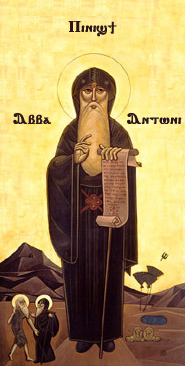
Wisdom from St Anthony


“A time is coming when men will go mad, and when they see someone who is not mad, they will attack him, saying, ‘You are mad; you are not like us.'”

Apologies

Sorry for not posting anything of substance for a while. The new job has taken up much of my time and I need to create a balance so I can get back to writing about important things. I am planning an article on the political side of the 20th century reform movement collation with this older one. Our series on the early traditionalists is once again on hold for research purposes. Not knowing French is prohibitive because the traditionalist movement was born in France. I will post the last of the Shepherd of Hermas however and maybe one other piece this weekend.

Our friend over at Ecclesial Vigilante has an interesting piece on Bridal Mysticism and what Leon Podles calls the "Church Impotent." In short, the extension of some of St Bernard's ideas on Christ as the spouse of the faithful outside on monastic communities may have been a bad idea. I am a bit apprehensive about dissenting from St Bernard here and find his sermons on this matter very edifying, but perhaps the emotions of his sermon outweighed its actual content. The traditional belief is that Christ is the bridegroom of the Church as a whole, as the Fathers and the liturgy attest; Mattins in the Byzantine rite during Great and Holy Week (sung the night before, like Tenebrae) is called the Bridegroom service; the old episcopal rite of consecration used to admonish the new bishop to guard "the Holy Church, God's bride." The matter is worth a thought.

To tide you over, here are some images of the parish that the Fort Worth Ordinariate community, St Timothy's, currently uses. The church is St Mary's of the Assumption (what a relief to have a parish with a normal name). Many features, like the dried out wood doors in the narthex, imbue a maturity of character that reminds me of New England and European churches.


Tuesday, January 13, 2015

Guess It's My Turn

....to say something about the French magazine shoot up. The national presses are reacting to this, rather than the removal of the Christian population from northern Iraq, because it impinges upon their ultimate sacrament: the right to say or do anything with impunity. Charlie Hebdo wrote and published blasphemous things about Christianity and promotes Marxist politics. This was not a magazine for normal people attacked on account of its upright content or daring reporting. This was a fringe magazine attacked and massacred because it pushed the wrong people too far. Catholics are the press's punching bag. We take it and have for years now. Muslims, or a very active minority of them, would rather the publisher die than themselves die of laughter. I have absolutely nothing good to say about Islam and believe it to be, when fully practiced in devotion, the remnant of an insane cult. That said, Charlie Hebdo is hardly off the proverbial hook. Imagine a school field trip to the zoo. The class bully steals everyone's lunch money and buys himself a juicy burger. He punches out a nice young man so he can sit next to the fellow's girlfriend on the bus. At the zoo he taunts the animals, making foul faces at the lions and chirping at the bears. Then, unassumingly, he does the same to the monkeys, only monkeys, while not quite as potent as lions or bears, are quite creative at being devious. The monkey takes a rock from his cage and hurls it through the bars, striking the bully o n the head and leaving him in a coma. Is it tragic? Yes. Did he deserve it? No, but one could be forgiven for not being overwhelmed at the matter.

Truth be told, I feel most sorry for the hostages the Muslim terrorists killed. They earned no part in this mess.