Monday, May 5, 2014

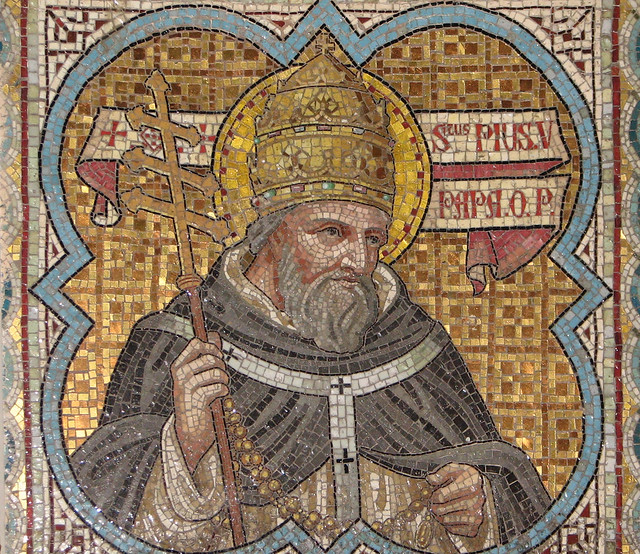
Feast Day Book Review: Missal & Breviary of St Pius V


I have been accused of it all: being an immovable traditionalist, being a false traditionalist, being an Ultamontanist, being an Eastern Orthodox in disguise. Why? Usually, but not exclusively, for my liturgical views. This perhaps gives his Traddiness an opportunity to clear the air, again, on his views and to discuss the legacy of a great pope (unless you are an English monarchist).

Again, I think the Roman rite is to be found in features and not a particular year or set of approved books. Among these features I would include:
  • the Roman Canon
  • the Roman Ordo Missae (generally understood in the Latin Church and not necessarily the 1570 Ordo word-for-word)
  • the immemorial Roman psalter
  • unique Roman feasts (apparition of St. Michael, Our Lady of Snows, St. John at the Latin Gate etc)
  • the Roman kalendar system (feria, simplex, semi-duplex, duplex, octaves)
  • the Roman Holy Week rites
  • rites for non-Eucharistic Sacraments and the understanding those rites convey
One reason this blog discusses pre-Conciliar changes so much is not because the author thinks the alterations of the 1960s were minor, but in order to help people understand that by 1962 the Canon of the Mass was the only thing that had not already changed.

Let us consider a wonderful set of books published by the saint of the day, Pius V, which wonderfully epitomize the Roman rite.

After the Council of Trent Papa Ghislieri issued a pair of liturgical books which he made available for general use to any Latin rite priest without having to answer to his superiors. The two accompanying documents, Quod a nobis and Quo primum tempore, exempted liturgical traditions over 200 years old. What were these books? The Missale Romanum and the Breviarium Romanum used by the Roman Curia since about the time of St. Gregory VII.

The Missal is an adjustment of the 1474 Missal published in several locations throughout Italy, often with corruptions. The bull Quo primum tempore was not aimed at future liturgical reform committees as much as it was duplicitous Venetian printers, the dual punishment of excommunication and a two hundred ducat fine for changing the books. Quod a nobis—abrogated by Papa Sarto—has the same warnings and punishments in the exact same language. The 1474 Missal was a bit different from 1570, containing many sequences which likely resulted from the international character of the Curia. The Johannine prologue is not mentioned because it was said in recession to the sacristy as the priest's devotion and not at the altar as a public proclamation. There were also more feasts.

The 1570 Missal is trimmed down version of the 1474 Missal, perhaps better off for the reductions. It eliminates the December 8th Immaculate Conception Mass (Egredimini et videte filie syon reginam vestram) and replaces it with a re-branded Conception of the Blessed Virgin Mary Mass based on the September 8th Salve sancta parens formula for the Nativity of the Blessed Virgin.

Some sequences are eliminated, really all but the best ones. The Greek Doctors of the Church, four at the time, were given Duplex rank on par with their Latin counterparts. One weakness of this Missal is that it rightly eliminates some feasts that inspire only local devotion (Ss. Anthony of Padua, Patrick of Ireland, and Elizabeth of Hungary), yet goes a bit far in eliminating some important ones, too (Ss. Joachim and Anne, as well as the Presentation of the Blessed Virgin Mary).

Despite the elimination of feasts the kalendar is a strength of this Missal. There are quite a number of ferial days and the Lenten kalendar is quite stark. The rubrics require the Sunday Mass to be repeated on a weekday before a votive Mass can be said. The kalendar cycle, especially in the Breviary, is so strong that when a feast approaches one wants to leap for joy because a feast is so special. Octaves are a welcomed change of pace, particularly the three during Paschaltide and the one after that (Corpus Christi). The kalendar system ensures that even during feasts the ferial cycle is not entirely ignored. The Gospel of superseded Sundays and Lenten feriae is read in the place of St. John's prologue at Masses on those days. Similarly, the lessons of superseded days are compressed into one long ninth lesson at Mattins in the Breviary.

The weakness of this Missal is precisely that it is the Curial Missal, a book meant for time pressed bureaucrats looking to eek out a Mass in 60 minutes within the walls of a chapel. Outside of Holy Week the rubrics presume low Mass to be the norm, differentiating between public and private Mass only (meaning the essential and extra Masses of the day in places where a Mass in required). Consequentially the rich and grand ceremonies of cathedrals and collegiate churches fell into disuse upon adoption of the Pian Missal and new ceremonies could not evolve. Perhaps it would have been prudent of the saint to permit variation of this sort. Men like Clement Russell and Quintin Montgomery-Wright kept the medieval ceremonies regardless.

The strongest of these two books is the Breviary. It has the aforementioned kalendar system, with its schedules, octaves, and commemorations. It also has certain feasts which are beautiful, didactic, and Roman to the core. My favorite texts are the antiphons for the Common of Roman virgin martyrs like Ss. Anne, Cecilia, and Agnes. The responsories at Mattins are subtle and reflective of the Roman tradition's use of Scripture in the liturgy as a means of commenting or coloring the feast at hand. The psalter is brutal at first (12 psalms at Mattins, 8 at Lauds, 5 at Vespers, 4 at Compline), but eventually paces itself and becomes a weekly rhythm of prayer, one prayer visited several times.

For more on the technical particulars of the 1570 Missal, Quo primum tempore, and the contrasts with the 1474 Missal see this particular by one Paul Cavendish here. He also discusses later emendations by Clement VIII. What is interesting to see, despite my disagreement with the ballooning of Duplex feasts, is that additions and abolitions took place within the existing liturgical framework and sought to preserve the existing praxis both in spirit and in law.

St. Pius V, pray for us!

Saturday, May 3, 2014

Byzantine Crucifixion Service


The above video was taken on Great and Holy Friday (sort of) this past year at the Melkite parish I once attended. I have never found Holy Week done better. The above chant is the climax of the Crucifixion service that takes place late Thursday night. It is haunting. Here is a version of the words:

Today is suspended upon the tree, He who suspended the earth upon the waters.
A crown of thorns crowns Him Who is the King of the angels.
He is wrapped about with the purple of mockery, He Who wrapped the heavens with clouds.
He receives smitings, He who freed Adam in the Jordan.
The Bridegroom of the Church is affixed to the Cross with nails.
The Son of the virgin is pierced by a spear.

We worship Thy passion, O Christ!

Show us also Thy glorious resurrection!

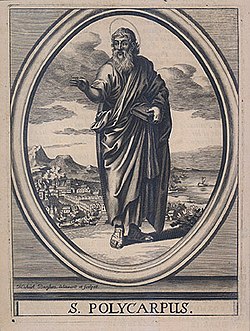
Lesser Known Fathers IX: St. Polycarp and the Philippians

Given the "proof text" approach of many Catholic apologists today, using the writings of the Apostolic and Church Fathers against protestants, only certain Fathers are read. St. Justin the Martyr is useful in "proving" the Eucharist. St. Ignatius of Antioch is useful in "proving" the idea of the Catholic Church. St. Cyprian is useful in "proving" the papacy. Yet what of great Fathers who are not so easily weaponized? Today they are forgotten by those who call nineteen century old writers to arms against Legion and his megachurches, but they are not forgotten by all. Some of us still find edification in the pastoral writings of the Fathers, as much so as in the doctrinal writings of other Fathers. One such Father who I find fascinating is St. Polycarp of Smyrna.

According to tradition Polycarp was taught by "St. John," who ordained him a bishop of the city of Smyrna. I put John in quotations because a few dispute whether his teacher was John the Apostle—writer of the Johannine Gospel, the first epistle of John, and the Apocalypse—or whether it was John the Presbyter—likely writer of the second and third epistles of John. Polycarp, who lived until the mid-second century, is remembered in his surviving letter to the Church at Philippi, where St. Paul "accurately and steadfastly taught the word of truth in the presence of whose who were then alive" (Ch. 3). The epistle is an exhortation to the laity and clergy to ignore the worldly temptations which have seduced some of the church and to return to the faith given to them by Paul and Ignatius. At some point Polycarp visited St. Anicetus, a fellow Syrian and at the time Pope of Rome. He fell asleep in the Lord in 155.

The epistle begins with a veritable Pauline greeting: "Polycarp, and the presbyters with him, to the Church of God sojourning at Philippi: Mercy to you, and peace from God Almighty, and from the Lord Jesus Christ, our Savior, be multiplied." The tone establishes that this missive has a personal connotation and not a formal one. He is acquainted with these believers and greets them in the spirit rather than in social respect.

The saint initiates the body of his letter with a reminder of that church's sufferings, "diadems of the true elect of God and our Lord." Mere works do not save, but faith. How is suffering not a "work?" Are the Christians of today to read Polycarp and surrender to the modern dichotomy between "faith" and "works?" This is not what the saint means: "[know] that by grace you are saved, not of work, but by the will of God" (Ch. 1) and "But He who raised [Jesus] up from the dead will raise up us also, if we do his will, and walk in His commandments, and love what He loved" (Ch. 2). One is saved by the will of God, not personal merit. Yet if one loves God one is united to the will of God and does what He wishes out of love for God—what we now call Sanctification or Theosis. This holiness in which one unites to the will of God is found in suffering, for Christ "suffered for own sins unto death" (Ch. 1) that "we might live in Him" (Ch. 8, 1 John 4:9). One does not suffer alone for Christ. The Christian suffers with Him as did the Apostles, who are "in their due place in the presence of the Lord, with whom also they suffered" (Ch. 9).

This same call to virtue displays ante-Nicene Trinitarianism. St. Polycarp establishes order and communion between "God" and the Son "Jesus Christ." The separation of the two persons of the Trinity as "God" and "Jesus" should not trouble us, as this terminology survives in the traditional Roman and the Byzantine liturgies, wherein God the Father is sparingly called "Father" directly, indeed perhaps only in the Our Father. "God" raised Jesus, glorified Him, sat Christ at His right hand, and gave Him the power of judgment; all these things are proper to the Godhead. Polycarp is using the ante-Nicene vocabulary for talking about the Divine inherited from the Jews which survives in the Church's liturgical life.

Chapter four opens with a famous aphorism, "But the love of money is the root of all evils." From here Polycarp gently indicts the priests, deacons, and laity of the church for losing their focus and then tries to re-direct this wayward church. What utility, the saint questions, is to be found in alternatives to virtue or the presentation of false virtue? God "clearly perceives all things, and that nothing is hid from Him, neither reasonings, nor reflections, nor any one of the secret things of the heart" (Ch. 4). God is not mocked, even in private. The saint gives a general warning against various kinds of that most powerful kinds of private sin, the sexual:
"For it is well that they should be cut off from the lusts that are in the world, since every lust wars against the spirit; and neither fornicators, nor effeminate, nor abusers of themselves with mankind [doesn't sound terribly fond of gay marriage] shall inherit the kingdom of God, nor those who do things inconsistent and unbecoming. Wherefore, it is needful to abstain from all these things, being subject to the presbyter and deacons, as unto God and Christ. The virgins also must walk in a blameless and pure conscience." (Ch. 5)
Sexuality is not necessarily a bad thing. Indeed it is quite good. The chastity outlined negatively above is one found in behaving according to one's place in life.

Perhaps priests would do well to read this letter particularly the sixth chapter, which outlines the saint's expectations of the presbyters and other clergy of the Church:
"Let the presbyters be compassionate and merciful to all, bringing back those that wander, visiting all the sick, and not neglecting the widow, the orphan, or the poor, but always providing for that which is becoming in the sight of God and man.... If then we entreat the Lord to forgive us, we ought also ourselves to forgive; for we are before the eyes of our Lord and God, and we must all appear at the judgment seat of Christ, and must every one give an account of himself. Let us then serve Him in fear, and with all reverence, even as He Himself has commanded us, and as did the apostles who preached the Gospel unto us, and the prophets who proclaimed beforehand the coming of the Lord."
In short, the priest is the fearful instrument of Christ God's mercy. The end.

Polycarp places the greatest emphasis of faith on the Resurrection and Last Judgement. Here is the strongest insight yet into how the early Church believed. Christ was the first fruit of His own work, a work from which we shall in time benefit or suffer from abusing. Reality in changed by this one event, the rising of a man—Who is God—from the dead. We are partakers in that Resurrection and will be held to account for it. Those who deny this are the "first born of Satan" (Ch. 7). Oh how does this concept of death survive for us today in the Requiem Mass of All Souls' Day! In the epistle of that Mass St. Paul warns the Corinthians that those who lived in Christ will come to the "resurrection of life," but that those who did evil will awake in the "resurrection of judgment." Death and judgment. Could any two topics be less popular? In my own family mention of either is tantamount to scandal.


After another exhortation to virtue St. Polycarp writes harsh words that should carry weight with every Catholic who sins in public, who dissents from the Church in public, and who does not practice virtue: "Be all of you subject one to another having your conduct blameless among the Gentiles, that you may both receive praise for your good works, and the Lord may not be blasphemed through you. But woe to him by whom the name of the Lord is blasphemed! Teach, therefore, sobriety to all, and manifest it also in your own conduct" (Ch. 10). 

The author winds down his letter in lamentation, regretting the loss of the priest Valens and his wife to bad faith. Evidently they fell in matters of "covetousness." Polycarp finds the loss of the two particularly painful given St. Paul's praise for the church of Philippi. He begs the Philippians not to be too harsh on Valens and his wife: "And be then moderate in regard to this matter, and do not count such as enemies, but call them back as suffering and straying members, that you may save your whole body. For by so acting you shall edify yourselves" (Ch. 11).

The saint concludes in telling the Philippians that he is sending copies of St. Ignatius of Antioch's epistles with the messenger and even divulges the name of the scribe who wrote the letter, a man named Crescens, who will pay the Philippian Christians a visit with his sister! Personally I find the human elements of these letters calming, as I do in the Pauline epistles. Modern readers can read these ancient texts and think them remote, saccharine, or even impossible. These letters were written by and for people who, like we today, must run our course in the faith and do so with the same union to the will of God and the same humility to which Polycarp exhorted the church of Philippi.

Interesting Historical Notes


  • Although a disciple of St. John, he rarely quotes John in this letter. The few times he does refer to John, such as in Chapter 8, are in reference to union with God—Theosis—indicating that this is a trait of the Johannine tradition. Also, in light of this, I would side with those who say Polycarp's John was the Evangelist and not the Presbyter.
  • He is very familiar with most all of the Pauline letters and quotes them more than any other text considered Scripture. He especially favors Philippians, Galatians, Timothy, and Ephesians. This indicates that Paul's letters, which most now agree were written in the 50s, had been in wide circulation beyond the local churches for quite some time.
  • Again, despite being from the Johannine tradition, Polycarp refers exclusively—at least in this sole surviving letter—to the Gospel according to St. Matthew and occasionally to St. Luke's account. These references are most often made to the Sermon on the Mount. The implications of this should be problematic to 20th century Biblical scholars who seek to drive a wedge between the Johannine tradition and the Synoptic texts. Evidently the bishop of Smyrna, a follower of John, saw no conflict or incongruity between the Synoptic narrative and the one he received. This could be explained by a theory that the account in St. John's Gospel draws to attention not a different Christ or different tradition, but different events and teachings not mentioned in the Synoptics. There is one Gospel and four accounts of it.
From this I think we must conclude that the New Testament texts were more broadly circulated and more widely accepted than we often realize.

Happy feast of the Invention of the Holy Cross!

Thursday, May 1, 2014

The Lyonese Missal Part III: Sundays per Annum

St. Jean, cathedral of the primatial see of France

Let us resume our exciting series on the local liturgical usages of the French dioceses prior to the 19th century streamlining of worship influenced by Dom Prosper Gueranger's accusations of Jansenism. The rite of Lyon, the primatial see of the first daughter of the Church, survived the liturgical purge until the mid-20th century when, like so many other dioceses both after Trent and after the 1960s reforms, the bishop decided to switch to the Roman liturgy.

As a review, let us aphorize that Jansenists were effectively French Catholics who thought Calvin read St. Augustine correctly. On this scheme of belief some of God's commandments are impossible to uphold, that grace is irresistible—unless one is not "chosen", and Christ died for the elect and not for all men. Other peculiarities of the Jansenists include an allergy to people receiving Communion on a regular basis. This makes accusations of Jansenism difficult to justify given that the Parisian and Lyonese rites mandate regular administration of Holy Communion during Mass to whoever so wishes to receive. Other issues and defects exist which likely led to the demise of the Gallican rites, issues which will be covered in the concluding post at some point in the future.

Part I: Third Sunday of Advent

The Third Sunday of Advent is one of the great days of the year in the Roman rite. Celebrated in rose vestments, hinting at the impending joy of Christmas, the Mass begins with the word Gaudete. In ancient and medieval times the pope would celebrate this Mass following a nighttime vigil of Mattins and Lauds. The Lyonese rite begins not with Gaudete, but rather with the familiar Introit Rorate coeli de super. The collect and epistle (Gaudete, iterum dico gaudete....) are the same as in the Roman Mass. Graduals tend to differ in the French rites from the Roman one, probably the result of mangling by bishops without the supervision of monks. This gradual is not different in content. It has the same two verses of psalm 79 as the Roman rite, but flipped! The Alleluia is different, but again taken from a psalm. The Gospel pericope is the same as in Rome, extracted from John chapter 1, wherein the Forerunner calls himself the "voice crying out in the desert" in anticipation of the coming of the Lord. The Offertory verse is again different from Rome, although it is familiar to us all (Deus, tu conversus vivificabis nos, et plebs tua laetabitur in te: ostende nobis, Domine, misericordiam tuam, et salutare tuum da nobis). Indeed it fits in well with the crying aloud of the Baptist and the apocalyptic tone of Advent. The secret is the same as in the Roman. The preface is of the Incarnation (not neo-Gallican Advent preface). The Communion verse again betrays not malice, but mangling; the Roman verse, from Isaiah, is Dicite: pusillanimes, confortamini et nollite timere: ecce, Deus noster veniet, et salvabit nos. Lyon reads: Dicite: pusillanimes, confortamini et nollite timere: ecce, Deus ipse veniet, et salvabit vos. The post-Communion oration, completely different from the Roman one, says that the faithful have been "renewed" in the Body and Blood of Christ and asks that by those gifts, "aids of the present life," we may "obtain the reward of eternal happiness."

The non-Roman rites usually give readings for ferial Masses on Wednesdays and Fridays for the sake of variety and to expound the mysteries of Sunday in more depth. Lyon is no exception.

Part II: Sunday with the Octave of the Nativity


The Roman Mass for today is a sensible continuation of the Nativity cycle beginning with the Puer natus est nobis Introit so familiar to those of us who love the Roman Advent/Nativity cycle (personally I do not think any time in the Latin or Greek liturgies is as rich as the Roman Advent season). The Introit for Lyon is a curious variation of psalm 88: Ipse invocabit me. The Roman collect for the day exists here as a commemoration, as the Sunday has its own unique collect: "Almighty eternal God, direct our actions in Your approval, that in the name of Your beloved Son, we may merit to abound in good works." Could one who does not believe in substantial free will pray this oration? The collect of the Octave is omitted if the Mass is celebrated, but it is said as a commemoration, along with the collect of the Sunday, if the feast of St. Stephen, St. John, or the Holy Innocents is celebrated on the Sunday.

The readings are entirely in variance from the Roman rite. The Roman epistle comes from St. Paul's letter to Titus and the Gospel is St. Luke's account of shepherds adoring Christ. The Lyonese readings come from Galatians (4:1-8) and the first half of St. Luke's narrative of the presentation of Christ in the Temple. The message here is that Christ's Incarnation makes all people children of God and descendants of Abraham, not just those born through certain lineages. The old Law gives way to something greater. The gradual, Offertory, and Communion verses differ, but are unremarkable. The secret is a long way of saying very little very vividly, typical French Latin. The post-Communion oration petitions that we may be more worthy to become partakers "of His divinity Who humbled Himself to be a partaker in our humanity." I wonder if the makers of the Pauline liturgy borrowed from this prayer. The Latin word order and vocabulary is even the same.

Part III: First Sunday of Lent


Mass, per the Norman praxis, is celebrated in ash colored vestments rather than violet. While the ancient Roman tradition was to use as dark a color as possible, the Norman tradition was to use as colorless and sparse a color as possible.

The synaxis is almost exactly the same as in the Roman rite, with two exceptions. The first is that the old Roman psalms are foregone again—a dubious trait of these Gallican rites—in favor of the Vulgate translation. The Introit begins with Clamabit ad me rather than Invocabit me. The other difference is in the gradual and tract. Both use large excerpts from psalm 90, which readers hopefully pray at Compline every night, but the Roman tract is longer. Perhaps Lyon is a reduction.

The secret is the same, but not the Offertory or Communion verse, nor the post-Communion oration. The Offertory is from Deuteronomy chapter 9 and parallels Moses' forty days of fasting followed by his reception of the Ten Commandments with Christ's forty days fasting followed by the beginning of His public ministry.

After Vespers all images except crosses on the altars where Mass is celebrated and processional crosses are covered. Even in Passiontide they are not covered. One presumes that the coverings are ash colored.


Part IV: 14th Sunday after Pentecost


No study of Masses per annum would be complete without a foray into the Sundays after Pentecost, the Roman "green season." Strangely, today's Introit is the one missing from would-be Gaudete Sunday from the first section of today's post. The collect and readings are the same, although the gradual and alleluia differ quite a bit, emphasizing fear of God rather than the joy in the Roman texts. The Offertory chant differs, but is unremarkable. The Roman secret petitions that the gifts offered may be a "purgation of offences and propitiation of your power" while the Lyonese asks that the gifts and prayers offered bring "Your kingdom and justice that we seek with all our heart." The post-Communion calls upon God to feed us through the Sacrament received, that we may pull through visible things and have faith in the invisible things to come. The Roman oration has more or less the same message in half as many words.

Conclusion


Again our efforts to find Jansenism in the French rites is thwarted and again we find at least one prayer that seems to be directly opposed to the ideas attributed to bishop Jansen. Furthermore, we see evidence that the real reason for the suppression of the French rites—aside from the political climate—may well have been intentional deviations from things explicitly Roman like the antiphonary psalms used in the Introits of Mass.

Next in the series: feasts & commons.

Ss. Philip & James


A happy feast of Ss. Philip and James to all readers! May these holy Apostles of the Lord intercede for you in your lives and lead you all to the awesome face of Christ which these men had the privilege to behold on earth.

Today is a liturgical curiosity in that in the Roman rite today is the feast of two Apostles, in the Pian rite it is the feast of Joe the Communist, and in the Pauline rite it is a ferial day (although masochistic priests may commemorate Joe the Communist). Indeed, once while reading an introduction to St. Athanasius' On the Incarnation I burst into an embarrassed hysteria when the writer lamented that the saint from Alexandria is liturgically obscured, losing his first Vespers to Ss. Philip & James and his second Vespers to the feast of the Invention of the Holy Cross! For more on just what the hell happened we turn to the esteemed Rubricarius:
In the 'liturgical books of 1962' the ancient feast of SS Philip and James has been shoved aside until May 11th, the first 'free' liturgical day, and May 1st became the execrable 'Joe the Worker' day. Pius XII's Commission for General Liturgical Reform had discussed making May 1st a Marian feast but settled on S. Giuseppe Artigiano (c.f. minutes of meeting 45; 19 Oct 1954 and 59; 17 Jan 1956 in Giampietro). Clearly feasts of antiquity were not considered particularly sacred - but neither was much else - so from 1956 the beautiful feast of the Solemnity of St. Joseph and its Octave were abolished and today's venerable and ancient feast of the Holy Apostles cast aside to May 11th. On May 1st was placed perhaps the nadir of two thousand years of Christian liturgy (although Pius XII's reign resulted in much competition for that dishonour) with a modern liturgical composition that instead of honouring St. Joseph as Patron of the Universal Church made him some type of shop steward ostensibly out of pastoral need. The Office is truly appalling with lessons about multitudes of working men gathering in St. Peter's Square: '...cum occasionem nactus opificum conventus Kalendis maiis...Romae celebrati, ingentum multitudinem in foro ad sancti Petri Basilicam...' It really is atrocious. In an excellent article on the highly inorganic Pian changes Fr. Francesco Ricossa quotes a Jean Crete:
"The Sacred Congregation of Rites was not favorable toward this decree [Cum nostra], the work of a special commission. When, five weeks later, Pius XII announced the feast of St. Joseph the Worker (which caused the ancient feast of Ss. Philip and James to be transferred, and which replaced the Solemnity of St Joseph, Patron of the Church), there was open opposition to it.
“For more than a year the Sacred Congregation of Rites refused to compose the office and Mass for the new feast. Many interventions of the pope were necessary before the Congregation of Rites agreed, against their will, to publish the office in 1956 — an office so badly composed that one might suspect it had been deliberately sabotaged. And it was only in 1960 that the melodies of the Mass and office were composed melodies based on models of the worst taste.
"We relate this little-known episode to give an idea of the violence of the reaction to the first [It was hardly the first - R.] liturgical reforms of Pius XII".
 He also relates an amusing story about Msgr. Alfred Gilbey, who had little use for novelty and poor taste:

One of my happiest memories of the late Mgr. Alfred Gilbey is of his early morning Mass on May 1st. Mgr. Gilbey would come into St. Wilfrid's Chapel at the Brompton Oratory, radiant in red vestments, and approach the small, loyal, congregation and say "Today is the feast of the Holy Apostles Saints Philip and James. For some curious reason some of you may find Jerz the Werz [I think to pronounce a title such as Joseph the Worker would have been offensive to the good Monsignor's refined lips] on this day but that has been abolished and Saints Philip and James restored to their rightful date." Alas, not quite true although in the 1970-2002 calendar Joe the Worker has been reduced to an 'optional memoria' and SS Philip and James place on May 3rd. Certainly there is a lot of restoration to do...
Pray for us Holy Apostles! Pray for us Holy Patron of the Universal Church! Pray that we may be rid of the stain and stench of the 1962 books.

No Jerz the Werz....

Tuesday, April 29, 2014

Two Very Different Dallas Churches

Again I bring readers a report on the very curious situation with regards to ecclesiastical architecture here in the Dallas/Fort Worth area.

The first building shown is St. Thomas Aquinas in Dallas, which, if the website is correct, is only fifty years old. Built in a plane, but well done neo-gothic style, it has survived the liturgical revolution more or less intact. The altar was brought out from against the wall, yet it is still suitable for more traditional rites.


Neo-gothic with plenty of color and not too many statues.


Correctly the Baptistry is an octagonal room at the back
of the church, behind the nave.

The other church is called St. Jude's and is located in Allen. Its style is an unusual
blend between modern brutalism and the traditional layout, although not
the traditional decorative style.


The center of attention is unclear here. Yes, that iron plank on the wall is
the tabernacle door.


The transepts and altar are arranged such that
everyone gets a view of the "action"


The place lights well, but has no distinctly Christian
architectural features. I have seen banks with similar
ceiling patterns.

The Stations of the Cross seem to be charcoal drawings of
scenes from Mel Gibson's Passion of the Christ


Oh boy....


A fascinating processional cross

Monday, April 28, 2014

Milestone

Today this blog hit 100,000 unique views. Less than a year ago we hit 10,000 and marked it as a milestone in readership, as in the first month this blog had 177 hits. Now we tend to get about 500 hits a day, not bad considering that when I took a leave of absence we were getting around 180-200 a day. Each month since December has been a new all-time high, thanks primarily to the dedication and patience of subscribers and regular readers. I appreciate your loyalty.

The top ten most viewed posts on this blog, in order of popularity, are:
  1. Sedevacantism
  2. Practical Effects of Ultramontanism
  3. URGENT: Papal Bull on 1962/5 Missal and Reform of Roman Liturgy
  4. Book Review: The Banished Heart: Origins of Heteropraxis in the Catholic Church by Dr. Geoffrey Hull
  5. Good Friday: Mass of the Pre-Sanctified
  6. I'm Done
  7. The Last Acceptable Error?
  8. Yet Another Dallas Area Church
  9. The Roman Rite in Transition
  10. Reasons for the Reform of the Roman Rite Part I: Feasts
Clearly the old Roman liturgy and the authentic place of the papacy are on people's minds, as well as bad architecture in Dallas.

I would also like to add that I am grateful for the opportunity to correspond with many of your privately and for the chance to share thoughts and cultivate ideas with you all.

I will pick up again on our series on the Lyonese Missal this weekend, having stalled during Lent, and see about reviewing another Lesser Known Father, perhaps St. Andrew of Crete.

Thank you again,
The Rad Trad

St. Felix of Valois, pray for us!