Mr. Rubricarius has two interesting photos here, one of the FSSPX liturgical calendar for June 1981 and another for this year. The former was the old rite and the newer, 1962. The liturgical changes of the 1950s and 1960s sound paltry to many when compared to the Pauline liturgy, but if the liturgy is something entered by human beings living in time then such conclusions must be re-considered.
Tuesday, June 3, 2014

Another Post on SVism
 |
| source: Huffington Post, selfie with the Roman Pontiff |
Readers will remember my post Sedevacantism several months back. It is, quite inexplicably, my most-read post ever, I suspect because there is little mainstream discussion on the subject that examines both its claims and its historical origins. For those with a continuing interest in the subject see this fellow's post on the topic at Shameless Popery. The blogger is a seminarian who follows what label makers would categorize as neo-conservative Catholicism and his post, a very basic point-by-point rebuttal to sedevacantism, seems geared toward those pulling out their hairs over Francis rather than those concerned with the broader problems in the Church. What is interesting about his post is that he felt compelled to write it. The original wave of sedevacantism came during the late papacy of Paul VI and the early years of John Paul II. Could Francis be fostering new signals on the EKG of empty-chair outlook?
Monday, June 2, 2014
Update on Forthcoming Series
 |
| corbisimages.com |
Next month, if we ever get past the French rites, we will begins our series on the primitive Traditionalist movement, its lesser known players, and its spirit. The content is manifestly divisible into two categories, French traditionalism and traditionalism everywhere else. As potential subjects we have:
- Fr. Quintin Montgomery-Wright
- Fr. Bryan Houghton
- Msgr. Alfred Gilbey
- Mary Ball-Martinez
- Kathleen Pond, OPL
- Fr. Gomar DePauw
- Opus Sacerdotale
- Fr. Leo McNamara
- Fr. Siro Cisilino
- Msgr. Francois Ducaud-Bourget
- Always open to more suggestions!
This list is already long, so feel free to suggest new names or reason to exclude others.
Saturday, May 31, 2014
Who Was Malachi Martin?
Some time ago I acquired the hobby of learning more about early figures in the traditionalist movement (there will be a series on some of the less prominent persons in a month or so). One figure, who I have never been able to understand, is former Jesuit priest Malachi Martin.
Martin studied at Louvain, earned three doctorates, was ordained following the Second World War, had stints at Oxford and Hebrew University, worked on the Dead Sea Scrolls, and was an adviser to Cardinal Bea (SJ) and Pope Paul VI. At some point during the Second Vatican Council he was laicized by Pope Paul and moved to New York City, where he won the Guggenheim fellowship twice and worked as the Religion Editor for William F. Buckley's journal National Review (he was Mary Ball-Martinez's superior and her opinion of him is more than apparent in her books). In the above video he is interviewed by Buckley on the program Firing Line about his book Jesus Now.
His early post-priesthood books displayed liberal undertones and a more broadly Christian perspective. In the 1980s his work threw the rudder hard right. He championed Marcel Lefebvre and Ultramontanism (yes, both at once) as well as writing a generally reliable exposé on the Society of Jesus called Jesuits. At some point in the late 1980s or early 1990s his books and appeal branched into the world of conspiracy, world domination, and late night talk radio. His Windswept House purported that Lucifer was "enthroned" in St. Peter's Basilica during Vatican II, almost a reverse Sacred Heart enthronement. He delved into the world of Masons, Bugnini, and Cardinal Casaroli—all working to overthrow the Church and create a "new world order."
Most bombastically he claimed to have been a secret priest all along, not laicized, providing Sacraments to the "underground Church" and performing more exorcisms that Fr. Gabriel Amorth (as an aside, Martin did write Hostage to the Devil, which is a summary of five exorcisms performed by other priests). He believed John Paul II was a good pope surrounded by evil people preventing him from following the demands of Fatima. He also believed the Pauline liturgy to be more or less invalid on all counts. As a result of all these disparate things he had a broad audience: truckers and late night radio listeners looking for a good scare story about demonic possession, ordinary Catholics seeking to discuss private devotions or Fatima, and hard line traditionalists who wanted simple explanations for what happened in 1962. Somehow his audience could include a sedevacantist, Art Bell, Richard Williamson, and a man making a FedEx delivery.
All of this elides into one question, who was Malachi Martin? Was he a furtive priest fighting the devil and exposing the "Novus Ordo Church?" Was he a liberal gradually overcome with buyer's remorse? Was he an opportunist who used varying parts of Christianity, especially Catholic traditionalists, as a cash cow? As long as there is YouTube there will be questions about Malachi Martin.
As an aside, his Art Bell interviews are great late night entertainment for those occasions of insomnia. He had a soft, velvet voice and was an excellent conversationalist. Combined with talk of murder, Masons, the Papacy, demonic possession, and American callers the result is the modern version of a campfire ghost story!
Note: the series next month (if I ever finish the series on French rites) will cover some of the less luminous early traditionalists. The goal of the series will be to show what the emerging traditionalist movement looked like prior to the FSSPX's rise to prominence. Nowadays it seems everything is a variation of their position ("indult" traditionalists, the "Hermeneutic of Continuity" traditionalists, sedevacantist traditionalists etc.), yet this was not always the case. With the help of some correspondents who knew these people, I hope to cover:
- Fr. Quintin Montgomery-Wright
- Fr. Ronald Silk
- Mary Ball-Martinez
- Fr. Bryan Houghton
- Anyone else readers can suggest!
Friday, May 30, 2014
Nostalgic Literature
My books are currently locked in a storage facility somewhere in Houston, 250 miles south of me, leaving me a dearth of reading material. By a stroke of luck I came across a sale of 19th century books in hardcover at the local library, eight or so works for $15. I imagine the library is trying to clear out room to expand their Blu Ray holdings.
The books I acquired are hardly the high brow literature of James Fenimore Cooper or Victor Hugo, but I think these works do at some level reflect the popular sentiment of the age. The novels Waverly by Walter Scott, The Scarlet Pimpernel by Baroness Orczy, and the D'Artagnan works of Dumas all yell "nostalgia" at the top of their parchment lined lungs.
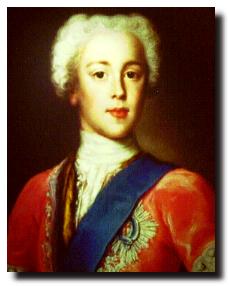 Waverly describes the romantic folly of a young man named Edward Waverly, educated in many subjects and knowledgeable in none of them. He falls for the Jacobite cause and Bonnie Prince Charlie (whose father's perplexing tomb I saw at St. Peter's Basilica, Iacob III, Rex Anglorum). His venture with the band of Scottish usurpers was doomed from the start, but the charm of the undertaking clouded Edward's judgment. The Scarlet Pimpernel rescues French nobles from the guillotine during the Revolution and rescues the 19th century nobility from their declining relevance during the Baroness's time. And the D'Artagnan romances glorify a France and a chivalric spirit which Edmund Burke declared dead half a century earlier.
These novels are nostalgic lamentations for an era within living memory, but certainly gone and never returning. Gone were the days of treks and aimless adventures through the highlands. Gone were the days of noble patricians guiding society out of obligation and not self-interest. Gone were the days of impulsively gallant knights willing to sacrifice all for king and wenches.
Conversely, other writers attempted to compensate for the loss of old Europe by moving adventures to new settings amenable to the scientism of the age. My current book, Jules Vernes' remarkably dull Journey to the Center of the Earth, brims with optimism about the potential for science to pave the path of the coming age. The protagonist and his uncle engage of what we are supposed to believe is sophisticated debate over minutiae concerning minerology and geology. The impolite dullards are the norm people, such as the village priest and his housekeeper. H.G. Wells took scientism to an unhealthy level. Both authors wanted to move the conventional adventure story to a new setting and found moderate success.
Technology has not brought new platforms to traditional behavior, nor has it induced healthy new behavior. Submarines did not continue the swashbuckler. Some technology, if anything, has limited human behavior. Social networking, to my mind, is an unmitigated disaster. Almost everyone one knows via Facebook one knows in real life. Rather than meet in person for dinner once a week people swap mind numbing messages about mostly nothing. They exchange so much menial information so frequently that when two people do have the rare encounter they sit in silence with nothing to discuss. Email is far more tolerable to me, given that it does the same thing as a letter and in shorter time; I hardly think email, unlikethe blue thing Facebook, substitutes for real human contact.
So many cheerleaders for science, particularly in biology, seem positively giddy about the potential to change human nature. Would we still be human at that point? Industry, modern democracy, and technology, although useful, have not so much changed human nature as much as they have curtailed it. I find myself sympathizing with those who yearn for "simpler" times not because I am a Luddite, but because those times were more humanly vibrant. Maybe I need to get out less....
The books I acquired are hardly the high brow literature of James Fenimore Cooper or Victor Hugo, but I think these works do at some level reflect the popular sentiment of the age. The novels Waverly by Walter Scott, The Scarlet Pimpernel by Baroness Orczy, and the D'Artagnan works of Dumas all yell "nostalgia" at the top of their parchment lined lungs.
These novels are nostalgic lamentations for an era within living memory, but certainly gone and never returning. Gone were the days of treks and aimless adventures through the highlands. Gone were the days of noble patricians guiding society out of obligation and not self-interest. Gone were the days of impulsively gallant knights willing to sacrifice all for king and wenches.
Conversely, other writers attempted to compensate for the loss of old Europe by moving adventures to new settings amenable to the scientism of the age. My current book, Jules Vernes' remarkably dull Journey to the Center of the Earth, brims with optimism about the potential for science to pave the path of the coming age. The protagonist and his uncle engage of what we are supposed to believe is sophisticated debate over minutiae concerning minerology and geology. The impolite dullards are the norm people, such as the village priest and his housekeeper. H.G. Wells took scientism to an unhealthy level. Both authors wanted to move the conventional adventure story to a new setting and found moderate success.
Technology has not brought new platforms to traditional behavior, nor has it induced healthy new behavior. Submarines did not continue the swashbuckler. Some technology, if anything, has limited human behavior. Social networking, to my mind, is an unmitigated disaster. Almost everyone one knows via Facebook one knows in real life. Rather than meet in person for dinner once a week people swap mind numbing messages about mostly nothing. They exchange so much menial information so frequently that when two people do have the rare encounter they sit in silence with nothing to discuss. Email is far more tolerable to me, given that it does the same thing as a letter and in shorter time; I hardly think email, unlike
So many cheerleaders for science, particularly in biology, seem positively giddy about the potential to change human nature. Would we still be human at that point? Industry, modern democracy, and technology, although useful, have not so much changed human nature as much as they have curtailed it. I find myself sympathizing with those who yearn for "simpler" times not because I am a Luddite, but because those times were more humanly vibrant. Maybe I need to get out less....
Wednesday, May 28, 2014
Bringing Back Sinners: A Personal Reflection on Communion for the Divorced & Re-Married
My perspective here is hardly original or unique to my own experiences, but it is a perspective that no one has discussed in the forensic exercises over Cardinal Kasper's proposal to admit the divorced and re-married to Communion under some pastoral regulations that everyone knows full well will not be enforced strictly. The reason the Church does not admit, and historically has not admitted, those who left their spouse and married again to Communion is because the Church wants sinners to repent and turn back to God. The matter really is not theological, but pastoral. It is that simple. Get sinners to turn back to God.
Daily I witness two intensely close and violently torrential cases of ex-communication, restriction from receiving Communion, that perturb me. Those cases are of my father and one of my best friends.
My father married during the year the Second Vatican Council convened, fathered three children (of whom I have met two, and only seen one in the last seven years once), divorced in 1972, received a letter of ex-communication shortly thereafter, and married my mother in Methodist rites in 1974. He goes to Mass perhaps once a year if the good Lord disposes him to do so. The setting varies: the old Mass, the Pauline Mass, and once the Divine Liturgy (which he insisted was not really Catholic). Religiously my father is a product of the 1950s. He never knew what happened at Mass. He just knew all the respectable people went there for their 25 minute service and followed it up with an omelette. A few times a year he would go to Communion, of course after confessing all his major sins and fasting. No one goes to Communion in sin and without preparation. Having been ex-communicated since 1972 he still knows and believes that much. Once he attempted to go to Confession, but found the priest meddlesome and unhelpful, which turned him off from reconciling with the Church. The shell of his 1950s Catholicism is all he has left. He is my father and I love him dearly, but his life could be called one of disappointments and some bitterness to boot.
 A friend of mine was raised in a lesbian household with a distant father and, after having gone through some 1980s Catholic education, drifted away from a faith which I do not believe he ever really understood. He was a rambunctious child straightened out by a decade and a half of service in the infantry of the United States Army. He worked ground zero after 9/11 and toured Afghanistan, burning out his lungs in the process. During his army stint he married in a secular ceremony a wonderful woman who has never been anything but kind to me. Since then he has strayed in the annals of academia and all the dismaying tendencies therein. Whenever I visit him in his house I am received with the greatest affection and hospitality. He always takes me to Confession on Saturday night and Mass on Sunday. And on Saturday nights he stares at the Confessional, joins the line, and then walks away at the last moment saying he will take too long. At Mass he refrains from Communion, instead remaining on his knees in meditation.
According to the laws of the Church and the Church's traditional understanding of marriage there is no way either my father or my friend are married. They are both lapsed Catholics who married without the witness or blessing of the Church and remain in such arrangements. They cannot take Communion and in no way do I wish for this situation to change.
The de facto ex-communication of these two loved ones is the only thing keeping them close to the Catholic faith, to taking it seriously. My father's mind clings to two facts about Catholicism, that one must be clean of sin to partake of Communion and that he cannot partake of Communion. My friend's matter is the same way, although my friend's conscience does tear at his heart. It is my hope that these two dear people will one day return to the Church, even if it be the hour of death, when all worldly attachments and interests that mire us in sin fade to dust and we must see God, not as we imagine Him to be in our tinted looking glass, but as He actually is. I hope that before death they both wish to ask God's forgiveness and petition the Church to receive the Body of Christ worthily.

The Church always places repentance before the celebration of the holy things of God. Both the new and old Roman Masses begin with a general confession of unworthiness. In the older rite the people, or the deacon, repeat this confession prior to the reception of Communion. At Compline, the hour prayed before going to bed, our must vulnerable state, we again pray for the forgiveness of sins by saying the Confiteor and asking for the Lord's protection. In the Byzantine rite the priest prays "Lord, forgive me the sinner and have mercy on me" before the celebration of Orthros (Mattins and Lauds) and Vespers; he will say "God have mercy on me a sinner" after the anaphora and before his own Communion. And lastly there is the long "Lord, I truly believe and confess...." before the Communion of the congregation. One must turn from sin to God prior to participating in the sacred rites of the Church. Is not the same true in eternity? Must not one repent before entering into the Kingdom of God?
What of the Orthodox approach? What of it? I think it is wrong, but I cannot see how it would be helpful in this day and age. When the Church of Constantinople decided that marriage can die and one can re-marry twice given the proper state of mind and a heavily penitential effort prior to the new union, the spirit of penance was alive and well. People fasted from all meat and dairy products during Lent, the pre-Christmas fast, and the Dormition fast. Even though I think the practice wrong, I cannot deny that it could be done in the right spirit. All of that is gone now. The Church now requires fasting two days of the year: Ash Wednesday and Good Friday. Further more, the modern age would confirm that the Church was changing her outmoded teachings, not forcing people who failed their vocations to do penance. The adaptation of the Chalcedonian-Orthodox discipline would be a disaster in practice in this day and age. To admit the divorced and re-married to Communion will not make those in question grateful to the Church for her mercy and understanding. Rather they will hear all the talk of the "Body of Christ" and the confessions throughout the liturgy and think to themselves "So it was not really such a big deal after all."
So again I say the only thing keeping my father and my friend close to the Church is the very fact that they cannot go to Communion. They know that the Church guards something sacred which they still, on some level, believe and would like to receive yet cannot. When time purges these men of all that ties them to the world they will have the option of repenting and reconciling to God before death or the other, less attractive option. It is precisely because they cannot repent now that they still believe in God, Christ, the Church, and the Eucharist. To remove their barrier from Communion will not bring either my father or friend to Mass with any regularity. It will merely tell that the Church does not consider what she does at Mass very important. It will tell them that the Church was bluffing all the time.
If the Church does not admit these men to Communion then they may still believe something important resides in the Catholic Church and wish to return to it. I can very much envision this one fact returning my father to the Church at some point before he dies and my friend sooner than that. My friend especially wants to repent and to go to Communion. Why remove the impetus? I want nothing more than for these two men to enter heaven, but not without repentance first.
The Church's power to loosen and to bind the sins of men has brought back into the fold men like Oscar Wilde, Voltaire, and John Wayne. Why not my father and my friend, too?
Tuesday, May 27, 2014
Allatae Sunt
_Benedict_XIV.jpg)
A fascinating bull on East-West issues by Benedict XIV, Papa Lambertini. Much of the material is still relevant today. Some of it, particularly the tone, is a bit dated (the Roman rite, being the rite of Roman, is naturally superior to all others and hence none can transfer to a Greek rite from it.... yeah....) yet most of the bull constituted a firm foundation for re-establishing Communion between the various Churches. Of keen interest is the Pope's reverence for Eastern customs and traditions (the liturgy, married clergy, reservations about pushing the Filioque on them). All this during the Counter-Reformation of all periods!
Subscribe to:
Posts (Atom)