Showing posts with label quo primum. Show all posts

Tuesday, October 28, 2014

Perpetuis Futuris

John R and the Maestro have offered two articles on the bull Quo primum tempore well worth reading here and here. What they write is a liturgically driven objection to the reason most traditionalists given for opposing the Pauline liturgy, that it violates the Pian bull, and instead they make the case that the older liturgy more perfectly reflects the Catholic tradition and the Catholic concept of tradition. 

Like John R and the Maestro, I rather doubt anyone really thinks Quo primum tempore is an inviolable dogma or irreformable act of legislation that no future pontiff can change. The liturgy has always and everywhere been subject to variation and the pope, as the bishop of Rome, can alter the Roman liturgy. Some other influence must dissuade a pope from fiddling with the Church's worship than a pseudo-dogmatic bull. Does anyone doubt Guiseppe Sarto was pope? He violated the bull Quod a nobis, issued by the same St Pius V two years before Quo primum tempore and which uses the exact same language in restricting alteration and threatening punishment upon agents of change. Every kind of traditionalist from the "continuity" crowd to the sedevacantists accept the 1911 reform and the papacy of Papa Sarto. It would be intellectually inconsistent to reject the Pauline liturgy while accepting the Pian reforms. 

Another issue is that of language. Phrases in Quo primum tempore like "we declare and ordain" are often associated with the language of papal definitions and have been since Vatican I. This is understandable now that such language is restricted to binding pronouncements, but it was not always such. This kind of language can be found in any number of papal and conciliar documents from past times whenever a pope, bishop, or council wanted people to follow a given idea or program. It was not necessarily dogmatic teaching. How can a document publishing a book be dogmatic? Also, phrases such as perpetuis futuris and ad perpetuam are often translated as "forever" and "in perpetuity," which carry a strong weight in English. Could the actual use of these phrases not mean something more like "indefinitely" or "on-going"? Urban VIII, S Pius X, and Pius XII seem to have felt no scruple about making changes to the existing liturgy and often supplemented their changes with additional documents (OK, Pius X tossed Quo primum tempore equivalent Quod a nobis and outright replaced it). The behavior of the popes seems to confirm a weaker understanding of the original text.

Quo primum tempore and Quod a nobis reflect a larger pattern of centralization that I have discussed in my Reform of the Roman Rite series here and in a post reacting to some of Fr Cekada's ideas here. The real reason to support the old rite, of whatever vintage, is that it is tradition. It is a traditio, a passed-on thing from our ancestors in faith. Local rites arose because our fathers in faith received what the Church had given them and they allowed it to flourish within their own culture and with their own enthusiasm for the faith. They took the Roman seed, planted it everywhere, and watered it until a great tree of tradition grew, with the Roman trunk and many unique branches. The horticulturist managing the greenhouse of the Church can erect a sign reading "No one may ever touch this tree ever", but he has no way of ensuring the next person with his job follows suit. 

Friday, August 9, 2013

On the Validity and Legality of the Mass of Paul VI

JohnR, a friend of this blog, recently alluded to something in a comment on the previous post concerning Fr. Anthony Cekada's thesis in The Work of the Human Hands: A Theological Critique of the Mass of Paul VI that the new Mass is invalid. His opinion is ubiquitous in sedevacantist-ville while the opinion that the new Mass is likely valid but certainly illegal was, at least once, popular in SSPX-land. The premises for both these opinions are utterly banal and without theological, historical, or legal merit, yet they exist and the Rad Trad, being in a devious mood, would like to look into them a bit more.

Validity

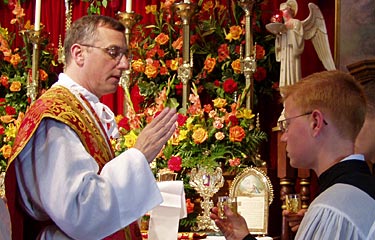
Fr. Anthony Cekada celebrating Mass very Romanly
Toward the end of Work of Human Hands Fr. Cekada argues on Thomistic grounds that the Order of Mass promulgated in 1969 is absolutely invalid in Latin or vernacular. Some hardline SSPXers used to argue that the common mistranslation of pro multis invalidated the consecration of the chalice; taken to its logical conclusion, there would be no Mass in that case and the consecration of the bread, since the Church does not consecrate outside of Mass, would also be invalid. But back to the more general validity issue. The reason Fr. Cekada gives is that the institution narrative in the new rite is treated as just that: a narrative, as opposed to a consecration formula. The words in the new rite, he says, do not contain the intention to consecrate and hence no consecration is possible, even if a validly ordained priest who intends to consecrate speaks the narrative words with the proper intention. Your eyes are not under the spell of glaucoma. You read it correctly. A validly ordained priest with the right intention speaking the words of consecration, which are the same in the new and old rites, cannot consecrate validly. So, is Fr. Cekada right?
 
His invalidity stance rests on intention within the "form" of the consecration. The old rite gradually builds up the priest's intention, from the sacrificial offertory prayers, through the thanksgiving prayers early in the Canon, transitioning into prayers for the living and dead, and concluding the Canon with an act of offering the Victim to God (Per ipsum....). The new rite certainly lacks this continuous flow, but I think Fr. Cekada would concede that it is not absolutely necessary. His position is specifically concerned with the consecration itself. At this point a little bit of history goes a long way.
 
When does the consecration happen? At Hoc est enim corpus meum and Hic est enim calix sanguinis mei? That has certainly been the prevailing teaching since the Scholastic era in the high Middle Ages, but it is not as clear cut as one may think. Around the 11th or 12th century priests, at the behest of the faithful often yelling from the nave, elevated the host and chalice during the Canon for their benefit and view. Some say this form of piety was a soft substitution for actual reception of the Blessed Sacrament, owing to the infrequency of reception that arose in the Dark Ages and which continued for centuries afterward. It is also at this point when scholars and theologians begin to question the specific moment of the "change." We are so accustomed to seeing those specific words of the priest as the formulation for the change that we read the rest of the Canon of Mass around it. But consider this: five centuries earlier the same Canon was sung, without pause, aloud in the tone of a preface in its entirety. A preface tone indicates that the prayer is concerned with blessing or consecrating something. The various signs of the cross and gestures made throughout the Canon differed diocese to diocese, sometimes greatly. Sarum, for example, has very few reverences (later genuflections) and a very different series of actions at the Per ipsum. For whatever reason at the end of the first millennium priests began to recite the Canon rather than sing it aloud and the gestures flourished as private signs of devotion in a private prayer. A consequence of these gestures was the partitioning of the Canon, in the priest's experience, into varying parts. The institution of the elevation of the elements had the same consequence, making the institution narratives a unique segment of the Canon.
 
Yet, without these gestures and motions we could read the Canon's text straight through and see that that institution narrative may well have been seen in earlier times as just that, a narrative. It is the justification, within the text of the prayer, for why the Church celebrates the Mass. It is hardly a story time, but rather is a public supplication to God on the grounds that we are obeying His Only Begotten Son's precepts. In those days one would of course agree that the change had taken place by the end of the Canon, although today we pinpoint it at the institution narrative. Months ago the Rad Trad published an appendix from an English translation of the Ordo Romanus Primus which contains a replication of what a Paschal Mass celebrated by the Pope may have looked like around the year 800 here. As readers will see the celebrant continues through the Canon unabated, without any special notice.
 
How does this influence our view of Fr. Cekada's thesis? The Rad Trad readily acknowledges that the change, the transubstantiation, happens at the narrative. Why? Two reasons: (1) the priest is given the power to consecrate and he intends to consecrate at this moment and (2) because the Church has agreed for a millennium to treat this particular point as the moment of transubstantiation. What the Rad Trad cannot do, and what the sedevacantist theory does do, is ignore the first ten or eleven centuries when the moment of change is at best vague or a little iffy. The Church, in her kindness and respect for tradition, cannot and does not uproot and ignore the prayers, beliefs, or intentions of previous generations of the faithful. It is for this reason that the Addai and Mari rite is valid. Liturgical historicity takes precedent over, admittedly Church sanctioned, Scholastic theology concerning forms. By ignoring this principle and by ignoring the history of the Canon itself one looks away from a legitimate reading of the narrative as a narrative. Hence the idea that somehow treating this part of the Canon as what it originally was invalidates it on defect of form is myopic.  Also, need the function of the institution words as a narrative and as consecration formula clash?
 
I have never met a priest or lay person who has read the narrative and thought any other intention other than consecration is latent in the words contained therein. One would think someone other than Fr. Cekada had caught on to the structural defects supposedly present in the altered Canon or new Eucharistic prayers.
 
Yes, it is very valid.

Licit?

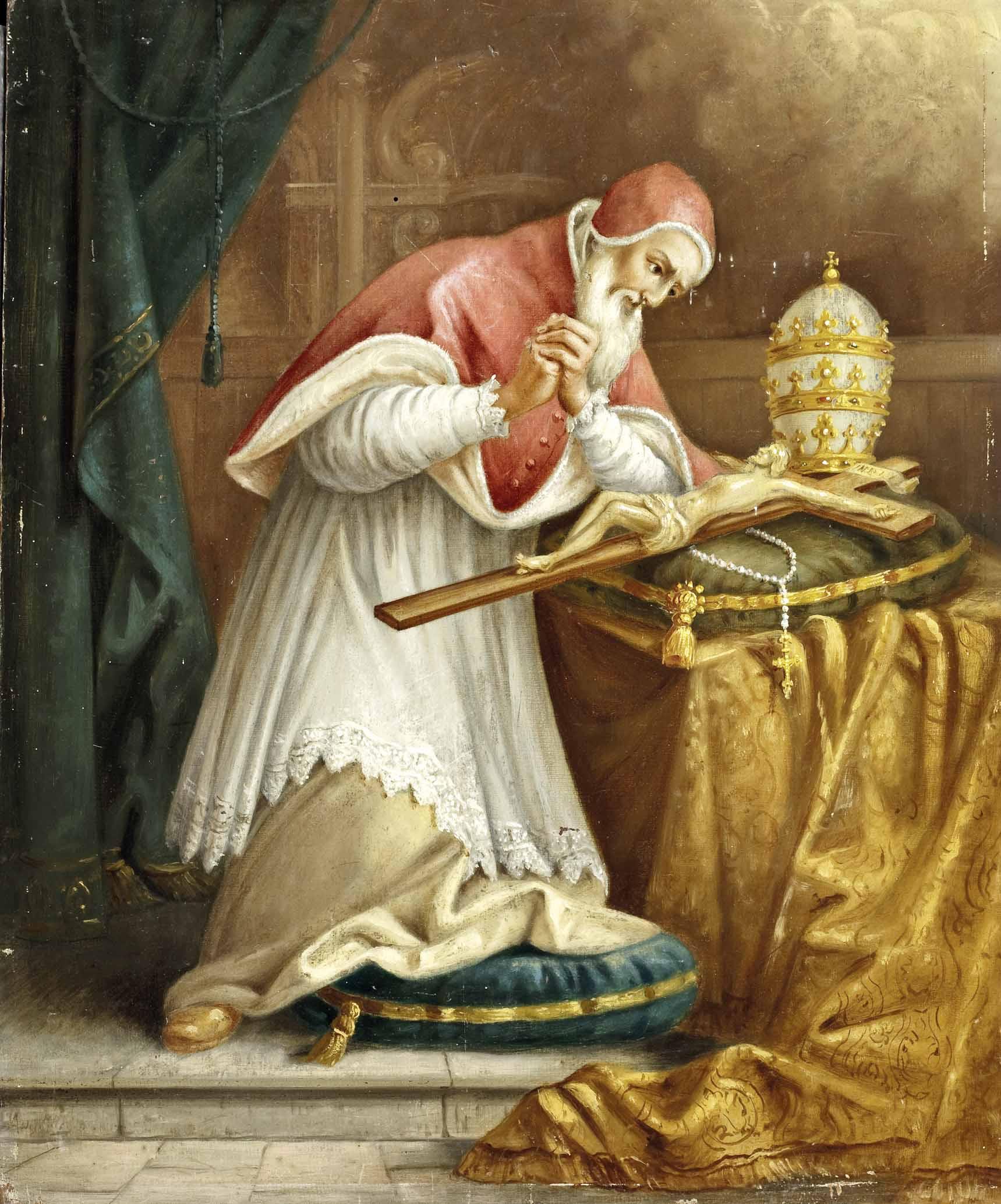
St. Pius V, Pope of Quo Primum
Part of the fallout within the Society of St. Pius X over Bishop Fellay's failed attempt to give his institution canonical standing was Rome's demand that the Society sign on to the "legitimacy" of the new rite. This sounds odd, but it really just means the legality. In short, was the "new Mass" promulgated in a valid, legal action by the proper authority? Some apparently say no. Others, like one Paul Kramer in his article Legal Status of the Tridentine Mass, argue that since Quo Primum is a dogma of the faith Paul VI avoided going into schism by merely publishing, rather than promulgating, the new Mass.
 
First, we will discuss Quo Primum. Both of these positions are really variations of each other and they rest on the principle that St. Pius V's bull Quo Primum made the 1570 Missal, or at least the Ordo Missae within it, a dogma of the faith that cannot be violated and which guaranteed that it could never be taken away. This is wrong at two levels:
  1. Quo Primum is primarily a legal document promulgating use of a certain liturgical book within the Latin Church. As a legal and administrative act it cannot bind a successor of equal status should he take the proper steps to depart from it.
  2. Neither Pius V, nor any following pope, thought it was such. Two years earlier the same Pius V published Quod a nobis promulgating a Roman Breviary for general use which contains the same rules of use and prohibitions against alterations and threats of Divine retribution as Quo Primum. Urban VIII did not go into schism or heresy by changing the hymns and no one has suggested the 1911 breviary changes were illegal or invalid (although they were unwise).
Confusion over this point may have been compounded when Benedict XVI wrote that the 1962 Missal was never abrogated, which begs the question: how is any following liturgy legal? Were priests who held out in the 1970s and onward justified in their use of 1962? The Rad Trad, no canonist, does know of one distinction in Canon Law that could serve us well here and which may not, legally at least, justify those who adhered to 1962 after the promulgation of the 1969 Ordo. In Canon Law there is a taxonomy of "derogation" and "abrogation." The former is the partial removal or replacement of the existing law while the latter is its outright suppression. To abrogate the 1962 Missal, Paul VI would have had to issue some sort of legal document explicitly prohibiting use of that Missal. This was clearly never done. The "extraordinary" rite was never abrogated. All well and good? New Mass illegal? Not so fast.
 
The Pauline liturgy was not introduced to the Latin Church by the abrogation of the "traditional" liturgy. For example, John XXIII compressed festal categories into Class I, Class II, and Class III, not abrogating the old calendar entirely, but derogating the ranking system within it in his Rubricarum Instructum. The same holds true for his changes to the breviary lessons, not abrogating the [not so] old Mattins, but derogating the particular way of picking lessons in place in 1955 (both changes were ultimately made by Pius XII, although John XXIII pulled the trigger on the 1960 set). Similarly the 1962 Missal was not abrogated with the publication of the 1965 Missal, but anything in it that differed from 1965 was derogated (use of Latin in readings, the Introibo prayers, the "doubling" of certain texts, ordinary of the first half of Mass in Latin, the communion formula, the Last Gospel, and some other details). 1962 was not strictly "abrogated" but it was by no means usable. The 1967 document Tres abhinc annos introduced further changes by derogating what was different in the 1965 Missal: optional use of a weekday lectionary, optional use of different orations, the Canon was not abrogated but the rubrics governing the priest's actions during it were derogated and replaced, the entire Canon is said aloud, and other alterations; interestingly, IV.17 in that document is the first official instance, to the Rad Trad's knowledge, of a rubric that assumes Mass facing the people could be ordinary and normal outside of a few Roman parishes. On the feast of the Assumption in 1968 the new Eucharistic prayers (2-4) were introduced, again not replacing the entire existing liturgy, but replacing and derogating certain rules and rubrics, this time governing the Canon, therein. A new Pontificale came about that same year.
 
Here comes the 1969 change. Paul VI did not introduce a new Missal or a new Mass in 1969. He introduced what was mostly a new text for the ordinary of the Mass. The Canon and Eucharistic prayers, lectionary, rubrics, calendar, and Divine Office remained unchanged from the previous year. Even some parts of the ordinary itself were unchanged, given the significant alterations in 1964-8. Perhaps the most dramatic different between 1968 and 1969 is the contrasting offertory prayers, but most everything else matches. The Missal introduced by Paul VI in 1970 again did not "abrogate" 1962 or even whatever was used in 1969, but de facto derogated whatever differed from it: the old sacramentary and [again, no so] old lectionary was replaced. Otherwise, 1970 and 1969 match up very closely.
 
The idea that the new liturgy is somehow canonically illegal or that the 1962 liturgy was abrogated relies on the view that the Pauline rites were introduced and imposed instantaneously rather than gradually and under transitional, derogation-based legal auspices.
 
Thank you for reading a such dry and disinteresting post,
The Rad Trad

Tuesday, April 23, 2013

Reasons for the Reform of the Roman Rite Part VI: Centralization

Today's post, the penultimate "reason" before our conclusions, focuses on centralization in the Roman liturgy which followed the Council of Trent and eventually facilitated the reforms of the Roman rite during the papacies of St. Pius X, Pius XII, John XXIII, and Paul VI, as well as the legislation of John Paul II and Benedict XVI. Aside from providing a means for the reforms to present themselves to the Church, centralization changed the mindset of the Church of Rome and of her clergy toward the worship of God.

Following the Council of Trent, St. Pius V issued two papal bulls Quod a nobis and Quo primum, promulgating a Divine Office and a Missal which, although not always obligatory, could be used by any priest in the Latin rite of the Church without exception. To the modern reader this hardly seems shocking. The revised English translation of the new rite of Mass came at Rome's behest, the diocesan bishops, at least in the United States, liked the old translation, even the erroneous "for all" in the consecration of the chalice. We can easily lose sight of how drastic a change this was.

Paschal Mass in the Lyonese rite, some very different texts
from Rome's Resurrexi.
From the earliest days of Christianity in the West, the liturgy developed at a local level and took on the characteristics of both the people who celebrated it and of the rites of major churches within the same area. In Europe, the city of the Rome was the most influential church "in the same area." I suspect this is what so many modern day commentators mean when they discuss "organic" development. Charlemagne accelerated a process already underway, whereby bishops would seek to emulate the liturgy as it was practiced in the city of Rome. This meant following the Latin language, the basic structure of the Mass, the schedule of the hours of the Divine Office, the structure of the Office, loosely the arrangement of the psalms, and many of the prayers. Yet no one diocese had the same exact rite as another. Indeed, within the city of Rome the Divine Office varied by church. In some cathedrals each priest might say a slightly different private Mass in his chapel. Yet, any observer of a Mass in Cluny, St. John Lateran, or the Cathedral of Canterbury would recognize that the same ritual, spirituality, faith, and objectives were being followed. The late Laszlo Dobszay, whose work I find myself constantly recommending, notes that the neo-Gallican graduals are almost all the same text as in the "Tridentine" Roman rite, although this did not come to pass by legislation. Rites gradually converged as ideas and rites spread, but the Roman Canon and the Roman structure remained the barometers of liturgical order.

These rites could vary in their texts and their ceremonies, imbuing the liturgy with a very personal character. There existed in these local churches numerous abuses condemned by the 22nd session of the Council of Trent, and rightly so. Votive Requiem Masses have no place on Sundays or on great feasts. Priests should not charge stipends for missis siccis. Pius V, Pope immediately after Trent, determined to correct any potential abuses or defects in priestly life or in religious practice by imposing a streamlined version of the Roman Curia's liturgy on the Latin Church at large. He did so at the behest of the Council of Trent, but eventually promulgated the rites under Papal authority. One correspondent of mine observed that Quod a nobis, the 1568 bull concerning the Divine Office, is brimming with "aggression and conquest." He might have been right.

The immediate effects of Pius V's actions were two-fold:
  1. The bottom-up problem: local rites, unless they were more than two hundred years old, died immediately and could no longer contribute to the development of the liturgy in the Church. Even some older rites did not last. Rome attempted for centuries after Trent to suppress the local usages of France, particularly the Parisian rite. Anyone interested can find at least one edition of the Missale Parisiense on Google Books. The rites of Braga, Lyons, and Milan were similarly targeted, but managed to survive until the Second Vatican Council.
  2. The top-down problem: the Roman liturgy becomes a product under corporate management and subject to quality tests.
First, the bottom-up issue. The suppression or de facto extinction of local usages and variations of the Roman rite was not immediately troublesome, but blurred the character of local churches—and each church is a unique Christian community—and removed their own expression of belief. Aside from the personal investment people had in worshiping as their fathers had, people had grown accustomed to singing hymns to particular chants and in local tones, to distinct ceremonies and rituals—especially during Holy Week, and the liturgy of the cathedrals revolved around these communal celebrations, led by the bishop and his convened chapter. All of this either vanished or became a tolerated exception under the bulls of 1568 and 1570.

Local uses of Rome disappeared almost immediately, although a few oddities, like the Lateran Cathedral's refusal to sing Dona nobis pacem for the third invocation in the Agnus Dei remained. Why does this matter? Roman churches each celebrated the liturgy somewhat differently. Hymns and chants are great examples as to how. Local churches would often repeat the same hymn from day to day, or from feast to feast, and utilize simple melodies so that the ignorant could sing along and memorize these chants through repetition. The uses of the Carmelites, Dominicans, and Carthusians better preserve this principle than the rite of 1570.

Ecce lignum crucis....
While considering this point, we ought to meditate on the 1570 Missale Romanum. The 1570 Missal and 1568 Office are trimmed down versions of the same books used in the Roman Curia a century earlier. The Henry Bradshaw Society reprinted the 1474 Missale Romanum a few years ago, should any of you wish to purchase a copy. St. Pius V specified some rubrics, explicitly added the Last Gospel (formerly said in procession rather than at the altar), deleted Gallican prefaces and sequences, slashed a few feasts (including of Ss. Joachim and Ann), and adjusted other points in the Office which elude me. The reformers of the post-Tridentine period purported that this Missal represented the liturgy of the time of St. Gregory VII. It may well have been the liturgy as it was practiced by the Papal Court in the eleventh century, in fact it was probably very close, but no closer than any of the other local usages to the essence of the Roman rite as a liturgy diffused throughout Europe.

Here comes a secondary negative effect. The Missal of the Roman Curia was made for small scale, simple, timely celebrations by bureaucrats who had other work to do. The Pope, until 1964, had his own rite of Mass very befitting the dignity of his office. The Curia, on the other hand, was a body of priests and cardinals, who operated in chapels rather than large churches, who did so in the presence of similarly educated people, aided by professional singers, and who wished to make these rites as succinct as possible. These rites were consequently very simple in ceremony and sometimes stark in text compared to the larger Roman liturgy spread throughout Europe.

For example: on Good Friday in the 1474-1955 Roman Missals, the deacon gives the priest a veiled crucifix, who exposes it in three moments, lays it on a pillow, and the choir sings the "reproaches" (Trisagion, Pange lingua etc) while those present adore it. In the Norman and neo-Gallican rites we see more clearly the function of the reproaches. The deacon brings the veiled crucifix through the church, or more likely, cathedral, whilst the choir sings the Trisagion: Agios o Theos! Agios ischyros! Agios athanatos, eleison imas! At the altar, the priest would then do the three familiar un-veilings and lay the crucifix down for adoration, during which the choir would sing Pange lingua and the subdeacon would "comment" by singing antiphons between the verses, antiphons which described Christ. Clearly, the Roman liturgy on Good Friday was a simplification made to suit a particular brand of practitioner.

Now we come to the second effect of this post-Tridentine centralization, the "brand" of the Roman liturgy.

Palm Sunday according to the rite of Braga, but actually in Rhode Island.
source: newlitugicalmovement.org
We have made the case that prior to Trent local dioceses based their liturgy around what Rome generally did and use Rome as an enduring standard. Now Rome did not nurture the liturgy, but actually imposed it from afar. Liturgy was something given to the clergy of the Roman rite, even if they were originally of another rite or use, by Papal decree. The Sacred Congregation for Rites, erected in 1588 by Sixtus V, managed the Roman liturgical books on the Pope's behalf, except when the Pope felt inclined to intervene, for instance when Urban VIII published his new and improved hymns.

The Roman Church became like McDonalds. The Pope was CEO, the cardinals formed a board of directors—each with his own congregation or department, bishops were the franchisees, and priests were restaurant managers who had to sell their product to the faithful customers. The product, the liturgy, must meet a given standard. Falling short of or exceeding the standard are not options.

This analogy is facetious, but contains some truth. Priests had to do whatever was in the books imposed by the Pope, no more, no less. If he celebrated, or said, Mass and recited the Office as instructed then he was, on one count, meeting expectations.

During the centuries after Trent no one paid too much attention to the liturgy outside of the cathedrals and monasteries. Theology, doctrine, devotion, and art dominated the Counter-Reformation and baroque epochs. Few seem to have bothered to adopt local customs, music, or ceremonial to the Roman liturgy, perhaps due to the phenomena examined in our posts on low Mass culture and Devotionalism. Local expression, even in a highly centralized liturgical setting, is not impossible. The Church of Antioch, after having the liturgy of Constantinople forced upon it, rejected ceremonies pertaining to the Byzantine court and continued to administer Holy Communion without the spoon. Not until the 19th century did clergy think about the liturgy, but by then popular perceptions of what constituted or created the liturgy had changed.

Most clergy accepted the 1911, 1955, and 1960 liturgical reforms without batting an eyelash. The right authorities promulgated these changes. Consideration of the merits of these changes was frivolous, perhaps even disobedient. Divino afflatu uses similar language to that of Pius V's decrees centuries earlier. When the more visible changes came through in 1964, 1965, 1967, 1968, and finally the new rite of Mass in 1969 and new Office in 1975, priests and bishops were expected to accept any changes because they came from Rome. Cardinal Ottaviani, who in his private "intervention" with Pope Paul VI wrote that the proposed new rite was a "striking departure from the Catholic theology of the Mass as it was formulated in Session XXII of the Council of Trent," eventually learned to accept the new rite in spite of his intuition. Ditto for Cardinals Bacci and Siri.

The legal authority Rome found itself possessing after Trent made a drastic overhaul somewhat inevitable. No longer were the Latin rites guarded by tradition, but they were given by a congregation in central Italy. This meant that whoever controlled that office or whoever had the Pope's ear could essentially have his way with the liturgy of western Christendom. It was only time before a large number of people from the Liturgical Movement found themselves in that position. Moreover, Rome no longer guards the liturgy. Rome is neither the aggressor nor the victim in the war over the liturgy. Rome is the battlefield.

This last point represents a problem for the "brick by brick" crowd, as they often rely on exercising the most conservative legal options when celebrating the Mass of Paul VI. What is the point of celebrating the Mass of Paul VI ad orientem and in Latin if one has to give Holy Communion in the hand? An Oratorian high Mass and an American suburban low Mass both follow the prescribed rules.

Rome must also find this phenomenon problematic. Benedict XVI's Summorum Pontificum stated that the Missal of John XXIII was never "abrogated." It may never have been explicitly suppressed, but after Inter oecumenici in 1964 priests could not have expected to be able to follow 1962. If 1962 is legal, are not 1967 and 1920?—two very different Missals. As Joseph Cardinal Ratzinger, the previous Pope wrote many commentaries on "organic" liturgy. He even sat on a commission with Cardinals Hoyos and Stickler which found the old rite perfectly legal for use. Question: which Missal was found legal for use? The 1962 rite? The "Tridentine" Mass? The "Mass of St. Pius V?" The "old rite?" Indeed, the choice of 1962 is now commonly acknowledged to be that of Archbishop Marcel Lefebvre, not of the Vatican. Still, why pick a year? I personally think Benedict XVI was aware the rites of Paul VI represented a departure from the established tradition of the Roman rite and wished to find some way of stating that the Church would never suppress her tradition, that its use was always legitimate. 1962 was the year most commonly used by "traditionalists," so that is the rite he declared was never "abrogated."

Perhaps the saddest consequence of this legalism and liturgical centralization is that decline of people's view of Rome as the spiritual center of the Church and of the Pope as the spiritual father. The Pope is just the man who makes the rules and the Vatican processes them. If in the early 13th century, I asked a priest in Canterbury Cathedral if Pope Innocent III had the power to depose King John, the priest would probably at least entertain the question: political power comes from God and the Pope is His vicar on earth. If I asked him if the same Pope could dictate every word and action of the Mass he just celebrated, the same priest would think me mad. Yet, I wager the same priest would not dare to change a punctuation mark in the Roman Canon, much less write a series of new anaphoras.

Thus ends my proposed list of causes of the reform of the Roman liturgy. In our next post, the last in this series, we will give a brief summation of what we have found, make a few conclusions, and, since I prefer to be part of the solution and not part of the problem, present some ideas for the future.

God bless.