Using the rubrics that were in force from time immemorial until 1911 and Divino Afflatu, the Office of Prime mirrors the movements and variations of Lauds. The Roman Office has much variation, but essentially there are three types of days:
Duplex feasts
Simplex feasts
Feriae
A Semi-Double is celebrated in much the same manner as a Double, but with a lesser ranking and some additional prayers. A day within an octave is similar, although without additional prayers. The psalms at Vespers and Mattins are from the common and the Lauds and Prime are sung using the Dominical psalms. The Little Hours never change.
A feria simply observed the Office of the day with no note of any feasts, unless they warrant a commemoration of a superseded Lenten or Advent Simplex feast. Simple feasts use the psalter of the day for Vespers and Mattins, but follow the Dominical psalms for Lauds and an abbreviation of Prime. At first this seems a strange and arbitrary shift away from the purpose of the Office, the recitation of 150 psalms of David every week spread through the day for its sanctification. In fact, Lauds and Prime before S Pius X had very little daily variation. The first psalm of Lauds would be either 50 (Miserere mei Deus) or 92 (Dominus regnavit), the second psalm varied every non-festive day of the week, and the canticle could be one of seven possibilities unless a feast occurred, in which case the Benedicite would be sung. Two psalms varied daily, one conditionally, and five remained constant.
At Prime, the psalter was as follows:
Sunday: 53, 117, 118i (1-16), 118ii (17-32)
Monday: 53, 23, 118i, 118ii
Tuesday: 53, 24, 118i, 118ii
Wednesday: 53, 25, 118i, 118ii
Thursday: 53, 22, 118i, 118ii
Friday: 53, 21, 118i, 118ii
Saturday: 53, 118i, 118ii
The entirety of the psalmody would be wrapped under one antiphon, either from the Office of the day or the first Lauds antiphon of the occurring feast. Like the other Horae Minores, the antiphon on Prime is semi-doubled, that is, read as far as the asterisk before the psalms and read in full after. On a feast, the psalms were always the three of Saturday not not the longer Prime of Sunday. Sunday Prime, before the full antiphon, also includes the Athanasian Creed. On feriae of Paschaltide, the psalms are always festive just as the Lauds are always Dominical.
If the Office is of Sunday, any feast, within an octave, or a weekday of Paschaltide, the chapter is from Timothy; otherwise, it is from Zachariah. Then follows the responsory Christe Fili Dei vivi. On festive days, the collect Domine Deus omnipotens immediately follows. Under any other circumstance the responsory and collect are separated by a series of versicle preces and the Confiteor said as at Mass and Compline. During penitential seasons the preces are expanded, although they do not include an additional psalm as they do at Vespers and Lauds during those seasons.
Should the Martyrology be read it comes after the collect. The Roman Martyrology for the current day is always that of tomorrow's saints, usually with a word or two about them. At the end, thanksgiving is made and Our Lady and the rest of the saints are invoked for protection. Another comes another responsory, Deus in adiutorium, Gloria Patri, Kyrie eleison, Christe eleison, Kyrie eleison, the Lord's Prayer, another set of versicles, and the collect Dirigere:
O Lord, Almighty God, King of heaven and earth, Savior of the world, bless, lead, rule and govern our hearts and bodies, our senses, words and deeds today, following thy law and commandments, that here and for eternity with thy help we shall be saved in freedom. Who lives and reigns for ever and ever.
If the Office of the Blessed Virgin Mary is to be sung this day, it begins at once. Otherwise, as with the beginning of Compline, a lector asks the celebrant for a blessing and reads a short lesson varying with the season. On feasts, however, the lesson is the same as the chapter sung at None.
After Adiutorium nostrum the dismissal is sung: Benedicite / Deus followed by the blessing:
May the Lord bless us, protect us from all evil and bring us to everlasting life. And may the souls of the faithful, through the mercy of God, rest in peace.
Again, Prime resembles Compline in how it contrasts the other Hours, this time with its own dismissal (not the usual Benedicamus Domino) and blessing (not the usual Fidelium animae).
Divino Afflatu reordered the entire psalter to revive the de facto recitation of the 150 psalms daily. The better solution would either have been to reduce the number of Duplex feasts or lessen clerical obligations, but instead Papa Sarto initiated a radical overhaul of the Office. To the layman, the only arrant changes may have been more green vestments on Sundays and a strange new antiphon at Sunday Vespers for no apparent reason. In fact, most of the old antiphons of the Roman Office had to be discarded and replaced due to the fragmented psalter introduced in place of the full psalms of the Roman rite. Between its psalms and antiphons, the Little Hours are nigh unrecognizable. Some of the psalter remains unchanged for the great feasts of Our Lord and Our Lady, aside from the reduction of Lauds and the loss of ps. 53 at Prime on Sundays. The rest of it differs greatly every single day. The psalter became as follows:
Sunday: 117, 118i, 118ii
Monday: 23, 18 (in halves)
Tuesday: 24 (in thirds)
Wednesday: 25, 51, 52
Thursday: 22, 71 (in halves)
Friday: 21 (in thirds)
Saturday: 93 (in halves), 107
If these psalms look familiar it is because most of them belong to Mattins, not Prime, in the classical forms of the Roman Office. Additionally, the Pian Lauds and Prime represent the first time psalms in the Roman rite would be said out of order. The Byzantine rite Vespers sings some psalms out of order, but following a theme of persecution, deliverance, and thanksgiving. The Pian rite, by contrast, was formed with uniformity and a side glance to Tradition in mind. Its intentions were rational and yet, unlike the preceding Gregorian/medieval and Tridentine iterations, the psalms are printed on the page out of order because they must present the remaining psalm from S Pius V's Office first.
The rules for how to recite Prime are otherwise the same under Pius X as they were under Pius V with the caveat that, again, Prime's variability tracks Lauds. Divino Afflatu limited the potential for proper psalms and texts on feasts below Duplex of the II Class to a handful of ancient Roman feasts, meaning festive Prime (still 53, 118i, and 118ii) would now be said rarely. This system would continue until 1964.
The Offices of Prime and Compline are unique among the Roman Hours. They are horae minores, "little hours", but look little like the Terce, Sext, and None. Prime has variable readings and Compline boasts a canticle, a feature otherwise belonging to the Vigil and Vespers. Both of these Hours originated after the main Hours of the Office (Vespers, Mattins/Lauds, Terce, Sext, and None), but according to the evidence, they originated not too much later. If anything, all that lagged was their universal acceptance, which both Hours attained by the second half of the first millennium of the Christian age.
The Divine Office is a fracturing of the original Christian all-night vigil which would culminate in the singing of the Divine Praises (laudes) at dawn and the celebration of the Eucharistic sacrifice, the risen Sun would meet the Risen Son. The Hours separated and, as readers of St. Augustine's Confessions will remember, the implementation was somewhat arbitrary imitation of the practices of Alexandria according to local taste (Saint Ambrose evidently preferred a lone cantor to sing psalms in recto tono rather than ornate melodies of whatever practices preceded the Canonical Office).
Practical needs of discipline in monastic life generated the first Hour of the Office. Saint John Cassian purported that Prime, which he called "Mattins" (literally the "morning hour", as separate from the vigil we call Mattins and its accompanying Lauds), came about in his own monastery at Bethlehem:
"But you must know that this Mattins, which is now very generally observed in Western countries, was appointed as a canonical office in our own day, and also in our own monastery, where our Lord Jesus Christ was born of a Virgin and deigned to submit to growth in infancy as man, and where by His Grace He supported our own infancy, still tender in religion, and, as it were, fed with milk. For up till that time we find that when this office of Mattins (which is generally celebrated after a short interval after the Psalms and prayers of Nocturns in the monasteries of Gaul) was finished, together with the daily vigils, the remaining hours were assigned by our Elders to bodily refreshment. But when some rather carelessly abused this indulgence and prolonged their time for sleep too long, as they were not obliged by the requirements of any service to leave their cells or rise from their beds till the third hour" (Cassian, Twelve Institutes Bk III.IV).
In his Rule, Saint Benedict laid out a schema of psalms for his monks to follow according to the day, a schema which effectively reworked the Roman psalter of his time according to his own perceived needs. In Chapter 8 he asks that three psalms be said at Prime each day from Monday until the Lord's day, psalms 1, 2, and 6 and then three successive psalms each day; on Sunday the psalms at Prime were the four 15-line fragments of psalm 118.
Chapter Room of Poblet Monastery
Prime and Compline, unlike the other Major and Minor Hours, are "chapter" hours, not properly part of the cathedral or collegiate public liturgy. Their original purpose was to occupy monks' down time, but as the rites of the Church matured, they took on their own character and importance in the monastic and collegiate life. Both were sung "in chapter", that is, in a separate room attached to the collegiate or monastic church, but separate from it. Mass would never be offered in this room. Instead, the avowed clerics would sing either Prime or Compline, review business of the day, listen to spiritual reading, admit any violations of their Rule or constitutions, and administer punishment.
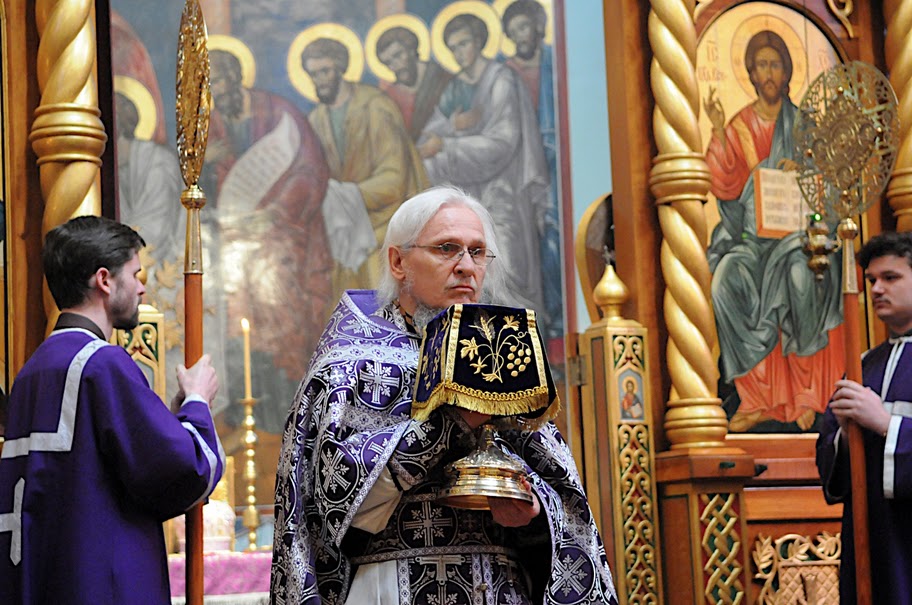
Among the Eastern Churches, the practice of reading sacred texts in the Office subsided, leaving only prophesies for major feasts in the Byzantine rite. The Roman rite, however, retained a full structure of readings at Mattins and offered the Martyrology at the Office of Prime. As an Hora Minor, Prime does not change drastically with the days or seasons, but if the Martyrology is read, it reads of the saints whose feasts will be recalled by the Church the following day. On December 24 comes the only day in the Roman rite wherein Prime is celebrated with great ceremony. Prime is sung as normal until the Martyrology, when a priest in purple cope flanked by two acolytes reads the foretelling of the Incarnation:
"In the year 5199th from the creation of the world, when in the beginning God created the heavens and the earth, in the year 2957th from the flood, in the year 2015th from the birth of Abraham, in the year 1510th from the going forth of the people of Israel out of Egypt under Moses, in the year 1032th from the anointing of David as King, in the 65th week according to the prophecy of Daniel, in the 194th Olympiad, in the 752nd from the foundation of the city of Rome, in the 42nd year of the reign of the Emperor Octavian Augustus, in the 6th age of the world, while the whole earth was at peace, Jesus Christ, Himself Eternal God and Son of the Eternal Father, being pleased to hallow the world by His most gracious coming, having been conceived of the Holy Ghost, and when nine months were passed after His conception, (all kneel down) was born of the Virgin Mary at Bethlehem of Juda made Man, Our Lord Jesus Christ was born according to the flesh."
After the psalms in Prime, the choir sing a series of intercessory prayers, the celebrant and the choir make Confessions in alternation, the celebrant recites a stationary collect that Our Lord might protect those present this day from the danger of sin, they read the Martyrology, and then follows another series of prayers in praise of Our lady and the Saints. These prayers are of early medieval Gallican origin. Prior to the Battle of Hastings in 1066, the communities of England had their own preces based entirely on verses of psaltery, admitting no other text. These prayers, which one can read more about in The Psalms and Medieval English Literature: from Conversion to the Reformation, were replaced with more responsorial prayers akin to the ones in the pre-Conciliar breviaries.
As far as the psalms themselves, Sunday Prime before S Pius V was longer than any major Hour, save Mattins. Psalms 21-25, 53, 117, and the first two fragments of 118 were sung, followed by the Athanasian Creed, the Martyrology, and the aforementioned prayers. For the rest of the week, Prime was short. The 1568 reforms, cognizant of the new obligation of secular clergy to pray the complete Office daily and also aware of the 26 psalms sung at Mattins and Lauds, re-distributed psalms 21-25 and 117 throughout the week while retaining 53 and the first two fragments of 118 daily. The result was coming substantial, but manageable from the standpoint of secular clergy.
Why, then, did Prime become the object of incessant caterwauling by reform minded priests in the late 19th and early 20th century? The Industrial Revolution quickened the pace of life in ways that modern society often overlooks. Throughout medieval times and into the pre-Industrial period, most people in Europe practiced bi-phasic sleep. Liturgically, this meant monks would awake in the middle of the night, sing the Nocturnal Vigil (Mattins and Lauds), return to sleep, and observe the rest of the Liturgy in the morning. When that disappeared, clergy still retained the venerable tradition of anticipating Mattins and Lauds after nightfall the prior evening. After both social changes in sleep and 20th century legislation forcing the entire Office to be sung or said within a modern 24 hour day, the morning became front-loaded with psalms. For the parish priest celebrating a 7AM Mass, this was onerous.
As stated elsewhere on this blog, the answers to the problems with the ancient Roman Liturgy could easily have been resolved by reducing clerical obligations and lessening the number of Doubles in the kalendar, but the result was something quite different.
Next we will look at how to pray Prime and its variations in the early half of the 20th century.
The pontificate of Leo XIII can be remembered as a genuine mini-Renaissance of Catholic life and culture in between the collapse of the Ancien Regime and the introduction of modern malevolences. In Phoenix from the Ashes Henry Sire associates the light handed, pastoral style of Leo with that of the paternal Pius XI and John XXIII, a last gasp before centralization stuck its tentacles into any remaining ecclesiastical crevices.
Leo's reign saw a revival of the gothic style as Romanticism and the return to Patristics set the Christian view beyond the immediate baroque era. Soaring arches, anachronistically left pale, graced new churches along with wooden statues and richer vesture.
In theology, Leo initiated a return to Scholasticism which, for all the short comings of manuals and Thomas's unimaginative imitators, marked a needed departure from the mechanical and narrow view of the theology coming out of Western Europe, particularly France, in prior generations. Newman, who one Jesuit described as the "first original thinker since Augustine", came into the Church and with him several positive aspects of the Oxford movement: a return to the Fathers, a return to local community as the basis of prayer, and an understanding that devotions should be done out of devotion.
However, not all aspects of the last Leonine papacy deserve historical approbation. His reign saw the continued extension of feasts of nine lessons that replaced the ferial schedule of canonical hours. Of the 18 saints canonized by Leo, half received Offices of nine lessons while some existing saints, like St Cyril or St Boniface, saw their feasts upgraded to Duplex. Outside of Advent and Lent the psalms of the day hardly ever appeared by the accession of Giuseppe Pecci to the Petrine chair. If the ferial Office did appear it was hardly ever available on consecutive days, meaning the 12 Mattins psalms of the day would be read, but Vespers would be taken from the Common of a saint. Only during pentitential seasons and during the sanctoral vigils could the ferial Office even presume to appear. Under Leo, however, it would appear less, should a cleric desire a more timely Office.
Enter the below 1883 legislation from Pope Leo granting to clerics certain votive Offices of nine lessons, based on the Offices of associated feasts and said according to the rubrics of a semi-Duplex, which gave priests, if they desired, near-full authority to ignore the Roman psalter outside of Ash Wednesday, Passiontide, and the last week of Advent. These votive Offices created Commons out of feasts (Holy Angels, Immaculate Conception, Holy Apostles etc) while integrating the occurring Scripture into the first nocturne and commemorating the feria. One imagines that after Passiontide, psalm 134 might not be said by a priest until Advent. The ancient principle that the psalter is the public prayer of the Roman Church evanescenced more and more.
And yet, this author is not sure Leo is to be condemned outright for what is, more or less, a legalized abuse of the psalter. I do not know if this permission extended to those in religious orders who sang a public Office daily. If not, then this legislation merely confirms what this blog has said for years: secular priests serving the faithful outside of canonries should not have been bound to the entirety of the daily Office. The parish parson is not a monk and the forced familiarity with the Office only bred contempt for the onus Dei. Votive Offices figured greatly into medieval piety and prebendary clerics were employed by the faithful for no other reason than to offer votive Masses and Offices of the Dead, of the Five Wounds, and of local saints for their intentions. The Little Office of the Blessed Virgin Mary was especially popular among wealthy, literate laymen and members of guilds who wished to foster communal prayer. Secular priests, at least in England, would offer Vespers and votive Offices daily in their parishes in conjunction with any prebendary clerics. With the Council of Trent, itself medieval in mindset, the parish priest became bound to the entire ferial Office and found himself something of a monk, one set apart from the very world he served.
Even with these votive Offices, the Roman rite retained more variability than the sister Byzantine rite, but something was further lost. The heart of the Greek rite are the troparia and stichera. The Roman Office is uniquely the psalms and the antiphons which adorn them.
The schedule of the Leonine Offices are:
Monday: Holy Angels
Tuesday: Holy Apostles
Wednesday: Saint Joseph, Spouse of the BVM and Guardian of the Universal Church
Thursday: Holy Sacrament of the Eucharist
Friday: Passion of Our Lord Jesus Christ
Saturday: Immaculate Conception of the Blessed Virgin Mary
Leo foresaw that priests might be especially bothered by repetition during Lent and gave additional options for Fridays of that season, the Offices of which at least relate to the general theme of the feast.
First week of Lent: Lance & Nails of Our Lord Jesus Christ
Second week of Lent: Holy Crown of Thorns of Our Lord Jesus Christ
Third week of Lent: Five Holy Wounds of Our Lord Jesus Christ
Fourth week of Lent: Precious Blood of Our Lord Jesus Christ
Discussion at New Liturgical Movement has come around to positing that the Roman liturgy proper is composed of "elements more and less central" to its identity rather than a minimal statement of validity. This touches on what has been said on this blog for years, that the Roman liturgy is not to be found in a given set of books ("pre-'55", 1962, "pre-Pius X" etc), but rather a series of characteristics either ancient in origin or synthesized by gradual acceptance over the course of several generations. Some elements, like the Eucharistic Canon of Mass and the Kalendar, are irreplaceable as essentials of the rite. Others, like the offertory prayers and choir ceremonies, form unique aspects of the Latin liturgy that distinguish local "dialects" from the mother tongue. The Sacramentary, Psalter, and Sunday lectionary are essential aspects of the Roman rite, while ritual books and private prayers have always permitted some local variation. However, one aspect of the Roman liturgy that we have not argued as an essential on this blog is the Mattins cycle of readings.....
....Why?
Simply because they changed relatively often before Trent. St. Pius V's commission to pare down medieval exuberances also looked at the inherited Curial breviary's reading schedule for the Office and found it wanting in the age of sola Scriptura. As of 1529 most of the readings for feasts, aside from the Gospel lesson in third nocturne, were edited Patristic sermons of variable, and occasionally dubious, origin.
It was not always this way. Six or seven centuries earlier readings tended towards Scriptural passages, often at lengths that discouraged concentration by the canons and monastics praying the Office. The Cluniac Divine Office often covered an entire Pauline epistle in two days of Mattins; this proved so onerous during the evening vigil that the abbot regularly appointed a monk to roam the Choir with a wooden stick and call inattentive monks to attention when they dozed off.
Centuries before then the readings may have been an odd mix of Scripture and contemporary sermons. Pierre Batiffol recounts St. Augustine advising a pastor as to which of his sermons he thought worthwhile to read during the Office.
The Tridentine commission assigned Scripture to the first nocturne of Mattins for feasts, often taken from the same book and chapter as the pericope at Mass, and a gradual reading of St. Paul on ferial days. The unique Masses of Lent already possessed proper Gospels and hence required no revision in the study group's mind. Local uses seem to have revised their vigil readings in line with the Scriptural revival in the Roman Office, although some, like Sarum, died out as they were, leaving Origen's sermon on the Incarnation for us on Christmas Eve.
Through the miracle of time I have rediscovered the office of Compline. Although it was the first hour I really learned to say on my own accord I fell out of the practice of saying it in the years since finishing school and finding my life regulated by the daily and monthly pulse of American corporate finance, month end close, and quarterly reports to the Street. I began Vespers several years ago and anticipate Mattins and Lauds for Sundays and major feasts, but the non-major hours (horae minores are during the day???) rarely appear in my life, save Sundays and long vacations.
I was introduced to the old Latin liturgy long ago in the form of the "Traditional Latin Mass," but did not discover the Divine Office until 2011, when I went to Oxford and found the Office to be the pulse of St. Aldate Street. The Dominicans said the full Liturgy of the Hours in English daily while the Oratorians, where my shadow haunted for latria, used the 1962 Vespers for Sundays and the eve of major feasts. At some level I grew to love the Office more than the Mass if only because the Mass is required out of obligation, whereas a layman only attends the Hours out of devotion. Upon return to the States I began saying Compline according to the Tridentine form before going to bed. For a tired mind looking for an evening blessing, Compline is more focused than "Bless mommy, bless daddy, good night, Lord."
Compline is an altogether different sort of Office, both in structure and purpose, from the rest of the hours in the Roman breviary. The major hours (Vespers, Mattins, Lauds) descend from the vigil of psalms and readings that took place at night before the Eucharistic sacrifice in ancient days and which solidified in their extant, pre-1911 form by the age of St. Benedict, if not earlier. The daytime hours (Terce, Sext, None) grew out of non-cleric devotion in the major Roman basilicas by those who wished to pray and sanctify the entire day; because those who sang it were commoners unable to print book on demand, the psalter remained fixed for these hours. Prime and Compline have their origin in the monasteries around Jerusalem and functioned as "fillers" for gaps in the day when a monk might lapse in his prayer. St. John Cassian remarked during his 382 AD visit to Bethlehem that Prime had not yet been adopted everywhere in the East. Similarly, he knows nothing of the tradition already practiced by St. Basil of reciting psalm 90 (Qui habitat in adiutorio) before bed. When Benedict left Rome and brought the basilica psalter with him, he may have brought a newly settled custom of praying other psalms with psalm 90 before sleep.
Compline's distinction in structure and repetition in text makes it an easy hour to commit to memory and hence very suitable for those tiresome moments before bed when creative thought and reflection fail. The words themselves carry a weight of reassurance and tenderness:
Procul recedant somnia, Et noctium phantasmata; Hostemque nostrum comprime, Ne polluantur corpora.
For a brief while I attempted the Divino Afflatu rendition of this hour, but found the variable psalms and antiphons antithetical to the very purpose of this Office. Indeed, Compline helped me realize that Pius X and Paul VI's overhaul of the Roman Office was far more radical than what the latter did to the Missal.
Compline represents a marvelous entry point into the Roman Office and deeper liturgical prayer. This prayer for a safe rest under Our Lord's watch, like an "apple to His eye", is approachable in its brevity and constancy while being less mundane than the horae minores of the day: a Confession, a few psalms, a short hymn, a canticle, and a prayer to Our Lady; most remarkable to me, at least in the Tridentine Office, is that the last words on the Christian's lips before sleep are the Pater, the Ave, and the Apostles' Creed. Seven Office sanctify the day, but only one the night!
Liturgical theology is, according to Aidan Kavanagh, not a theological examination of the liturgy, but theology done by means of the liturgy. Liturgy is the theologia prima of the Church. When someone asks a Catholic how to learn more about the faith, the believer never directs the inquirer to obtain a copy of Denzinger. Invariably, the believer tells the non-Catholic to go to Mass (and hopefully at a carefully selected location). With this in mind, let us [very succinctly] consider what the Church told and taught us about the Assumption of the Mother of God today.
Apse of St. Mary Major with mosaic of Mary as Queen of Heaven,
crowned by and reigning with Christ.
source: Rad Trad's collection
Mattins—or the "vigil," as Dobszay insisted on calling the first major hour—consists of nine psalms and readings divided evenly into three nocturnes. Contrary to the eccentric and rich local traditions of northern Europe, which created special texts for Marian feasts, the Roman rite retains a primitive and sparse text. The psalms and hymns for the feast are typical of any Marian feast prior to the 1860s when Pius IX issued a unique liturgy for the Immaculate Conception. Where the Assumption stands alone is in the Mattins lessons and the text of the Mass. According to Dom Gueranger:
"the Lord Pope went to St Mary Major, where, surrounded by his court, he celebrated First Vespers. At the beginning of the night the Matins with nine lessons were chanted in the same church.
"Meanwhile an ever-growing crowd gathers on the piazza of the Lateran, awaiting the Pontiff's return.... Around the picture of the Saviour, within the sanctuary, stand twelve bearers who form its perpetual guard, all members of the most illustrious families, and near them are the representatives of the senate and of the Roman people.
"But the signal is given that the papal retinue is redescending the Esquiline. Instantly lighted torches glitter on all sides, either held in the hand, or carried on the brancards of the corporations. Assisted by the deacons, the Cardinals raise on their shoulders the holy image, which advances under a canopy, escorted in perfect order by the immense multitude. Along the illuminated and decorated streets, amid the singing of the psalms and the sound of instruments, the procession reaches the ancient Triumphal Way, winds round the Coliseum, and, passing through the arches of Constantine and Titus, halts for a first Station on the Via Sacra, before the church called St Mary Minor.... In this church, while the second Matins with three lessons are being chanted in honor of the Mother, some priests wash, with scented water in a silver basin, the feet of the her Son, our Lord, and then sprinkle the people with the water thus sanctified. Then the venerable picture sets out once more, crosses the Forum amidst acclamations.... it at least enters the piazza of St Mary Major. Then the delight and the appluse of the crowd are redoubled; all, men and women, great and little, as we read in a document of 1462 (archivio della Compagnia di Sancta Sanctorum), forgetting the fatigue of a whole night spent without sleep, cease not till morning to visit and venerate our Lord and Mary. In this glorious basilica, adorned as a bridge, the glorious Office of Lauds celebrates the meeting of the Son and the Mother and their union for all eternity." (The Liturgical Year, August 15)
All rungs of Roman society paused regular life and joined Christ and Mary in the divine life for a night and an octave, celebrating Mary joining her Son in eternity and anticipating their own union with Christ in eternity. Mary was the first of what Christ wants all Christians to become by the Sacraments, albeit in a lesser degree.
The first three lessons are extracted from chapter 1 of the Song of Songs:
1 Let him kiss me with the kiss of his mouth: for thy breasts are better than wine,2 Smelling sweet of the best ointments. thy name is as oil poured out: therefore young maidens have loved thee.3 Draw me: we will run after thee to the odour of thy ointments. The king hath brought me into his storerooms: we will be glad and rejoice in thee, remembering thy breasts more than wine: the righteous love thee.4 I am black but beautiful, O ye daughters of Jerusalem, as the tents of Cedar, as the curtains of Solomon.5 Do not consider me that I am brown, because the sun hath altered my colour: the sons of my mother have fought against me, they have made me the keeper in the vineyards: my vineyard I have not kept.6 Show me, O thou whom my soul loveth, where thou feedest, where thou liest in the midday, lest I begin to wander after the flocks of thy companions.7 If thou know not thyself, O fairest among women, go forth, and follow after the steps of the flocks, and feed thy kids beside the tents of the shepherds.8 To my company of horsemen, in Pharao's chariots, have I likened thee, O my love.9 Thy cheeks are beautiful as the turtledove's, thy neck as jewels.10 We will make thee chains of gold, inlaid with silver.11 While the king was at his repose, my spikenard sent forth the odour thereof.12 A bundle of myrrh is my beloved to me, he shall abide between my breasts.13 A cluster of cypress my love is to me, in the vineyards of Engaddi.14 Behold thou art fair, O my love, behold thou art fair, thy eyes are as those of doves.15 Behold thou art fair, my beloved, and comely. Our bed is flourishing.16 The beams of our houses are of cedar, our rafters of cypress trees.
Some of these verses are very sensual and even sexual. Let no one say that the medievals were prudish on matters of intimacy! These verses can be applied both as the Church's acclamation to the Virgin, joyfully exclaiming her maternal nurturing of us Christians working out our salvation in fear and trembling. These words can also, with some care and reservation, be interpreted as a dialogue between Mary and her Creator. The first verse "Let him kiss me with the kiss of his mouth: for thy breasts are better than wine" speaks to Mary on a level of intimacy that no man ever knew, but Christ did. He nursed from her, yes, but He, in the Father, also created her in accordance with His divine plan for mankind. The image of the breast conjures immature sexual ideas today, but previous peoples instantly affiliated it with nurturing and familial ties: the affection of the husband, the nurturing of the children—two kinds of love, the second generated from the first, which reflects the Divine Love. At this level of power and privacy did Mary know God, of course without the sexual element. Should the dialogue interpretation continue, Mary is both removed from conventions "I am black, but I am beautiful" and presented as close with God on the level of bride in the King's chamber, as the versicle before the third nocturne says.
The readings in the second nocturne come from St. John of Damascus' second treatise on the Dormition of the Mother of God. These readings replaced the writings of St. Dionysius of the [pseudo] Areopagite —which would have been the lessons read at St Mary Minor—with the Tridentine reforms. St. John explains the typology of the Virgin, her prefigurement in the Ark of the Covenant, which housed the old promise between God and mankind, and its fulfillment in her, who housed the new and eternal promise between God and mankind. And like Christ, she did not refuse death, but embraced it as a path to life away from the death wrought by Adam:
"From her true life had flowed for all men, and how should she taste of death? But she yielded obedience to the law established by Him to Whom she had given birth, and, as the daughter of the old Adam, underwent the old sentence, which even her Son, Who is the very Life Itself, had not refused; but, as the Mother of the living God, she was worthily taken by Him unto Himself."
In the treatise from which the above passage in extracted, the Damascene saint goes on to teach that Mary's body could only be assumed into heaven because its use by Christ consecrated it as a thing of heaven. The treatise goes on to recount the entire event of the Dormition and Assumption of the Blessed Virgin, which ran the course of three days:
"An ancient tradition has been handed down to us, that, at the time of the glorious falling-asleep of the blessed Virgin, all the Apostles, who were wandering throughout the world preaching salvation to the Gentiles, were caught up aloft in the twinkling of an eye, and met together in Jerusalem. And when they were all there, a vision of Angels appeared to them, and the chant of the heavenly powers was heard; and so with divine glory she gave up her soul into the hands of God. But her body, which bore God in an effable manner, being lifted up amid the hymns of Angels and Apostles was laid in a tomb in Gethsemane. There for three whole days the angelic song was heard.
"But after three days, the chant of the Angels ceased, and the Apostles who were present (for Thomas, the only one who had been absent, came after the third day, and wished to adore the body which had borne God) opened the tomb; but they could by no means find her sacred body in any part of it. But when they only found those garments in which she had been buried, and were filled with indescribable fragrance which emanated from them, they closed the tomb. Amazed at this wonderful mystery they could only think that he, who had been pleased to take flesh from the Virgin Mary, to be made man, and to be born though he was God the Word, and the Lord of glory, he who had preserved her virginity without stain after childbirth, should also have been pleased to honor her pure body after her death, keeping it incorrupt, and translating it into Heaven before the general resurrection."
The best sermon this writer ever heard preached about the Assumption, or "Dormition" given the setting, was that of a Melkite deacon. Paraphrasing and condensing ten minutes into a few sentences, "Heaven and earth were not vast enough to hold Gods' glory, but Mary's womb was. Christ received His Divine nature when He was begotten of the Father in eternity. He received His human nature when He was conceived and born of Mary in time. When her earthly course was run, Mary died and her body was taken into heaven by the One Who created her because it was inconceivable that the womb which ore God-made-Man could decay in the ground. But this does not separate Mary from mankind. God became united to mankind through her. Mary was the first. We will never know God as closely as she did on earth, except perhaps when we receive Holy Communion, but we can pray to know Him in eternity because of her."
The Annunciation by Fra Angelico
source: joyfulheart.com
At the third nocturne we arrive at the Gospel of the day, also used in the Mass of the day. The pericope, Luke 10:38-42, is the same Gospel story applied in the Liturgy of St. John Chrysostom in the Greek tradition for this feast, adding verses 11:27-28. The last verses used in the Byzantine liturgy highlight the entire point of the Gospel for this day: "And it came to pass, as he spoke these things, a certain woman from the crowd, lifting up her voice, said to him: Blessed is the womb that bore thee, and the paps that gave thee suck. But he said: Yea rather, blessed are they who hear the word of God, and keep it." Is any depiction in pre-modern art more popular than that of the Annunciation? Mary became special because she bore Christ. She is a powerful intercessor with Him, indeed the most powerful intercessor with Him precisely for this reason. But also for this reason Mary is not a lone, solitary figure of power. She matters because wherever she is, Christ is nearby. Practically every depiction of the Virgin before the vulgar kitsche artwork of the 19th century showed Mary and our Lord Jesus together. In the various pieta paintings and sculptures, the great paintings depicting the Crucifixion and Norman rood screens recounting the same event, and first millennium holy images—Eastern and Western alike—Mary is with her Son. So let us agree with the woman in the crowd: blessed is the womb that bore the Lord! And then let us turn our attention from Mary to Christ by hearing the word of God and by keeping it.
Culminating with the Mass, the Introit invites us to enter into the heavenly abode of joy, elevated from the earthly joy and instruction in Mattins and Lauds, as well as the rites local to the diocese of Rome described by Gueranger above. In the Mass God's presence begins as a mystic one and elevates into a literal presence that can be seen and touched, a presence similar to the one Mary knew as Christ's mother. The collect of the Mass is among the best in the Roman tradition:
"Forgive, O Lord, we beseech thee, the sins of thy servants: that we who by our own deeds are unable to please thee, may be saved by the intercession of the Mother of thy Son our Lord."
This collect, as Fr. Hunwicke has stated, is the theology of Mary East and West. What words could better express our Lady's place in the plan of salvation? The Mass became the integral part of the Assumption liturgy and, in time, many stunning settings of the Mass were written by the great polyphonic and choral composers. Palestrina's setting of the Ordinary of Mass is a personal favorite. The below sequence of videos has both the proper chants and Palestrina's setting concatenated, as for a Mass.
Lastly, the feast is an octave. This blog has discussed in other posts the concept of the eighth day and the theology of the Resurrection. Christ rose on the eighth day after He entered Jerusalem and He appeared to the Apostles on the eighth day after that, one octave after another. Moreover, the Resurrection constitutes the eighth day of the week, the new day of Creation, or re-creation. Mary's tomb, like her Son's was found empty. While the myrrh-bearing women and the Apostles Peter and John only found a few burial garments in Christ's tomb, Mary's tomb was found full of flowers and sweet scents. Christ's Resurrection brought mystery only clarified with the descent of the Holy Spirit on Pentecost. Mary's Assumption was clear and a fruit of Christ's Resurrection.
Unfortunately, this historic and gladsome liturgy was altered in 1950 after Pius XII's definition of the Assumption—wherein he says nothing new and clears up none of the controversy stemming from the chirpy immortalist crowd, even if the accompanying letter did in fact say she died. The Office readings were altered severely: the first reading is now taken from Genesis chapter 3 and the next two readings from Corinthians (the same passage used in the Requiem Mass). The Pope's encyclical Munificentissimus Deus replaces one of the lessons from St. John of Damascus. The hymns are new and utterly ghastly. And the Mass is entirely new. The Introit is no longer an invitation to joy, but instead an excerpt from Revelation chapter 12. The collect is banal beyond belief and the Gospel is the account of the Annunciation heard at practically every Marian feast now other than the Immaculate Conception. Of all the changes to the feast in 1950, the insertion of Genesis chapter 3 at Mattins and the new Introit of Mass stand out most. Far from according to a "hermeneutic of continuity" with the previous liturgy, these texts exude the images of plaster statues and devotional lithographs so common in the 19th and early 20th century. Who has not seen a plaster statue of the Virgin, clothed in blue, perhaps with a bulbous baroque crown rimmed in twelve stars, standing on a blue globe and crushing the head of a green snake? The problem that arises from this depiction of Mary as crushing sin and standing above the moon, crowned with stars is not so much what it says as much as what it fails to say. The Mary of these images, pieces of art, and, to some extent, devotions is an aggrandized Mary not entirely dependent on Christ for her importance. There is nothing wrong with these texts doctrinally, but they replace other texts that were more coherent, beautiful, and holistically reflective of the Church's understanding of our Lady. The octave was stripped in 1955.
As with Holy Week, the same people who created the Pauline liturgy restored a few small portions of what they vitiated in the 1950s. The old Gaudeamus omnes Introit is made available as an option. The Mass as a whole is just as bad as the Pian Mass though. The readings are respectively Revelation 12 and the 1951-1969 Mattins readings from Corinthians; the Gospel is again the Annunciation. Mattins The Office of Readings gives Ephesians 1:16-2:10 and again Pius XII's encyclical as the lessons. The mystical understanding of Mary in union with Christ, representing the Church, and the link between the God-Man and mankind is obscured or forgotten. Who can deny that even the most pious of Roman Catholics—far better people than the Rad Trad—only know of Mary through the kitsch statue or as the object of the line "Hail, full of grace"? Again, there is nothing strictly heterodox about this folkish interpretation, but it comes at the cost of the stronger, traditional interpretation of the feast.
On a happy note I know of at least one priest who celebrated the old Mass and kept the old Office for August 15 and the octave! This feast, like so many of the most ancient feasts in the Roman rite, brings the faithful deep into the mens of the Church and her theology of the mysteries of God.
"When the Church is self-referential, inadvertently, she believes she has her own light," Cardinal Bergoglio said to the College of Cardinals before the Conclave that elevated him to the Petrine See. Bergoglio's message continued the engagement with existential modernity begun by other dubious figures like Henri de Lubac, Karl Rahner, and Rudolf Steiner decades earlier, but this isolated statement reveals a rare moment of clarity from the modern Roman See. When the Church is self-referential, she disables herself from spreading the Gospel because she does not know what she is or what she does.
Such is the contemporary state of the Roman liturgy. Many readers have asked over the last two years what the point of the liturgy is. They are being cynical. The question carries the utmost gravity. Is it a divinely imparted ritual with its own powers? Is it a set of didactic actions that ornament the more important mechanical acts of transmitting grace? What is it? If we do not know what the liturgy is, then we are truly lost. The liturgy, in my own private opinion, is the sensus fidelium of the Church expressed according to separate, non-contradicting traditions and lived out in the Church universal. There is no citation for this definition in an ecumenical council—nor is there a definition of the Resurrection. Previous generations needed no definitions or binding statements to understand the relationship between the liturgy and the faith. If they believed it, they prayed it. They did not leave what they believed out of their worship, nor did they believe in novelties unfounded in the traditions of the Church. Liturgy does not merely teach belief and transmit grace. It revives and renews the sacred mysteries of Christ in time for the faithful. In doing so, one encounters Christ, the angels and saints, and glimpses into the greater spiritual reality of the Lord while remaining on earth, blurring the lines which separate the eternal and the temporal. One leaves the liturgy and the "mystical supper" of Christ not only having learned what to believe, but also how to believe when he returns to the world outside the temple.
Christ taught simply. His teachings tell the listener as much about how to engage Him as much as they do what to think of Him. Chesterton wrote that when he first read the Gospel, contrary to everything he was told about a kind rabbi divinized by his followers, Jesus spoke authoritatively as God. As God, He commanded love, fidelity, and trust in Him as well as care and attention towards one's neighbor. Above all, He taught the forgiveness of sins and the metanoia of the sinner. The last part concerns us. How does one orient one's self to God and away from sin? How does one see the world and God as He wishes? In conjunction with being the setting for the Sacraments, where the Holy Spirit acts and makes the work of Christ immediately accessible to the believer, the liturgy shows us this. It only makes sense. When a friend asks about the Catholic faith, one does not give him a catechism. One takes him to Mass or the Divine Liturgy.
"I have passed on to you what I have received," St. Paul wrote to the Church in Corinth some time in the 50s, merely a generation after the Passion of the Lord. The Apostle to the Gentiles passed on to the Corinthians both the tradition of the Lord's work and the tradition of what He commanded His followers to do. The two were inseparable. Belief and the primitive liturgy were received by believers simultaneously. They did not remain static, however. Passing on something does not preclude its development, its clearer enunciation, its deepening. Chapter 23 of St. Vincent of Lerins' Commonitorium applies to the liturgy as much as to doctrine:
"But some one will say, perhaps, Shall there, then, be no progress in Christ'sChurch? Certainly; all possible progress. For what being is there, so envious of men, so full of hatred to God, who would seek to forbid it? Yet on condition that it be real progress, not alteration of the faith. For progress requires that the subject be enlarged in itself, alteration, that it be transformed into something else. The intelligence, then, the knowledge, the wisdom, as well of individuals as of all, as well of one man as of the whole Church, ought, in the course of ages and centuries, to increase and make much and vigorous progress; but yet only in its own kind; that is to say, in the same doctrine, in the same sense, and in the same meaning."
Local churches developed their liturgical rites around their own settings, needs, and cultural tendencies. The Roman rite is, to say the least, highly efficient. More so than the Eastern rites, replete with hymns and elaborate gestures, the Roman rite uses the words of Holy Writ as its almost exclusive textual basis for the propers and many of the prayers, reflective of the Roman legal tradition's emphasis on the binding power of authoritative words. The more philosophical Greeks had a mystical and excessive liturgy consonant with its philosophical tradition. And the various far Eastern rites too reveal their origins. The Roman Patriarchate tolerated variation more than any other patriarchate until Trent, permitting, often begrudgingly, "dialects" of the Roman rite like the French, English, and Portuguese uses as well as further departures like Toledo, Milan, and L'Aquila. The multiplicity of uses in the Latin Church multiplied the spiritual wealth of the Western Church and gave her saints and thinkers recognized across national borders. Uses were often suppressed, but local variety was accepted as the norm with Rome as the original, the standard, the canon. One can trim the branches of a tree, but not the trunk.
"That we may receive the King of All, invisibly
escorted by angelic hosts."
source: preachersinstitute.com
These various dialects teach the Christian to perceive the world in a divine language. Language, Noam Chomsky begrudgingly admits, is something for which human beings seem uniquely wired. Language creates learning, interaction, and introspection. The liturgy, in a very real way, makes all these things possible with the Holy Trinity. The liturgy of the Church, Alexander Schmemann taught, is the continued presence of the Lord in the world and in time. Laurence Hemming develops this idea and notes the medieval concept of theliturgy as the opus Dei, the work of God which man engages and shares. In prior times, the bells of monasteries and cathedrals signaled the various canonical hours and stages of the Mass in town. The liturgy was the pulse of the community, not a feature of it. Schmemann's interpretation of the entirety of the liturgy of the Church as Christ's continued presence is not verified by baroque and modern writers, but by the liturgy itself. In it, the Christian meets God as He is, not as He is imagined to be or desired. The understanding of God in the liturgy may be deepened or hallowed by previous generations, but the sensus cannot be changed. The literal encounter with God liturgically, but not exclusively in the Sacraments, finds confirmation in the oldest texts of the Church. On Holy Saturday the deacon, in the blessing of the Paschal candle, sings of "this night," not "a night we remember," as the night of the passage to salvation. Then the cynosures of pre-Incarnational salvation history are recounted by the lectors, the story of the fall of both Man and creation. Then, water, a symbol of creation and the fundamental element of creation itself, is blessed and made into the matter of our salvation in Christ, Who Himself first made it holy in creating it and then re-sanctified it by seeking St. John's baptism in the Jordan. He brought the world back into Himself in that act and segmented a new creation that the baptized join. So water is blessed and sprinkled on the faithful. Catechumens join that new creation in Baptism themselves. This transcends decoration around simple Sacraments of Baptism and Communion. Indeed, it is this liturgical context that those Sacraments make sense. The re-visitation of the divine mysteries continues in the morning with the Mass, "I am risen and am still with you." The Church uses the psalm in the present tense and does not adapt it to a commemorative tone. Similarly, the collect of Pascha refers to the Resurrection as having transpired hodierna. The Byzantine rite also speaks of the Resurrection as a current reality, singing countless times "Christ is risen from the dead...." On Holy Saturday, Pascha, and the other Sundays, ferial days, and feasts of the year, the faithful see the Trinity, the Sacraments, and the Saints as they really are and are united to heaven in the sacred rites, when God comes down from heaven and gives the Christian a glimpse above in a heavenly tongue.
"All of Paradise is close to the altar when I celebrate Mass. The angels
attend my Mass in legions. The Virgin assists me."
To those who think this "high" interpretation inappropriate or misguided, the author poses the question: why consecrate a church? The objection to interpreting the liturgy as a very real thing which imbues the sensus fidelium by bringing the faithful to the sacred acts of Christ usually rests on the misguided belief that a religious act is either real or symbolic, but never both. Yet Baptism is both real and symbolic. It symbolizes creation, restoration, the eighth day, the Divine Adoption, and the cleansing of spiritual dirt. And still, it actually accomplishes all these things and incorporates a person into the Body of Christ, the Church. The Cathedral of Our Savior at the Lateran palace in Rome was the first church ever to be consecrated in the sense that churches are consecrated. It is not a Sacrament and the rejection of a high view of the liturgy would necessarily elicit one to interpret the actions as a series of exorcisms and drawn-out, pious actions of instruction. Does the church then become a house of God? Can there be such a thing as a house of God in a post-Mosaic Law Church without the authority of the Church to develop and deepen its tradition to allow for such an act of consecration? The Church does indeed symbolize the Temple of Jerusalem and the future New Jerusalem of heaven, but it is actually a very real house of God where, as in heaven, God lives and dwells and, for a few hours a week, acts. If the liturgy is anything less, then it is just bad literature.
The purpose of the liturgy, especially during the great periods of the year, is to unite the faithful to God so that they might know Him and save their souls. He gathers them to Himself and to His new Jerusalem, the Church, and to His Body, again, the Church. The belief and the sensus fidelium of the Church is diffused among the various rites and usages the Church enjoins and has practiced through out the ages. Christ's Body, the Church on earth, is much like His physical body when He was present among us in flesh in that it is organic and prone to growth. I recall years ago reading interviews with both a prominent sedevacantist and a priest of the FSSPX. Both were asked if a pope could create a new rite of Mass and both answered "In theory, yes, but the New Mas is bad, so we reject it." I think a more prudent reply excludes the possibility that the pope, or any bishop, can create a new liturgy or discard large portions of the old liturgy. Many of the additions to the Roman rite over the years—introductory rites in the Office, hymns, prayers before the altar, the offertory, the monastic choir ceremonies, the Eastern feasts imported etc—were just that, additions, neither replacements nor fabrications. If we concede this point, then we lose part of the sensus fidelium and instead embrace the inner-mind of some dodgy bishop. Worse yet, we lose the greater meaning of the mysteries and lessen the Sacraments, turning them into transmission channels for grace and nothing more. To retain the sensus fidelium and keep the faith, we ought to guard the liturgy of the Church with Davidic fortitude lest we embrace Christ as we want Him to be and not as He actually is.
My fellow Americans: Happy Thanksgiving. Fast tomorrow!
As a follow up to this post on the Liturgy of the Hours, I would like to share this brief comparison of the Roman rite as various stages in the last four a half centuries.
Liturgy & Feast
I Vespers
Mattins/Lauds
Mass
II Vespers
1570: Octave day of St. Lawrence
Vespers of St. Lawrence; comm. X Sun. after Pentecost and oct. of
Assmpt.
Festive. Three nocturnes of three psalms and three lessons; last
lesson concatenates dominical readings. Comm. of Sunday and Marian oct. at
Lauds
Of St Lawrence. Comm. of Sunday and oct. of Assmpt. Last Gospel from
Sunday
Vespers of St. Lawrence; comm. X Sun. after Pentecost and oct. of
Assmpt.
1910: St. Joachim
Vespers of St. Joachim; comm. X Sunday after Pentecost, oct. day of
St. Lawrence, oct. of Assmpt., and of St Hyacinth
Festive. Three nocturnes of three psalms and three lessons; last
lesson concatenates dominical readings. Comm. of Sunday, St. Lawrence oct.
day, Marian oct. and St. Hyacinth at Lauds
Of St Joachim. Comm. of Sunday, St. Lawrence oct. day, Marian oct.
and St. Hyacinth at Lauds. Last Gospel from Sunday
Vespers of St. Joachim; comm. X Sunday after Pentecost, oct. day of
St. Lawrence, oct. of Assmpt., and of St Hyacinth
St Pius X: X Sunday after Pentecost
Vespers of St. Joachim, comm. of oct. day of St Lawrence, X Sunday
after Pentecost, St. Hyacinth, and oct. of Assmpt.
Of Sunday, three nocturnes of three psalms and three lessons; comm.
of St. Hyacinth, oct. day of St. Lawrence and Marian. Oct. at Lauds
Of Sunday. Comm. of oct. day of St. Lawrence, St Hyacinth, and oct.
of Assmpt.
Optional private Mass of St.. Joachim with comm. of Sunday and proper
Last Gospel
Of Sunday. Comm. of oct. day of St. Lawrence, St Hyacinth, and oct.
of Assmpt.
1962: X Sunday after Pentecost
Vespers of St. Joachim, comm. of X Sunday after Pentecost
Of Sunday. One nocturne of nine psalms and three lessons.
Of Sunday.
Of Sunday.
Paul VI: XXth Sunday of “Ordinary Time”
Evening Prayer scheme I for Sundays of Ordinary Time
Of Sunday. Three psalms and two [very long] readings
Of Sunday. Readings of year A
Of Sunday.
I am sure some of this is wrong, so JohnR and Rubricarius can disabuse me of my errors. The Rad Trad advocates no specific year here, although he would not mind the 1570 scheme with St. Joachim permanently fixed for August 16.
Today, tomorrow, and the day after give us some insight into how feasts have been celebrated and ranked throughout the history of the Roman Church. The Roman rite generally has four categories for days:
Ferial
Simple
Semi-Double
Double
Semi-Double is a compromise between Simple and Double. A Ferial day uses the psalter of the day (including the 12 Mattins psalms), the full preces and suffrages during the major and minor hours (intercessory prayers), and celebrates the Mass proscribed for that day. For most of the year this is a repetition of Sunday's Mass. During Lent it is a unique Mass daily. Mass uses an odd number of orations, usually three, but enough commemorations can boost it to five or seven.
A Simple usually celebrates a lesser known saint of local interest and has much the same character as a Ferial day, except the psalms at Lauds are festive and the Mass is of the saint rather than of the previous Sunday. Mass is sung after Sext on Ferial and Simple days, except when the Ferial or Simple day has a penitential character or is a vigil—like next week's vigil for St. Lawrence—in which case the Mass is after None. During Lent the Ferial days enjoy privilege and supersede the Simple feasts. On Simples the full preces are sung, but the Commemoration of the Cross is omitted during the suffrages. A Simple begins with Vespers the previous night and ends at None in the afternoon, as is still the Eastern practice for feasts.
A Double begins with first Vespers the previous night and ends with Compline the night of the feast. Mattins uses 9 psalms and 9 lessons in three nocturnes as Mattins, using either psalms proper to the feast or from the Commons. Lauds are of course festive and there are no suffrages or preces during any of the hours of the Office. Mass, sung after Terce, has no votive orations, although it can admit commemorations of impeded feasts or Ferial days.
Semi-Double is, again, a blend of Double and Simple. It retains all the psalms and the arrangement or the hours of a Double, but with the suffrage, preces, and commemoration rules of a Simple. The Rad Trad always fancied Semi-Double to be an arrangement invented by monks who thought a saint was important, but not important enough to impede Sunday. Sundays are Semi-Double, but take priority over any Semi-Double saint's feast.
What does this have to do with the period from August 4-6th? Every day of that period is a Double feast. Today's feast of St. Dominic began last night, overtaking Sunday's Vespers. Tomorrow is the feast of Our Lady of the Snows (St. Mary Major in Rome). Finally, on Wednesday, is the Transfiguration of the Lord. Despite their similar celebration in the Mass and Office they are not observed as having the same status.
Many will have heard of the ranks "Double I Class," "Double II Class," "Great Double" etc. These days illustrate the significance of these ranks. They are means of classifying the prominence of feasts that are celebrated the same way in the Office. It seems that when these classifications were given to Double feasts in the mid-second millennium—complete when Clement VIII instituted "Greater Double" rank—those in charge of the process began with the understanding that the feast of the Transfiguration would be the most significant day in the sequence. From there they also understood that while not as important, Our Lady of Snows was both a Marian feast and a major feast within the city of Rome. St. Dominic was an important enough saint to impede the Sunday Mass and Office, as he would have until 1911, but not enough to impede the other feasts. So St. Dominic retained a regular Double rank, while Our Lady of the Snows became Greater Double, and the Transfiguration was kept as a Double II Class. Hence second Vespers of St. Dominic is replaced by first Vespers of Our Lady of the Snows, which in turn loses its second Vespers to the first Vespers of the Transfiguration (which enjoys first and second Vespers).
All this becomes apparent when one sees no Greater Double feast in the kalendar is surrounded by Ferial or Simple days!
A picture of St. Mary Major from the Rad Trad's personal collection.