Showing posts with label Missale Romanum. Show all posts

Friday, September 16, 2016

John the Baptist in the Latin Mass

(Giotto)
Usually when reaching the Communicantes prayer in the Johannine-revised Missal, I cringe and quickly skip over the inserted phrase: sed et beati Ioseph eiusdem Virginis Sponsi. Last night at Mass it instead piqued my curiosity towards finding references to the Baptist throughout the text of the Missal.

The first mention is very early, in the Confiteor which is prayed twice, once by the priest and once by the server.
Confíteor Deo omnipoténti, beátæ Maríæ semper Vírgini, beáto Michaéli Archángelo, beáto Joanni Baptístæ.... Ideo precor beátam Maríam semper Vírginem, beátum Michaélem Archángelum, beátum Joánnem Baptístam, &c.
That adds up to four invocations of John by name before the Introit.

The Gloria refers to Christ as the Agnus Dei, the Lamb of God, as he was named by the Baptist.

After the washing of hands, in the Suscipe, sancta Trinitas, John is mentioned by name after the Virgin and before Peter and Paul.

In the canon, the Communicantes omits the Baptist, including rather John the Apostle and the John who was martyred under Julian the Apostate.

After the consecration, the Nobis quoque peccatoribus invokes the martyrs, with the Baptist at the head of the list.

The thrice-hymned Agnus Dei of course reflects the proclamation of the Forerunner of the identity of the Christ.

Before the people's communion, the celebrant declares: Ecce Agnus Dei, ecce qui tollit peccáta mundi. This quotes the Baptist again more fully regarding the Christ (cf. Jn 1.29).

Finally, the Last Gospel makes reference to the witness of John as one giving testimony of the Light.

The testimony of St. John the Baptist is so important to the liturgy of the Mass that the priest not only prays to, but with, him multiple times. Traditionally in the Roman Rite, the feasts of the Baptist were of the greatest importance after the feasts of Christ, the Virgin, and the Angels. This is reflected mightily in the Mass itself.
"Such an one was John, who regarded not the multitude, nor opinion, nor anything else belonging to men, but trod all this beneath his feet, and proclaimed to all with becoming freedom the things respecting Christ. And therefore the Evangelist marks the very place, to show the boldness of the loud-voiced herald. For it was not in a house, not in a corner, not in the wilderness, but in the midst of the multitude." —St. John Chrysostom

Monday, June 1, 2015

Lost Octaves: The Ascension


Christ rose from the dead on the eighth day of the week, capping a week that began with His triumphant entry into Jerusalem on Palm Sunday with His entry into Hades, its harrowing, and His return to this earth glorified. Since then, the Church has traditionally marked the great feasts with eight day long celebrations, commemorating the marked significance of what Our Lord did either Himself or through His saints with protractions of the Office, Mass, and associated festivals. We recently concluded the octave of Pentecost, or Trinity Week in the Byzantine rite, one of the few octaves remaining in the 1962 Roman liturgy. The liturgy of Paul VI lacks this octave. Traditionally the Church celebrated numerous octaves until the pontificate of Pius XII, among them the octave of the Ascension of Our Lord into heaven. 

Octaves give the faithful seven days to digest a great feast. Rogation days, three days of penitential services and processions, precede the feast of the Ascension. St. Mamerus of Vienne instituted what eventually became the Rogation days while he was bishop of that see. The saint wanted his people to do penance so that they might repair for the wars of that region. The Council of Tours championed the practiced in 567 and in the ninth century it found a champion in St. Leo III, the pope of the age. 


Originally the Rogation days resembled the Roman observance of Ash Wednesday: the clergy and faithful wore poor clothing, marked themselves with ashes, and processed from church to church singing psalms and litanies. Over time the Rogation days, owing to their proximity to the Ascension, became spiritualized lamentations at the end of Paschaltide for the impending departure of Christ. Dom Gueranger wrote that observance of the Rogation days to their full extent with abstinence "would express how [the Church] feels at the loss of her Spouse, who is soon to be taken from her."

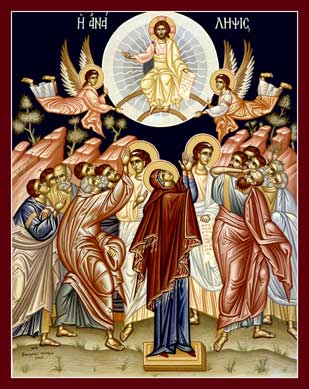
The Gospel of the Ascension and what occurs immediately after its reading are among the most subtle acts in the subdued Roman liturgy. In the 16th chapter of St. Mark's Gospel, Christ commands the Apostles to preach to the good news to the ends of the earth, telling them that they shall cast out devils, speak in new tongues, and survive poison, for no harm shall impede them from their charge. While this sounds hyperbolic, it means that the sign of the Church is miracles—God acting apart from conventional expectation to draw people's attention to the truth of Christ. If the sign of the Church is miracles, then the sign of the Church is holiness above all. Miracles are not part of the message of Christ or of the Church, rather they point to it and enable it.

After the deacon has read the Gospel, an acolyte snuffs the Paschal candle, which will not burn again save for at the blessing of the font on the vigil of Pentecost. In the middle ages this act would have made more sense to us than it does in the 1962 form or the Pauline form (if it is still done). The other candles in a church would have been light from the Paschal fire, which burned without pause from Holy Saturday through the Ascension. Devotional candles, candles on side altars, and other candles in the sanctuary would have been lit from the Paschal candle before the acolyte extinguished it. Christ has taken the Apostles to the top of Mt. Olivet. Peaks of mountains and hills, as the "closest" point to heaven for those on earth and places of isolation, have special significance in the Scriptures. Moses ascended Mt. Sinai and received the Ten Commandments. Reflectively, Christ brought the Apostles up Mt. Tabor to show the congruity between the Jewish covenant and the one to come when He transfigured before them. At this moment atop Mt. Olivet, the Apostles again assume, again wrongly, that Christ will now restore the kingdom of Israel to its Davidic glory, forgetting the Lord's condemnation of Israel on Palm Sunday. A new covenant will be accompanied by a new Jerusalem, one based in heaven and present on earth, descending from one to another. God outwardly signified His presense in a cloud over the Mercy Seat on the Ark of the Covenant. Now, His presence would descend from heaven to earth and diffuse through the working of the Holy Spirit and the work of the Church, its opus Dei.

Saturday morning's Mattins delve more explicitly into the extinction of the Paschal candle. The Lord "has given us great and precious promises, that by [faith and knowledge (cf. 1-2)] you may be made partakers of the divine nature" (2 Peter 1:4). Grace is given freely, not seen instantly. It must be perceived by faith, just as the presence of Christ is no longer seen physically in human form, only by faith. St. Leo the Great explicitly states in the second nocturne of Saturday "the seen presence of Our Redeemer in the body has been changed for the unseen presence of sacraments, and hearing was given to the Church instead of seeing." As she can no longer "see" her Spouse, the Church turns to externals like the Holy Fire to as reminders of Christ's humanity and His perpetual presence. Some Greek churches expand beyond the medieval Roman practice by reserving the Holy Fire for the entire year and lighting all candles until the next Holy Saturday from it.

The Apostles are left at the peak of Mt. Olivet with the Virgin, confused and disconsolate, none the wiser than they were when Jesus said "The Son of Man must suffer" or "I go to My Father." For understanding they had to await the descent of the Holy Spirit. The Ascension of the second person of the Holy Trinity necessarily implicates the descent of the third. The first nocturne at Mattins on the octave day contains the greeting "peace from God the Father, and from Christ Jesus, the Son of the Father", stopping short of St. Paul's Trinitarian greeting in 2 Corinthians 13:14. As the Holy Spirit has not yet descended in liturgical time, the Church does not draw further attention to the Paraclete, only anticipation. Instead, she continues to focus on Christ's assumption of our humanity both at the Incarnation and the Ascension. St. Augustine of Hippo emphasizes in the second nocturne of Mattins that Christ had to be man for the Cross to matter and that he similarly had to God for the Resurrection to transpire. Local uses further expurgate on the communion between God and Man in the Ascension. The rite of Lyon, in the French tradition, offers additional readings at Mass within the octave. On Wednesday before the octave day the French church reads Christ's prayer: "I pray for them; I pray not for the world, but for them that you have given me, because they are yours. All things are yours and they are mine, and I am glorified in them" (John 17:9-10). The soul naturally drifts to the words recorded in Exodus 33:20, that "no man has seen my face and lived." Now that Christ has taken our humanity into heaven and left the promise of His divinity with us on earth, what was hopeless in the old covenant is now hoped for in the new. Adam fell and could not see God. Christ rose so that we may.

From that same state bear back
From whence by sin he fell,
To the joys of Paradise,
When Thou as Judge dost come
To doom the universe,
Grant, we beseech thee, Lord,
Eternal joys to us
In the Saints' blessed land,
In which we all to Thee
Shall Alleluias sing.

From the Sarum sequence for the feast

Friday, February 27, 2015

Blessed Are They Who Hear the Word of God

source: newliturgicalmovement.org

Never has the Word of God been more discussed than in the last two centuries. Vatican II's Dei Verbum is an entire document on interpreting it. Protestantism is an entire religion founded on most of it. Nineteenth century German biblical scholarship assured us it was mostly second century bosh while late twentieth century scholarship has shown it originated frighteningly proximate to Christ and the Apostles. The average American household owns four copies of it. Never before has it been more read, more discussed, and less heard.

Our modern relationship with Scripture is abecedarian. A layman sits at his reading desk or cozies himself in his arm chair in quiet repose, opens his Ignatius Study Bible to whatever section of the Johannine gospel looks interesting, and reads while imagining the events described, as though he is the woman at the well. Could anything be more Ignatian? Could anything be more modern? Could anything be more removed from how our fathers in the faith interfaced with the Word of God?

The dispute over the place of liturgical theology and the value of the pre-20th century Roman rite—the real thing, I call it—is closely related to a long lost dispute over the place of Scripture in the liturgy. The Byzantine rite long replaced most of the Scriptural portions of the liturgy with hymns and symbolic gestures, although readings of substance remain at Vespers for great feasts and the pre-Sanctified weekday rites of Great Lent. The un-reformed Roman rite retained the place of Scripture from ancient times, although some abbreviations took place, such as the reduction of the psalm verses in the introit. Holy Writ narrated the Mass and the Office. The liturgy was how people encountered what we call the Bible. Liturgical worship outside the Eucharistic sacrifice culminated in the reading of the words of Christ by the herald of the Gospel, the deacon, from a lecturn or ambo in the midst of those destined to hear it. In the Roman rite this singing of Christ's words took place in medio choro, in the Greek rite from an enormous stone ambo in the center of the Hagia Sophia.

In neither of these settings was the place of proclamation a rival or equal to the altar of sacrifice that so much heterodox architecture now presents it to be. The Gospel was sung from a prominent place amid the congregation. The Eucharist is offered from the most prominent point, somewhat veiled, and removed from the congregation until Holy Communion. The Word anticipates the Sacrament as it did for the Israelites in the desert of Egypt.

source: lamprotes1 on YouTube

The Gospel was sung either in vernacular or in a mostly intelligible language proximate to the common tongue. Slavonic is near enough to most Slavic languages as is Latin to French and Italian. If not directly understood, the gospel readings would be comprehended to some degree and decorated with some ornament of mystery. A few oddities did and do exist, like Classical Arabic, which is far removed from vernacular Arabic. We Anglophonic men also seem to have been born outside of the Lord's good liturgical graces, condemned to a bastard Germanic language well removed from the tongues of liturgy.

Above all the reading of the Gospel was the greatest encounter with the spoken word of God a human being would have. God the Holy Spirit spoke by the prophets and Christ spoke to the Apostles His commandments. Christ wrote nothing, but He did say, "Blessed are they who hear the word of God and who keep it." The extravagant actions of the Greek rite and the Scriptural narration of the Office and fore-Mass in the Roman rite climaxed with the solemn speaking of God-made-Man. The words of Christ and the actions of Christ are renewed in the presence of the faithful for their edification and holiness. Previous generations, enriched in their poverty of electronic entertainment and television, understood that anticipation and fulfillment meet the imagination's ideas about God. Gestures, actions, and words together synthesize into a taxis which follows the plan of Revelation: the anticipation of the prophets and the fulfillment of Christ.

The marriage of Protestantism and book-printing changed the purpose of the word of God in people's minds. What was something sacred and removed became a pocket-size product for individual interpretation and personal consumption. A Romanian friend once confided that his mother had never heard of a Bible before she came to America: "Oh yes, we have the prophets and the gospels, but not everything bound up in one nifty package." St. Augustine recalls in his Confessions that when the child said "Take and read" he picked up the letters of St. Paul, not the Revised Standard Version. There is nothing wrong reading the Scriptures on one's own outside a liturgical setting for knowledge or spiritual meditation, but who will deny that generally the accessibility of the words of God has resulted in a decline of reverence for those words. God's word has become my Bible. Some well meaning but very lost celebrants of the Pauline spoken Mass try too hard to imbue rediscovered significance in the spoken Gospel by "proclaiming" the "Good news" in theatrical voices punctuated by long, awkward pauses and eye-piercing stares at the congregation. Father, you are trying too hard. The religion founded on [most of] the Bible has reduced the Bible's gravitas. Combined with emotionally and intellectually dulling forms of entertainment like television, the abecedarian approach to Scripture given to us by the Protestants has removed our awe in encountering and keeping the Word of God when we hear it.

In spite of these losses, hope is not gone. Even in the reformed rites of Holy Week ('62 or Pauline) people find the non-Sacramental gestures and readings powerful. People attend these rites for these ceremonies and readings almost exclusively. Were Thursday of Holy Week just a Mass, how many would attend? Most go because of what makes it unique: the reading of the Mandatum periscope and the washing of the feet. The same is true for the singing of the Passion and the adoration of the Cross on Good Friday as well as the blessing of the fire and the prophecies on Holy Saturday. They are going to find Christ in His words and actions, something previous Catholics were able to see more regularly than we can, who Platonically peer into the water which reflects the Sun those before us saw so brilliantly.
 
source: the Pit
 

Thursday, November 27, 2014

Liturgy & Tradition: Sensus Fidelium


"When the Church is self-referential, inadvertently, she believes she has her own light," Cardinal Bergoglio said to the College of Cardinals before the Conclave that elevated him to the Petrine See. Bergoglio's message continued the engagement with existential modernity begun by other dubious figures like Henri de Lubac, Karl Rahner, and Rudolf Steiner decades earlier, but this isolated statement reveals a rare moment of clarity from the modern Roman See. When the Church is self-referential, she disables herself from spreading the Gospel because she does not know what she is or what she does. 

Such is the contemporary state of the Roman liturgy. Many readers have asked over the last two years what the point of the liturgy is. They are being cynical. The question carries the utmost gravity. Is it a divinely imparted ritual with its own powers? Is it a set of didactic actions that ornament the more important mechanical acts of transmitting grace? What is it? If we do not know what the liturgy is, then we are truly lost. The liturgy, in my own private opinion, is the sensus fidelium of the Church expressed according to separate, non-contradicting traditions and lived out in the Church universal. There is no citation for this definition in an ecumenical council—nor is there a definition of the Resurrection. Previous generations needed no definitions or binding statements to understand the relationship between the liturgy and the faith. If they believed it, they prayed it. They did not leave what they believed out of their worship, nor did they believe in novelties unfounded in the traditions of the Church. Liturgy does not merely teach belief and transmit grace. It revives and renews the sacred mysteries of Christ in time for the faithful. In doing so, one encounters Christ, the angels and saints, and glimpses into the greater spiritual reality of the Lord while remaining on earth, blurring the lines which separate the eternal and the temporal. One leaves the liturgy and the "mystical supper" of Christ not only having learned what to believe, but also how to believe when he returns to the world outside the temple.

Christ taught simply. His teachings tell the listener as much about how to engage Him as much as they do what to think of Him. Chesterton wrote that when he first read the Gospel, contrary to everything he was told about a kind rabbi divinized by his followers, Jesus spoke authoritatively as God. As God, He commanded love, fidelity, and trust in Him as well as care and attention towards one's neighbor. Above all, He taught the forgiveness of sins and the metanoia of the sinner. The last part concerns us. How does one orient one's self to God and away from sin? How does one see the world and God as He wishes? In conjunction with being the setting for the Sacraments, where the Holy Spirit acts and makes the work of Christ immediately accessible to the believer, the liturgy shows us this. It only makes sense. When a friend asks about the Catholic faith, one does not give him a catechism. One takes him to Mass or the Divine Liturgy.

"I have passed on to you what I have received," St. Paul wrote to the Church in Corinth some time in the 50s, merely a generation after the Passion of the Lord. The Apostle to the Gentiles passed on to the Corinthians both the tradition of the Lord's work and the tradition of what He commanded His followers to do. The two were inseparable. Belief and the primitive liturgy were received by believers simultaneously. They did not remain static, however. Passing on something does not preclude its development, its clearer enunciation, its deepening. Chapter 23 of St. Vincent of Lerins' Commonitorium applies to the liturgy as much as to doctrine:

"But some one will say, perhaps, Shall there, then, be no progress in Christ's Church? Certainly; all possible progress. For what being is there, so envious of men, so full of hatred to God, who would seek to forbid it? Yet on condition that it be real progress, not alteration of the faith. For progress requires that the subject be enlarged in itself, alteration, that it be transformed into something else. The intelligence, then, the knowledge, the wisdom, as well of individuals as of all, as well of one man as of the whole Church, ought, in the course of ages and centuries, to increase and make much and vigorous progress; but yet only in its own kind; that is to say, in the same doctrine, in the same sense, and in the same meaning."

Local churches developed their liturgical rites around their own settings, needs, and cultural tendencies. The Roman rite is, to say the least, highly efficient. More so than the Eastern rites, replete with hymns and elaborate gestures, the Roman rite uses the words of Holy Writ as its almost exclusive textual basis for the propers and many of the prayers, reflective of the Roman legal tradition's emphasis on the binding power of authoritative words. The more philosophical Greeks had a mystical and excessive liturgy consonant with its philosophical tradition. And the various far Eastern rites too reveal their origins. The Roman Patriarchate tolerated variation more than any other patriarchate until Trent, permitting, often begrudgingly, "dialects" of the Roman rite like the French, English, and Portuguese uses as well as further departures like Toledo, Milan, and L'Aquila. The multiplicity of uses in the Latin Church multiplied the spiritual wealth of the Western Church and gave her saints and thinkers recognized across national borders. Uses were often suppressed, but local variety was accepted as the norm with Rome as the original, the standard, the canon. One can trim the branches of a tree, but not the trunk.

"That we may receive the King of All, invisibly
escorted by angelic hosts."
source: preachersinstitute.com
These various dialects teach the Christian to perceive the world in a divine language. Language, Noam Chomsky begrudgingly admits, is something for which human beings seem uniquely wired. Language creates learning, interaction, and introspection. The liturgy, in a very real way, makes all these things possible with the Holy Trinity. The liturgy of the Church, Alexander Schmemann taught, is the continued presence of the Lord in the world and in time. Laurence Hemming develops this idea and notes the medieval concept of the liturgy as the opus Dei, the work of God which man engages and shares. In prior times, the bells of monasteries and cathedrals signaled the various canonical hours and stages of the Mass in town. The liturgy was the pulse of the community, not a feature of it. Schmemann's interpretation of the entirety of the liturgy of the Church as Christ's continued presence is not verified by baroque and modern writers, but by the liturgy itself. In it, the Christian meets God as He is, not as He is imagined to be or desired. The understanding of God in the liturgy may be deepened or hallowed by previous generations, but the sensus cannot be changed. The literal encounter with God liturgically, but not exclusively in the Sacraments, finds confirmation in the oldest texts of the Church. On Holy Saturday the deacon, in the blessing of the Paschal candle, sings of "this night," not "a night we remember," as the night of the passage to salvation. Then the cynosures of pre-Incarnational salvation history are recounted by the lectors, the story of the fall of both Man and creation. Then, water, a symbol of creation and the fundamental element of creation itself, is blessed and made into the matter of our salvation in Christ, Who Himself first made it holy in creating it and then re-sanctified it by seeking St. John's baptism in the Jordan. He brought the world back into Himself in that act and segmented a new creation that the baptized join. So water is blessed and sprinkled on the faithful. Catechumens join that new creation in Baptism themselves. This transcends decoration around simple Sacraments of Baptism and Communion. Indeed, it is this liturgical context that those Sacraments make sense. The re-visitation of the divine mysteries continues in the morning with the Mass, "I am risen and am still with you." The Church uses the psalm in the present tense and does not adapt it to a commemorative tone. Similarly, the collect of Pascha refers to the Resurrection as having transpired hodierna. The Byzantine rite also speaks of the Resurrection as a current reality, singing countless times "Christ is risen from the dead...." On Holy Saturday, Pascha, and the other Sundays, ferial days, and feasts of the year, the faithful see the Trinity, the Sacraments, and the Saints as they really are and are united to heaven in the sacred rites, when God comes down from heaven and gives the Christian a glimpse above in a heavenly tongue.

"All of Paradise is close to the altar when I celebrate Mass. The angels
attend my Mass in legions. The Virgin assists me."

To those who think this "high" interpretation inappropriate or misguided, the author poses the question: why consecrate a church? The objection to interpreting the liturgy as a very real thing which imbues the sensus fidelium by bringing the faithful to the sacred acts of Christ usually rests on the misguided belief that a religious act is either real or symbolic, but never both. Yet Baptism is both real and symbolic. It symbolizes creation, restoration, the eighth day, the Divine Adoption, and the cleansing of spiritual dirt. And still, it actually accomplishes all these things and incorporates a person into the Body of Christ, the Church. The Cathedral of Our Savior at the Lateran palace in Rome was the first church ever to be consecrated in the sense that churches are consecrated. It is not a Sacrament and the rejection of a high view of the liturgy would necessarily elicit one to interpret the actions as a series of exorcisms and drawn-out, pious actions of instruction. Does the church then become a house of God? Can there be such a thing as a house of God in a post-Mosaic Law Church without the authority of the Church to develop and deepen its tradition to allow for such an act of consecration? The Church does indeed symbolize the Temple of Jerusalem and the future New Jerusalem of heaven, but it is actually a very real house of God where, as in heaven, God lives and dwells and, for a few hours a week, acts. If the liturgy is anything less, then it is just bad literature.

The purpose of the liturgy, especially during the great periods of the year, is to unite the faithful to God so that they might know Him and save their souls. He gathers them to Himself and to His new Jerusalem, the Church, and to His Body, again, the Church. The belief and the sensus fidelium of the Church is diffused among the various rites and usages the Church enjoins and has practiced through out the ages. Christ's Body, the Church on earth, is much like His physical body when He was present among us in flesh in that it is organic and prone to growth. I recall years ago reading interviews with both a prominent sedevacantist and a priest of the FSSPX. Both were asked if a pope could create a new rite of Mass and both answered "In theory, yes, but the New Mas is bad, so we reject it." I think a more prudent reply excludes the possibility that the pope, or any bishop, can create a new liturgy or discard large portions of the old liturgy. Many of the additions to the Roman rite over the years—introductory rites in the Office, hymns, prayers before the altar, the offertory, the monastic choir ceremonies, the Eastern feasts imported etc—were just that, additions, neither replacements nor fabrications. If we concede this point, then we lose part of the sensus fidelium and instead embrace the inner-mind of some dodgy bishop. Worse yet, we lose the greater meaning of the mysteries and lessen the Sacraments, turning them into transmission channels for grace and nothing more. To retain the sensus fidelium and keep the faith, we ought to guard the liturgy of the Church with Davidic fortitude lest we embrace Christ as we want Him to be and not as He actually is.

My fellow Americans: Happy Thanksgiving. Fast tomorrow!

Friday, August 15, 2014

Gaudeamus Omnes in Domino....

The old Mass for the Assumption, taken from the Rad Trad's 1911 Missale Romanum:


The introit is quite stunning to hear

Sunday, June 8, 2014

Liturgical Theology of Pentecost

source: oca.org
Pentecost is too big, too vast, too intimidating for any singular explanation, but the Roman liturgy's rich vigil for this feast nurtures the faithful with some food for thought. Let us consider the liturgy of the Roman rite for this great feast, second only to the Sunday of the Resurrection in importance.

source: traditionalmass.org
The vigil commences with the celebrant—vested in a violet chasuble—kissing the altar and following the lectors, who read six prophecies from the Old Testament, interspersed with collects sung by the celebrant. The first lesson is the familiar story of Abraham ascending a mountain with his son Isaac, prepared to sacrifice his only child in obedience to God. An angel intervenes and tells a relieved Abraham that God would never really do such a thing. All of this was proclaimed on Holy Saturday, prefiguring Christ's willingness to sacrifice everything to the Father on behalf of the world. Pentecost enters this passage late at the point when God rewards Abraham's fidelity by promising "I will bless thee and multiply thy seed as the stars of heaven, and as the sand that is by the seashore.... and in thy seed all the nations of the earth shall be blessed because thou hast obeyed My voice."

The second prophecy is an extraction from Exodus 14, wherein the Pharaoh's forces chase the Israelites through the desert and into the Red Sea, which St. Moses has just parted by the Lord's command. The Lord then tells Moses to close the Sea and drown the Egyptians, which he does. The tract continues the passage:
"Let us sing to the Lord, for He is gloriously magnified: the horse and the rider He hath thrown into the sea: He is become my helper and protector unto salvation...."
These two prophecies speak of the same thing, Baptism. Water is a symbol of creation and the essential ingredient of all that lives. Yet water is also uncertain, difficult to control. Genesis chapter 1 speaks of water roaming the earth before it had form. God used water to protect the Israelites from the Egyptians. Egypt itself is a type, a parallel, an example of sin and loss and here God saves His people—fulfilled and most perfectly expressed in the Church—through water. Through water He will "multiply thy seed as the stars of heaven," only He will no longer multiply Abraham's progeny through obedience, but Christ's Church through Sacrament. The second collect of the vigil demands this interpretation:
"O God, who by the light of the New Testament hast made clear to us the miracles wrought in earliest times, prefiguring unto us the Red Sea as an image of the sacred font, and Who in the deliverance of Thy people from the bondage of Egypt, hast foreshadowed the sacraments of the Christian dispensation; grant that all nations who have merited by faith the privilege of the children of Israel, may be born again by partaking of Thy holy Spirit."
The third prophecy, take from Deuteronomy 31, compares and contrasts closely with the Ascension of Christ. Moses, nearing death, has taken care to write down his encounters and history with God. He abjures and confronts his fellows Israelites for their infidelity to God, "For I know that, after my death, you will do wickedly, and will quickly turn aside from the way that I have commanded you." The scripture, excluded from this passage, goes on to tell us that his bones were never found. This is extraordinary. Moses joins Elijah, Enoch, and the Blessed Mother among those whose bones have not been found and the others were taken bodily by the Lord, Elijah in a chariot of fire and our Lady after her death in Jerusalem. Moses, a prefigurement of Christ who leads God's people out of bondage, many believe, Jews included, was also taken up by God. Should he have been assumed by God then an strong parallel with the Ascension presents itself. Christ of course was not assumed into heaven, but rather ascended through His own power as God. Moses brought people forth from human bondage and Christ from spiritual bondage. Both died and were raised, so to speak, and rebuked their followers for their lack of faith. Moses's followers would continue to fail God, even if they would eventually reach the promised land and create a kingdom of Israel. Christ, in a marked contrast, promises something perfect that will never be lost, a "Helper" (meaning of the word Paraclete) to preserve the faithful "in all truth." He ascends telling the Apostles to "baptize all nations in the name of the Father and of the Son and of the Holy Ghost.... For I am with you always, even until the end of the world." Moses's deliverance from slavery is made perfect in Christ's words.

The fourth prophecy again anticipates the inception of the Church in the Baptism of its members, "the Lord shall wash away the filth of the daughters of Sion, and shall wash away the blood of Jerusalem out of the midst thereof, by the spirit of judgment, and by the spirit of burning" (Isaiah chapter 4). At this point perhaps the faithful should consider what Baptism is. It is the movement of water over a person's skin with a Trinitarian formula, yes, but it is so much more, too. "Baptism" derives from a similar Greek word meaning "to immerse" or "to plunge." To be "plunged" into Christ and in the name of the Trinity is more than to enter a visible community or lose a sentence of punishments condine to one's sins. To be "plunged" into Christ is to be immersed and filled with the very life of Christ given by the Holy Spirit, Who, St. Gregory reminds the Church of Rome during Mattins of the feast, is the love of God Himself. The Holy Spirit, to be simplistic, is God's love working and doing something, creating or renewing. The Holy Spirit accomplishes this rebirth in Baptism through water, the physical essential in life and the material, again referencing Genesis chapter 1, which formlessly covered the earth before creation. Water is also like the Holy Spirit, or "Holy Wind" to take a very literal translation, in that water is not easily contained, limited, narrowed, or defined. It enters through crevices unseen and can also be lost by poor care through other unanticipated openings. It is this in water that Christ, through the Holy Spirit, renews His creation. It is for this reason so many commentators have adduced the psalm from the Vidi aquam "I saw water flowing from the right side of the Temple, alleluia; and all to whom this water came were saved...." Therefore the Church uses as her last prophecy in the vigil Ezekiel 37:1-14:
"Thus saith the Lord God, Come, spirit, from the four winds, and blow upon these slain, and let them live again. And I prophesied as He had commanded me; and the spirit came unto them; and they lived; and they stood upon their feet, an exceeding great army.... Thus saith the Lord, I will open your graves, and will bring you out of your sepulchres, O My people, and will bring you into the land of Israel.... and you shall have put My spirit in you, and you shall live, and I shall make you rest upon your own land; saith the Lord almighty."
source: traditionalmass.org
A procession then brings the sacred ministers to the baptistry where the font's waters are again blessed and infused with chrism, itself a priestly thing, as on Holy Saturday. The Paschal candle, extinguished on Ascension Thursday after the Gospel, reappears. Let not the importance of its reappearance be lost. As Dr. Laurence Hemming adumbrates in his Worship as Revelation, all the fires in a church are to be lit from the Paschal fire much as the Presence of Christ in the Sacraments comes from Christ's Incarnation and work on earth. The Paschal candle is extinguished at the end of forty days because, as with Christ and the Sacraments, its purpose, to diffuse holy fire, is accomplished. The fire remains without the candle's use just as Christ remains in the Church without a bodily physical presence. The candle returns because it symbolizes the Resurrection, the event which made this new life in the Holy Spirit possible. The celebrant plunges the candle into the font, almost baptizing the font with the candle rather the other way around. The celebrant sparges the faithful with the blessed water, infuses the chrism, and baptizes catechumens into Christ and His Resurrection. More adept parishes will also have the good sense to administer confirmation at this time, giving the neophytes the Holy Spirit and His "sevenfold gifts."

After the baptisms all who have been "baptized into Christ" on earth sing the Litanies of Saints, imploring the intercession of those in heaven who are the perfection of God's promise to Abraham, "multipl[ied] as stars of heaven." The saints, together with those on earth baptized into Christ, form the Church and carry that same Spirit and fire found on Holy Saturday. Pentecost makes the Resurrection permanent on earth, preserved in the Church unto ages of ages.

source: traditionalmass.org
Mass follows immediately during the vigil. The lesson, taken from Acts of the Apostles, recounts Paul's preaching of the Baptism of Christ, or into Christ, to the Ephesians, hitherto only aware of St. John the Baptist's baptism of repentance. The alleluia is the same as on Holy Saturday. And in the Gospel St. John tells of Jesus saying "If you love me, keep my commandments." What is the Holy Spirit other than the strength to do this? This simple, demanding sentence of Christ calls to mind James 2:18, "I will show you my faith by my works." The Holy Spirit creates, re-creates, renews, strengthens, and preserves the Church in Christ, of Christ, and for Christ, as foretold to the prophets long ago. He makes all things anew, fashioning a new, holier creation out of the materials and persons of the existing, fallen creation. And He will remain with us until the very end.

In a rare moment the Byzantine tradition has a far simpler and more understated take than the Roman Church. The Greek theology of this feast can be found in the troparion of Penteost, which I heard today at Divine Liturgy and last evening at Vespers:
"Blessed are You, O Christ our God, You have filled the fishermen with wisdom by sending down the Holy Spirit upon them, and Who through them have caught in Your net the whole world. O Lover of mankind, glory to You!"

And who can turn down a chance to listen to Veni Creator Spiritus?


Wednesday, June 4, 2014

Book Review: Interpreting the Liturgy, Nicholas Cabasilas, the Divine Liturgy & the Roman Rite


During the final two centuries of the Byzantine Empire Eastern Roman culture underwent a resurgence in art and philosophy which was both introspective and nostalgic. As the Serbs and Ottomans shrank the outer realms of the remnant of the Roman Empire, the spiritual eye turned inward, towards things of religion. During these last years the Greek Church experienced the Hesychast movement and the accompanying Christian renaissance. New writings on religious subject proliferated as did scholarship of past texts. Ironically, this new found vibrancy served to stagnate Byzantine Christianity in the form of the age, much as Counter-Reformation legalism did with Roman Christianity. Men like St. Gregory Palamas, Mark of Ephesus, Nilus Cabasilas, and others created the expression of Greek Christianity that now survives as the Orthodox Church.

During this period the Byzantine liturgy evolved from a long, mystical, public action to a symbolic action adaptable to various settings, perhaps the reason why Byzantine Christianity, although rarely missionary is never the less durable under persecution. This process involved a spiritual imagination. An example of this transformation can be seen in the world of iconography. The icon of Christ above currently resides on Mount Sinai, but originates in 6th century Constantinople. In contrast the icon is fairly indicative of modern non-Russian iconography. Which looks more realistic? Precisely. Contrary to the wide-spread belief that icons are unrealistic, ancient icons were highly realistic and attempted to give hue and color to the flesh of Christ and the saints. The inward seeking renaissance, like most revivals, romanticized the past to some extent and made the icons less realistic and more mystical. The same could be said of the Divine Liturgy. Many practical things became imbued with spiritual meaning. For instance, the bread to be consecrated was hidden under a small cage called an asterisk (used in Papal Mass, too) which protected it from the cloth which covered the elements. Our feature today interpreted the asterisk as a mystical symbol of the star which covered over Bethlehem during the Nativity of the Lord. What is wrong with this interpretation? Nothing at all, and that is something liturgical critics must recognize. Praxis derives from meaning and the synthesis of various elements of rite clarifies that meaning.

Today let us consider Interpretation of the Divine Liturgy by the Greek saint Nicholas Cabasilas. Nicholas was born in the early 14th century in Thessalonica and lived most of his life as a layman. Contrary to what some believe, he was never a bishop. Robert Taft SJ believes that later in life he may have lived as a monk in Constantinople. His brief work, Interpretation, is hardly long enough to be considered a book, but we will review his essay and use it as a conversation piece to discuss the Roman liturgy.

He begins by taking the liturgy as a given, as something received and to be esteemed in virtue of what God does during its course:
"The prayers, chants the scriptural readings and all those things that are performed and said during the liturgy aid this work and purpose. In these it is as if we are seeing the whole life of Christ depicted in painting, from beginning to end. Because sanctification of the gifts, the sacrifice itself, in other words, proclaims His death, resurrection, and ascension. Since these gifts are changed into the Lord's body itself, into that which was crucified resurrected and ascended. Whatever precedes the sacrifice, reveals the events that happened before the Lord's death, that is His coming into the world, His public appearance, His miracles and teaching. The things that follow the sacrifice, symbolize the Holy Spirit's descent on the Apostles, people returning to God and their communion with Him."
Nicholas first considers why bread and wine are used as the elements of the Eucharistic liturgy. He concludes that it is because these two things are essential foods, for "when one offers food, it is like offering life itself" because life depends on material sustenance. Christ "wanted us to offer Him temporal life, and He would offer us back eternal life." Yet the Eucharist is not merely an offering of bread and wine. It is a sacrifice which remembers, in the most mystical and vividly real ways possible, the sacrifice of the Cross:
"How shall we remember the Lord in the Liturgy and what will we narrate about Him? Maybe those things that prove He was the almighty God? That, in other words, He resurrected the dead, granted light to the blind, commanded the winds to cease, fed thousands of people with a few breads? No, Christ did not ask us to remember these things, but rather those things that revealed the weakness, that is the crucifixion, the passion, the death. Because the passion was more necessary than the miracles. The sufferings of our Christ cause salvation and resurrection, whereas His miracles prove only that He is the true Savior."
Contextually, the writer comments on the proskomide, the rite by which the bread and wine were prepared in the sacristy of Hagia Sophia for the Divine Liturgy, or later in a table to the left of the altar in the Holy Place. The priest cuts out a large piece from the loaf called the "Lamb," symbolizing Christ, the innocent "led to the slaughter" (Isaiah 53:7). The prayers over the Lamb do not consecrate, but prayers such as "The Lamb of God is sacrificed, Who takes away the sins of the world" clearly anticipate the sacrifice much as the pre-Pauline offertory prayers did in the Roman rite.

The Divine Liturgy commences with the familiar "Blessed is the Kingdom of the Father and of the Son and of the Holy Spirit, now and ever and unto the ages of ages. Amen." Then follows the Great Litany of Peace. The first petition is "For peace from on high and the salvation of our souls, let us pray to the Lord." Why? Nicholas writes that the purpose is to ask for the Christian idea of peace to prevail among the congregation. Peace "does not only [mean] peace between us, when in other words, we do not have animosity against others, but also peace towards our own selves, when, in other words, our heat does not accuse us of anything."

Then follows the antiphons, taken from the psalms. These are both instructional and prophetic. They sanctify and prepare the believer for the mystery and harkens the believer to Christ's life before His ministry, when He would have prayed to the Father with the psalms of David, and even further back to those who awaited the coming of Christ. The writer underscores the importance of psalms, texts of prophecy, being sung during the synaxis. They could not be sung in full during the second half of the liturgy because Christ, at that moment, has come.

The antiphons give way to the small entrance and the Trisagion. Then the faithful come to the readings. Nicholas reflects that the deacon instructs "Wisdom" and the priest "Let us be attentive" because "he reminds the believers of the wisdom with which they must participate in the Liturgy. These are the good thoughts that those have who are rich in faith and foreign to everything human. It is truly necessary for us to attend the Liturgy with suitable thoughts, if we want, of course, not to spend our time in vain." Could there be a better definition of participatio actuosa?

A sermon traditionally follows the Gospel and then comes the great entrance and the "symbol of faith," the Creed. Nicholas' commentary on this section again indicates the spiritualizing of once practical actions. The exhortation "The doors! The doors! In wisdom, let us be attentive" once expelled the catechumens and shut the doors behind them, restricting the miracle of the consecration to the faithful. Nicholas interprets it as meaning "Open wide all the doors, that is, your mouths and ears."

The Thrice Holy Hymn is then sung followed by the anaphora. The beginning of the anaphora is a thanksgiving for all that was done for mankind's sake. The "Lord's words" from the Last Supper are repeated as a justification and narration as to why the Eucharist is celebrated. This gratitude culminates in the priest's turning towards the Father and saying "We offer You Your own from what is Your own, from all and for the sake of all." It is the offering of Christ, without human change or touch. The Father is given the most precious thing He gave mankind, His Son. This divestment from human intervention is critical to Nicholas, who writes "Neither is this manner of worship our own intervention, but You taught it to us and You urged us to worship You in this manner. For this reason, all that we are offering You is completely Your own." The priest, who Nicholas calls the "liturgist," then invokes the Holy Spirit to change the species. The commentator's reflections are entirely familiar to Roman ears at this point: "The sacrifice took place! The great victim and slaughter which was sacrificed for the sake of the world is found before our eyes, on the Holy Altar Table! Because the bread is no longer a type of the Master's body. It is the all holy Body of the Lord itself."


The Holy Spirit is given to the priest as a strength, a confirming grace to perform the divine mysteries. The priest is the servant of the Holy Spirit, not offering anything of his own. Consequentially, the validity of the Sacrament, Nicholas writes, has nothing to do with the priest's personal condition or worthiness. Indeed, the change of the species into the Sacred elements can happen in spite of the priest's sinfulness. The priest, before preparing for his own Communion, shows the Body to the faith, almost as to say "Here is the Bread of life! You see it, so run to commune of it. Not everyone, however, but whoever is holy. Because holy things are allowed only for holy people." By "holy" he means the baptized.

The priest pours warm water into the chalice, symbolizing the descent of the Holy Spirit into the Church, the Body of Christ. Then comes the Communion of the congregation:
"Christ's Body and Blood are true food and true drink. When one communes of them, they are not altered into the human body, as happens with customary foods, but the human body is altered into them, just as when iron comes into contact with fire, it also becomes fire. It does not make the fire iron."
The people communicate. The priest gives the dismissal and the blessing. The faithful partake of antidoron, a blessed bread left over from when the matter for the Eucharist was cut out prior to the Liturgy.

Here, if anywhere, is an argument against the typical "East vs. West" badinage spouted by elitists on both ends. Roman and the Greek Church were both under one cultural and political system for centuries, so one would expect the liturgy and the liturgical theology to be very similar. Indeed, their Holy Week rites were virtually identical until the deforms of 1955. Common concepts abound: the Eucharist as a sacrifice instructed by God the Father of God the Son, Communion as sanctification by union with Christ, participation as a frame of thought and not just mouthing the words, the priest as the servant of God and not his own person, and Christ as a victim on the altar. Particularly worthy of attention is the concept of the priest as servant of the Holy Spirit. The old Roman consecration rite for bishops revolved around the phrase "Receive the Holy Spirit," which many thought was the formula of ordination until Pius XII decided it was something else. Even the phrase Pius picked and the formula his successor Pope Paul VI promulgated reflect a similar theology of priesthood—ironic given the 20th century reformers' efforts to further distinguish the priesthood from the episcopacy. 
A point of difference between the two is that while the vibrant East spent the waning years of Byzantium spiritualizing the practical in its praxis, the Roman Church, just as liturgically vibrant and alive, both retained ancient practices and added new ones with specifically spiritual aims. There is not, nor was there ever, a "practical" point to the prayers before the altar or the Johannine prologue at the end of the Mass. These elements were enhancements which completed the Ordo Missae, which perfected it as a literal symbol of the work of Christ, beginning with sinners pleading for mercy, the Incarnation amid cries of "Glory be to God in the highest," the preaching ministry of Christ, the Cross and Resurrection, the descent of the Holy Spirit, and the sending of the Apostles into the world. As with the practical elements in the Byzantine rite, many integral parts of the Roman Mass came to their place by happenstance. The Gloria was once an awkward interpolation into the Mass reserved to the Pope. Yet, like the Byzantine liturgical praxis, it became something coherent with an underlying spiritual order which reflects the work of Christ. Why can the Roman Church not do the same with its Ordo Missae and, particularly, with the rites of Holy Week and the Divine Office.

The growth of the Roman liturgy during this period remains something of a sore spot to me precisely because it stopped with Trent. The Office of the Blessed Virgin, the Office of the Dead, the rites of Pontifical Mass, the ceremonies of Holy Week, the hourly and seasonal pattern of the liturgy, and the synthesis between these features with art and music all occurred from late antiquity through the high Middle Ages. Many local rites kept parts of the pre-Gregory VII Roman rite, such as Sarum having more than one psalm verse in the Introit or Lyons retaining use of the Apocalyptic seven candles held by acolytes, while fostering new liturgical expressions based on a reverence for the received Order. This, if anything, is what Geoffrey Hull called "authentic" liturgy in his masterful Banished Heart. The liturgical fallout also underscores Hull's thesis that the Rome-Constantinople schism has been an unmitigated disaster for the Roman liturgy, having lost the "heart" to the "head."

Trent did not smash all of this to bits. Trent simply froze the liturgy in place, or at least chilled it. Some trimming was due, such as feasts of local saints and excessive local use of octaves, but was too much lost in the process? The liturgy became something administered by an office in Rome rather than something held dear by the various intimate communities (dioceses and monasteries) that used it. The liturgy fell out of use and no one opposed the new Divine Office of 1911. Some opposed, rightly, the Pian Holy Week. Then of course came the Pauline Mass the following decade. Could any of this have happened had not the old liturgy froze and then shattered like grass on a cold New England morning? The greatest of these ironies is that the Greek liturgy changed quite a bit when strong authority existed in the Byzantine Church and the liturgy has remained ossified since that authority disappeared, whereas the Roman liturgy thrived locally without centralized authority, but was stilled and killed with it.

For deeper thoughts about how to read the liturgy spiritually, for an understanding of liturgical theology, and for material on the commonalities of Byzantine and Roman liturgy read Nicholas Cabasilas' Interpretation of the Divine Liturgy, available online for free.

Friday, May 23, 2014

The Lyonese Missal Part IV: Feasts & Commons

source: newliturgicalmovement.org
Progressing with our exposé on the "Jansenism" of the local rites of France alleged by those who wished to effect the abandonment of those uses in favor of the Tridentine Roman liturgy. Thus far no discernible traces of Jansenism have been found in the rites of Paris or Lyon.

What has been found is a series of deviations and differences from the Roman rite which vary in their contribution to the Church catholic and their accord with custom. As mentioned the Gallican and neo-Gallican rites omit the previously utilized Roman psalter in the propers in favor of the Gallican Vulgate translation of St. Jerome. Similarly, many proper texts which once matched the Roman rite have changed, sometimes by evolution and sometimes by outright alteration. Many of the new prayers are quite beautiful and reflect the vibrant religious and literary life of the age. Others are vividly visual and replete with excessive talk of immolation and other eccentric wording. While many of the contrasts between the French rites and the Roman mother rite can be said to be in poor taste, none of them thus far show signs of heresy.

In our series let us continue with two sets of propers for both major feasts and from the Commons. Let us examine Epiphany and the Assumption feasts as well as the Common for a virgin martyr and the votive Mass of the Holy Trinity.

Epiphany

The feast of Epiphany is the third most important in the whole of the Catholic Church. Pascha relives the Resurrection from the dead of our Lord and Pentecost celebrates the sending of the Holy Spirit upon the Apostles who in turn used this dwelling presence of God to multiply the Church throughout the world. Epiphany celebrated the "appearing" of God in many venues: the appearance of the Christ child to the magi, marking the first time Gentiles ever met God; the changing of water into wine during the wedding feast at Cana manifested Jesus' divine power over matter; and the feast in general recalls Christ's spiritual birth in eternity (indeed some second century writers opposed celebrating a lesser birth in time); on the octave day the Baptism in the Jordan is celebrated, wherein the fullness of the Trinity was finally revealed to mankind and Christ began His public ministry. After Pentecost no octave is as rich in content and beauty as the eight days of Epiphany.

This Mass differs substantially from the Roman rite, in the synaxis sharing only the Collect and the Gospel pericope. The Introit in the Roman tradition and in the Lyonese Missal do have the same theme, that the Lord of all has come to dwell and rule among men, "Adore the Lord in His holy court, let the heavens rejoice and the earth be glad, and may they say among the nations: the Lord reigns" (Introit, taken from psalm 95). The epistle (Ephesians 2:8-18) reminds the faithful that they are saved by faith and that faith is a gift from God, not a human fabrication or action. Faith was given to the world by God, faith which was known only to the Jews—and even then only in part—before the coming of Christ and His salvific work which manifested God to all mankind. Is this not the purpose of the Epiphany?

The Roman gradual mentions Jerusalem, surge et illuminare, Ierusalem, the type of the Church and of heaven. The Lyonese texts eschew Jerusalem and call upon the "ends of the earth" that they "may be converted unto the Lord." These variations are not of faith, but of perspective. The Lyonese Mass, in line with St. Paul's epistle, expounds the universality of God's revelation in His appearance to men, even unto Gentiles. The Roman Mass instead celebrates the fulfillment of the type that is Jerusalem in the Church and also the quasi-type of Heaven that is the Church.

The real treasure of this Mass however is the sequence Ad Iesum accurrite:

"Run to Jesus,
Lower your hearts
To the new king of Men.

"The star broadly preaches,
And faith inwardly points
To the Redeemer of all.

"Here offer gifts
giving freely,
but given in the heart.

"This will be the most accepted
Offering of the Savior,
A sacrifice of the mind.

"Gold makes love
and the myrrh of life makes holiness,
And may frankincense be vows of the heart.

"The King is known by gold,
The Man by myrrh is nurtured,
And by incense He is the God of all nations.

"Judea, be joyful people
And do not envy the Gentiles to whom
Was revealed the mystery.

"After the shepherds,
The faithful Magi
Join in the consort.

"Who to the Jews advocates
Christ, he gathers peoples
Under one house.

"Bethlehem is today
All of the Church
Newly born.

"Christ reigns in hearts,
And in the defeat of rebels
He makes His domain. Amen."

(I apologize for the poor literary quality of the translation, it is my own)

The Gospel, Offertory, and Secret are identical with the Roman rite. The post-Communion oration builds on the Pauline text earlier, thanking God Who in His "ineffable mercy called us from the shadows and dignified us in the admirable light" for the gift of faith. Perhaps this prayer, or prayers similar to it, aroused suspicions of Jansenism, which builds upon the Calvinistic interpretation of St. Augustine's concept of free will. Under the Calvinistic and Jansenistic scheme of free will, faith is a grace that God gives to the individual which he cannot chose to accept or decline. The person is very much the chattle of God. The Catholic Church rejects this notion of grace and faith. The oration in question certainly could be read in a Jansenistic fashion when perceived in a vacuum. In context the prayer belongs to a series of prayers and texts that thank God for the gift of faith, particularly for giving it to all nations and not just to the Jews as He had in previous times.

Verdict: orthodox.

Assumption of the Blessed Virgin Mary

The Roman Mass for this day, prior to 1951, was one of the most beautiful Masses of the entire year, beginning with the Gaudeamus omnes Introit. Lyon calls for a procession prior to the Mass during which verses of the Magnificat are sung continuously. The Introit is the rather dull Tenuisti manum dexteram meam. Interestingly, the Collect for the feast is the same as in Sarum and in the Dominican rite:
"We beseech You, Oh Lord, let us be aided continually by the sacred feast of this day, whereon the Holy Mother of God underwent death in this world, and yet could not be held by the chains of death, who did bring forth Your Son Our Lord."
The Collect is something of a two-for-one, calling for the above prayer on the feast and the beautiful Famulorum Collect of the Roman rite for days within the Octave and the Octave day. The lesson is taken from the same part of the Johannine Apocalypse where Pius XII's fellow reformers found the Signum mangum Introit for the new Assumption Mass. This passage however has the preceding verse "And the temple of God was opened in the sky and His ark of the covenant was seen in the temple." This underscores Our Lady's importance: she is the new ark of the covenant that carries not the written Word, but the Word Himself; she fulfills the role of the ark and of the Temple; she is a type of the Church and the mother of the Church. She is not a solitary neon blue figurine surrounded in kitsch stars, the sort found in the dollar section of a department store.

Is it just me or is something different?

There is a sequence, Plaudamus cum superis, which follows the Marian typology closely. The Gospel is the Lucan account of the Visitation of the Virgin to her cousin St. Elizabeth, the mother of the Forerunner. A unique interpolation follows the Canon of the Mass. After the Libera nos Domine the deacon goes to the Gospel corner, the subdeacon to the epistle corner, the priest genuflect, turns to the people, and the choir sings the antiphon Sub tuum praesidium confugimus. A versicle is sung followed by an oration to the "King of kings" that through the intercession of Mary He may deign to protect the "most Christian king" and those who are under his domain. One wonders why the monarchists in France today have no interest in this rite? The post-Communion again differs from the Roman rite, but is unremarkable.

Votive Mass of the Holy Trinity

This Mass is more or less the Roman Mass with some alterations. The Introit is now Misericordia Domini plena est terra rather than the familiar Benedicta sit Sancta Trinitas. The Collect, Epistle, Gospel, and Secret are the same. The Gradual and Offertory verses as well as the Communion verses have been changed to conform to the emphasis given to the power of the Trinity in the Lyonese Introit, whereas the Roman Introit and proper chants simply repeat "Blessed" in many variations to describe the Trinity. The post-Communion is a wordy [by Latin standards] thanksgiving glorifying the Trinity in the Persons' functions and a Roman lesson in theosis:
"Lord God, Father of Our Lord Jesus Christ, from Whom all fatherhood in heaven and on earth in named, grant to us that through Your Spirit we may be strengthened inwardly in [Your] power, and to know the love of Christ, which is beyond all knowledge, that we may be filled in the fullness of God."

Virgin Martyr

The Roman Office of Virgin Martyrs is my favorite of the Commons. The Mass however is a different matter. The Roman Missal gives two Masses for Virgin Martyrs, as does Lyon. Both Lyonese Masses appear to be variations of the Roman Mass with different Introits. The Collects of both match their Roman counterparts (Deus qui inter and Indulegentiam nobis). The second Mass, Casta generatio, retains the lesson from Ecclesiasticus (the first Mass in the Roman Missal) while the first Mass in the Lyonese rite finds an epistle from 2 Corinthians ch. 10. The Gospel in the first Mass matches the first Roman Mass perfectly. The Secret and the various post-Communions use vivid language describing "the Lamb," of course Christ, which the pure virgin martyrs follow and imitate.

This Common, as with one Mass mentioned in the previous post in this series, demand a thesis that the original sin of the French rites, other than not conforming to centralization, is a mangling of texts. Many of the new texts contribute to the Church's understanding of the holy mysteries. Many restore medieval praxis. And yet some, such as the swapping of the Gospel texts and some spelling errors, display a degree of experimentation that might have demanded an intervention, albeit on a much smaller scale than the virtual suppression of the French rites that occurred under the Ultramontane purge of the liturgical fabric of the Church.

Conclusion

Next week we will wrap up the Lyonese Missal with the votive orations and compare them with the Roman prayers. I do hope some of you are enjoying this series, which I fear might only appeal to specialists.

Monday, May 5, 2014

Feast Day Book Review: Missal & Breviary of St Pius V


I have been accused of it all: being an immovable traditionalist, being a false traditionalist, being an Ultamontanist, being an Eastern Orthodox in disguise. Why? Usually, but not exclusively, for my liturgical views. This perhaps gives his Traddiness an opportunity to clear the air, again, on his views and to discuss the legacy of a great pope (unless you are an English monarchist).

Again, I think the Roman rite is to be found in features and not a particular year or set of approved books. Among these features I would include:
  • the Roman Canon
  • the Roman Ordo Missae (generally understood in the Latin Church and not necessarily the 1570 Ordo word-for-word)
  • the immemorial Roman psalter
  • unique Roman feasts (apparition of St. Michael, Our Lady of Snows, St. John at the Latin Gate etc)
  • the Roman kalendar system (feria, simplex, semi-duplex, duplex, octaves)
  • the Roman Holy Week rites
  • rites for non-Eucharistic Sacraments and the understanding those rites convey
One reason this blog discusses pre-Conciliar changes so much is not because the author thinks the alterations of the 1960s were minor, but in order to help people understand that by 1962 the Canon of the Mass was the only thing that had not already changed.

Let us consider a wonderful set of books published by the saint of the day, Pius V, which wonderfully epitomize the Roman rite.

After the Council of Trent Papa Ghislieri issued a pair of liturgical books which he made available for general use to any Latin rite priest without having to answer to his superiors. The two accompanying documents, Quod a nobis and Quo primum tempore, exempted liturgical traditions over 200 years old. What were these books? The Missale Romanum and the Breviarium Romanum used by the Roman Curia since about the time of St. Gregory VII.

The Missal is an adjustment of the 1474 Missal published in several locations throughout Italy, often with corruptions. The bull Quo primum tempore was not aimed at future liturgical reform committees as much as it was duplicitous Venetian printers, the dual punishment of excommunication and a two hundred ducat fine for changing the books. Quod a nobis—abrogated by Papa Sarto—has the same warnings and punishments in the exact same language. The 1474 Missal was a bit different from 1570, containing many sequences which likely resulted from the international character of the Curia. The Johannine prologue is not mentioned because it was said in recession to the sacristy as the priest's devotion and not at the altar as a public proclamation. There were also more feasts.

The 1570 Missal is trimmed down version of the 1474 Missal, perhaps better off for the reductions. It eliminates the December 8th Immaculate Conception Mass (Egredimini et videte filie syon reginam vestram) and replaces it with a re-branded Conception of the Blessed Virgin Mary Mass based on the September 8th Salve sancta parens formula for the Nativity of the Blessed Virgin.

Some sequences are eliminated, really all but the best ones. The Greek Doctors of the Church, four at the time, were given Duplex rank on par with their Latin counterparts. One weakness of this Missal is that it rightly eliminates some feasts that inspire only local devotion (Ss. Anthony of Padua, Patrick of Ireland, and Elizabeth of Hungary), yet goes a bit far in eliminating some important ones, too (Ss. Joachim and Anne, as well as the Presentation of the Blessed Virgin Mary).

Despite the elimination of feasts the kalendar is a strength of this Missal. There are quite a number of ferial days and the Lenten kalendar is quite stark. The rubrics require the Sunday Mass to be repeated on a weekday before a votive Mass can be said. The kalendar cycle, especially in the Breviary, is so strong that when a feast approaches one wants to leap for joy because a feast is so special. Octaves are a welcomed change of pace, particularly the three during Paschaltide and the one after that (Corpus Christi). The kalendar system ensures that even during feasts the ferial cycle is not entirely ignored. The Gospel of superseded Sundays and Lenten feriae is read in the place of St. John's prologue at Masses on those days. Similarly, the lessons of superseded days are compressed into one long ninth lesson at Mattins in the Breviary.

The weakness of this Missal is precisely that it is the Curial Missal, a book meant for time pressed bureaucrats looking to eek out a Mass in 60 minutes within the walls of a chapel. Outside of Holy Week the rubrics presume low Mass to be the norm, differentiating between public and private Mass only (meaning the essential and extra Masses of the day in places where a Mass in required). Consequentially the rich and grand ceremonies of cathedrals and collegiate churches fell into disuse upon adoption of the Pian Missal and new ceremonies could not evolve. Perhaps it would have been prudent of the saint to permit variation of this sort. Men like Clement Russell and Quintin Montgomery-Wright kept the medieval ceremonies regardless.

The strongest of these two books is the Breviary. It has the aforementioned kalendar system, with its schedules, octaves, and commemorations. It also has certain feasts which are beautiful, didactic, and Roman to the core. My favorite texts are the antiphons for the Common of Roman virgin martyrs like Ss. Anne, Cecilia, and Agnes. The responsories at Mattins are subtle and reflective of the Roman tradition's use of Scripture in the liturgy as a means of commenting or coloring the feast at hand. The psalter is brutal at first (12 psalms at Mattins, 8 at Lauds, 5 at Vespers, 4 at Compline), but eventually paces itself and becomes a weekly rhythm of prayer, one prayer visited several times.

For more on the technical particulars of the 1570 Missal, Quo primum tempore, and the contrasts with the 1474 Missal see this particular by one Paul Cavendish here. He also discusses later emendations by Clement VIII. What is interesting to see, despite my disagreement with the ballooning of Duplex feasts, is that additions and abolitions took place within the existing liturgical framework and sought to preserve the existing praxis both in spirit and in law.

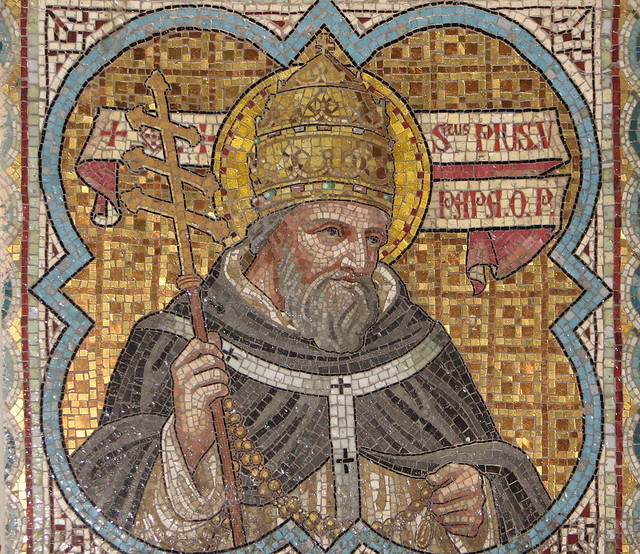
St. Pius V, pray for us!