Showing posts with label Pascha. Show all posts

Sunday, April 1, 2018

Christ is Risen!


"If any man be devout and love God, let him enjoy this fair and radiant triumphal feast. If any man be a wise servant, let him rejoicing enter into the joy of his Lord. If any have labored long in fasting, let him now receive his recompense. If any have wrought from the first hour, let him today receive his just reward. If any have come at the third hour, let him with thankfulness keep the feast. If any have arrived at the sixth hour, let him have no misgivings; because he shall in nowise be deprived thereof. If any have delayed until the ninth hour, let him draw near, fearing nothing. If any have tarried even until the eleventh hour, let him, also, be not alarmed at his tardiness; for the Lord, who is jealous of his honor, will accept the last even as the first; he gives rest unto him who comes at the eleventh hour, even as unto him who has wrought from the first hour.

"And he shows mercy upon the last, and cares for the first; and to the one he gives, and upon the other he bestows gifts. And he both accepts the deeds, and welcomes the intention, and honors the acts and praises the offering. Wherefore, enter you all into the joy of your Lord; and receive your reward, both the first, and likewise the second. You rich and poor together, hold high festival. You sober and you heedless, honor the day. Rejoice today, both you who have fasted and you who have disregarded the fast. The table is full-laden; feast ye all sumptuously. The calf is fatted; let no one go hungry away.

"Enjoy ye all the feast of faith: Receive ye all the riches of loving-kindness. let no one bewail his poverty, for the universal kingdom has been revealed. Let no one weep for his iniquities, for pardon has shown forth from the grave. Let no one fear death, for the Savior’s death has set us free. He that was held prisoner of it has annihilated it. By descending into Hell, He made Hell captive. He embittered it when it tasted of His flesh. And Isaiah, foretelling this, did cry: Hell, said he, was embittered, when it encountered Thee in the lower regions. It was embittered, for it was abolished. It was embittered, for it was mocked. It was embittered, for it was slain. It was embittered, for it was overthrown. It was embittered, for it was fettered in chains. It took a body, and met God face to face. It took earth, and encountered Heaven. It took that which was seen, and fell upon the unseen.

"O Death, where is your sting? O Hell, where is your victory? Christ is risen, and you are overthrown. Christ is risen, and the demons are fallen. Christ is risen, and the angels rejoice. Christ is risen, and life reigns. Christ is risen, and not one dead remains in the grave. For Christ, being risen from the dead, is become the first fruits of those who have fallen asleep. To Him be glory and dominion unto ages of ages. Amen."


A blessed Pascha to all!

Thursday, February 15, 2018

The Universal Language of (Lenten) Music


Many functions can "exercise" parts of the brain seldom used in the doldrums of quotidian life: practicing arithmetic, learning or speaking another language, and music. The last of these, according to neurologists, exerts memory, creativity, motor skills, and releases oxytocin, which creates emotional trust between people.

Music is so powerful that one often neglects the words of a well-written melody and sometimes the key or produced effects of music elicit a "mood" that speaks more clearly than words. Very touching melodies, the sort where the notation follows in sequence rather than spilling all over the place for the sake of "theory", can render even memorable words immemorable, as Beethoven did to Schiller's An die Freude. This same power of melody made the Beatles and Beach Boys popular despite the inanity of the words. Yet it is the unique combination of melody and word that makes the Marian anthems of the season my favorites in the liturgical canon.

Alma Redemptoris Mater has never "done it" for me; melodically it dithers too much and lyrically it lacks the rhythmic qualities that make the other three anthems so very singable. Ave Regina caelorum and Regina coeli, however, are this writer's most favored of the four anthems precisely because their simple tone variants perfectly marry a straightforward, balanced base text to a tune that accentuates and punctuates those words adequately.

Ave Regina caelorum, like the Ordinary setting of Lenten Masses, is given in a major key, beginning low and climbing high in saluting the Blessed Virgin under several titles (Queen of Heaven, Lady of Angels etc) before trilling at the top of the scale to change the direction of the prayer from greeting to petition (Rejoice, O Glorious Virgin) and finally resting with the request that She might pray to Her Divine Son on our behalf.

Regina coeli does something very similar with a more spartan set of words, but instead of a "climbing" melody that cheers up the grimness of Lent, it begins high and slowly relaxes at the end of each verb and its accompanying Alleluia. Rather than provide relief, as the Lenten music does, Regina coeli reflects the confidence, heart-throbbing joy of a mother who can touch Her once-dead Son.

One wonders if, when God disposed the human mind toward the qualities of music, He had the Felix culpa of the Fall and His Son's restoration of us, His image, in mind?


Sunday, April 16, 2017

Christ is Risen!


"If any man be devout and love God, let him enjoy this fair and radiant triumphal feast. If any man be a wise servant, let him rejoicing enter into the joy of his Lord. If any have labored long in fasting, let him now receive his recompense. If any have wrought from the first hour, let him today receive his just reward. If any have come at the third hour, let him with thankfulness keep the feast. If any have arrived at the sixth hour, let him have no misgivings; because he shall in nowise be deprived thereof. If any have delayed until the ninth hour, let him draw near, fearing nothing. If any have tarried even until the eleventh hour, let him, also, be not alarmed at his tardiness; for the Lord, who is jealous of his honor, will accept the last even as the first; he gives rest unto him who comes at the eleventh hour, even as unto him who has wrought from the first hour.
"And he shows mercy upon the last, and cares for the first; and to the one he gives, and upon the other he bestows gifts. And he both accepts the deeds, and welcomes the intention, and honors the acts and praises the offering. Wherefore, enter you all into the joy of your Lord; and receive your reward, both the first, and likewise the second. You rich and poor together, hold high festival. You sober and you heedless, honor the day. Rejoice today, both you who have fasted and you who have disregarded the fast. The table is full-laden; feast ye all sumptuously. The calf is fatted; let no one go hungry away.
"Enjoy ye all the feast of faith: Receive ye all the riches of loving-kindness. let no one bewail his poverty, for the universal kingdom has been revealed. Let no one weep for his iniquities, for pardon has shown forth from the grave. Let no one fear death, for the Savior’s death has set us free. He that was held prisoner of it has annihilated it. By descending into Hell, He made Hell captive. He embittered it when it tasted of His flesh. And Isaiah, foretelling this, did cry: Hell, said he, was embittered, when it encountered Thee in the lower regions. It was embittered, for it was abolished. It was embittered, for it was mocked. It was embittered, for it was slain. It was embittered, for it was overthrown. It was embittered, for it was fettered in chains. It took a body, and met God face to face. It took earth, and encountered Heaven. It took that which was seen, and fell upon the unseen.
"O Death, where is your sting? O Hell, where is your victory? Christ is risen, and you are overthrown. Christ is risen, and the demons are fallen. Christ is risen, and the angels rejoice. Christ is risen, and life reigns. Christ is risen, and not one dead remains in the grave. For Christ, being risen from the dead, is become the first fruits of those who have fallen asleep. To Him be glory and dominion unto ages of ages. Amen."


A blessed Pascha to all!

Sunday, March 27, 2016

Sunday of the Resurrection: Christ is Risen!


"If any man be devout and love God, let him enjoy this fair and radiant triumphal feast. If any man be a wise servant, let him rejoicing enter into the joy of his Lord. If any have labored long in fasting, let him now receive his recompense. If any have wrought from the first hour, let him today receive his just reward. If any have come at the third hour, let him with thankfulness keep the feast. If any have arrived at the sixth hour, let him have no misgivings; because he shall in nowise be deprived thereof. If any have delayed until the ninth hour, let him draw near, fearing nothing. If any have tarried even until the eleventh hour, let him, also, be not alarmed at his tardiness; for the Lord, who is jealous of his honor, will accept the last even as the first; he gives rest unto him who comes at the eleventh hour, even as unto him who has wrought from the first hour.
"And he shows mercy upon the last, and cares for the first; and to the one he gives, and upon the other he bestows gifts. And he both accepts the deeds, and welcomes the intention, and honors the acts and praises the offering. Wherefore, enter you all into the joy of your Lord; and receive your reward, both the first, and likewise the second. You rich and poor together, hold high festival. You sober and you heedless, honor the day. Rejoice today, both you who have fasted and you who have disregarded the fast. The table is full-laden; feast ye all sumptuously. The calf is fatted; let no one go hungry away.
"Enjoy ye all the feast of faith: Receive ye all the riches of loving-kindness. let no one bewail his poverty, for the universal kingdom has been revealed. Let no one weep for his iniquities, for pardon has shown forth from the grave. Let no one fear death, for the Savior’s death has set us free. He that was held prisoner of it has annihilated it. By descending into Hell, He made Hell captive. He embittered it when it tasted of His flesh. And Isaiah, foretelling this, did cry: Hell, said he, was embittered, when it encountered Thee in the lower regions. It was embittered, for it was abolished. It was embittered, for it was mocked. It was embittered, for it was slain. It was embittered, for it was overthrown. It was embittered, for it was fettered in chains. It took a body, and met God face to face. It took earth, and encountered Heaven. It took that which was seen, and fell upon the unseen.
"O Death, where is your sting? O Hell, where is your victory? Christ is risen, and you are overthrown. Christ is risen, and the demons are fallen. Christ is risen, and the angels rejoice. Christ is risen, and life reigns. Christ is risen, and not one dead remains in the grave. For Christ, being risen from the dead, is become the first fruits of those who have fallen asleep. To Him be glory and dominion unto ages of ages. Amen."

A blessed Pascha to all!

Sunday, November 8, 2015

7s and 8s for the Octave of All Saints

Seven candle laid before the altar in the Leonian Triclinium during
the Fourth Lateran Council, Innocent III presiding.
"And on the seventh day God ended his work which he had made: and he rested on the seventh day from all his work which he had done. And he blessed the seventh day, and sanctified it: because in it he had rested," begins the second chapter of Genesis. Biblical numbers used to occupy a more prominent place in the world of conspiracy theories and listeners of the Art Bell Show, but to a believer Three, Seven, Eight, Twelve, and multiplication by thousands still carries importance. Seven remains a popular number in common life because a week is seven days long, the resting day preceding a return to work. A former coworker of mine named her son Seven—poor lad.

Seven and Eight occupy a prominence in the Church, both in Holy Writ and in the liturgical life of Christians. While Three arrantly refers to the Holy Trinity and the days before the Resurrrection, and while Twelve recalls the tribes of Israel and the Apostles, Seven and Eight are less immediately obvious and the most inseparable of these numbers, not least because they are sequential in every way.
Count 'em: seven on the top.
Seven is conspicuous throughout the tradition of the Church, being found in Scripture and in the celebration of sacred rites. According to Genesis, God created the world in seven "days," the last of which He did not create anything, but instead rested and sanctified that day by His rest. He dedicated the day to Himself. Seven is also reiterated throughout the Apocalypse of St. John: seven candles, seven spirits, seven seals. In the old rite of Papal Mass, acolytes set seven candles in front of the altar, imitated in the Lyonese rite. The "Tridentine" Roman liturgy, a pontifical Mass celebrated by a bishop in his own diocese mandates seven candles on the altar rather than the conventional six, or whatever the rank of the day dictates. Many Byzantine Holy Tables will support a tabernacle ornamented with seven candles, too.

Seven is perfection. It is fulfillment. It is rest for God, but not for man. By sanctifying the seventh day unto Himself, God made Himself man's duty on that day rather than the work he earned by the merit of his sin. The seventh day is meant for the worship and adoration of God, to plead for the forgiveness of sins and for clemency in all man's needs. 

Man's Fall impairs his worship of the Creator. Abraham's summoning to the mountain initiated the Jewish tradition of sacrificing small animals, vital sources of sustenance—milk, meat, textile materials, for God's ignorance of sin. The Law came through Moses. Grace and Truth—and the realized remission of sin—came through Jesus Christ. Christ's death on the Cross remitted the sins of those who follow Him, just as His Resurrection from the dead empowered His Apostles to heed the command to repeat the offering of bread and wine "for the anamnesis of me," revisiting, not repeating, His sacrifice.

The significance of Seven did not end with the Cross, rather it realized it final potential and deeper meaning. St. Paul's much abused adage "the letter kills, but the Spirit gives life" (2 Corinthians 3:6) excuses most Christians from meeting their duties by dismissing their potential detractors as legalists. The real meaning of this phrase could not be further from its modern reception. The letter, meaning the Law of Moses, was a meeting point between the Divine plan and man's fallen nature. Since the Passion of Christ and the coming of the Holy Spirit, the Law has become antiquated in light the coming of the Spirit. Adherence to the Law yields death, adherence to the Spirit yields life. The significance of the signs of the Law did not vanish with Christ; they became more powerful.

God's reservation of the seventh day makes Seven a Temple number, both in the Old Testament and in the New. A young animal was fit for sacrifice when it was seven days old (Exodus 22:30). Visibly there were seven lamp stands in the Temple, an image continued in the Apocalypse of St. John. In a passage of Scripture read at Mattins for the feast of All Saints, the writer described the court of the Almighty:
"And from the throne proceeded lightnings, and voices, and thunders; and there were seven lamps burning before the throne, which are the seven spirits of God" (Apocalypse 4:5)
God no created nothing new on the seventh day, yet Genesis delineates the end of Creation on the seventh day. The seventh day is perfect, it is completion. The use of seven in the Apocalypse may relate a vision to the reader, but it may also communicate to the reader that the eternal liturgy in the heavenly court is the Christian's final destination, his perfection, his fulfillment. If true, this imbues the liturgy with an apocalyptic nature, a preview of what eternity is supposed to be. The tradition of the seven lamps remained a feature of Papal Mass until Paul VI discontinued the rite in 1964. The use of Lyon retained the tradition until adopting Pope Paul's reforms. Greek churches still often display seven candles above the altar. The recent loss of this tradition does not neglect what appears to have been the conventional interpretation of this number by the Church according to her sacred rites, that adoration of God in sempiternal beatitude in the un-ending end of the faithful.


Alas, Seven is succeeded by Eight, and it is time to move on.

If Seven is clear and explicit, Eight is hinted and implicit. Christ entered Jerusalem on Palm Sunday the day after the Sabbath and was put to death the day before the Sabbath. A good Jew, he rested on the Sabbath and rose the next day, a unique and extraordinary event in human history never to be repeated. Our Lord did not rise in a new body, nor the old as it was, but in the old body glorified, so resplendent and transformed that His own Apostles did not recognize Him. Understanding this, St. Paul writes to the Philippians, "Who will reform the body of our lowness, made like to the body of his glory, according to the operation whereby also he is able to subdue all things unto himself" (3:21). Christ rose on the first day of the new week, a new first day of Creation, in the "body of his glory."

"Our Redeemer's visible presence," wrote St. Leo the Great, "has passed into Sacraments." The Sacrament most readily associated with the Resurrection and with the renewal of mankind is Baptism, which St. Augustine often calls the Sacrament in his Confessions (my emphasis). Baptism is the Sacrament of regeneration, where what Christ did physically comes to the catechumen spiritually now and physically in eternity.

The great ancient feasts, Greek and Latin, have two commonalities: an extended liturgical celebration and the celebration of Baptism. Pascha, Pentecost, and Epiphany/Theophany are the greatest of all feasts in the Church, feasts liturgically observed for an octave of days and which relics of the older practice of Baptism on the feast vaguely remains. Pascha and Pentecost were preceded by a vigil in older times that became its own liturgical day in the middle ages. On those vigils, Baptism is still celebrated with the reading of prophecies, the blessing of water, and the Sacrament itself. Epiphany/Theophany no longer sees Baptism on the day of its celebration, but water is blessed and distributed by vials or by sprinkling among the faithful there gathered.
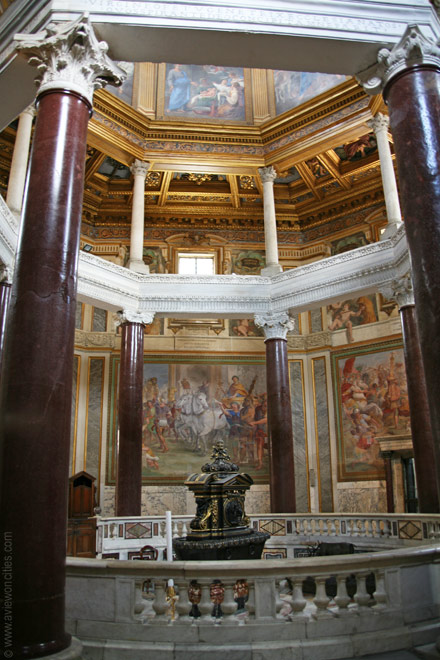
Lateran Baptistery
The extended liturgical celebration of Christ's regenerative mysteries is the octave, the eight day long week. In lesser feasts, the octave day repeats the feast day. In these three feasts, however, the octave day is unique from the feast itself. Pascha has Low Sunday (Thomas Sunday for the Greeks). Epiphany/Theophany is capped with the Baptism of the Lord (or a leave-taking in Byzantium). Pentecost does not have a strict octave day, but its semi-festive vigil can reasonably make Ember Saturday an octave day; Trinity Sunday could also be read as an accidental octave day, celebrating the complete revelation of the Trinity, the Third Person of Whose revelation was observed the prior week (Greeks do not have a formal octave, but they do call the week after Pentecost Sunday "Trinity Week," during which there is no fasting).

Eight not only appears in liturgical times of Baptism, but also in space. Baptisteries traditionally have eight sides, again signifying the Resurrection on the eighth day of the week, the first day of the new Creation. Even smaller churches without dedicated Baptisteries often possess an octagonal font. The local FSSP parish—despite the prevalence of plaster statues, blue wall paper, and young St. Joseph—has a proper Baptistery, octagonal in shape.

For the Jew, the only eighth day was the eighth day of the Feast of Tabernacles. Those under the Mosaic Law would build tents of palms and offer sacrifices for seven days, recalling the cycle of Creation. The entirety of the seven days was an extension of the Sabbath, the seventh and perfect day, wherein no servile work was performed. On the eighth day, a solemn celebration would resume and sacrifices would be offered communally. "On the first and eighth day shall be a sabbath, that is a day of rest" (Leviticus 23:39). This was a penitential cycle, attached to the Day of Atonement, the day the people would project their sins onto a "scapegoat" and offer sacrifices according to their means. For the Christian, the Sacrifice has been made by Christ, the Lamb Who took on the sins of the world. The celebration is a celebration not only in the sense of observance, but also in joy.

Unfortunately, the significance of Eight, octaves, and Baptism became obfuscated by the decline in liturgical observance in the Latin Church and the suppression of almost all octaves, save three, by Pius XII in 1955. Paul VI would unwittingly suppress Pentecost in 1970, after his mentor, Pius XII, removed its vigil and Baptism rites 15 years earlier.

Seven and Eight are sequential, as the fullness of Creation in one gives way to the new Creation in another. God created us to His end, from which we fell away on the seventh day and to which He restored us on the eighth. We are meant for Him, both now and forever. There is no new revelation, no new progression along the Biblical number line. We live in the final age, the last aeon (one could write a post on the meaning of "unto the ages of ages" in prayers). There will be no more progression in our knowledge of God until the end, when we will no longer see Him gradually lifting the veil, but instead see Him and He is. To end this numeric article, Msgr. Alfred provides the faithful with another mathematical insight on the Almighty in the first chapter of We Believe:
"The analogy or comparison which I personally find useful is to think of eternity as the point at the center of a circle. You know from your geometry that a point has no extension in space: it simply exists. In the same way, eternity has no extension in time: it simply exists. When we say of Almighty God in our limited language that He was, is and always will be, it would be far more correct to say—since in eternity there is no succession of events—that He always is. Now, if you think of time as the circumference of that circle, with every single point on the circumference equally and simultaneously present to the center, you may see what we mean when we say that the whole of time is likewise equally and simultaneously present to Almighty God. But to us the succession of events in real indeed: we are successively encountering what is simultaneous to Almighty God."
Seven and Eight can make you a saint! A happy octave day to all.

Saturday, May 23, 2015

Liturgical Theology of Pentecost as Told by the Vigil

source: oca.org
Pentecost is too big, too vast, too intimidating for any singular explanation, but the Roman liturgy's rich vigil for this feast nurtures the faithful with some food for thought. Let us consider the liturgy of the Roman rite for this great feast, second only to the Sunday of the Resurrection in importance.

source: traditionalmass.org
The vigil commences with the celebrant—vested in a violet chasuble—kissing the altar and following the lectors, who read six prophecies from the Old Testament, interspersed with collects sung by the celebrant. The first lesson is the familiar story of Abraham ascending a mountain with his son Isaac, prepared to sacrifice his only child in obedience to God. An angel intervenes and tells a relieved Abraham that God would never really do such a thing. All of this was proclaimed on Holy Saturday, prefiguring Christ's willingness to sacrifice everything to the Father on behalf of the world. Pentecost enters this passage late at the point when God rewards Abraham's fidelity by promising "I will bless thee and multiply thy seed as the stars of heaven, and as the sand that is by the seashore.... and in thy seed all the nations of the earth shall be blessed because thou hast obeyed My voice."

The second prophecy is an extraction from Exodus 14, wherein the Pharaoh's forces chase the Israelites through the desert and into the Red Sea, which St. Moses has just parted by the Lord's command. The Lord then tells Moses to close the Sea and drown the Egyptians, which he does. The tract continues the passage:
"Let us sing to the Lord, for He is gloriously magnified: the horse and the rider He hath thrown into the sea: He is become my helper and protector unto salvation...."
These two prophecies speak of the same thing, Baptism. Water is a symbol of creation and the essential ingredient of all that lives. Yet water is also uncertain, difficult to control. Genesis chapter 1 speaks of water roaming the earth before it had form. God used water to protect the Israelites from the Egyptians. Egypt itself is a type, a parallel, an example of sin and loss and here God saves His people—fulfilled and most perfectly expressed in the Church—through water. Through water He will "multiply thy seed as the stars of heaven," only He will no longer multiply Abraham's progeny through obedience, but Christ's Church through Sacrament. The second collect of the vigil demands this interpretation:
"O God, who by the light of the New Testament hast made clear to us the miracles wrought in earliest times, prefiguring unto us the Red Sea as an image of the sacred font, and Who in the deliverance of Thy people from the bondage of Egypt, hast foreshadowed the sacraments of the Christian dispensation; grant that all nations who have merited by faith the privilege of the children of Israel, may be born again by partaking of Thy holy Spirit."
The third prophecy, take from Deuteronomy 31, compares and contrasts closely with the Ascension of Christ. Moses, nearing death, has taken care to write down his encounters and history with God. He abjures and confronts his fellows Israelites for their infidelity to God, "For I know that, after my death, you will do wickedly, and will quickly turn aside from the way that I have commanded you." The scripture, excluded from this passage, goes on to tell us that his bones were never found. This is extraordinary. Moses joins Elijah, Enoch, and the Blessed Mother among those whose bones have not been found and the others were taken bodily by the Lord, Elijah in a chariot of fire and our Lady after her death in Jerusalem. Moses, a prefigurement of Christ who leads God's people out of bondage, many believe, Jews included, was also taken up by God. Should he have been assumed by God then an strong parallel with the Ascension presents itself. Christ of course was not assumed into heaven, but rather ascended through His own power as God. Moses brought people forth from human bondage and Christ from spiritual bondage. Both died and were raised, so to speak, and rebuked their followers for their lack of faith. Moses's followers would continue to fail God, even if they would eventually reach the promised land and create a kingdom of Israel. Christ, in a marked contrast, promises something perfect that will never be lost, a "Helper" (meaning of the word Paraclete) to preserve the faithful "in all truth." He ascends telling the Apostles to "baptize all nations in the name of the Father and of the Son and of the Holy Ghost.... For I am with you always, even until the end of the world." Moses's deliverance from slavery is made perfect in Christ's words.

The fourth prophecy again anticipates the inception of the Church in the Baptism of its members, "the Lord shall wash away the filth of the daughters of Sion, and shall wash away the blood of Jerusalem out of the midst thereof, by the spirit of judgment, and by the spirit of burning" (Isaiah chapter 4). At this point perhaps the faithful should consider what Baptism is. It is the movement of water over a person's skin with a Trinitarian formula, yes, but it is so much more, too. "Baptism" derives from a similar Greek word meaning "to immerse" or "to plunge." To be "plunged" into Christ and in the name of the Trinity is more than to enter a visible community or lose a sentence of punishments condine to one's sins. To be "plunged" into Christ is to be immersed and filled with the very life of Christ given by the Holy Spirit, Who, St. Gregory reminds the Church of Rome during Mattins of the feast, is the love of God Himself. The Holy Spirit, to be simplistic, is God's love working and doing something, creating or renewing. The Holy Spirit accomplishes this rebirth in Baptism through water, the physical essential in life and the material, again referencing Genesis chapter 1, which formlessly covered the earth before creation. Water is also like the Holy Spirit, or "Holy Wind" to take a very literal translation, in that water is not easily contained, limited, narrowed, or defined. It enters through crevices unseen and can also be lost by poor care through other unanticipated openings. It is this in water that Christ, through the Holy Spirit, renews His creation. It is for this reason so many commentators have adduced the psalm from the Vidi aquam "I saw water flowing from the right side of the Temple, alleluia; and all to whom this water came were saved...." Therefore the Church uses as her last prophecy in the vigil Ezekiel 37:1-14:
"Thus saith the Lord God, Come, spirit, from the four winds, and blow upon these slain, and let them live again. And I prophesied as He had commanded me; and the spirit came unto them; and they lived; and they stood upon their feet, an exceeding great army.... Thus saith the Lord, I will open your graves, and will bring you out of your sepulchres, O My people, and will bring you into the land of Israel.... and you shall have put My spirit in you, and you shall live, and I shall make you rest upon your own land; saith the Lord almighty."
source: traditionalmass.org
A procession then brings the sacred ministers to the baptistry where the font's waters are again blessed and infused with chrism, itself a priestly thing, as on Holy Saturday. The Paschal candle, extinguished on Ascension Thursday after the Gospel, reappears. Let not the importance of its reappearance be lost. As Dr. Laurence Hemming adumbrates in his Worship as Revelation, all the fires in a church are to be lit from the Paschal fire much as the Presence of Christ in the Sacraments comes from Christ's Incarnation and work on earth. The Paschal candle is extinguished at the end of forty days because, as with Christ and the Sacraments, its purpose, to diffuse holy fire, is accomplished. The fire remains without the candle's use just as Christ remains in the Church without a bodily physical presence. The candle returns because it symbolizes the Resurrection, the event which made this new life in the Holy Spirit possible. The celebrant plunges the candle into the font, almost baptizing the font with the candle rather the other way around. The celebrant sparges the faithful with the blessed water, infuses the chrism, and baptizes catechumens into Christ and His Resurrection. More adept parishes will also have the good sense to administer confirmation at this time, giving the neophytes the Holy Spirit and His "sevenfold gifts."

After the baptisms all who have been "baptized into Christ" on earth sing the Litanies of Saints, imploring the intercession of those in heaven who are the perfection of God's promise to Abraham, "multipl[ied] as stars of heaven." The saints, together with those on earth baptized into Christ, form the Church and carry that same Spirit and fire found on Holy Saturday. Pentecost makes the Resurrection permanent on earth, preserved in the Church unto ages of ages.

source: traditionalmass.org
Mass follows immediately during the vigil. The lesson, taken from Acts of the Apostles, recounts Paul's preaching of the Baptism of Christ, or into Christ, to the Ephesians, hitherto only aware of St. John the Baptist's baptism of repentance. The alleluia is the same as on Holy Saturday. And in the Gospel St. John tells of Jesus saying "If you love me, keep my commandments." What is the Holy Spirit other than the strength to do this? This simple, demanding sentence of Christ calls to mind James 2:18, "I will show you my faith by my works." The Holy Spirit creates, re-creates, renews, strengthens, and preserves the Church in Christ, of Christ, and for Christ, as foretold to the prophets long ago. He makes all things anew, fashioning a new, holier creation out of the materials and persons of the existing, fallen creation. And He will remain with us until the very end.

In a rare moment the Byzantine tradition has a far simpler and more understated take than the Roman Church. The Greek theology of this feast can be found in the troparion of Penteost, which I heard today at Divine Liturgy and last evening at Vespers:
"Blessed are You, O Christ our God, You have filled the fishermen with wisdom by sending down the Holy Spirit upon them, and Who through them have caught in Your net the whole world. O Lover of mankind, glory to You!"

And the Veni, Creator Spiritus (the greatest of Latin hymns?)


Sunday, April 5, 2015

Christ is Risen!


To all readers I wish a blessed and happy Sunday of the Resurrection. Where ever you dwell and which ever language you speak, I say unto you Christ is risen! 
"If any man be devout and love God, let him enjoy this fair and radiant triumphal feast. If any man be a wise servant, let him rejoicing enter into the joy of his Lord. If any have labored long in fasting, let him now receive his recompense. If any have wrought from the first hour, let him today receive his just reward. If any have come at the third hour, let him with thankfulness keep the feast. If any have arrived at the sixth hour, let him have no misgivings; because he shall in nowise be deprived thereof. If any have delayed until the ninth hour, let him draw near, fearing nothing. If any have tarried even until the eleventh hour, let him, also, be not alarmed at his tardiness; for the Lord, who is jealous of his honor, will accept the last even as the first; he gives rest unto him who comes at the eleventh hour, even as unto him who has wrought from the first hour.
"And he shows mercy upon the last, and cares for the first; and to the one he gives, and upon the other he bestows gifts. And he both accepts the deeds, and welcomes the intention, and honors the acts and praises the offering. Wherefore, enter you all into the joy of your Lord; and receive your reward, both the first, and likewise the second. You rich and poor together, hold high festival. You sober and you heedless, honor the day. Rejoice today, both you who have fasted and you who have disregarded the fast. The table is full-laden; feast ye all sumptuously. The calf is fatted; let no one go hungry away.
"Enjoy ye all the feast of faith: Receive ye all the riches of loving-kindness. let no one bewail his poverty, for the universal kingdom has been revealed. Let no one weep for his iniquities, for pardon has shown forth from the grave. Let no one fear death, for the Savior’s death has set us free. He that was held prisoner of it has annihilated it. By descending into Hell, He made Hell captive. He embittered it when it tasted of His flesh. And Isaiah, foretelling this, did cry: Hell, said he, was embittered, when it encountered Thee in the lower regions. It was embittered, for it was abolished. It was embittered, for it was mocked. It was embittered, for it was slain. It was embittered, for it was overthrown. It was embittered, for it was fettered in chains. It took a body, and met God face to face. It took earth, and encountered Heaven. It took that which was seen, and fell upon the unseen.
"O Death, where is your sting? O Hell, where is your victory? Christ is risen, and you are overthrown. Christ is risen, and the demons are fallen. Christ is risen, and the angels rejoice. Christ is risen, and life reigns. Christ is risen, and not one dead remains in the grave. For Christ, being risen from the dead, is become the first fruits of those who have fallen asleep. To Him be glory and dominion unto ages of ages. Amen."

Greek and Roman


Wednesday, April 1, 2015

Roman & Byzantine Triduum (repost)

Awareness of the old Holy Week in the Roman rite has grown since then-Pope Benedict XVI's Summorum Pontificum in 2007, as many eager clergy and faithful sought to understand both the 1962 liturgy and what preceded it. What many do not know, but will in a few moments, is just how close the old Roman Triduum is to the last three days of Great Week in the Byzantine liturgical tradition.

I found this especially jarring when I first realized it, as "restoration" to a more pristine liturgy, as supposedly exists in the East, was often presented as a premise for the Pian and Pauline reforms. It should not be so surprising. Rome and Constantinople are only a few hundred miles apart and were, until the papacy of St. Gregory the Great, under the same cultural and political body. Even after Rome's de facto separation from the Byzantine Empire Constantinopolitan liturgy came to Rome via Milan and via Europe (France and Spain picked up Eastern Roman traditions and practices from North African Christians). The Crusades would have a reciprocal effect centuries later. Contrary to our instinct to view the Rome-Constantinople schism as the compass for liturgy, the two cities probably have more in common than the Byzantine tradition has with the Thomist Christians of India or the Nestorians or the other various non-Chalcedonian Churches we call "Oriental."

Before we look at the specific rites, let us lay down a few basic principles necessary to understanding the commonality of the two rites:
  1. A liturgical day begins the evening prior to the calendar day with Vespers. This derives from the Mosaic tradition (Exodus 29:38-39) of offering sacrifice in the morning and evening. The Temple eventually came to a regular schedule of prayer hours, much like the Divine Office, which is, in most ways, a Christianized version of the ancient Jewish public prayer. Saturday evening Vespers begin Sunday in the Byzantine tradition, as first Vespers begin a feast—and in some sense, Sunday—in the Roman tradition.
  2. The celebration of the Eucharist, call it Mass or Divine Liturgy, is integral to the mysteries and prayer of a given day, but does not encompass all of it. The Divine Office and Eucharist together comprise the observance of a feast, Sunday, or feria.
  3. The entire liturgy comprises the opus Dei, not just the Eucharist or any other one portion of it. Opus Dei does not indicate work men do to glorify God, but rather work He does for us and on our behalf. Indeed the word liturgy comes to us from a Greek term for "work of public service," the service being something God does for the public and not the other way around. With this in mind the Catholic must realize that God is present and "working" among the Church in all the rites of Holy Week
Now, let us look at the Triduum!

Mandy/Great and Holy Thursday

Archbishop Soroka washes feet at Ss. Cyril and Methodius
from: blogs.thetimes-tribune.com
In the Byzantine tradition, dark vestments are used on this day. My parish, which has limited means, uses crimson red. The day begins Wednesday evening with Vespers, with the usual introductory rites and psalm 103 ("Bless the Lord, my soul..."). Psalms 140, 141, and 129 are sung, the emphasis being "crying out" to the Lord. The stichera (hymns), which emphasize Judas' betrayal of the "Creator and Maker of all" to the Jews, are sung thereafter. The emphasis on the guilt of Judas never ceases, which impressed me the first time I heard these hymns. All Christians are aware of the great betrayal, but I never thought of singing "the Apostle and Apostate" and the "spawn of the vipers" as a liturgical act. The Evening Hymn is sung, followed by prophecies from Exodus, Isaiah, and Job. This marks a quiet transition into the Divine Liturgy proper, wherein the institution narrative from St. Paul first epistle to the Church in Corinth is read. The Cherubic Hymn is replaced by the normal communion verse "Make me this day a sharer in your mystical supper, Oh Son of God...." (interestingly, this is sung as the Communion antiphon this day in the Ambrosian rite). These verses are repeated several times, even after Communion. The blessing at the end, which normally speaks of "Our Lord Jesus Christ, Who is risen from the dead," instead reflects on the Lord's humility in washing His Apostles' feet and dying for us and them.

In the Melkite Church, and presumably the Chalcedonian-Orthodox of Antioch, the Sacrament of Anointing of the Sick is given to all the faithful between Vespers and the Divine Liturgy proper. During the periods of time when the Eastern Christians suffered persecution under Islam, or suffered an organizational duress, there were fewer and fewer priests available to give absolution for sins, a faculty which in the Eastern and Western tradition must be given explicitly by the bishop; otherwise one could confess to a priest or any other person, but not receive absolution. As a means of forgiving sins priests would give the Unction of the Sick prior to the Eucharistic Sacrifice during Great Week, interpolating it into the vesperal liturgy for Holy Thursday. As St. John Chrysostom wrote 1,600 years ago, "Is there anyone among you sick? Let him call in the priests of the church, and let them pray over him, anointing him with oil in the name of the Lord. And the prayer of faith shall save the sick man, and the Lord shall raise him up, and if he has committed sins, he shall be forgiven."

In most parishes, but not my small parish, the celebrant washes the feet of twelve men after communion and before the dismissal. If the celebrant is a bishop, he is sure to wash the feet of some clergy. The same goes for an abbot in a monastery. The washing takes place outside of the Royal Doors, in the nave of the church. Mattins on Thursday morning continues the theme of betrayal, which is much stronger than in the Roman rite.

Tenebrae sung at St. Mary's in Norwalk, CT USA, an excellent little parish.
The Roman rite, oddly, does not begin with Vespers, as there are no first Vespers during Holy Week. But it does begin, powerfully, with the Wednesday evening service of Tenebrae—Mattins and Lauds of Mandy Thursday. There are no introductory rites and the psalms are actually ferial, not festal. The lessons from the Book of the Lamentations of Jeremias speak of tragic desolation of a lonely city—quomodo sedet sola civitas. The responsories speak of Christ asking for the cup to pass from Him and of His immanent betrayal. The antiphons on the Mattins psalms speak of fear, silence, disturbance, trembling, and judgment. After each psalm a candle on the hearse is extinguished, eventually leaving the church in darkness. Whereas Mattins and Lauds usually lead us out of the darkness of night into the service of God throughout the day, here we go from day into obscurity and trembling as the Divine Redemption begins to unfold. Lauds begins with psalm 50 and then 89, the antiphon on which says "The Lord was brought as a lamb to the slaughter, and He opened not His mouth." The Miserere psalm is repeated again as part of the would-be suffrages and the remaining candles on the altar are snuffed, darkening the church. The clergy take their books and smash them to create an earthquake-like noise, reminiscent of the one following the Crucifixion.

Mass is sung after None, in practice in the morning. The introit is Nos autem gloriari and the Gloria is sung, but the rest of the Mass pertains to the Last Supper. The Epistle is the same as in the Byzantine liturgy and the Gospel is St. John's account of Christ washing the Apostles' feet. The vestments are white for the Mass but not for the rest of the day. My own cheesy interpretation of this is that it is like a going-away for a beloved friend who you know you will not see again for a long time; festive, but surreal and sad. In reality this is probably a Roman oddity: Byzantium used dark vestments, Milan used black, and the Gallican and Norman rites used red. After Mass a procession brings the Blessed Sacrament to an altar of repose and the Vespers follows. The altars of the church are stripped and washed. At a side altar, in the afternoon, the celebrant washes the feet of thirteen men, after having repeated the Gospel of the Mass. The priest wears a penitential violet for this ceremony, which many once considered a possible Sacrament.

Should the Roman celebrant be a diocesan bishop oils are blessed for use throughout the coming year during the Mass. The Canon of the Mass stops, the only time when this happens in the Roman rite, and olive oil is then blessed and "breathed" on by the bishop and twelve priests, making it a work of Christ's priesthood which he imparted to His Apostles that night. The work of Christ during the Canon of Mass and during the blessing of oils is the same Melchizedek priesthood.

Good/Holy and Great Friday

A typical epitaphios
from: orthodoxytoday.org
In the Byzantine rite Great and Holy Friday begins with a long Mattins on Thursday evening. The Byzantine rite, which is actually sparse in its Scripture readings compared to the Roman rite, has twelve lessons on this day, beginning with chapters 13-18 of the Gospel of St. John. In some churches twelve candles are lit and gradually extinguish after each reading. A crucifix with an icon-style corpus is placed in the nave and all adore it. A hymn describing Christ as the "Bridegroom of the Church" transfigured by the nails of the Cross  precedes the adoration. After the Little Hours, around 3:00 PM, a Deposition from the Cross service takes place. It is a Vespers service and the Gospel Passion according to St. Matthew, although with interpolations from all the accounts, is sung by the deacon. The reading encompasses Christ's burial in the tomb of St. Joseph of Arimathea. At the end of the service the icon-styled corpus is removed from the Cross and "buried" in an embroidered cloth called the epitaphios, which is placed within a bier. Once again all adore. Compline follows.

In the Roman rite the day once again begins with Tenebrae and the exact same ceremonies as the previous Tenebrae on Mandy Thursday. The last nocturne of Mattins contained excerpts from St. Paul's Epistle to the Hebrews, wherein the Apostle describes the two-edged sword of faith, hopes he maintains his, and emphasizes that faith is a living thing. The versicle before the second Miserere at Lauds adds mortem autem crucis.

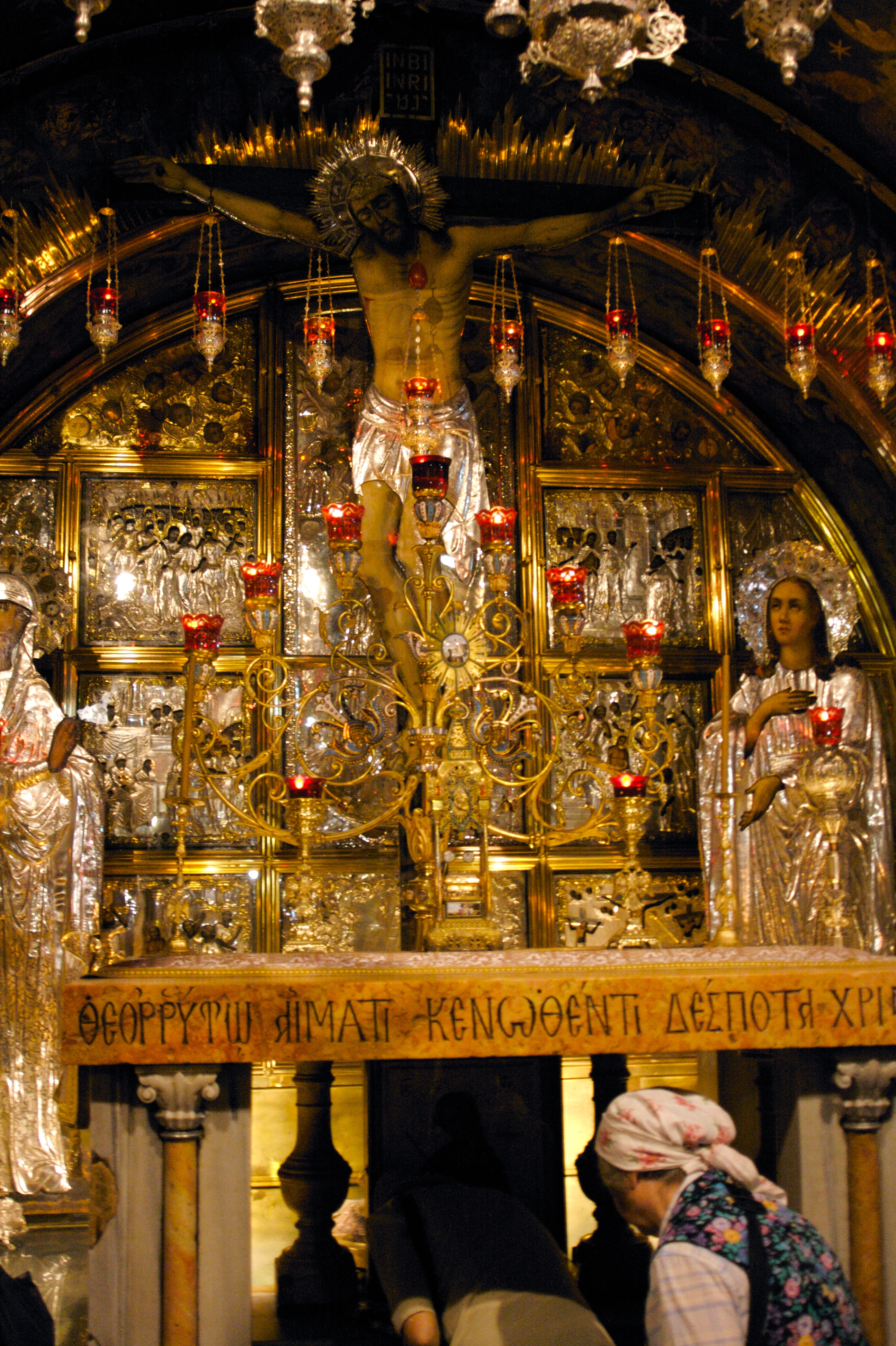
On Friday, in the morning or around noon, the Mass of the Pre-Sanctified takes place. Structured like a Mass, the celebrant and his deacons wear their normal vestments, albeit the black of Masses of death, and take their places according to Mass ceremonial. A prophecy from Osee and from the book of Exodus are read. The Passion according to St. John is sung, followed by collects for the needs of the Church and then, in three successive and dramatic stages, a Cross is unveiled for public adoration. The clergy and the people "creep" to the Cross in three double-genuflections. A Blessed Sacrament procession brings the Host consecrated the previous day to the altar and a "Mass" begins with the offertory and incensation of the altar. The Host is elevated and a fragment is mixed with the wine in the chalice. The celebrant consumes the Host and the contents of the chalice and purifies his fingers and the vessels as usual. Vespers follows immediately, as yesterday. Compline is sung in the late afternoon. Around 3:00 PM a deposition service takes place, during which the corpus is removed from the Cross and "buried" in a sepulcher created in  side chapel. Some churches in England and Northern Europe will put a crown of thorns and nails in the tomb.
A Deposition service

[Great and] Holy Saturday

A bishop before the change of vestments
source: uocofuse.org
On the last day of the Triduum the story gets really interesting. Great and Holy Saturday starts Friday evening with Mattins (often called "Jerusalem Mattins," as many Byzantine and Roman ceremonies were inspired or transposed from the Church in Jerusalem), a lengthy service with opening rites, six psalms, and then psalm 118 sung with long interpolations praising Christ's adoration by the angels in the tomb and the conquest of Hades. The Canon follows, concluding with the Laudate psalms from Lauds. The message at the end is that the proscription to rest on the seventh day was a prophecy of Christ's Saturday in the tomb, intimating that the eighth day would be a new creation! A litany, dismissal, and Marian hymn conclude Mattins.

The Vesperal Liturgy, theoretically something in the afternoon of Saturday, in practice takes place in the morning for pastoral reasons. It begins with, you guessed it, Vespers! Black, or whatever dark color is available, is the color of the day thus far. The stichera begin to anticipate the Resurrection of the Lord ("for you alone manifested resurrection to the world!") and the lamentation of Hades ("my power is destroyed"). Fifteen Old Testament prophecies are read and any converts are baptized. The Canticle of the Three Children segues into the Divine Liturgy of St. Basil the Great. Prior to the Gospel, St. Matthew's account of the Resurrection, the clergy change their black vestments for white—quite a sight! A hymn of "silence" and "trembling" replaces the Cherubic hymn. The Hirmos is one of Jesus comforting His Mother rather than the usual "It is truly right...." Bread and figs are blessed at the end. During the Vesperal Liturgy converts are baptized and chrismated into the Church.
The deacon awaiting the Paschal fire in the old Roman Holy Saturday liturgy.
The Roman rite parallels strongly. Tenebrae again commences the liturgical day on Friday night. The Vesperal Liturgy starts Saturday after None, in practice mid-morning. Penitential violet is worn. A fire is blessed outside using three collects and the fire is brought into the church by a triple-wicked candle held by the deacon. The Paschal Candle is blessed and lit by the deacon during the Exsultet. Twelve prophecies from the Old Testament (four of which are to be found in the Byzantine rite) are read, telling of the gradual plan of salvation. The baptismal font is blessed and converts are baptized. The place of the baptisms, in a formerly-empty font, after the reading of the prophecies of old anticipating Christ have an un-mistakable purpose: baptism realizes for us the end of the prophecy and the beginning of the actual salvation; as the church is born anew by blessing, fire, and water from Christ, so too are these converted sinners; they are part of God's eighth day of Creation. The Litany of Saints begins and transitions into the actual Mass, taking the place of the Introit. The ministers change from violet to white vestments. At the Gloria bells are rung in joy. At the Gospel no candles are carried, as Christ's Resurrection, liturgically, is anticipated, but has not actually happened yet. There is no offertory chant and the Agnus Dei is omitted after the Canon. After communion a short Vespers with psalm 116 and the Magnificat are sung. A large [and well deserved] meal follows the Mass with Compline in the late afternoon or early evening.

Pascha

from: Huffington Post

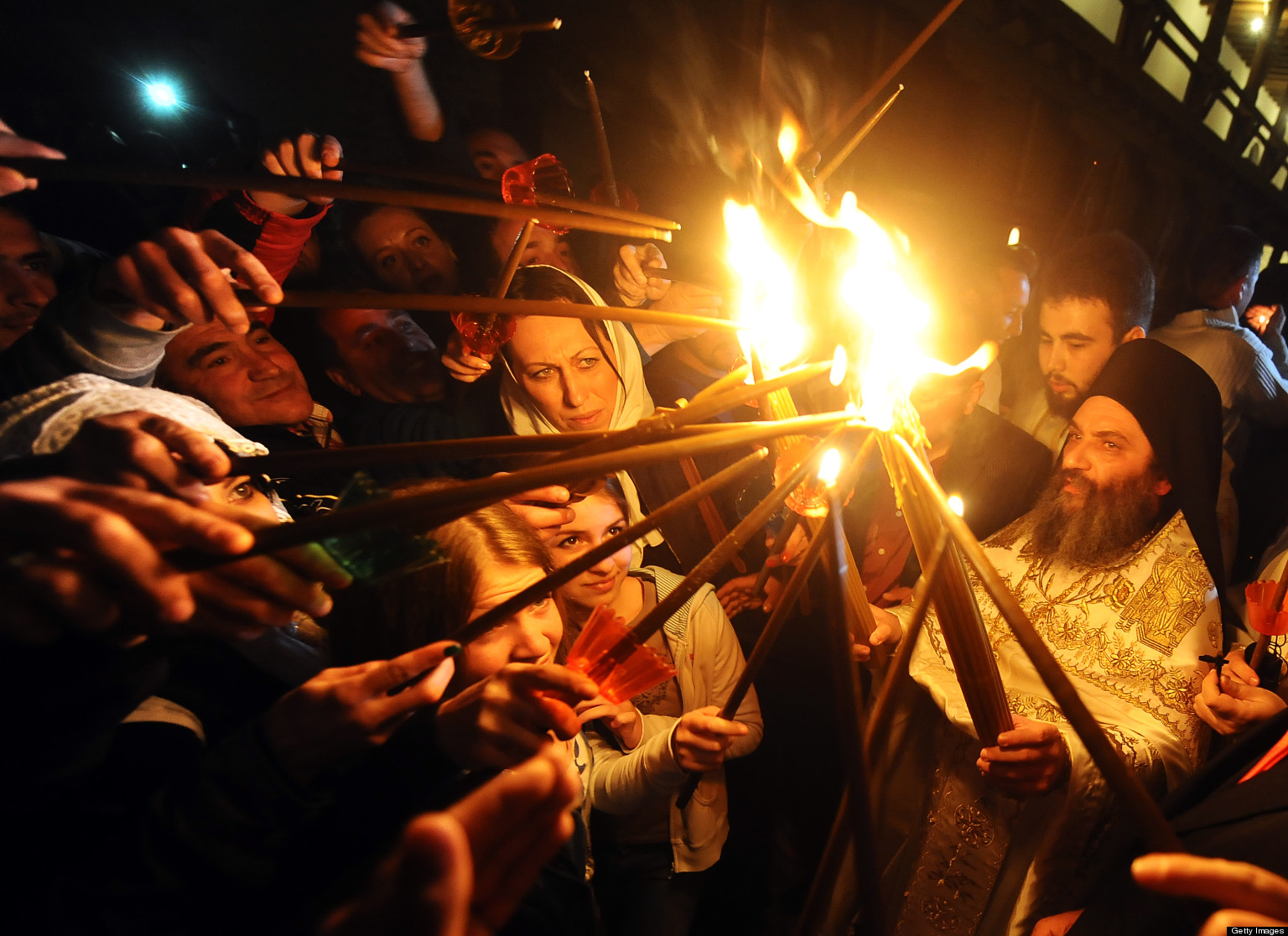
Pascha in the Byzantine rite could be said to start with the Liturgy of St. Basil the Great in the morning, but it is most firmly felt on Saturday evening, usually an hour or so before midnight, when Pascha Sunday is about to begin. After the midnight office the epitaphios with the corpus of the Lord is venerated once again. All lights are extinguished save for the trikirion, a small candlestick on the altar. The celebrant invites all to come and receive the "light not overtaken by night." The people congregate outside after lighting their own candles and are met by the clergy. The constantly repeated "Christ is risen from the dead and by His death He has trampled upon death and has given life to those who were in the tombs" is sung. An account of the Resurrection is then sung and the celebrant, with his blessing cross, knocks on the door of the church and announces the "King of Glory" to the poor man pretending to be the Evil One inside. The procession bursts into the church, bathed in light and fully illuminated. Mattins follows. The Paschal Canon is sung in full with the litany and Magnificat at the end. Twice during Mattins a deacon censes the people and gives them the Paschal greeting "Christ is risen! He is truly risen!" At the end the priest reads the Paschal sermon of St. John Chrysostom. The hours are sung in a very abbreviated form, entirely without psalms, and the Divine Liturgy of St. John Chrysostom follows. After the Liturgy the faithful venerate an icon of the Resurrection rather than a blessing cross.

In Rome Pascha began with the Gloria during the Holy Saturday rites. On Saturday evening Paschal Mattins and Lauds are sung. Throughout Northern Europe the images in the churches would be unveiled and the Cross would be "raised" from the sepulcher and adored once more, as on Good Friday. A procession would then arrive at the high altar, vested with the best frontal and all candles in the church lit. Mattins is just psalms 1-3 and a sermon of Pope St. Gregory the Great. No canticles or hymns. The celebrant and cantors them vest in the best copes and begin Lauds. The antiphons on the first and third psalms commemorate the angel rolling back the stone on the Lord's tomb and the earthquake that followed respectively—we are clearly re-visiting the Resurrection at this moment! Haec dies... "This is the day the Lord has made, let us be glad and rejoice therein" replaces the chapter and there is no hymn before the Benedictus. The dismissal has a double-alleluia and the Regina coeli finally ends the service.

Worth Noting

After these long, and possibly trivial, descriptions the similarities might be obscured by an overload of information, so let us consider the Triduum day-by-day:
  • Thursday: it actually begins Wednesday night, in shadows. The office marks the point of transition between days. The office and Eucharist together form the complete prayer of the Church, as the Mass/Divine Liturgy is limited in what it can say to two readings. Tenebrae contains the full realm of Christ's betrayal, His worries, human fear, darkness, and also the institution of the Eucharist. The same is true in the Byzantine rite, which examines the Agony in the Garden and the betrayal in depth at Vespers. Also notable is that the foot-washing does not interrupt the Mass/Divine Liturgy in either rite and follows the Biblical flow of events by coming after the Eucharist. Lastly, priesthood is diffused and manifested by the use of holy oils. The blessing of oil in the Roman rite and the forgiveness of sins by oil in the Byzantine rite are two sides of Christ's one priestly function which he passed on to His Apostles that night (it also makes the concoction of "Chrism Masses" in the Roman rite something of a travesty).
  • Friday: begins with Mattins on Thursday evening in both rites. A Cross is revealed and adored in both. Vespers precedes the Deposition ceremony in both rites, which are both held when Our Lord has, liturgically, died, at 3:00 PM. The sepulcher and the epitaphios serve the same purpose.
  • Saturday: again begins with Mattins the evening prior, although Tenebrae gets shorter as the Triduum progresses whereas Saturday Mattins in the Byzantine rite is very long. In both rites the Resurrection is anticipated, not outright celebrated. The Byzantine tradition emphasizes the Harrowing of Hades directly while the Roman tradition does so implicitly. The Vesperal Liturgy in both rites would presumably be celebrated in the afternoon but for pastoral reasons is celebrated in the morning. Both include Vespers, a large number of prophecies meant to reveal the story of salvation leading to baptism and God's new Creation in the Resurrection, and a joyful transition from a penitential service into a joyful Mass/Divine Liturgy. The inclusion of Baptism in both rites is also critical. Water, aside from being the "matter" used in Baptism is also representative of matter, creation, the world, and chaos. By blessing it and using it for Baptism, Christ and His Church sanctify it and reserve it and the rest of the restored creation for His use.
  • Pascha: tomorrow still begins tonight! The Cross/epitaphios is venerated one last time and the church is illuminated for Paschal Mattins and Lauds, which is when the Resurrection is actually celebrated.
The Rad Trad hopes his readers got something out of this lengthy piece. The crossover between the two is significant and should give Roman liturgists who flirt with the "East" some reason to re-evaluate how we have done our Triduum in the last few decades, what basic ideas and frames of mind we have put aside, and what needs to be recovered.  Heck, maybe the Latin Mass Society or Una Voce could start doing the old Holy Week on the grounds of ecumenism.... Ironic, is it not, that one is more likely to see the Roman Triduum at an Eastern Catholic or Eastern Orthodox parish than at any Roman Catholic parish? 

Thursday, November 27, 2014

Liturgy & Tradition: Sensus Fidelium


"When the Church is self-referential, inadvertently, she believes she has her own light," Cardinal Bergoglio said to the College of Cardinals before the Conclave that elevated him to the Petrine See. Bergoglio's message continued the engagement with existential modernity begun by other dubious figures like Henri de Lubac, Karl Rahner, and Rudolf Steiner decades earlier, but this isolated statement reveals a rare moment of clarity from the modern Roman See. When the Church is self-referential, she disables herself from spreading the Gospel because she does not know what she is or what she does. 

Such is the contemporary state of the Roman liturgy. Many readers have asked over the last two years what the point of the liturgy is. They are being cynical. The question carries the utmost gravity. Is it a divinely imparted ritual with its own powers? Is it a set of didactic actions that ornament the more important mechanical acts of transmitting grace? What is it? If we do not know what the liturgy is, then we are truly lost. The liturgy, in my own private opinion, is the sensus fidelium of the Church expressed according to separate, non-contradicting traditions and lived out in the Church universal. There is no citation for this definition in an ecumenical council—nor is there a definition of the Resurrection. Previous generations needed no definitions or binding statements to understand the relationship between the liturgy and the faith. If they believed it, they prayed it. They did not leave what they believed out of their worship, nor did they believe in novelties unfounded in the traditions of the Church. Liturgy does not merely teach belief and transmit grace. It revives and renews the sacred mysteries of Christ in time for the faithful. In doing so, one encounters Christ, the angels and saints, and glimpses into the greater spiritual reality of the Lord while remaining on earth, blurring the lines which separate the eternal and the temporal. One leaves the liturgy and the "mystical supper" of Christ not only having learned what to believe, but also how to believe when he returns to the world outside the temple.

Christ taught simply. His teachings tell the listener as much about how to engage Him as much as they do what to think of Him. Chesterton wrote that when he first read the Gospel, contrary to everything he was told about a kind rabbi divinized by his followers, Jesus spoke authoritatively as God. As God, He commanded love, fidelity, and trust in Him as well as care and attention towards one's neighbor. Above all, He taught the forgiveness of sins and the metanoia of the sinner. The last part concerns us. How does one orient one's self to God and away from sin? How does one see the world and God as He wishes? In conjunction with being the setting for the Sacraments, where the Holy Spirit acts and makes the work of Christ immediately accessible to the believer, the liturgy shows us this. It only makes sense. When a friend asks about the Catholic faith, one does not give him a catechism. One takes him to Mass or the Divine Liturgy.

"I have passed on to you what I have received," St. Paul wrote to the Church in Corinth some time in the 50s, merely a generation after the Passion of the Lord. The Apostle to the Gentiles passed on to the Corinthians both the tradition of the Lord's work and the tradition of what He commanded His followers to do. The two were inseparable. Belief and the primitive liturgy were received by believers simultaneously. They did not remain static, however. Passing on something does not preclude its development, its clearer enunciation, its deepening. Chapter 23 of St. Vincent of Lerins' Commonitorium applies to the liturgy as much as to doctrine:

"But some one will say, perhaps, Shall there, then, be no progress in Christ's Church? Certainly; all possible progress. For what being is there, so envious of men, so full of hatred to God, who would seek to forbid it? Yet on condition that it be real progress, not alteration of the faith. For progress requires that the subject be enlarged in itself, alteration, that it be transformed into something else. The intelligence, then, the knowledge, the wisdom, as well of individuals as of all, as well of one man as of the whole Church, ought, in the course of ages and centuries, to increase and make much and vigorous progress; but yet only in its own kind; that is to say, in the same doctrine, in the same sense, and in the same meaning."

Local churches developed their liturgical rites around their own settings, needs, and cultural tendencies. The Roman rite is, to say the least, highly efficient. More so than the Eastern rites, replete with hymns and elaborate gestures, the Roman rite uses the words of Holy Writ as its almost exclusive textual basis for the propers and many of the prayers, reflective of the Roman legal tradition's emphasis on the binding power of authoritative words. The more philosophical Greeks had a mystical and excessive liturgy consonant with its philosophical tradition. And the various far Eastern rites too reveal their origins. The Roman Patriarchate tolerated variation more than any other patriarchate until Trent, permitting, often begrudgingly, "dialects" of the Roman rite like the French, English, and Portuguese uses as well as further departures like Toledo, Milan, and L'Aquila. The multiplicity of uses in the Latin Church multiplied the spiritual wealth of the Western Church and gave her saints and thinkers recognized across national borders. Uses were often suppressed, but local variety was accepted as the norm with Rome as the original, the standard, the canon. One can trim the branches of a tree, but not the trunk.

"That we may receive the King of All, invisibly
escorted by angelic hosts."
source: preachersinstitute.com
These various dialects teach the Christian to perceive the world in a divine language. Language, Noam Chomsky begrudgingly admits, is something for which human beings seem uniquely wired. Language creates learning, interaction, and introspection. The liturgy, in a very real way, makes all these things possible with the Holy Trinity. The liturgy of the Church, Alexander Schmemann taught, is the continued presence of the Lord in the world and in time. Laurence Hemming develops this idea and notes the medieval concept of the liturgy as the opus Dei, the work of God which man engages and shares. In prior times, the bells of monasteries and cathedrals signaled the various canonical hours and stages of the Mass in town. The liturgy was the pulse of the community, not a feature of it. Schmemann's interpretation of the entirety of the liturgy of the Church as Christ's continued presence is not verified by baroque and modern writers, but by the liturgy itself. In it, the Christian meets God as He is, not as He is imagined to be or desired. The understanding of God in the liturgy may be deepened or hallowed by previous generations, but the sensus cannot be changed. The literal encounter with God liturgically, but not exclusively in the Sacraments, finds confirmation in the oldest texts of the Church. On Holy Saturday the deacon, in the blessing of the Paschal candle, sings of "this night," not "a night we remember," as the night of the passage to salvation. Then the cynosures of pre-Incarnational salvation history are recounted by the lectors, the story of the fall of both Man and creation. Then, water, a symbol of creation and the fundamental element of creation itself, is blessed and made into the matter of our salvation in Christ, Who Himself first made it holy in creating it and then re-sanctified it by seeking St. John's baptism in the Jordan. He brought the world back into Himself in that act and segmented a new creation that the baptized join. So water is blessed and sprinkled on the faithful. Catechumens join that new creation in Baptism themselves. This transcends decoration around simple Sacraments of Baptism and Communion. Indeed, it is this liturgical context that those Sacraments make sense. The re-visitation of the divine mysteries continues in the morning with the Mass, "I am risen and am still with you." The Church uses the psalm in the present tense and does not adapt it to a commemorative tone. Similarly, the collect of Pascha refers to the Resurrection as having transpired hodierna. The Byzantine rite also speaks of the Resurrection as a current reality, singing countless times "Christ is risen from the dead...." On Holy Saturday, Pascha, and the other Sundays, ferial days, and feasts of the year, the faithful see the Trinity, the Sacraments, and the Saints as they really are and are united to heaven in the sacred rites, when God comes down from heaven and gives the Christian a glimpse above in a heavenly tongue.

"All of Paradise is close to the altar when I celebrate Mass. The angels
attend my Mass in legions. The Virgin assists me."

To those who think this "high" interpretation inappropriate or misguided, the author poses the question: why consecrate a church? The objection to interpreting the liturgy as a very real thing which imbues the sensus fidelium by bringing the faithful to the sacred acts of Christ usually rests on the misguided belief that a religious act is either real or symbolic, but never both. Yet Baptism is both real and symbolic. It symbolizes creation, restoration, the eighth day, the Divine Adoption, and the cleansing of spiritual dirt. And still, it actually accomplishes all these things and incorporates a person into the Body of Christ, the Church. The Cathedral of Our Savior at the Lateran palace in Rome was the first church ever to be consecrated in the sense that churches are consecrated. It is not a Sacrament and the rejection of a high view of the liturgy would necessarily elicit one to interpret the actions as a series of exorcisms and drawn-out, pious actions of instruction. Does the church then become a house of God? Can there be such a thing as a house of God in a post-Mosaic Law Church without the authority of the Church to develop and deepen its tradition to allow for such an act of consecration? The Church does indeed symbolize the Temple of Jerusalem and the future New Jerusalem of heaven, but it is actually a very real house of God where, as in heaven, God lives and dwells and, for a few hours a week, acts. If the liturgy is anything less, then it is just bad literature.

The purpose of the liturgy, especially during the great periods of the year, is to unite the faithful to God so that they might know Him and save their souls. He gathers them to Himself and to His new Jerusalem, the Church, and to His Body, again, the Church. The belief and the sensus fidelium of the Church is diffused among the various rites and usages the Church enjoins and has practiced through out the ages. Christ's Body, the Church on earth, is much like His physical body when He was present among us in flesh in that it is organic and prone to growth. I recall years ago reading interviews with both a prominent sedevacantist and a priest of the FSSPX. Both were asked if a pope could create a new rite of Mass and both answered "In theory, yes, but the New Mas is bad, so we reject it." I think a more prudent reply excludes the possibility that the pope, or any bishop, can create a new liturgy or discard large portions of the old liturgy. Many of the additions to the Roman rite over the years—introductory rites in the Office, hymns, prayers before the altar, the offertory, the monastic choir ceremonies, the Eastern feasts imported etc—were just that, additions, neither replacements nor fabrications. If we concede this point, then we lose part of the sensus fidelium and instead embrace the inner-mind of some dodgy bishop. Worse yet, we lose the greater meaning of the mysteries and lessen the Sacraments, turning them into transmission channels for grace and nothing more. To retain the sensus fidelium and keep the faith, we ought to guard the liturgy of the Church with Davidic fortitude lest we embrace Christ as we want Him to be and not as He actually is.

My fellow Americans: Happy Thanksgiving. Fast tomorrow!