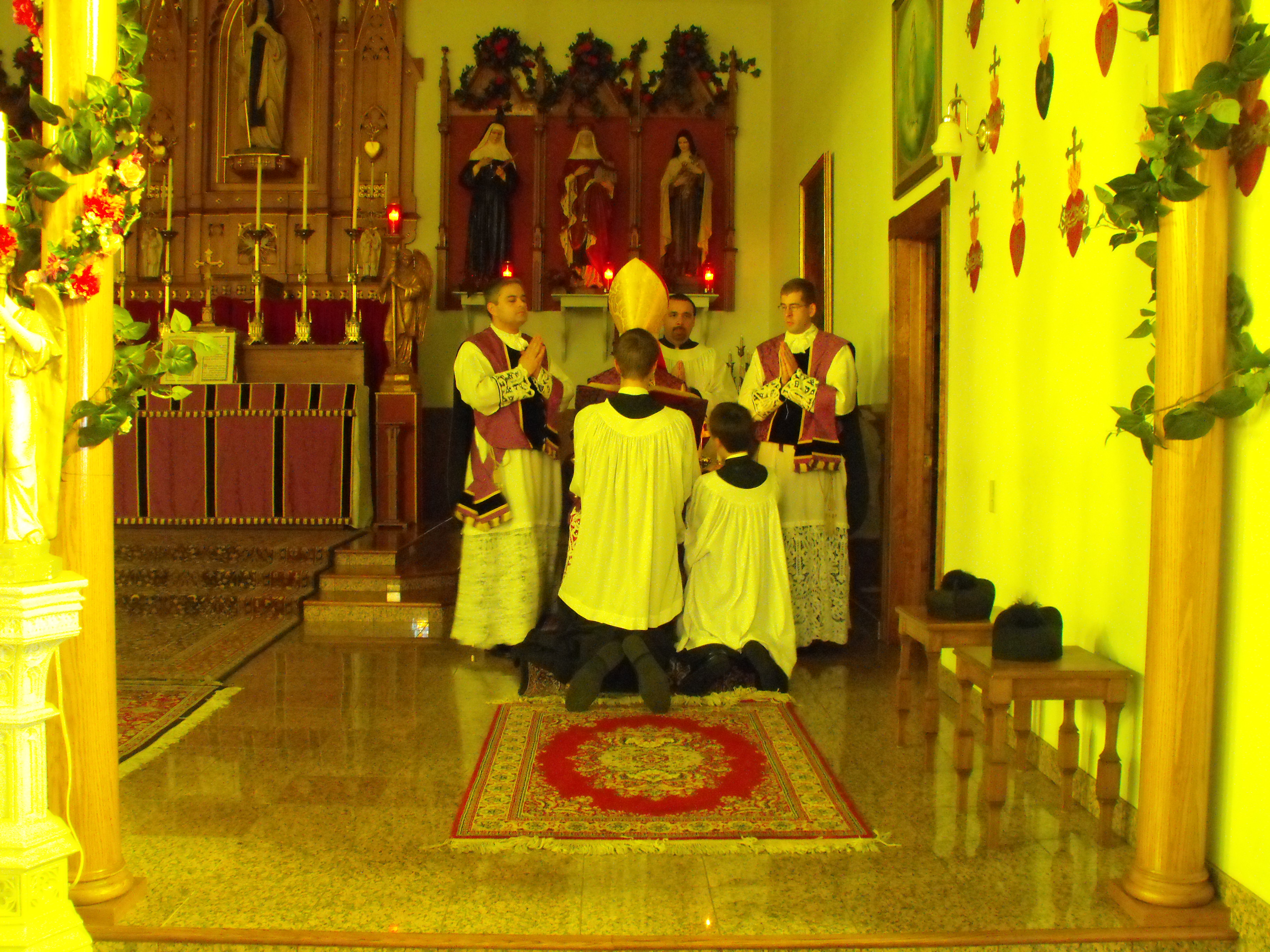
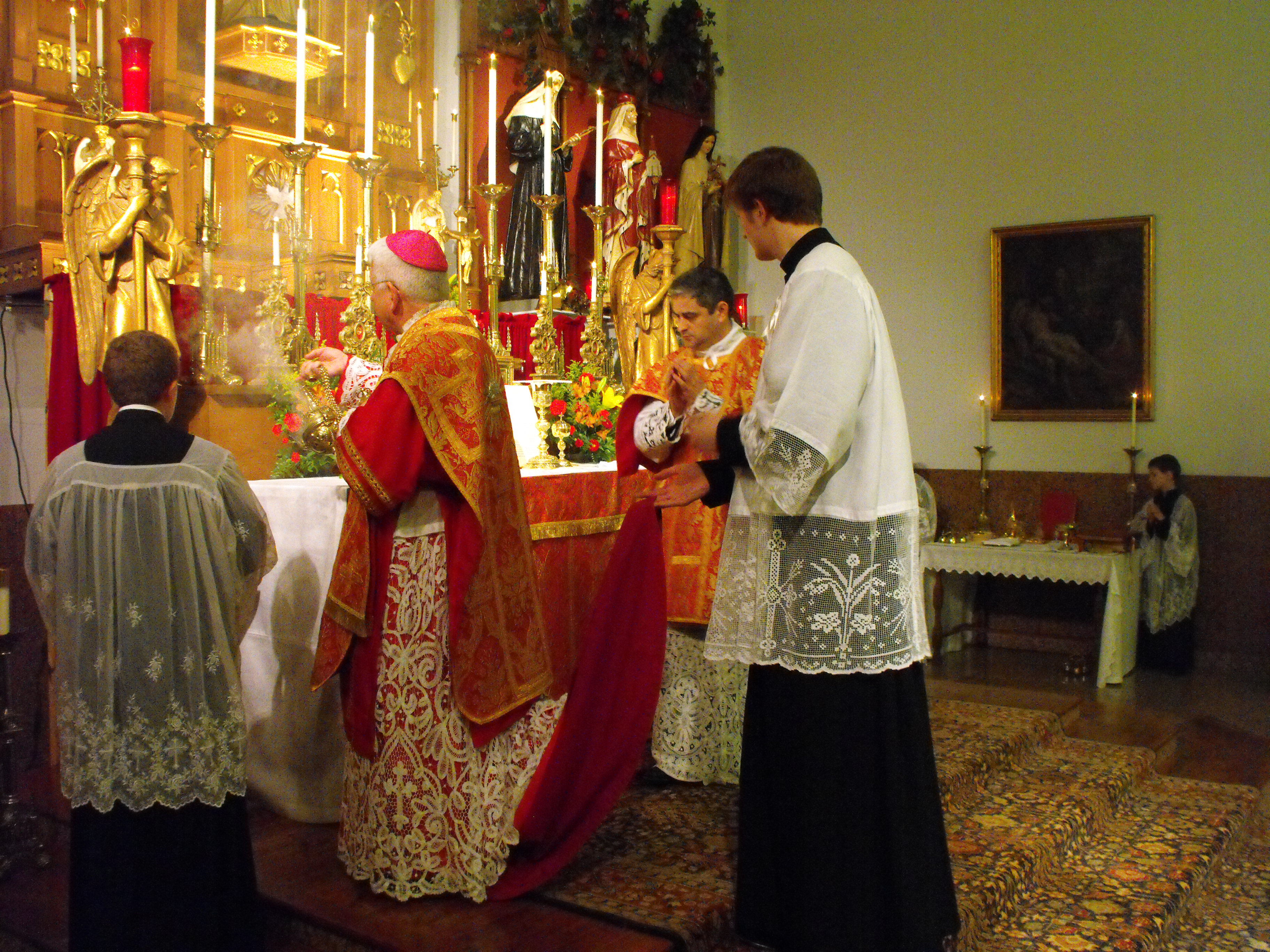
Showing posts with label Pentecost. Show all posts

Monday, June 25, 2018

The Service of Vespers

Solemn Mass? It has been six years since I last saw one. Vespers? I have not seen the service of Vespers in five weeks and I miss it much more. I would even go as far as to say I could live with a spoken Mass provided I could attend Vespers every Sunday evening, the perfect consummation to a perfect day.

Last year I wrote about my recent re-discovery of Compline after sticking to the Major Hours and also the Byzantine Office for several years. Compline, for myself and for many readers, was our initiation into the Divine Office if only because it could be said before bed, it was simple, and it hardly changed day to day. Vespers, however, was for myself and another reader, our introduction into liturgical prayer properly speaking. Raised in the 20th century Roman Church, the parish Mass can be taken for granted, new or old rite. We are required to go to Mass and we can find its celebration more or less heuristic and devout depending on our own disposition and devotion. The Office, unlike Mass, is seamless and can only really be celebrated one way, without pause for theatrics, spoken prayers, or deliberate gestures. It begins as it ends, imploring aid for those who need it: Deus in adiutorium and Fidelium animae. The service may not confect the Holy Eucharist, but it does enter into Eternity as much as the Mass and into the proprietary nature of the day even more so than the Mass for great feasts.


First, at the Oxford Oratory, I heard Vespers again where I first heard the service at all. The rite was Sunday after Ascension according to John XXIII's rubrics, which Oxford follows more stringently than the mishmash service at Brompton. "Back in the day" there were probably more people from the 11AM Solemn Latin Paul VI Mass who went to Vespers than people who went to the 1962 low Mass at 8AM. The reasons are probably varied: traditionalists are very likely to have families in tow, which is a complication toward the evening; people who go to the high Mass are likely more interested in grand liturgical gestures; perhaps the greater attendance at the new rite ensures that even with a lower percentage of people interested in Vespers a greater number will be from the new Mass. Regardless, Vespers and Benediction still gathers about 50 souls. The music was Gregorian plainsong according to the Solesmes method. The provost, Fr. Daniel Seward, officiated.


The most pleasantly surprising service was Vespers according to Paul VI's Liturgia Horarum in Latin at Westminster Cathedral, where a reader left me after spending an afternoon in London with a bottle of wine. Westminster Cathedral, in the fashion of the more proper Anglican institutions, maintains both a professional male choir and a school of young boys who sing the Office daily; the choir also sings a high new rite Latin Mass daily. The singing is some of the best I have ever heard in person and a far cry better than the Sistine Screamers. Vespers was for (what should have been) the Octave Day of the Ascension of Our Lord. The theme of the new rite Vespers, which is the only public celebration of the new Office I have ever seen in my life (like the Latin Novus Ordo it is rarer than its old rite counterpart), began with the Veni Creator hymn, an odd choice given that Pentecost was some days away. Then were sung three psalms, or possibly psalm fragments, then a vernacular reading, and a priest recited some intercessory prayers. All in all, this Vespers lasted 20 minutes and perhaps 30 people attended, although 150-200 probably came in for the following Mass.


The Kyrie from the evening Mass at Westminster Cathedral, set by Orlande de Lassus

Last came Vespers for Pentecost Sunday at the Brompton Oratory, sung alternatively by their professional choir and the Fathers in choro. The provost, Fr. Julian Large, celebrated with the aid of four coped assistants who intoned the antiphons before an assembled congregation of probably 100-150. Vespers of Pentecost Sunday may be the most beautiful in the entire Roman rite. The antiphons are brisk, succinct, generally in a major key, and come as powerfully as the Holy Wind of which they speak. Is there a more moving hymn than the Veni Creator

I have known Byzantine Vespers these past six years, the psalter of which never changes day to day, which the exception of odd times of year like Bright Week. The Roman Vespers has considerable variation with seasonality and the odd major feast. Also, whereas the Greek service tends to flow continuously, Roman Vespers builds up like the last movement of Beethoven's Ninth Symphony, culminating in the offering of incense at the altar during the Magnificat. A rediscovery of the old Suffrages and Commemorations might re-orient the Magnificat into the climax of the service rather than the bittersweet end that it generally is.

I wish Vespers would proliferate the United States. For those with a well equipped parish it may well be the next thing to ask of one's pastor. If he asks why the service should be scheduled when so few would attend just answer, "For God's sake, man."

Wednesday, June 7, 2017

Ember Wednesday: Date this Collect

The few sources I have found on the matter date the octave of Pentecost to around the 800s. Before that, the Sunday of Pentecost coincided with the seasonal ember days, so, given the Baptismal and creation-based character of the feast, it seemed reasonable to extend it over the ember days to each the whole week.

Some of the language in today's collect hints that the ember Mass pre-dates a certain dispute of language....

Mentes nostras, quǽsumus, Dómine, Paráclitus, qui a te procédit, illúminet: et indúcat in omnem, sicut tuus promísit Fílius, veritátem.... Per Dominum nostrum....

Saturday, June 3, 2017

Liturgical Theology: Pentecost Vigil (REPOST)

source: oca.org
UPDATE: You should be able to watch a livestream of the vigil at 5PM EST (US) here.

Pentecost is too big, too vast, too intimidating for any singular explanation, but the Roman liturgy's rich vigil for this feast nurtures the faithful with some food for thought. Let us consider the liturgy of the Roman rite for this great feast, second only to the Sunday of the Resurrection in importance.

source: traditionalmass.org
The vigil commences with the celebrant—vested in a violet chasuble—kissing the altar and following the lectors, who read six prophecies from the Old Testament, interspersed with collects sung by the celebrant. The first lesson is the familiar story of Abraham ascending a mountain with his son Isaac, prepared to sacrifice his only child in obedience to God. An angel intervenes and tells a relieved Abraham that God would never really do such a thing. All of this was proclaimed on Holy Saturday, prefiguring Christ's willingness to sacrifice everything to the Father on behalf of the world. Pentecost enters this passage late at the point when God rewards Abraham's fidelity by promising "I will bless thee and multiply thy seed as the stars of heaven, and as the sand that is by the seashore.... and in thy seed all the nations of the earth shall be blessed because thou hast obeyed My voice."

The second prophecy is an extraction from Exodus 14, wherein the Pharaoh's forces chase the Israelites through the desert and into the Red Sea, which St. Moses has just parted by the Lord's command. The Lord then tells Moses to close the Sea and drown the Egyptians, which he does. The tract continues the passage:
"Let us sing to the Lord, for He is gloriously magnified: the horse and the rider He hath thrown into the sea: He is become my helper and protector unto salvation...."
These two prophecies speak of the same thing, Baptism. Water is a symbol of creation and the essential ingredient of all that lives. Yet water is also uncertain, difficult to control. Genesis chapter 1 speaks of water roaming the earth before it had form. God used water to protect the Israelites from the Egyptians. Egypt itself is a type, a parallel, an example of sin and loss and here God saves His people—fulfilled and most perfectly expressed in the Church—through water. Through water He will "multiply thy seed as the stars of heaven," only He will no longer multiply Abraham's progeny through obedience, but Christ's Church through Sacrament. The second collect of the vigil demands this interpretation:
"O God, who by the light of the New Testament hast made clear to us the miracles wrought in earliest times, prefiguring unto us the Red Sea as an image of the sacred font, and Who in the deliverance of Thy people from the bondage of Egypt, hast foreshadowed the sacraments of the Christian dispensation; grant that all nations who have merited by faith the privilege of the children of Israel, may be born again by partaking of Thy holy Spirit."
The third prophecy, take from Deuteronomy 31, compares and contrasts closely with the Ascension of Christ. Moses, nearing death, has taken care to write down his encounters and history with God. He abjures and confronts his fellows Israelites for their infidelity to God, "For I know that, after my death, you will do wickedly, and will quickly turn aside from the way that I have commanded you." The scripture, excluded from this passage, goes on to tell us that his bones were never found. This is extraordinary. Moses joins Elijah, Enoch, and the Blessed Mother among those whose bones have not been found and the others were taken bodily by the Lord, Elijah in a chariot of fire and our Lady after her death in Jerusalem. Moses, a prefigurement of Christ who leads God's people out of bondage, many believe, Jews included, was also taken up by God. Should he have been assumed by God then an strong parallel with the Ascension presents itself. Christ of course was not assumed into heaven, but rather ascended through His own power as God. Moses brought people forth from human bondage and Christ from spiritual bondage. Both died and were raised, so to speak, and rebuked their followers for their lack of faith. Moses's followers would continue to fail God, even if they would eventually reach the promised land and create a kingdom of Israel. Christ, in a marked contrast, promises something perfect that will never be lost, a "Helper" (meaning of the word Paraclete) to preserve the faithful "in all truth." He ascends telling the Apostles to "baptize all nations in the name of the Father and of the Son and of the Holy Ghost.... For I am with you always, even until the end of the world." Moses's deliverance from slavery is made perfect in Christ's words.

The fourth prophecy again anticipates the inception of the Church in the Baptism of its members, "the Lord shall wash away the filth of the daughters of Sion, and shall wash away the blood of Jerusalem out of the midst thereof, by the spirit of judgment, and by the spirit of burning" (Isaiah chapter 4). At this point perhaps the faithful should consider what Baptism is. It is the movement of water over a person's skin with a Trinitarian formula, yes, but it is so much more, too. "Baptism" derives from a similar Greek word meaning "to immerse" or "to plunge." To be "plunged" into Christ and in the name of the Trinity is more than to enter a visible community or lose a sentence of punishments condine to one's sins. To be "plunged" into Christ is to be immersed and filled with the very life of Christ given by the Holy Spirit, Who, St. Gregory reminds the Church of Rome during Mattins of the feast, is the love of God Himself. The Holy Spirit, to be simplistic, is God's love working and doing something, creating or renewing. The Holy Spirit accomplishes this rebirth in Baptism through water, the physical essential in life and the material, again referencing Genesis chapter 1, which formlessly covered the earth before creation. Water is also like the Holy Spirit, or "Holy Wind" to take a very literal translation, in that water is not easily contained, limited, narrowed, or defined. It enters through crevices unseen and can also be lost by poor care through other unanticipated openings. It is this in water that Christ, through the Holy Spirit, renews His creation. It is for this reason so many commentators have adduced the psalm from the Vidi aquam "I saw water flowing from the right side of the Temple, alleluia; and all to whom this water came were saved...." Therefore the Church uses as her last prophecy in the vigil Ezekiel 37:1-14:
"Thus saith the Lord God, Come, spirit, from the four winds, and blow upon these slain, and let them live again. And I prophesied as He had commanded me; and the spirit came unto them; and they lived; and they stood upon their feet, an exceeding great army.... Thus saith the Lord, I will open your graves, and will bring you out of your sepulchres, O My people, and will bring you into the land of Israel.... and you shall have put My spirit in you, and you shall live, and I shall make you rest upon your own land; saith the Lord almighty."
source: traditionalmass.org
A procession then brings the sacred ministers to the baptistry where the font's waters are again blessed and infused with chrism, itself a priestly thing, as on Holy Saturday. The Paschal candle, extinguished on Ascension Thursday after the Gospel, reappears. Let not the importance of its reappearance be lost. As Dr. Laurence Hemming adumbrates in his Worship as Revelation, all the fires in a church are to be lit from the Paschal fire much as the Presence of Christ in the Sacraments comes from Christ's Incarnation and work on earth. The Paschal candle is extinguished at the end of forty days because, as with Christ and the Sacraments, its purpose, to diffuse holy fire, is accomplished. The fire remains without the candle's use just as Christ remains in the Church without a bodily physical presence. The candle returns because it symbolizes the Resurrection, the event which made this new life in the Holy Spirit possible. The celebrant plunges the candle into the font, almost baptizing the font with the candle rather the other way around. The celebrant sparges the faithful with the blessed water, infuses the chrism, and baptizes catechumens into Christ and His Resurrection. More adept parishes will also have the good sense to administer confirmation at this time, giving the neophytes the Holy Spirit and His "sevenfold gifts."

After the baptisms all who have been "baptized into Christ" on earth sing the Litanies of Saints, imploring the intercession of those in heaven who are the perfection of God's promise to Abraham, "multipl[ied] as stars of heaven." The saints, together with those on earth baptized into Christ, form the Church and carry that same Spirit and fire found on Holy Saturday. Pentecost makes the Resurrection permanent on earth, preserved in the Church unto ages of ages.

source: traditionalmass.org
Mass follows immediately during the vigil. The lesson, taken from Acts of the Apostles, recounts Paul's preaching of the Baptism of Christ, or into Christ, to the Ephesians, hitherto only aware of St. John the Baptist's baptism of repentance. The alleluia is the same as on Holy Saturday. And in the Gospel St. John tells of Jesus saying "If you love me, keep my commandments." What is the Holy Spirit other than the strength to do this? This simple, demanding sentence of Christ calls to mind James 2:18, "I will show you my faith by my works." The Holy Spirit creates, re-creates, renews, strengthens, and preserves the Church in Christ, of Christ, and for Christ, as foretold to the prophets long ago. He makes all things anew, fashioning a new, holier creation out of the materials and persons of the existing, fallen creation. And He will remain with us until the very end.

In a rare moment the Byzantine tradition has a far simpler and more understated take than the Roman Church. The Greek theology of this feast can be found in the troparion of Penteost, which I heard today at Divine Liturgy and last evening at Vespers:
"Blessed are You, O Christ our God, You have filled the fishermen with wisdom by sending down the Holy Spirit upon them, and Who through them have caught in Your net the whole world. O Lover of mankind, glory to You!"


Saturday, May 21, 2016

The Ennui of Evangelicals


Being born and raised in the largest American religious group, I spent many years watching my fellow Evangelical Protestants go through cycles of wild extremist belief, desperate attempts at holding on to their previous emotional faith, and termination either in outright apostasy, or bored church-hopping.

There’s a kind of anti-rational fideism eating away at the foundations of Evangelicalism. In spite of the ability and willingness of young Evangelicals to engage in debates at excruciating length, their spirituality relies almost entire on emotionalism. They operate on the logical extension of Fr. Luther’s redefinition of the virtue of faith as trust rather than humble belief. If the individual “Christian” no longer feels trust in their Heavenly Father, it must indicate a loss of faith—or worse, indicate that he never possessed faith in the first place.

The interaction of Evangelicals with the larger, secular culture is laced with an urgent need to be perceived as relevant. They instinctively understand the paucity of their own internal culture, and gravitate towards any things that hold the slightest promise of filling their own voids. They obsess about Hollywood movies, C.S. Lewis (hardly an Evangelical, himself), glorified road trips with missionary pretenses, popular musical trends, and even Thomas Aquinas. Worse, they obsess about convincing themselves that sin doesn’t matter.


But of course sin matters. It’s the most terrible thing in creation. It’s a horrible nothingness that tears away the only parts of us capable of communion with God. The Evangelical-Protestant insistence that sin is “already forgiven” or “placed at the Cross” is impious nonsense, a legal fiction that inflames the existing cognitive dissonance of religionists who already believe that “real Christians” simply will not sin. Or at least not seriously. Just a little. Maybe. Probably. Maybe.

At their happiest, Evangelicals are zealously troublesome in flooding Catholic message boards, insisting that they flee the great Whore of Babylon. At their saddest, they leave the drywall interiors of their churches for the caffeinated opium dens of abortion-loving Starbucks.

St. Jude describes the mental state of Evangelicals thoughtful enough to be aware that something is wrong: “Raging waves of the sea, foaming out their own confusion; wandering stars, to whom the storm of darkness is reserved.” The movement is so symbiotic with America that it can only exist in other countries that have been Americanized to some degree; and the more America is in turmoil, the more Evangelicals find themselves on the opposite sides of a similar divide.

They have no lasting poetry, no sculpture, no memorable novels, no architecture, no music that isn’t a cheap imitation or childish emoting. When an Evangelical wishes to learn how to integrate faith and the arts, he inevitably falls back on Catholic examples, and then spends hours explaining to his friends why reading Flannery O’Connor doesn’t necessarily make one a dirty papist.

So why does the Catholic Church seem hell-bent on imitating our Evangelical neighbors? Do we American Catholics really hate our pre-Vatican II urban ghetto culture so much that we are willing to trade it in for anything else? We are no longer preaching from the upper room in Jerusalem, proclaiming the New Covenant to all the world in every tongue with power and truth, as on that first Pentecost. We are more concerned with listening than telling.

At some point we despaired. We despaired of our own culture, our own ecclesiastical society, and our traditions. We didn’t despair in the darkest of times, after the Church had been rocked by a continual beating tide of scandals, but in good times of peace. We tired of promulgating the evangel throughout the world and our communities. Our own evangelical spirit grew cold, and once we stopped spreading it to the heathen and heretic, we stopped believing it, ourselves.

We are not even accused of being drunk on “new wine,” any longer. The American Catholic is desperate to be like his neighbor, to fit in and be accepted as just another flavor of so-called Christianity, to be both in and of the world. We are so alienated from our own roots that Flannery O’Connor is as obscure to the modern Catholic as to the Protestant.

The evangelical ennui is ours.

Summer, by Jules Breton

Thursday, May 19, 2016

Octave Musing: They Shall Be Created


"In times of difficulty the Holy Spirit raises up saints within the Church," Fr. Capreolus preached at Mass this Pentecost Sunday. The good priest touched on something that has been floating around the Catholic blogosphere recently, that the ancient Western understanding of the Holy Spirit has been obscured in since the mid-20th century by an unhealthy wave of Greek epicleptism.

The Roman liturgy, as it existed at the dawn of the 20th century, could be mistaken for an Arian rite if not for the Athanasius Creed at Prime, the Gloria Patri doxologies at the psalms, and the qui tecum vivit et regnat concluding orations. That is not to say the old Roman liturgy is in the least Arian, but it has every trace of being an ante-Nicene tradition that the Church enriched after the Christological clarifications of the first four councils. Unlike the explicitly didactic Greek rite, which preaches a small Trinitarian sermon at the sessional hymns and the troparia, the Latin rite rarely teaches about the nature of the Trinity, it simply directs the faithful in worship to God in the persons of the Trinity. I recall some time ago reading in an introduction to the writings of St. Gregory Nazianzen that the Byzantine Church saw the Trinity as three Divine persons Who, in virtue of the first commandment, must be one God, whereas the Latin Church saw one God Who, in virtue of the New Testament, must exist as three Divine persons. The Greek tradition narrates the active role of the Paraclete in every act of the Church, while the Latin tradition simply assumes it.

In the middle of the anaphora of the Greek liturgy the celebrant asks that the Father might "send down Your Holy Spirit and upon these gifts here offered," transforming them into the Body and Blood of Christ. The Roman Church quietly assumes that the Holy Spirit came down upon the Church once and is passed on by the laying of hands at exorcisms, Confirmation, absolution of sins, the conferral of Holy Order, and other blessings. The Holy Spirit need not descend upon the Church, He is already in it. St. Bernard writes in one reflection on the Song of Songs that the Holy Spirit ensures us of "truth of our interior life," guiding the faithful in the three so-called "theological" virtues (Song of Songs sermon 18). The Holy Spirit does not transubstantiate the gifts, He raises the priest to offer them to the Father, Who transforms them by his acceptance of them (Quam oblationem).

Perhaps the indwelling, as opposed to descending, Latin view of the Paraclete is why Roman Christians are more concerned than Easterners with having a pure Church at any given moment of history and why turbulent times are more difficult for them to endure (cf. Rorate Caeli every day). If the indwelling Spirit guides the Church "in all truth" then is the Church to be found in Pope Francis? Or in the "Novus Ordo"? Or in the Borgia era? The wise reply to those troubled hearts is the same Fr. Capreolus gave at Mass, that the Spirit lives in the Church, is passed on from age to age, and lifts up saints at the most dire of times. Perhaps the Church suffers today not from the lack of potentially great saints, but from bureaucratic obstruction of their work.

Regardless, the Lord sent forth His Holy Spirit fifty days after the Resurrection; henceforth, every generation of the Church has been created in the Spirit.

Sunday, November 8, 2015

7s and 8s for the Octave of All Saints

Seven candle laid before the altar in the Leonian Triclinium during
the Fourth Lateran Council, Innocent III presiding.
"And on the seventh day God ended his work which he had made: and he rested on the seventh day from all his work which he had done. And he blessed the seventh day, and sanctified it: because in it he had rested," begins the second chapter of Genesis. Biblical numbers used to occupy a more prominent place in the world of conspiracy theories and listeners of the Art Bell Show, but to a believer Three, Seven, Eight, Twelve, and multiplication by thousands still carries importance. Seven remains a popular number in common life because a week is seven days long, the resting day preceding a return to work. A former coworker of mine named her son Seven—poor lad.

Seven and Eight occupy a prominence in the Church, both in Holy Writ and in the liturgical life of Christians. While Three arrantly refers to the Holy Trinity and the days before the Resurrrection, and while Twelve recalls the tribes of Israel and the Apostles, Seven and Eight are less immediately obvious and the most inseparable of these numbers, not least because they are sequential in every way.
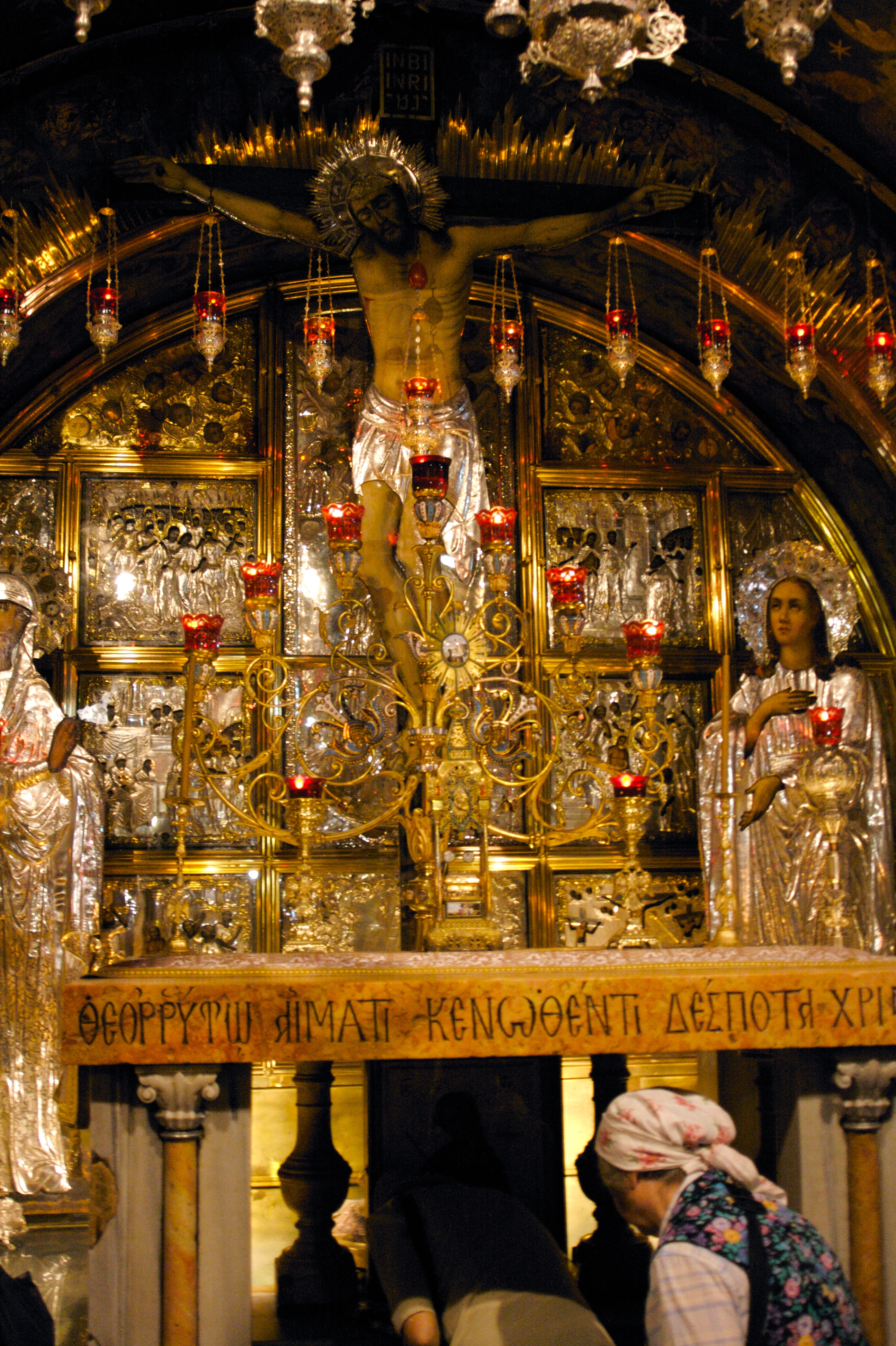
Count 'em: seven on the top.
Seven is conspicuous throughout the tradition of the Church, being found in Scripture and in the celebration of sacred rites. According to Genesis, God created the world in seven "days," the last of which He did not create anything, but instead rested and sanctified that day by His rest. He dedicated the day to Himself. Seven is also reiterated throughout the Apocalypse of St. John: seven candles, seven spirits, seven seals. In the old rite of Papal Mass, acolytes set seven candles in front of the altar, imitated in the Lyonese rite. The "Tridentine" Roman liturgy, a pontifical Mass celebrated by a bishop in his own diocese mandates seven candles on the altar rather than the conventional six, or whatever the rank of the day dictates. Many Byzantine Holy Tables will support a tabernacle ornamented with seven candles, too.

Seven is perfection. It is fulfillment. It is rest for God, but not for man. By sanctifying the seventh day unto Himself, God made Himself man's duty on that day rather than the work he earned by the merit of his sin. The seventh day is meant for the worship and adoration of God, to plead for the forgiveness of sins and for clemency in all man's needs. 

Man's Fall impairs his worship of the Creator. Abraham's summoning to the mountain initiated the Jewish tradition of sacrificing small animals, vital sources of sustenance—milk, meat, textile materials, for God's ignorance of sin. The Law came through Moses. Grace and Truth—and the realized remission of sin—came through Jesus Christ. Christ's death on the Cross remitted the sins of those who follow Him, just as His Resurrection from the dead empowered His Apostles to heed the command to repeat the offering of bread and wine "for the anamnesis of me," revisiting, not repeating, His sacrifice.

The significance of Seven did not end with the Cross, rather it realized it final potential and deeper meaning. St. Paul's much abused adage "the letter kills, but the Spirit gives life" (2 Corinthians 3:6) excuses most Christians from meeting their duties by dismissing their potential detractors as legalists. The real meaning of this phrase could not be further from its modern reception. The letter, meaning the Law of Moses, was a meeting point between the Divine plan and man's fallen nature. Since the Passion of Christ and the coming of the Holy Spirit, the Law has become antiquated in light the coming of the Spirit. Adherence to the Law yields death, adherence to the Spirit yields life. The significance of the signs of the Law did not vanish with Christ; they became more powerful.

God's reservation of the seventh day makes Seven a Temple number, both in the Old Testament and in the New. A young animal was fit for sacrifice when it was seven days old (Exodus 22:30). Visibly there were seven lamp stands in the Temple, an image continued in the Apocalypse of St. John. In a passage of Scripture read at Mattins for the feast of All Saints, the writer described the court of the Almighty:
"And from the throne proceeded lightnings, and voices, and thunders; and there were seven lamps burning before the throne, which are the seven spirits of God" (Apocalypse 4:5)
God no created nothing new on the seventh day, yet Genesis delineates the end of Creation on the seventh day. The seventh day is perfect, it is completion. The use of seven in the Apocalypse may relate a vision to the reader, but it may also communicate to the reader that the eternal liturgy in the heavenly court is the Christian's final destination, his perfection, his fulfillment. If true, this imbues the liturgy with an apocalyptic nature, a preview of what eternity is supposed to be. The tradition of the seven lamps remained a feature of Papal Mass until Paul VI discontinued the rite in 1964. The use of Lyon retained the tradition until adopting Pope Paul's reforms. Greek churches still often display seven candles above the altar. The recent loss of this tradition does not neglect what appears to have been the conventional interpretation of this number by the Church according to her sacred rites, that adoration of God in sempiternal beatitude in the un-ending end of the faithful.


Alas, Seven is succeeded by Eight, and it is time to move on.

If Seven is clear and explicit, Eight is hinted and implicit. Christ entered Jerusalem on Palm Sunday the day after the Sabbath and was put to death the day before the Sabbath. A good Jew, he rested on the Sabbath and rose the next day, a unique and extraordinary event in human history never to be repeated. Our Lord did not rise in a new body, nor the old as it was, but in the old body glorified, so resplendent and transformed that His own Apostles did not recognize Him. Understanding this, St. Paul writes to the Philippians, "Who will reform the body of our lowness, made like to the body of his glory, according to the operation whereby also he is able to subdue all things unto himself" (3:21). Christ rose on the first day of the new week, a new first day of Creation, in the "body of his glory."

"Our Redeemer's visible presence," wrote St. Leo the Great, "has passed into Sacraments." The Sacrament most readily associated with the Resurrection and with the renewal of mankind is Baptism, which St. Augustine often calls the Sacrament in his Confessions (my emphasis). Baptism is the Sacrament of regeneration, where what Christ did physically comes to the catechumen spiritually now and physically in eternity.

The great ancient feasts, Greek and Latin, have two commonalities: an extended liturgical celebration and the celebration of Baptism. Pascha, Pentecost, and Epiphany/Theophany are the greatest of all feasts in the Church, feasts liturgically observed for an octave of days and which relics of the older practice of Baptism on the feast vaguely remains. Pascha and Pentecost were preceded by a vigil in older times that became its own liturgical day in the middle ages. On those vigils, Baptism is still celebrated with the reading of prophecies, the blessing of water, and the Sacrament itself. Epiphany/Theophany no longer sees Baptism on the day of its celebration, but water is blessed and distributed by vials or by sprinkling among the faithful there gathered.
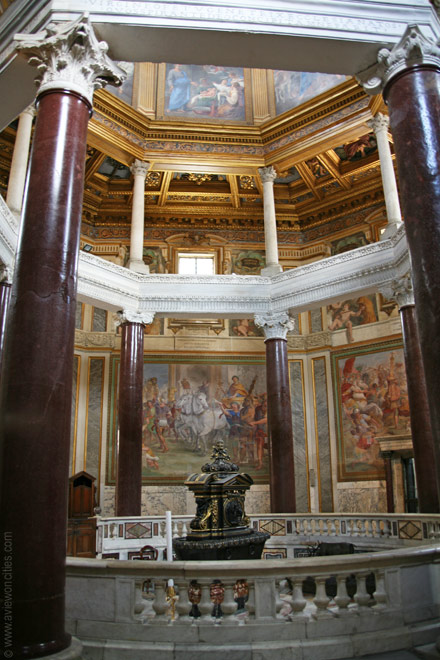
Lateran Baptistery
The extended liturgical celebration of Christ's regenerative mysteries is the octave, the eight day long week. In lesser feasts, the octave day repeats the feast day. In these three feasts, however, the octave day is unique from the feast itself. Pascha has Low Sunday (Thomas Sunday for the Greeks). Epiphany/Theophany is capped with the Baptism of the Lord (or a leave-taking in Byzantium). Pentecost does not have a strict octave day, but its semi-festive vigil can reasonably make Ember Saturday an octave day; Trinity Sunday could also be read as an accidental octave day, celebrating the complete revelation of the Trinity, the Third Person of Whose revelation was observed the prior week (Greeks do not have a formal octave, but they do call the week after Pentecost Sunday "Trinity Week," during which there is no fasting).

Eight not only appears in liturgical times of Baptism, but also in space. Baptisteries traditionally have eight sides, again signifying the Resurrection on the eighth day of the week, the first day of the new Creation. Even smaller churches without dedicated Baptisteries often possess an octagonal font. The local FSSP parish—despite the prevalence of plaster statues, blue wall paper, and young St. Joseph—has a proper Baptistery, octagonal in shape.

For the Jew, the only eighth day was the eighth day of the Feast of Tabernacles. Those under the Mosaic Law would build tents of palms and offer sacrifices for seven days, recalling the cycle of Creation. The entirety of the seven days was an extension of the Sabbath, the seventh and perfect day, wherein no servile work was performed. On the eighth day, a solemn celebration would resume and sacrifices would be offered communally. "On the first and eighth day shall be a sabbath, that is a day of rest" (Leviticus 23:39). This was a penitential cycle, attached to the Day of Atonement, the day the people would project their sins onto a "scapegoat" and offer sacrifices according to their means. For the Christian, the Sacrifice has been made by Christ, the Lamb Who took on the sins of the world. The celebration is a celebration not only in the sense of observance, but also in joy.

Unfortunately, the significance of Eight, octaves, and Baptism became obfuscated by the decline in liturgical observance in the Latin Church and the suppression of almost all octaves, save three, by Pius XII in 1955. Paul VI would unwittingly suppress Pentecost in 1970, after his mentor, Pius XII, removed its vigil and Baptism rites 15 years earlier.

Seven and Eight are sequential, as the fullness of Creation in one gives way to the new Creation in another. God created us to His end, from which we fell away on the seventh day and to which He restored us on the eighth. We are meant for Him, both now and forever. There is no new revelation, no new progression along the Biblical number line. We live in the final age, the last aeon (one could write a post on the meaning of "unto the ages of ages" in prayers). There will be no more progression in our knowledge of God until the end, when we will no longer see Him gradually lifting the veil, but instead see Him and He is. To end this numeric article, Msgr. Alfred provides the faithful with another mathematical insight on the Almighty in the first chapter of We Believe:
"The analogy or comparison which I personally find useful is to think of eternity as the point at the center of a circle. You know from your geometry that a point has no extension in space: it simply exists. In the same way, eternity has no extension in time: it simply exists. When we say of Almighty God in our limited language that He was, is and always will be, it would be far more correct to say—since in eternity there is no succession of events—that He always is. Now, if you think of time as the circumference of that circle, with every single point on the circumference equally and simultaneously present to the center, you may see what we mean when we say that the whole of time is likewise equally and simultaneously present to Almighty God. But to us the succession of events in real indeed: we are successively encountering what is simultaneous to Almighty God."
Seven and Eight can make you a saint! A happy octave day to all.

Saturday, May 23, 2015

Liturgical Theology of Pentecost as Told by the Vigil

source: oca.org
Pentecost is too big, too vast, too intimidating for any singular explanation, but the Roman liturgy's rich vigil for this feast nurtures the faithful with some food for thought. Let us consider the liturgy of the Roman rite for this great feast, second only to the Sunday of the Resurrection in importance.

source: traditionalmass.org
The vigil commences with the celebrant—vested in a violet chasuble—kissing the altar and following the lectors, who read six prophecies from the Old Testament, interspersed with collects sung by the celebrant. The first lesson is the familiar story of Abraham ascending a mountain with his son Isaac, prepared to sacrifice his only child in obedience to God. An angel intervenes and tells a relieved Abraham that God would never really do such a thing. All of this was proclaimed on Holy Saturday, prefiguring Christ's willingness to sacrifice everything to the Father on behalf of the world. Pentecost enters this passage late at the point when God rewards Abraham's fidelity by promising "I will bless thee and multiply thy seed as the stars of heaven, and as the sand that is by the seashore.... and in thy seed all the nations of the earth shall be blessed because thou hast obeyed My voice."

The second prophecy is an extraction from Exodus 14, wherein the Pharaoh's forces chase the Israelites through the desert and into the Red Sea, which St. Moses has just parted by the Lord's command. The Lord then tells Moses to close the Sea and drown the Egyptians, which he does. The tract continues the passage:
"Let us sing to the Lord, for He is gloriously magnified: the horse and the rider He hath thrown into the sea: He is become my helper and protector unto salvation...."
These two prophecies speak of the same thing, Baptism. Water is a symbol of creation and the essential ingredient of all that lives. Yet water is also uncertain, difficult to control. Genesis chapter 1 speaks of water roaming the earth before it had form. God used water to protect the Israelites from the Egyptians. Egypt itself is a type, a parallel, an example of sin and loss and here God saves His people—fulfilled and most perfectly expressed in the Church—through water. Through water He will "multiply thy seed as the stars of heaven," only He will no longer multiply Abraham's progeny through obedience, but Christ's Church through Sacrament. The second collect of the vigil demands this interpretation:
"O God, who by the light of the New Testament hast made clear to us the miracles wrought in earliest times, prefiguring unto us the Red Sea as an image of the sacred font, and Who in the deliverance of Thy people from the bondage of Egypt, hast foreshadowed the sacraments of the Christian dispensation; grant that all nations who have merited by faith the privilege of the children of Israel, may be born again by partaking of Thy holy Spirit."
The third prophecy, take from Deuteronomy 31, compares and contrasts closely with the Ascension of Christ. Moses, nearing death, has taken care to write down his encounters and history with God. He abjures and confronts his fellows Israelites for their infidelity to God, "For I know that, after my death, you will do wickedly, and will quickly turn aside from the way that I have commanded you." The scripture, excluded from this passage, goes on to tell us that his bones were never found. This is extraordinary. Moses joins Elijah, Enoch, and the Blessed Mother among those whose bones have not been found and the others were taken bodily by the Lord, Elijah in a chariot of fire and our Lady after her death in Jerusalem. Moses, a prefigurement of Christ who leads God's people out of bondage, many believe, Jews included, was also taken up by God. Should he have been assumed by God then an strong parallel with the Ascension presents itself. Christ of course was not assumed into heaven, but rather ascended through His own power as God. Moses brought people forth from human bondage and Christ from spiritual bondage. Both died and were raised, so to speak, and rebuked their followers for their lack of faith. Moses's followers would continue to fail God, even if they would eventually reach the promised land and create a kingdom of Israel. Christ, in a marked contrast, promises something perfect that will never be lost, a "Helper" (meaning of the word Paraclete) to preserve the faithful "in all truth." He ascends telling the Apostles to "baptize all nations in the name of the Father and of the Son and of the Holy Ghost.... For I am with you always, even until the end of the world." Moses's deliverance from slavery is made perfect in Christ's words.

The fourth prophecy again anticipates the inception of the Church in the Baptism of its members, "the Lord shall wash away the filth of the daughters of Sion, and shall wash away the blood of Jerusalem out of the midst thereof, by the spirit of judgment, and by the spirit of burning" (Isaiah chapter 4). At this point perhaps the faithful should consider what Baptism is. It is the movement of water over a person's skin with a Trinitarian formula, yes, but it is so much more, too. "Baptism" derives from a similar Greek word meaning "to immerse" or "to plunge." To be "plunged" into Christ and in the name of the Trinity is more than to enter a visible community or lose a sentence of punishments condine to one's sins. To be "plunged" into Christ is to be immersed and filled with the very life of Christ given by the Holy Spirit, Who, St. Gregory reminds the Church of Rome during Mattins of the feast, is the love of God Himself. The Holy Spirit, to be simplistic, is God's love working and doing something, creating or renewing. The Holy Spirit accomplishes this rebirth in Baptism through water, the physical essential in life and the material, again referencing Genesis chapter 1, which formlessly covered the earth before creation. Water is also like the Holy Spirit, or "Holy Wind" to take a very literal translation, in that water is not easily contained, limited, narrowed, or defined. It enters through crevices unseen and can also be lost by poor care through other unanticipated openings. It is this in water that Christ, through the Holy Spirit, renews His creation. It is for this reason so many commentators have adduced the psalm from the Vidi aquam "I saw water flowing from the right side of the Temple, alleluia; and all to whom this water came were saved...." Therefore the Church uses as her last prophecy in the vigil Ezekiel 37:1-14:
"Thus saith the Lord God, Come, spirit, from the four winds, and blow upon these slain, and let them live again. And I prophesied as He had commanded me; and the spirit came unto them; and they lived; and they stood upon their feet, an exceeding great army.... Thus saith the Lord, I will open your graves, and will bring you out of your sepulchres, O My people, and will bring you into the land of Israel.... and you shall have put My spirit in you, and you shall live, and I shall make you rest upon your own land; saith the Lord almighty."
source: traditionalmass.org
A procession then brings the sacred ministers to the baptistry where the font's waters are again blessed and infused with chrism, itself a priestly thing, as on Holy Saturday. The Paschal candle, extinguished on Ascension Thursday after the Gospel, reappears. Let not the importance of its reappearance be lost. As Dr. Laurence Hemming adumbrates in his Worship as Revelation, all the fires in a church are to be lit from the Paschal fire much as the Presence of Christ in the Sacraments comes from Christ's Incarnation and work on earth. The Paschal candle is extinguished at the end of forty days because, as with Christ and the Sacraments, its purpose, to diffuse holy fire, is accomplished. The fire remains without the candle's use just as Christ remains in the Church without a bodily physical presence. The candle returns because it symbolizes the Resurrection, the event which made this new life in the Holy Spirit possible. The celebrant plunges the candle into the font, almost baptizing the font with the candle rather the other way around. The celebrant sparges the faithful with the blessed water, infuses the chrism, and baptizes catechumens into Christ and His Resurrection. More adept parishes will also have the good sense to administer confirmation at this time, giving the neophytes the Holy Spirit and His "sevenfold gifts."

After the baptisms all who have been "baptized into Christ" on earth sing the Litanies of Saints, imploring the intercession of those in heaven who are the perfection of God's promise to Abraham, "multipl[ied] as stars of heaven." The saints, together with those on earth baptized into Christ, form the Church and carry that same Spirit and fire found on Holy Saturday. Pentecost makes the Resurrection permanent on earth, preserved in the Church unto ages of ages.

source: traditionalmass.org
Mass follows immediately during the vigil. The lesson, taken from Acts of the Apostles, recounts Paul's preaching of the Baptism of Christ, or into Christ, to the Ephesians, hitherto only aware of St. John the Baptist's baptism of repentance. The alleluia is the same as on Holy Saturday. And in the Gospel St. John tells of Jesus saying "If you love me, keep my commandments." What is the Holy Spirit other than the strength to do this? This simple, demanding sentence of Christ calls to mind James 2:18, "I will show you my faith by my works." The Holy Spirit creates, re-creates, renews, strengthens, and preserves the Church in Christ, of Christ, and for Christ, as foretold to the prophets long ago. He makes all things anew, fashioning a new, holier creation out of the materials and persons of the existing, fallen creation. And He will remain with us until the very end.

In a rare moment the Byzantine tradition has a far simpler and more understated take than the Roman Church. The Greek theology of this feast can be found in the troparion of Penteost, which I heard today at Divine Liturgy and last evening at Vespers:
"Blessed are You, O Christ our God, You have filled the fishermen with wisdom by sending down the Holy Spirit upon them, and Who through them have caught in Your net the whole world. O Lover of mankind, glory to You!"

And the Veni, Creator Spiritus (the greatest of Latin hymns?)


Friday, June 13, 2014

Pentecost: Old Rite, EF & OF

A correspondent and I were recently musing over the abolition of the vivacious, rich, and Paschal-like Roman vigil Mass of Pentecost in the "EF" rite, the 1962 liturgy. As one familiar with both the Pauline and the Pian/Johannine books will know, the 1970 books removed much ancient material and yet, in a twist of irony, re-inserted some other texts and rites that were cast aside under Pius XII. Pentecost exemplifies this queer phenomenon.

In 1951 Pius XII created the Easter Vigil as we know it today. He and his commission revised it the following year. Originally the Easter Vigil eliminated Vespers entirely in favor of a Communion verse. The renovators put psalm 116 back into the rite in 1952, but turned it into Lauds (????) and scrapped Compline, Mattins, and [real] Lauds. Also in 1952 celebration of the Pentecost vigil was automatically suppressed whenever the Easter Vigil had been celebrated, likely to avert Catholics from the fact that the sacred rites of Pentecost resembled most closely the sacred rites of Holy Saturday. Everyone would favor the shorter, easier Pian novelty, making the elimination of the old rite's unique ceremonies seamless.

Now the Pauline Missal allowed for an "extended" Pentecost vigil Mass with four Old Testament prophecies, something of a restoration in principle, although given the very different Ordo Missae one can hardly call it a complete restoration. Buyer's remorse?

Then there is the elimination of the octave in the Pauline rite, preserved in the 1962 rite. It was the second most important, and certainly the most beautiful, octave after that of Pascha. My correspondent did note the logic in axing the octave, that Pentecost is the 50th day and not the 51st, 52nd, 53rd etc. I would respond by noting that an octave is an extended celebration of one feast and that Pentecost, above any other feast, deserves an octave celebration. It is the Holy Spirit creating and re-creating for the first time since the creation of the world. The Resurrection happened on the eighth day of the week and Pentecost, as I said two posts ago, makes the Resurrection permanent in the world. The plunging of the Paschal fire into the Baptismal font means all who bath in the waters of regeneration are plunged into the Resurrection. We eventually agreed upon the matter.

Why does it have to be one or the other? Why must we have either the old Ordo and octave with no vigil or the new Ordo with a vigil and no octave? Were I a parish priest, and I am certainly not, I would not have the slightest hesitation about observing the un-reformed vigil and the full octave!

Sunday, June 8, 2014

Liturgical Theology of Pentecost

source: oca.org
Pentecost is too big, too vast, too intimidating for any singular explanation, but the Roman liturgy's rich vigil for this feast nurtures the faithful with some food for thought. Let us consider the liturgy of the Roman rite for this great feast, second only to the Sunday of the Resurrection in importance.

source: traditionalmass.org
The vigil commences with the celebrant—vested in a violet chasuble—kissing the altar and following the lectors, who read six prophecies from the Old Testament, interspersed with collects sung by the celebrant. The first lesson is the familiar story of Abraham ascending a mountain with his son Isaac, prepared to sacrifice his only child in obedience to God. An angel intervenes and tells a relieved Abraham that God would never really do such a thing. All of this was proclaimed on Holy Saturday, prefiguring Christ's willingness to sacrifice everything to the Father on behalf of the world. Pentecost enters this passage late at the point when God rewards Abraham's fidelity by promising "I will bless thee and multiply thy seed as the stars of heaven, and as the sand that is by the seashore.... and in thy seed all the nations of the earth shall be blessed because thou hast obeyed My voice."

The second prophecy is an extraction from Exodus 14, wherein the Pharaoh's forces chase the Israelites through the desert and into the Red Sea, which St. Moses has just parted by the Lord's command. The Lord then tells Moses to close the Sea and drown the Egyptians, which he does. The tract continues the passage:
"Let us sing to the Lord, for He is gloriously magnified: the horse and the rider He hath thrown into the sea: He is become my helper and protector unto salvation...."
These two prophecies speak of the same thing, Baptism. Water is a symbol of creation and the essential ingredient of all that lives. Yet water is also uncertain, difficult to control. Genesis chapter 1 speaks of water roaming the earth before it had form. God used water to protect the Israelites from the Egyptians. Egypt itself is a type, a parallel, an example of sin and loss and here God saves His people—fulfilled and most perfectly expressed in the Church—through water. Through water He will "multiply thy seed as the stars of heaven," only He will no longer multiply Abraham's progeny through obedience, but Christ's Church through Sacrament. The second collect of the vigil demands this interpretation:
"O God, who by the light of the New Testament hast made clear to us the miracles wrought in earliest times, prefiguring unto us the Red Sea as an image of the sacred font, and Who in the deliverance of Thy people from the bondage of Egypt, hast foreshadowed the sacraments of the Christian dispensation; grant that all nations who have merited by faith the privilege of the children of Israel, may be born again by partaking of Thy holy Spirit."
The third prophecy, take from Deuteronomy 31, compares and contrasts closely with the Ascension of Christ. Moses, nearing death, has taken care to write down his encounters and history with God. He abjures and confronts his fellows Israelites for their infidelity to God, "For I know that, after my death, you will do wickedly, and will quickly turn aside from the way that I have commanded you." The scripture, excluded from this passage, goes on to tell us that his bones were never found. This is extraordinary. Moses joins Elijah, Enoch, and the Blessed Mother among those whose bones have not been found and the others were taken bodily by the Lord, Elijah in a chariot of fire and our Lady after her death in Jerusalem. Moses, a prefigurement of Christ who leads God's people out of bondage, many believe, Jews included, was also taken up by God. Should he have been assumed by God then an strong parallel with the Ascension presents itself. Christ of course was not assumed into heaven, but rather ascended through His own power as God. Moses brought people forth from human bondage and Christ from spiritual bondage. Both died and were raised, so to speak, and rebuked their followers for their lack of faith. Moses's followers would continue to fail God, even if they would eventually reach the promised land and create a kingdom of Israel. Christ, in a marked contrast, promises something perfect that will never be lost, a "Helper" (meaning of the word Paraclete) to preserve the faithful "in all truth." He ascends telling the Apostles to "baptize all nations in the name of the Father and of the Son and of the Holy Ghost.... For I am with you always, even until the end of the world." Moses's deliverance from slavery is made perfect in Christ's words.

The fourth prophecy again anticipates the inception of the Church in the Baptism of its members, "the Lord shall wash away the filth of the daughters of Sion, and shall wash away the blood of Jerusalem out of the midst thereof, by the spirit of judgment, and by the spirit of burning" (Isaiah chapter 4). At this point perhaps the faithful should consider what Baptism is. It is the movement of water over a person's skin with a Trinitarian formula, yes, but it is so much more, too. "Baptism" derives from a similar Greek word meaning "to immerse" or "to plunge." To be "plunged" into Christ and in the name of the Trinity is more than to enter a visible community or lose a sentence of punishments condine to one's sins. To be "plunged" into Christ is to be immersed and filled with the very life of Christ given by the Holy Spirit, Who, St. Gregory reminds the Church of Rome during Mattins of the feast, is the love of God Himself. The Holy Spirit, to be simplistic, is God's love working and doing something, creating or renewing. The Holy Spirit accomplishes this rebirth in Baptism through water, the physical essential in life and the material, again referencing Genesis chapter 1, which formlessly covered the earth before creation. Water is also like the Holy Spirit, or "Holy Wind" to take a very literal translation, in that water is not easily contained, limited, narrowed, or defined. It enters through crevices unseen and can also be lost by poor care through other unanticipated openings. It is this in water that Christ, through the Holy Spirit, renews His creation. It is for this reason so many commentators have adduced the psalm from the Vidi aquam "I saw water flowing from the right side of the Temple, alleluia; and all to whom this water came were saved...." Therefore the Church uses as her last prophecy in the vigil Ezekiel 37:1-14:
"Thus saith the Lord God, Come, spirit, from the four winds, and blow upon these slain, and let them live again. And I prophesied as He had commanded me; and the spirit came unto them; and they lived; and they stood upon their feet, an exceeding great army.... Thus saith the Lord, I will open your graves, and will bring you out of your sepulchres, O My people, and will bring you into the land of Israel.... and you shall have put My spirit in you, and you shall live, and I shall make you rest upon your own land; saith the Lord almighty."
source: traditionalmass.org
A procession then brings the sacred ministers to the baptistry where the font's waters are again blessed and infused with chrism, itself a priestly thing, as on Holy Saturday. The Paschal candle, extinguished on Ascension Thursday after the Gospel, reappears. Let not the importance of its reappearance be lost. As Dr. Laurence Hemming adumbrates in his Worship as Revelation, all the fires in a church are to be lit from the Paschal fire much as the Presence of Christ in the Sacraments comes from Christ's Incarnation and work on earth. The Paschal candle is extinguished at the end of forty days because, as with Christ and the Sacraments, its purpose, to diffuse holy fire, is accomplished. The fire remains without the candle's use just as Christ remains in the Church without a bodily physical presence. The candle returns because it symbolizes the Resurrection, the event which made this new life in the Holy Spirit possible. The celebrant plunges the candle into the font, almost baptizing the font with the candle rather the other way around. The celebrant sparges the faithful with the blessed water, infuses the chrism, and baptizes catechumens into Christ and His Resurrection. More adept parishes will also have the good sense to administer confirmation at this time, giving the neophytes the Holy Spirit and His "sevenfold gifts."

After the baptisms all who have been "baptized into Christ" on earth sing the Litanies of Saints, imploring the intercession of those in heaven who are the perfection of God's promise to Abraham, "multipl[ied] as stars of heaven." The saints, together with those on earth baptized into Christ, form the Church and carry that same Spirit and fire found on Holy Saturday. Pentecost makes the Resurrection permanent on earth, preserved in the Church unto ages of ages.

source: traditionalmass.org
Mass follows immediately during the vigil. The lesson, taken from Acts of the Apostles, recounts Paul's preaching of the Baptism of Christ, or into Christ, to the Ephesians, hitherto only aware of St. John the Baptist's baptism of repentance. The alleluia is the same as on Holy Saturday. And in the Gospel St. John tells of Jesus saying "If you love me, keep my commandments." What is the Holy Spirit other than the strength to do this? This simple, demanding sentence of Christ calls to mind James 2:18, "I will show you my faith by my works." The Holy Spirit creates, re-creates, renews, strengthens, and preserves the Church in Christ, of Christ, and for Christ, as foretold to the prophets long ago. He makes all things anew, fashioning a new, holier creation out of the materials and persons of the existing, fallen creation. And He will remain with us until the very end.

In a rare moment the Byzantine tradition has a far simpler and more understated take than the Roman Church. The Greek theology of this feast can be found in the troparion of Penteost, which I heard today at Divine Liturgy and last evening at Vespers:
"Blessed are You, O Christ our God, You have filled the fishermen with wisdom by sending down the Holy Spirit upon them, and Who through them have caught in Your net the whole world. O Lover of mankind, glory to You!"

And who can turn down a chance to listen to Veni Creator Spiritus?


Sunday, May 19, 2013

Happy Pentecost!


"Dearly beloved brethren, our best way will be to run briefly through the words which have been read from the Holy Gospel, and thereafter rest for a while quietly gazing upon the solemn subject of this great Festival. This is the day whereon "suddenly there came a sound from heaven," and the Holy Ghost descended upon the Apostles, and, for fleshly minds, gave them minds wherein the love of God was shed abroad and, while without "there appeared unto them cloven tongues, like as of fire, and it sat upon each of them," within, their hearts were enkindled. While they received the visible presence of God in the form of fire, the flames of His love enwrapped them. The Holy Ghost Himself is love whence it is that John saith "God is love." Whosoever therefore loveth God with all his soul, already hath obtained Him Whom he loveth for no man is able to love God, if He have not gained Him Whom he loveth.
"But, behold, now, if I shall ask any one of you whether he loveth God, he will answer with all boldness and quietness of spirit "I do love him." But at the very beginning of this day's Lesson from the Gospel, ye have heard what the Truth saith " If a man love Me, he will keep My word." The test, then, of love, is whether it is showed by works. Hence the same John hath said in his Epistle. "If a man say, I love God, and keepeth not His commandments, He is a liar." Then do we indeed love God, and keep His commandments, if we deny ourselves the gratification of our appetites. Whosoever still wandereth after unlawful desires, such an one plainly loveth not God, for he saith, Nay, to that which God willeth.
And My Father will love him, and We will come unto him, and make Our abode with him." O my dearly beloved brethren, think what a dignity is that, to have God abiding as a guest in our heart Surely if some rich man or some powerful friend were to come into our house, we would hasten to have our whole house cleaned, lest, perchance, when he came in, he should see aught to displease his eye. So let him that would make his mind an abode for God, cleanse it from all the filth of works of iniquity. Lo, again, what saith the Truth " We will come unto him, and make Our abode with him." There are some hearts whereunto God cometh, but maketh not His abode therein with a certain pricking they feel His Presence, but in time of temptation they forget that which hath pricked them and so they turn again to work unrighteousness, even as though they had never repented."—Pentecost Sermon of Pope St. Gregory the Great, 30th Sermon on the Gospels

Saturday, May 18, 2013

Vigil of Pentecost

The esteemed and informative Rubricarius of the St. Lawrence Press has published a detailed post on the ancient Vigil of Pentecost, suppressed in 1956—probably, as he notes, because it would remind too many people of the old Holy Saturday Mass.
 
Violet penitential vestments, the "folded chasubles," worn by the deacon
and subdeacon during a Lenten Mass at the Pantheon

source: orbiscatholicus.blogspot.com
The old Vigil would start, as all Vigils did, after None, which is interesting as it bridges the times between the office of the day and first Vespers of the feast. A true practice of anticipation! The Mass itself begins with violet penitential vestments and six prophecies, all borrowed from Pascha's Vigil, are read with unique collects at the end. The collects and other prayers of this Mass have an even more baptismal undertone than those of the Paschal Vigil!—and should, as on Pentecost the Church baptized 3,000 people. The baptismal font if blessed, people are sparged (without that "Renewal of Baptismal Promises"), and converts are baptized. The Litanies of Saints again acts as an introit and Mass ensues. No candles are carried at the Gospel, a symbol that the feast is only expected, but has not yet arrived. First Vespers are sung later.
 
As Rubricarius points out at the end of his post, the Johannine Missal misses all of this and it is treated as a glorified ferial day. The rites of Paul VI actually improve on this dire situation by restoring the readings.
 
Depending on your location, you may have prayed first Vespers by now. If so, happy Pentecost!