Monday, November 16, 2015

Limelight on the City of Lights

Men of power have fixed their gaze on Paris, the City of Lights. Bodies shot up by wicked men at a metal music concert have barely absconded to the morgue and their blood sopped off the sand floor, yet the leaders of the West fret over the future of some ghastly concoction called "Europe."

Francois Hollande has "deployed the military" and declared a "state of emergency." Neither of these measures will mean anything. I had the chilling experience of standing atop the south tower of the World Trade Center in New York City four months before nineteen men with box-cutters brought it down. Terrorists operate in cells and in small numbers. 

The leaders will go into a mad rush to "save Europe" from Greek debt and impending political incorrectness. No one will say Islam is the problem, it will be "religious extremism," something that, supposedly, everyone else is capable of doing. These sorts of conflicts are usually brought to a head and resolved by open war, but that will not happen now, not yet. The dispute is not between combatant nations, it is between cultures—post-Christian, decadent Europe and the zealous, augmenting Islamic minority. Multiculturalism is the secular European church's sacrament; their inerrant leaders should be expected to uphold the orthodoxy they have created and blame everything on the Islamic State, which a calm analysis would likely show to be a symptom, not a cause, of what happened in Paris.

Until the cultural and political landscape changes so that open dispute may allow reconsideration of Europe's direction since the fall of the Berlin Wall, the Eurocentrists will continue to bomb the enemy remotely, except the enemy is not Islam, but Marine le Pen.

I am not politicizing this tragedy. I have no stake in French politics. What happened is quite serious. Pray for the repose of the dead, and maybe that common sense may benefit the living.

Saturday, November 14, 2015

Pray for the Dead


Please spare a moment to pray for those murdered in Paris last night.
"Man born of a woman, living for a short time, is filled with many miseries. Who cometh forth like a flower, and is destroyed, and fleeth as a shadow, and never continueth in the same state. And dost thou think it meet to open thy eyes upon such an one, and to bring him into judgment with thee?"

Thursday, November 12, 2015

Ordines


It is Ordo season and the usual suspects are promoting their favorite schedules for the recitation of the Divine Office and celebration of Mass. Do read the review of the only Ordo Recitandi Officii Divini Sacrique Peragendi endorsed by this blog, produced by the St. Lawrence Press, which follows the 1939 typical edition, the last version issued before the reform movements of Pius XII and Paul VI. It should also be noted that it is the best researched, conceived, and executed copy; my only cavil is that a spiral bound book might lay flatter in a sacristy. The abbreviations, rubrics, and variable instructions are quite clear—if one knows Latin.

My review also includes an informative and engaging interview with the compiler about the origins of his Ordo and of the traditionalist movement. Have a book and buy a copy here!

Wednesday, November 11, 2015

The Jansenist Church

The Synod of Pistoia
Fr. Ray Blake has an interesting article about the place of individual holiness in the Church universal, replete with all its sinners and misfit characters. Although he does not state it explicitly, the tone of his article underlines the spiritual influence of Jansenism in the heart of the contemporary Church. 

Although, we must concede, there was a prevailing belief that only monks and nuns could be holy—laity and secular priests lived in a mediocrity by contrast—the "old" spirituality of the Church permitted an ambiguous contiguity between herself and the sinner. It was an age of "literary converts" from sinful pasts (think Oxford before integration), where those with prolonged states of sin could feasibly come to the hospital of the soul and hope for an eventual cure. Then came the "universal call to holiness."

Holy Communion was probably under-received prior to the 20th century. Canon Law mandated at least an annual reception; Lateran IV called for at least biannual communication. Now the tables have completely reversed. The most poignant line for this reader was this:
"In practice, if everyone is to receive the Eucharist, does it means that there is no room for the prostitute or the gay man or adulterer unable to control his sexual desires or the alcoholic or the wife beater or the paedophile or the murderous God hating gangster, or the simply confused, or just plain ordinary sinner with a divided soul who loves the idea of God but is too damaged to fully embrace him."
The prevailing communitarianism of modern Roman Catholicism presumes a positive opinion of His people—the "people of God"—by the Almighty. How many inane hymns from the popular blue Gather books are about the congregation? In a Mass with friendly handshakes, the ashamed and lost sinner who wants to be left alone has no place of welcome. I myself had the unique experience of attending Mass on Pascha with my un-baptized girlfriend in Buffalo, NY. My sweetheart and a pew of middle-aged Italian men (decked in pinstripe suits and wearing pinkie rings) were the only ones not to approach for Communion.

The antiquarianism of the reformed Roman liturgy and the obsession with the activities of the congregants, since 1964, almost amounts to a neo-Jansenism, an assumption of a pure, God pleasing Church. The original Jansenists, in their zeal to imitate the life and times of St. Augustine of Hippo, discouraged frequent Communion because of the certainty of unworthy reception. These vicarious Augustinians also wanted to simulate the presumed bareness of the patristic liturgies, reducing the priest to an overseer. The recent Roman liturgical reforms accomplished much the same things and, despite what Michael Davies may have thought, the case for a visible protestantization of the Roman rite is a difficult one to make, all things considered. The changes more reflect a concern for the people, simplicity, and a pseudo-patristic experience than anything to do with Cranmer or Luther. While the Reformers created large portions of their own rites ex nihilo, new reformers cobbled their's together with new pieces, but also old elements of first millennium sacramentaries, prefaces, and books of blessings. However, the original Jansenists made their changes when a sense of sin still prevailed. Without sin, when the priest decreases, the people must increase—and how they have.

While Fr. Blake is right that some Orthodox churches see infrequent Communion, this is not entirely true. Here, at least, Communion is near-total at Greek Orthodox churches and the same at Eastern Catholic churches. The Slavic Orthodox tradition of Confession the night before Communion probably decreases the number of receptions. At Tradistan, nearly everyone goes up.

While in the first eight centuries or so, everyone in the church went to Communion, not everyone who assisted at the liturgical celebration stayed for the anaphora. The Romans expelled non-communicants after the Gospel. The Greeks did so with "The doors! The doors! In wisdom, let us be attentive!" There was no difficulty in leaving. Frequent reception is not a bad thing at all, but the manner in which it is now done certainly does not welcome repentance. Nothing is more awkward for a lapsed Catholic at Christmas Mass than watching everyone else but him go up to the altar.

Newman described Purgatory as a "hospital for the sick," a phrase adapted several paragraphs ago for the entire Church. A hospital the Church must be. Communion may be the medicine, but the patient must first accept the diagnosis. Unfortunately, the neo-Jansenists have not read a medical degree.

Note: for a brief overview of the original Jansenist movement, reader this monograph by Dr. Hull.

Monday, November 9, 2015

REPOST: Dedication of the Lateran Cathedral

Today is the feast of the dedication of the Cathedral of Our Savior, commonly known as the Archbasilica of St. John Lateran, the cathedral of the diocese of Rome and hence the foremost Church in the world. The cathedral has probably been re-built half a dozen times due to fires, earthquakes, and the Avignon papacy, yet some of the original building remains, which traces its origins to the Emperor Constantine. I had re-published an old post showing some pictures I took of the Cathedral during my visit there a few years ago. I think this better than posting images available from the internet because the display the "flow" of the cathedral and lend themselves to an appreciation of the look and scale. At the end I have added a video of the consecration of the FSSP seminary chapel in Nebraska which, although done to the 1962 rite, is textually very close to how the Mass part of the rites would have been done at the Lateran during its several re-consecrations. Happy feast!—one of my favorite of the year.

The image of Christ dominates this great cathedral built in His name
Today is the day we commemorate the (re-)dedication of the Archbasilica of Our Savior, also known as St. John Lateran. This church is great not so much for its size, grandeur, history, or architecture—although all are quite impressive, but because this church is the cathedral of Rome and, hence, the foremost church in the world. It is the Pope's cathedral, although people often mistake St. Peter's for this honor.

The throne of the Bishop of Rome
Christian worship existed at this location in the southeastern corner of Rome, near the walls of the old City, since the first century, when Ss. Peter and Paul themselves were present there. After Christianity was permitted to crawl out of the Roman woodwork Emperor Constantine began to build several major churches on behalf of the Christians. Contrary to popular opinion, Constantine did not give too much preference to Christianity over paganism during this period. He gave the Church and the Bishop of Rome considerable real estate, like the Lateran Palace, where the popes resided until the reign of Pius IX, but not in prime locations.

The Church of Our Savior eventually became the main seat of the Bishop of Rome due to its proximity to the Lateran Palace. Important stational days in Holy Week—particularly Palm Sunday, Maundy Thursday, and Holy Saturday—which are communal in nature take place here. The consecration of the Bishop of Rome, and his coronation as Pope, and special blessings took place at this cathedral, emphasizing the Pope's role as a bishop for the City. During one Maundy Thursday Pope St. Gregory the Great was performing the mandatum (re: foot-washing ceremony) and after washing twelve men's feet and thirteenth appeared. This man's luminous face was described as perfect by the Pope. The man immediately disappeared. St. Gregory concluded it was an angel, or perhaps even Our Lord Himself. This is why in the old Roman rite thirteen men's feet were washed in Maundy Thursday as opposed to the instinctive twelve.

The Cathedral of Our Savior was subjected to barbaric invasions by the Goths in the sixth century, by the Saracens in the ninth century, and earth quakes throughout. By the reign of Sergius III (r. 904-911) the Cathedral had fallen into such disarray it required a re-model, including a new roof. It was re-dedicated by Pope Sergius and given a consecration to Ss. John the Baptist and John the Evangelist, hence its vulgar name "St. John Lateran."

The Lateran Cathedral as seen from the square
In the first millennium the square in front of the Lateran Cathedral and Palace hosted the election of the Pope. After the death of the previous Pontiff the clergy would gather all Roman citizens, the cardinals (originally the priests and deacons of Rome) would elect nominees from amongst themselves, and the candidate with the greatest yell from the crowd would be the new Bishop of Rome. In the late first millennium violence often resulted and which faction could gain entrance to the Cathedral, consecrate its candidate, and enthrone him would have the Pope! During the middle ages the Archbasilica hosted five ecumenical councils, the Papal Court, and the public square of Rome. Pope Innocent III famously received St Francis of Assisi here, after first suggesting that the poor saint preach to the pigs in the public market—a suggestion which the saint immediately followed, and also saw the friar holding up the Cathedral, which was crumbling under the sins of the Church.
Pope Benedict XVI enthroned after election

As the Popes moved to Avignon, the Cathedral fell again into disarray and was partially destroyed due to a fire. It was re-modeled during the Renaissance and again during the 18th century, when the statues in the niches were added. Today the Popes still use this great Cathedral for Maundy Thursday, Ascension Thursday, Corpus Christi, pastoral visits, and enthronement after election.

I was blessed by God to be able to visit this awesome place a year and a half ago, whilst in Rome during Lent. My two friends and I, one Catholic and one then-searching, thought the Lateran to be an interesting one hour stop we could make on our way to the Colosseum. We spent five hours in the Lateran and two in the Colosseum.

The facade, a baroque addition, is impressive, but not as impressive as the one gracing St. Mary Major. I was not impressed with the Lateran until I stepped inside. What first struck me was the sheer scale of the place. I have been to St. Patrick's Cathedral in New York City several times, a larger church, but less open and hence smaller in scale.

The imposing Cosmatesque floor
My feet were sore from walking the Eternal City in boating shoes, so I ended up dragging the pads of my feet without intending to do so. This had the most spectacular effect. One can feel the texture of the mosaic floor in this Cathedral. Every bump and tile has character to it. History seeps from the ground of this place and the Spirit of God encompasses it. The words of the introit are verily said of this house of God:
Terrible is this place and This is none other than the house of God; this is the gate of heaven; and it shall be called the court of God.—Genesis 28:17
We made our way through the various side chapels over the course of an hour or two, before coming to the Chapel of St. Francis, shown below.


Depictions of the Saint and the Holy Ghost are abound in the chapel, including this one of this heart, re-calling his stigmata:


The Blessed Sacrament Chapel is next to the Papal Altar. There is a grand tabernacle surrounded by four statues of Popes. Interestingly the Popes are vested as deacons, indicating that they too are just servants at the altar of the High Priest, Christ. The Chapel is crowned by a depiction of the Last Supper and then of Our Lord's Ascension:


In the center of the Cathedral is the Papal Altar, topped by a canopy and reliquary which, although ornamented with busts of St. John the Baptist and John the Evangelist, contains the head of St. Paul. Imagine that almost every Pope from the fourth century has celebrated Mass in this place, surrounded by St. Paul and Our Lord Himself.


The Papal Altar

And the ciborium with the reliquary:


Across from the altar is the great apse of the Cathedral. A massive back wall is topped with gold mosaics containing icons of Our Lord, Our Lady, Ss. John the Baptist and John the Evangelist, and other Biblical figures. One must also recall the organic continuity of this cathedral. Icons of Ss. Francis and Dominic were not-so-deftly inserted at a later time! At the end of a long aisle, containing an organ, balconies for the cantors, and choir stalls for clergy in attendance, is the throne of the Supreme Pontiff:


Beyond the apse is a gift shop. Horrifically, the tomb of Pope Innocent III, the most powerful man of the Middle Ages, is a cross beam for the door frame! How passes the glory of the world!


Something striking about this place is the color in it. The nave is a bland white, as per Italian baroque style for public places, but the sanctuary and other locations from the early Christian era, Middle Ages, and Renaissance is thriving with life and color. Even niches between icons and mosaics were treated as opportunities to paint images, images which literally pop out into a third dimension:


The nave for contrast:


The layout is distinctly Roman, the floor is medieval, the ceiling Renaissance, the chapels Baroque, and place entirely Catholic.

The ceiling is a wonder

The Cathedral's altars, chapels, aisles, and niches are a testament to the on-going effort that is the Gospel of Christ, one held by sinners and saints, which must endure every trial and be maintained and expressed through every age. This aisle towards the entrance contained numerous chapels under renovation.


I will leave on a light note. One of my companions was quite taken with the statues of the twelve Apostles in the nave, which are gargantuan in this size given the scale of the Cathedral. Upon arriving at St. Matthew, my friend decided that since the former tax-collector no longer needed his gold, there was no excuse to let is sit unused.

Gimme!
Lastly, across from the Lateran Cathedral is the Scala Sancta, the Holy Stairs from Pilate's palace. Christ was tried atop these steps and descended them to take up His Cross for us. One may only ascend these steps on one's knees. More on them another time....


VIDEO:


Sunday, November 8, 2015

7s and 8s for the Octave of All Saints

Seven candle laid before the altar in the Leonian Triclinium during
the Fourth Lateran Council, Innocent III presiding.
"And on the seventh day God ended his work which he had made: and he rested on the seventh day from all his work which he had done. And he blessed the seventh day, and sanctified it: because in it he had rested," begins the second chapter of Genesis. Biblical numbers used to occupy a more prominent place in the world of conspiracy theories and listeners of the Art Bell Show, but to a believer Three, Seven, Eight, Twelve, and multiplication by thousands still carries importance. Seven remains a popular number in common life because a week is seven days long, the resting day preceding a return to work. A former coworker of mine named her son Seven—poor lad.

Seven and Eight occupy a prominence in the Church, both in Holy Writ and in the liturgical life of Christians. While Three arrantly refers to the Holy Trinity and the days before the Resurrrection, and while Twelve recalls the tribes of Israel and the Apostles, Seven and Eight are less immediately obvious and the most inseparable of these numbers, not least because they are sequential in every way.
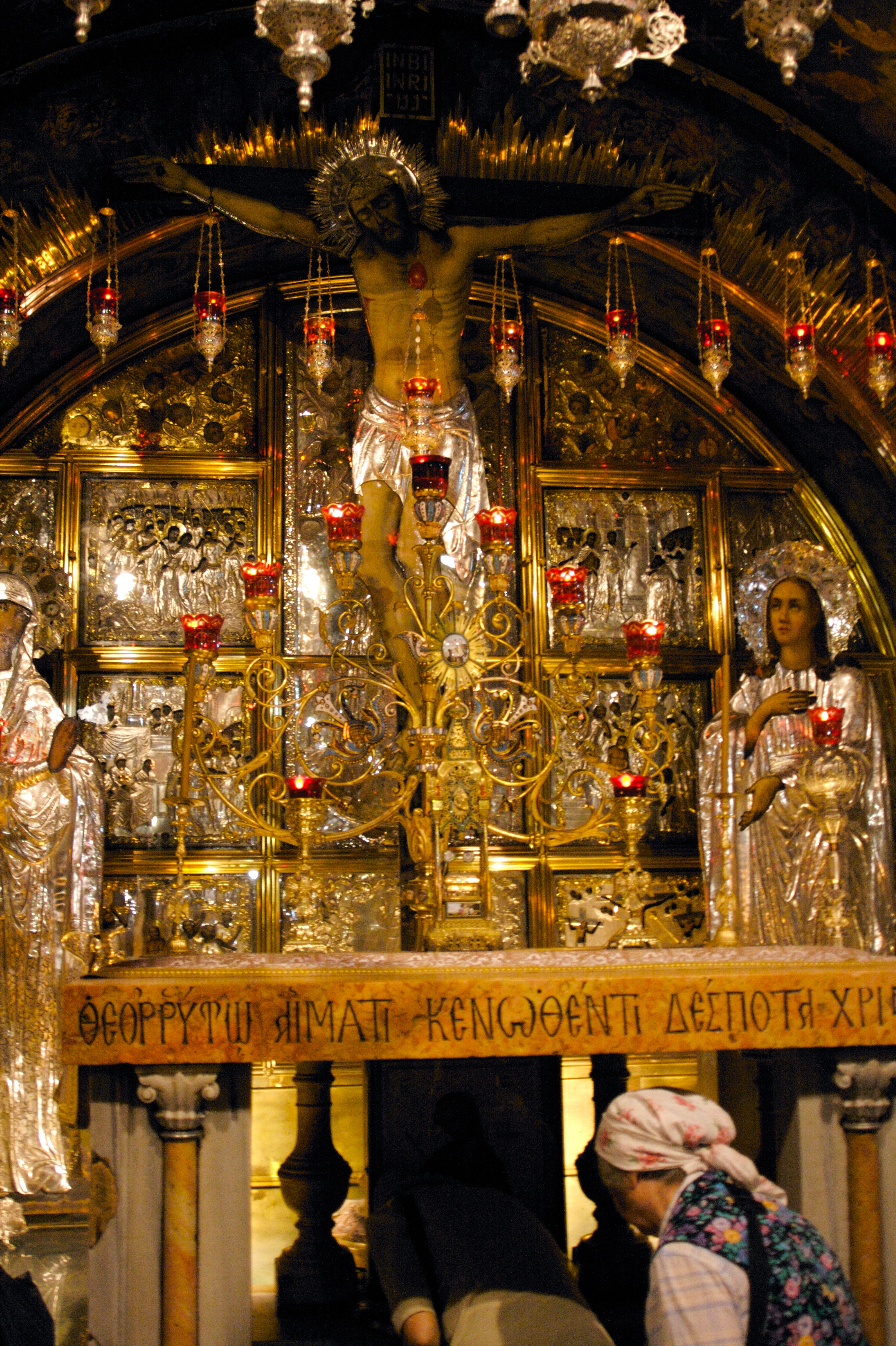
Count 'em: seven on the top.
Seven is conspicuous throughout the tradition of the Church, being found in Scripture and in the celebration of sacred rites. According to Genesis, God created the world in seven "days," the last of which He did not create anything, but instead rested and sanctified that day by His rest. He dedicated the day to Himself. Seven is also reiterated throughout the Apocalypse of St. John: seven candles, seven spirits, seven seals. In the old rite of Papal Mass, acolytes set seven candles in front of the altar, imitated in the Lyonese rite. The "Tridentine" Roman liturgy, a pontifical Mass celebrated by a bishop in his own diocese mandates seven candles on the altar rather than the conventional six, or whatever the rank of the day dictates. Many Byzantine Holy Tables will support a tabernacle ornamented with seven candles, too.

Seven is perfection. It is fulfillment. It is rest for God, but not for man. By sanctifying the seventh day unto Himself, God made Himself man's duty on that day rather than the work he earned by the merit of his sin. The seventh day is meant for the worship and adoration of God, to plead for the forgiveness of sins and for clemency in all man's needs. 

Man's Fall impairs his worship of the Creator. Abraham's summoning to the mountain initiated the Jewish tradition of sacrificing small animals, vital sources of sustenance—milk, meat, textile materials, for God's ignorance of sin. The Law came through Moses. Grace and Truth—and the realized remission of sin—came through Jesus Christ. Christ's death on the Cross remitted the sins of those who follow Him, just as His Resurrection from the dead empowered His Apostles to heed the command to repeat the offering of bread and wine "for the anamnesis of me," revisiting, not repeating, His sacrifice.

The significance of Seven did not end with the Cross, rather it realized it final potential and deeper meaning. St. Paul's much abused adage "the letter kills, but the Spirit gives life" (2 Corinthians 3:6) excuses most Christians from meeting their duties by dismissing their potential detractors as legalists. The real meaning of this phrase could not be further from its modern reception. The letter, meaning the Law of Moses, was a meeting point between the Divine plan and man's fallen nature. Since the Passion of Christ and the coming of the Holy Spirit, the Law has become antiquated in light the coming of the Spirit. Adherence to the Law yields death, adherence to the Spirit yields life. The significance of the signs of the Law did not vanish with Christ; they became more powerful.

God's reservation of the seventh day makes Seven a Temple number, both in the Old Testament and in the New. A young animal was fit for sacrifice when it was seven days old (Exodus 22:30). Visibly there were seven lamp stands in the Temple, an image continued in the Apocalypse of St. John. In a passage of Scripture read at Mattins for the feast of All Saints, the writer described the court of the Almighty:
"And from the throne proceeded lightnings, and voices, and thunders; and there were seven lamps burning before the throne, which are the seven spirits of God" (Apocalypse 4:5)
God no created nothing new on the seventh day, yet Genesis delineates the end of Creation on the seventh day. The seventh day is perfect, it is completion. The use of seven in the Apocalypse may relate a vision to the reader, but it may also communicate to the reader that the eternal liturgy in the heavenly court is the Christian's final destination, his perfection, his fulfillment. If true, this imbues the liturgy with an apocalyptic nature, a preview of what eternity is supposed to be. The tradition of the seven lamps remained a feature of Papal Mass until Paul VI discontinued the rite in 1964. The use of Lyon retained the tradition until adopting Pope Paul's reforms. Greek churches still often display seven candles above the altar. The recent loss of this tradition does not neglect what appears to have been the conventional interpretation of this number by the Church according to her sacred rites, that adoration of God in sempiternal beatitude in the un-ending end of the faithful.


Alas, Seven is succeeded by Eight, and it is time to move on.

If Seven is clear and explicit, Eight is hinted and implicit. Christ entered Jerusalem on Palm Sunday the day after the Sabbath and was put to death the day before the Sabbath. A good Jew, he rested on the Sabbath and rose the next day, a unique and extraordinary event in human history never to be repeated. Our Lord did not rise in a new body, nor the old as it was, but in the old body glorified, so resplendent and transformed that His own Apostles did not recognize Him. Understanding this, St. Paul writes to the Philippians, "Who will reform the body of our lowness, made like to the body of his glory, according to the operation whereby also he is able to subdue all things unto himself" (3:21). Christ rose on the first day of the new week, a new first day of Creation, in the "body of his glory."

"Our Redeemer's visible presence," wrote St. Leo the Great, "has passed into Sacraments." The Sacrament most readily associated with the Resurrection and with the renewal of mankind is Baptism, which St. Augustine often calls the Sacrament in his Confessions (my emphasis). Baptism is the Sacrament of regeneration, where what Christ did physically comes to the catechumen spiritually now and physically in eternity.

The great ancient feasts, Greek and Latin, have two commonalities: an extended liturgical celebration and the celebration of Baptism. Pascha, Pentecost, and Epiphany/Theophany are the greatest of all feasts in the Church, feasts liturgically observed for an octave of days and which relics of the older practice of Baptism on the feast vaguely remains. Pascha and Pentecost were preceded by a vigil in older times that became its own liturgical day in the middle ages. On those vigils, Baptism is still celebrated with the reading of prophecies, the blessing of water, and the Sacrament itself. Epiphany/Theophany no longer sees Baptism on the day of its celebration, but water is blessed and distributed by vials or by sprinkling among the faithful there gathered.
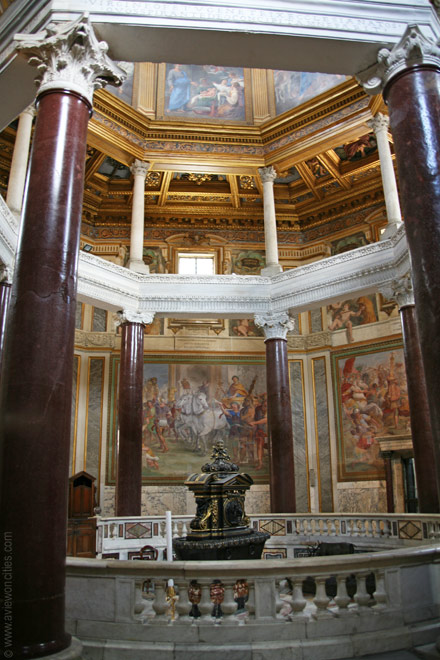
Lateran Baptistery
The extended liturgical celebration of Christ's regenerative mysteries is the octave, the eight day long week. In lesser feasts, the octave day repeats the feast day. In these three feasts, however, the octave day is unique from the feast itself. Pascha has Low Sunday (Thomas Sunday for the Greeks). Epiphany/Theophany is capped with the Baptism of the Lord (or a leave-taking in Byzantium). Pentecost does not have a strict octave day, but its semi-festive vigil can reasonably make Ember Saturday an octave day; Trinity Sunday could also be read as an accidental octave day, celebrating the complete revelation of the Trinity, the Third Person of Whose revelation was observed the prior week (Greeks do not have a formal octave, but they do call the week after Pentecost Sunday "Trinity Week," during which there is no fasting).

Eight not only appears in liturgical times of Baptism, but also in space. Baptisteries traditionally have eight sides, again signifying the Resurrection on the eighth day of the week, the first day of the new Creation. Even smaller churches without dedicated Baptisteries often possess an octagonal font. The local FSSP parish—despite the prevalence of plaster statues, blue wall paper, and young St. Joseph—has a proper Baptistery, octagonal in shape.

For the Jew, the only eighth day was the eighth day of the Feast of Tabernacles. Those under the Mosaic Law would build tents of palms and offer sacrifices for seven days, recalling the cycle of Creation. The entirety of the seven days was an extension of the Sabbath, the seventh and perfect day, wherein no servile work was performed. On the eighth day, a solemn celebration would resume and sacrifices would be offered communally. "On the first and eighth day shall be a sabbath, that is a day of rest" (Leviticus 23:39). This was a penitential cycle, attached to the Day of Atonement, the day the people would project their sins onto a "scapegoat" and offer sacrifices according to their means. For the Christian, the Sacrifice has been made by Christ, the Lamb Who took on the sins of the world. The celebration is a celebration not only in the sense of observance, but also in joy.

Unfortunately, the significance of Eight, octaves, and Baptism became obfuscated by the decline in liturgical observance in the Latin Church and the suppression of almost all octaves, save three, by Pius XII in 1955. Paul VI would unwittingly suppress Pentecost in 1970, after his mentor, Pius XII, removed its vigil and Baptism rites 15 years earlier.

Seven and Eight are sequential, as the fullness of Creation in one gives way to the new Creation in another. God created us to His end, from which we fell away on the seventh day and to which He restored us on the eighth. We are meant for Him, both now and forever. There is no new revelation, no new progression along the Biblical number line. We live in the final age, the last aeon (one could write a post on the meaning of "unto the ages of ages" in prayers). There will be no more progression in our knowledge of God until the end, when we will no longer see Him gradually lifting the veil, but instead see Him and He is. To end this numeric article, Msgr. Alfred provides the faithful with another mathematical insight on the Almighty in the first chapter of We Believe:
"The analogy or comparison which I personally find useful is to think of eternity as the point at the center of a circle. You know from your geometry that a point has no extension in space: it simply exists. In the same way, eternity has no extension in time: it simply exists. When we say of Almighty God in our limited language that He was, is and always will be, it would be far more correct to say—since in eternity there is no succession of events—that He always is. Now, if you think of time as the circumference of that circle, with every single point on the circumference equally and simultaneously present to the center, you may see what we mean when we say that the whole of time is likewise equally and simultaneously present to Almighty God. But to us the succession of events in real indeed: we are successively encountering what is simultaneous to Almighty God."
Seven and Eight can make you a saint! A happy octave day to all.

Thursday, November 5, 2015

Maria Goretti the Merciful


Two days ago I made a quasi-pilgrimage to visit the major relics of Maria Goretti in Dallas. (I can't honestly call a 20-minute drive a real pilgrimage.) Strangely enough, the relics were not displayed at St. Maria Goretti parish, but at the even more architecturally modernist St. Monica.

I have visited relics before, but never any that drew such a large crowd. The line when I arrived lasted about an hour. At other times of the day pilgrims were reporting 3-4 hour waits. A shuttle was bringing people over from a local Protestant church that had offered its parking lot for use. One lady helpfully told those standing in line that they could easily skip ahead and sneak in through another door.

On the approach to the church, I was accosted by some well-meaning devotees selling books and laminated prayer cards. The narthex (lobby?) featured an audio loop of a priest telling the story of St. Maria's extraordinary forgiveness. Inside the church, Knights of Columbus divided us into two efficient lines. Accosted again by devotees insisting that I take a last-minute prayer card, I offended them greatly by turning them down, all while also trying to ignore the very loud video presentation playing on the projection screens. Two Ladies of the Holy Sepulchre—their Knight husbands apparently taking a smoke break—stood elevated in the sanctuary overlooking the steady stream of pilgrims.


Maria herself was a small girl when she died. She was murdered during an attempted rape at the age of eleven by a twenty year-old man. Her hair is slightly lighter than it appears in most paintings and statues of her. Everything except her hair is covered while resting in the reliquary.

While praying in the pews after venerating the relics, I reflected on the content of the presentations which still bombarded everyone inside the church. Specifically, there was much ado about Maria's pious forgiveness of her rapist while she was dying, and no talk whatsoever about her refusal to submit to his impurity. What a change from the little girl's canonization ceremony, which concluded with P. Pius XII asking the crowds of youths, "Young people, pleasure of the eyes of Jesus, are you determined to resist any attack on your chastity with the help of grace of God?"

Resistance to evil is no longer in vogue; forgiveness—whatever that now means—certainly is. And if the recipient of that forgiveness is a pedophile rapist? What better way to herald in the Extraordinary Jubilee of Mercy?