Showing posts with label John XXIII. Show all posts

Friday, January 15, 2016

HJA Sire on the Recent Church

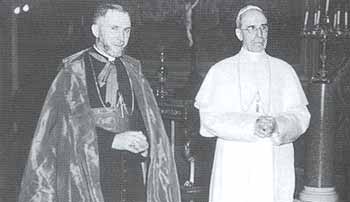
Bookends of an era look at each other.
Fr. Hunwicke continues to plug for H.J.A. Sire's Phoenix from the Ashes, a book about the decline and aspiring restoration of Western Catholic culture. While the book begins very factually and Eurocentric, it develops a broader and spiritual view of the Church and her influence on the West. I have only recently begun the book, but Sire's comments on the Church's last 120 years demand some reflection:
"When Leo XIII died in 1903, distinct progress had taken place in the intellectual life of the Church. Nevertheless, the revival of Thomism had among some an unintended consequence. These fell into treating St. Thomas's work not as a philosophical system but as a store from which infallible answers were to be extracted on any subject. While some were thus making Thomism the basis for innovative thought, others made it into a system that was unlikely to convince minds not predisposed to accept it. Partly for that reason, the extension of the Thomist approach beyond seminaries and its acquisition of a real influence on contemporary thought was not achieved." (137)
"The integrist frame of mind, now as a hundred years ago, may be defined as follows: its exponents are clericalist in their sympathies, and they were also strongly papalist until events since the 1960s forced them to shift their position. Their outlook is distinctly Western and relatively modern, tending to see the period from 1850 to 1958 as the norm of Catholic practice. They regard popes Pius IX, Pius X, and Pius XII as the models of what a pope ought to be, but (with due respect for their sacred office) really look upon Leo XIII and Pius XI as rather letting down the standards of papal authority. They show little sympathy with political and social pragmatism in the framing of religious policy. In philosophy, they hold to Thomism as the bastion of orthodoxy, to the extent of considering any lapse from the pure word of St. Thomas as inherently unsound." (139)
 "What can be said, however, was that [Pius X's] measures [against Modernism] were over-influenced by conditions in Italy, where Modernism was a pretentious, elusive, and even underhand phenomenon, and where there was, in parallel, a strong need to tighten standards in seminary training. In Italy, his measures may have been successful, but in the world as a whole they must be considered to have had a narrowing effect on the clerical intellect. Theologians need to be lean greyhounds, seeking out heresy and hunting it down; instead they became fat lap dogs, yapping foolishly at the enemy beyond the window. The results of Pius X's policy were seen in the Second Vatican Council, when two thousand bishops who had solemnly taken the anti-Modernist oath at their ordination were unable to recognize Modernism when it jumped up and bit them" (140)
"Journalistic opinion, remembering as always nothing beyond last week, worked to give [John XXIII's] reign the appearance of a new era, a distortion that has imposed itself ever since; but at the time those who remembered Pius XI and Leo XIII would have regarded his pontificate, apart from a certain naive optimism that distinguished it, as a return to a familiar style. Essentially, the reign of John XXIII is in the tradition of the period since 1814." (145)
"Linked with this clericalism was the dominance of a seminary-bound school of theology, losing something of the human fullness of earlier centuries. Thus, in natural theology there was a certain over-intellectualisation of the understanding of God, which lost sight of the potency of love as a divine attribute; akin to it, an over-spiritualisation of the doctrine of the Eucharist, obscuring the reality of physical union with Christ." (147)
Sire is fond of the post-Napoleonic period and even equates it with the revivals of the Middle Ages and Counter-Reformation, but also readily acknowledges that its limitations and drawbacks impeded it from influencing society and the Church in the same way.

The below documentary could be a primary source document for Sire's last observation. Ushaw, sadly, had to close a few years ago for lack of students. It had over 400 when this footage was filmed.


Friday, July 11, 2014

Book Review: Undermining of the Catholic Church UPDATED

"There are only two books worth reading on the Traddie situation," a correspondent, who knows who he is, wrote me to over a year ago. "Dr. Hull's book and Undermining of the Catholic Church by Mary Ball Martinez."

Traditionalists and all stripes of Catholics have access to volumes upon volumes of material to read, published or online. The best sources are of course Scripture, the liturgical texts of the Church, and the Fathers. These sources tell us not just what to believe, but more importantly how to believe. And there are other useful books, works, and lecture series for understanding theology, liturgy, history, and philosophy. Many of these works have been reviewed on this blog, particularly ones pertaining to liturgy (Dr. Hull's book, Kavanagh's lectures, and Laurence Hemming's works among them). And yet after extensive reading and private research I must agree that, as far as the "Traddie situation" is concerned—the 20th century revolution in the liturgy and the political agenda of the Roman Church—The Banished Heart by Geoffrey Hull and Undermining of the Catholic Church by Mary Ball-Martinez are still the best books to read. Other books touch related material, but only these works address the matters at hand directly.

I have alluded to Martinez's first book, From Rome Urgently, which was a compilation of articles she wrote in the 1970s. Undermining is something of a sequel to From Rome, with greater and clearer rumination on the status of the traditionalist movement and limpid hindsight into the beginnings of the revolution in the late 19th century. 

Undermining, which can be read and downloaded free of cost here, has largely been ignored by all quarters of the Church because its thesis and narrative do not fit anyone's agenda. The liberal crowd may have agreed with its facts and found the result of the revolution positively delightful. The neo-Ultramontanists who we now identify colloquially as the "JP2 generation" would find the criticism of the renewal outright scandalous. And sedevacantists, FSSPX traditionalists, and "indult" traditionalists could not stomach that she exposed Pius XII and the early 20th century Vatican for what they really were. Consequently, her book enjoys a dedicated, narrow following like 1980s "B films."

The Thesis

Martinez's begins on the vigil of Pentecost in Rome in 1971. The Second Vatican Council closed six years earlier. Pope Paul was midway to the end of his tragic reign. Archbishop Lefebvre was not yet ready to declare himself publicly. And Catholics were gathered and praying the rosary by the thousands under the windows of the Apostolic Palace for the return of the old Mass. How did the Church arrive at this odd point? With Mystici Corporis, Martinez says. MC was the first and most vital step in dismantling the legalistic understanding of the Church that dominated the Counter-Reformation and replacing it with a model based on human beings, an opinion shared by Avery Dulles, the Jesuit Cardinal and theologian.  It was the first domino to fall, culminating in the long anticipated Council that would complete a revolution started in 1903.

In 1903, Martinez asserts, Cardinal Rampolla was elected or nearly elected Pope, only to be vetoed by the Polish cardinal under the auspices of an obscure and long forgotten treaty. The cardinals then flocked to the patriarch of Venice, whose first decision as Pope was to rescind all veto privileges. Rampolla, now saddled with the less glamorous position of Secretary of the Holy Office, spent his time training three proteges who would make his humanistic vision for the Church a reality: Giacomo della Chiesa, Pietro Gasparri, and Eugenio Pacelli. Della Chiesa had no sooner been made a cardinal than he was elected Pope Benedict XV and began to undo his predecessor's measures against modernizations, including the dissolution of Pius X's secret informant network. The First World War threw a wrench into the clique's immediate plans. When Benedict XV died prematurely the powers that were found themselves in a debacle. Pacelli was still too young and Gasparri was un-electable. As a solution they elected an aloof academic in Pius XI, hitherto the Vatican Archivist. It was during this papacy that things began to turn.

The Secretariat of State office, run by Gasparri and assisted by Pacelli, promoted policy antipodal to the teachings and desires of the Pope of the time, opposing and undermining Action Francaise and the Catholics in the Spanish Civil War in favor of French secularists at the same time the Pope was talking about the "social reign of Christ the King," a long favorite subject of traditionalists. The most reprehensible betrayal was that of the Christeros, wherein a civilian army fighting against a humanistic and even Masonic (?) president in Calles with no support from the upper clergy achieved absolute victory and were then convinced by Rome to make an un-conditional surrender and subject themselves to slaughter.

During this same period the paradigm shifted within academia and the religious orders, often with tension between the younger and older generations of priests. The Holy See, far from reigning in excesses and deviations from the accepted teachings and outlook, often aided and abetted these digressions. In the case of Teilhard de Chardin the Society of Jesus prohibited him from publishing and obstructed him from going on the speaking circuit. The Secretariat of State however, at the behest of Pius XII, arranged for him to give lectures in occupied France during the rule of the Vichy government. 

During the War Pius XII aided Jewish efforts to escape from the Holocaust and Hitler's death camps, but almost entirely ignored the political difficulties of the Church during this era. His foreign policy consistently stood against authoritarian governments that were either indifferent to Catholicism or in favor of it, but he sided with the humanists and Marxists. He permitted the Vatican to be used an an intermediary point in the War for discussions between the Allies. And he spent copious time during the War smuggling Jews from Italy into British Palestine on the eastern coast of the Mediterranean. After the War the early seeds of liberation theology and the Charismatic movement began to sprout above ground with the support of Countess Pacelli, the Pope's sister.

The time after the War was spent consolidating power and loosening discipline. The Biblicum was created in Rome to give a presence in Vatican academia to the progressive movement. The rules around the celebration of Mass and reception of Communion were relaxed to a point envied today, but risible to previous generations. And the promulgation of the dogma of the Assumption and the creation of a commission to reform the liturgy centralized spiritual authority around the Pope. Martinez at one point boldly asserts that the canonization of Pius X was part of a barter with the baroque-minded Vatican establishment to begin introducing the new liturgy, particularly the new rites of Holy Week.

Aware of his age, the Pope sent his protege to Milan, but died before making his successor a cardinal. The affable Angelo Roncalli took the papacy for a few years before Montini could become Pope in 1963. From that point on the narrative becomes familiar. We all know about the Council, the branching and flowers of the roots planted half a century earlier.

The middle section of Undermining is a series of vignettes, short biographies of the Popes from John XXIII until the then-incumbent John Paul II. Paul VI's segment is especially poignant. He was an early revolutionary, encouraging students in the Red Brigade to oppose Mussolini, who, although a bad man, was tolerant to the Church in ways unseen since before the 1840s. Later in life he may have lamented that the Red Brigade had killed his dear friend Aldo Moro, the product of the center-left political party his father had party and Pius XII advanced decades prior. He died a broken, unhappy man. Also interesting, if only for historical reasons, is her honest biography of John Paul II. She summarizes his education and seminary formation in Poland after the Russian invasion and his time at the Belgian college in Rome dispassionately and with concision. This was revolutionary in 1991 because most people were pretending he was an impoverished miner who studied at an underground seminary amid Soviet persecution. 

The last segment of the book contrasts sharply in certain aspects with From Rome Urgently. Previously she was brimming with excitement about Lefebvre, the militancy of the traditionalists, and the devotion of the faithful. She maintains these qualities in Undermining, but with considerable reservation. She wonders if Lefebvre missed his chance to make a difference in 1976 by obeying the Pope's command to bite his French tongue. The grassroots traditionalist movement collapsed and all that was left was the FSSPX and a few independents—something that will be explored in our upcoming series on the early traditionalists.

Short-Comings

Undermining is not a book without short-comings, the three greatest of which are: the lack of citations, the proclivity for conspiracy-theory language, and a lack of historical perspective.

The lack of citations is the most arrant deficiency in this work. Martinez was a journalist, writing for decades as the Vatican correspondent for National Review, the Wanderer, and other periodicals. She was not a professional historian and did not document her work very well. Much of what she learned could be documented with extensive and painful research though. I came to trust Undermining from personal experience. My first major university research project was on the role of the Holy See during the Second World War. What Martinez surmises about the Pope's efforts against the Nazis and Holocaust I corroborated independently years before encountering her book using primary information sources (journals, news articles, and records) as well as some scholarly polemics. That she recorded this information favorable to Pius XII during a time before a cottage industry for defending his War record emerged (Rabbi Dalin, Sr. Marchione etc) and given her un-favorable view of the man impressed me.

The second issue is also significant. She speaks of "the Masons" and like groups as though they are an organized secret government with a dedicated head—as though the cretins who mangled the Church in the 20th century and who are mangling Western governments and economic policy now are capable of such things. She does at points clarify what she means, but often lapses into conspiracy theories again. At one point she wrote that Pius XII, Paul VI, and Benedict XV should not be considered conspirators in the common understanding of the word. These men did not hold round tables discussions on how to undermine the Church deep within the walls of a lodge. These men acted in accordance with their rearing and education, which involved a different outlook on the Church than the one received. She does claim John XXIII and Pius IX (you read that right) were Masons, but does not expound upon the supposed significance of this too deeply.

The last pitfall is her lack of perspective. Mystici Corporis was a departure from the legalistic, cold understanding and corporate structure of the Catholic Church that emerged during the Counter-Reformation. Where she errs is in stating that the teaching was entirely novel. Indeed, it is well rooted in the letters of St. Paul, the sermons and treatises of the Cappadocian Fathers, and in the ecclesiology of Lateran IV. The footnotes and citations in MC easily verify this. Where she was right was in suggesting that the point of MC was to confuse theologians by introducing an understanding of the Church based on human beings and mysticism. Indeed, the idea of the Church as the Body of Christ bound up in the Sacraments is the teaching of the Church Fathers East and West as well as that of the Greek and Latin liturgies. The idea of the mystical Body of Christ was quite novel, and the focal point of this mystical body would be the Roman Pontiff. Martinez, with more familiarity with the deeper traditions of the Church, might have realized that MC was about spiritual centralization and taming precocious revolutionaries, not about introducing unheard of doctrines.

Final Words

Undermining of the Catholic Church by Mary Ball-Martinez is an essential work to study and parse for those who seek to understand the political changes in the Vatican that wrought decades of internal revolution in the Church of Rome. For all its problems, Undermining is the only book that connects the dots which have been hiding in the plain sight of traditionalists for years.


As an aside, if anyone wants to know how to access her first book, From Rome Urgently, email me.

UPDATE: My email address is theradtrad@gmail.com.

Thursday, April 24, 2014

Of Impending Canonizations (and one that is not happening)

In a matter of days Pope Francis will canonize two of his many mis-understood 20th century predecessors, declaring them saints fit for universal veneration and examples given their state of life. I generally shy away from blogging about politics—and that is precisely what these canonizations are—but the significance of this event warrants some thoughts.

Why are John XXIII and John Paul II mis-understood? Because modern people think them more important and influential in the modern Church than they really were. In principle, I am entirely indifferent to the canonization of Papa Giovanni. He was elected to do three things: 1) make Pius XII's true successor, Msgr. Montini, a cardinal 2) call Pius XII's Council and 3) die. In some sense he was the first pope since Gregory XVI to live up to expectations! So why has the Roman bureaucracy undertaken effort to canonize John? It is an attempt to canonize a particular narrative and aesthetic of the Second Vatican Council.

When he died on the feast of the Transfiguration in 1978, ABC news reporter Stuart Laurence said  of Pope Montini "Romans never really in fact warmed up to Pope Paul because he was not gregarious and grandfatherly like his predecessor Pope John. John, of course, was loved. Pope Paul was only liked." Pope John represents a kinder, gentler means of looking at the transitional years of the Church than the harsh, turbulent years of Pope Paul. Paul VI's pontificate was more the reality of the transition, with the drop of Mass attendance in America (it plummeted in Europe decades earlier), the fallout over Humanae Vitae, the open resistance of Lefebvre, the failure of ecumenism and ostpolitik, and the decay of the Vatican's potency in political affairs. John's pontificate, for those lacking in perspicacity and historical knowledge, saw a fleetingly vibrant Church—rich in faith and dignity—opening itself up to a changing world with open arms. Rome has chosen to canonize a strong Church entering renewal rather than a long collapsing Church emerging from self-inflicted chaos. They have chosen to canonize a fuzzy, paternal pope rather than a morose one full of regret. The canonization might actually make Vatican II into "Pope John's Council" rather than "Pope Pius' Plan" and "Pope Paul's Burden."

The other canonization has nothing (I cannot emphasize this enough) to do with Vatican II and everything to do with crowd pleasing. He traveled everywhere. He touched everybody. He smiled for everyone. He was something for ever Catholic to behold. John Paul II was the first media superstar pontiff. He trotted the globe over the course of four decades and cemented himself into every living person's memory for good or ill. Two generations of Catholics (those born in the '60s-70s and those born in the '80s-90s) and Catholic priests know John Paul as their pope. He was against abortion. He had a warm, vague, way of inspiring confidence for people of all walks of like while maintaining the tenets necessary for orthodoxy. Conservatives could point to him as a living example of "renewal": he was clearly on board with many brands of spirituality, he favored the new liturgy, he was pro-life, he was against Russian Communism, he was friendly with people of other walks of life, and he had the occasional humorous moment when he defended orthodoxy, such as forcing a monarch to receive Communion on the tongue. He was everything a college student wants in his campus chaplain: Catholic, fun, and not too demanding.

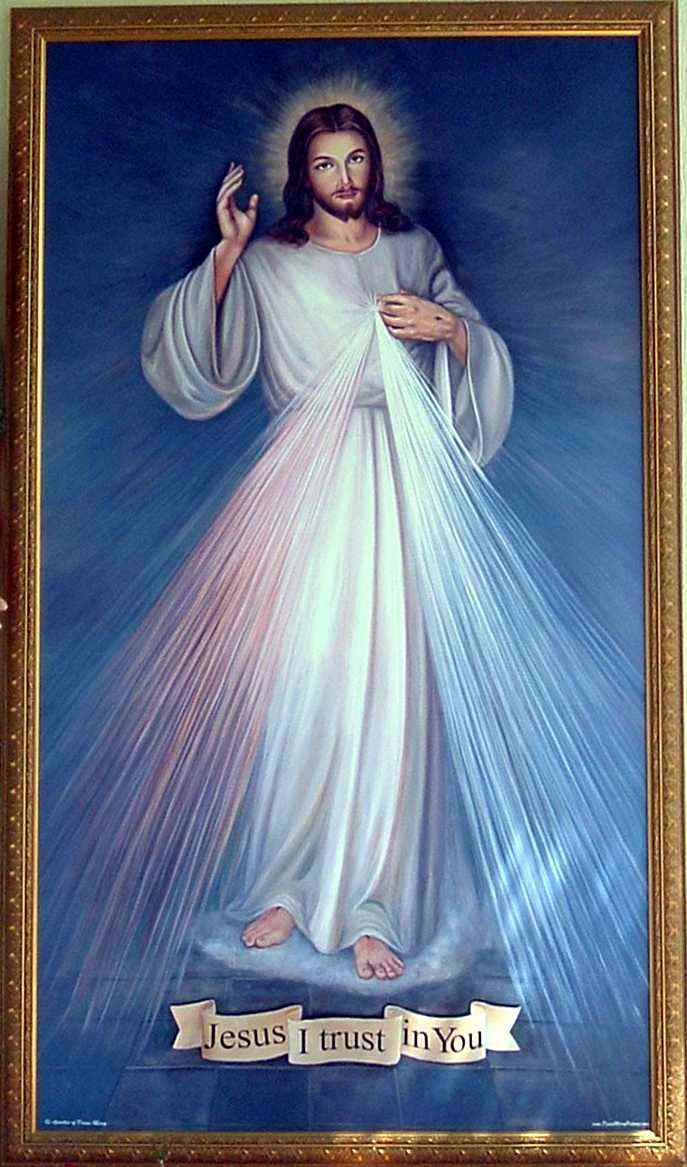
Even Traditionalists got something out of him. Many favorite saints in the Traditionalist milieu—Padre Pio, Juan Diego, and Maximilian Kolbe—were canonized by John Paul. He also gave both domesticated Traditionalists and neo-conservatives the Divine Mercy devotion (never quite understood it or the Sacred Heart). Indeed, National Review religion editor and ex-priest Malachi Martin succeeded in convincing many Traditionalists that John Paul really did believe everything they did and with the same sensus fidelium, hence the 1984 indult and attempts to smooth out relations with the potentially schismatic Lefebvre. He even invoked infallibility against women taking priestly orders!

The truth about the man is probably somewhere in the middle. He was elected because he was a charismatic man who could appeal pastorally to Catholics and non-Catholics while not disturbing the Vatican political machine, which continued to run the administrative side of the Roman Church into the ground. It is likely the same reason the prior pope and namesake of Wojtyla was elected.

The canonization of John Paul II will be an act of self-affirmation for hundreds of millions of modern Catholics following his unusual synthesis of doctrine, engagement, and outlook. "My pope is a saint," the average Mass-going Catholic between ages 20 and 50 will say in a manner akin to answering a question out of a self-help book. Whether he was actually a good pope is entirely irrelevant. Rome wants to keep its young faithful and young priests content. This, like the canonization of Celestine V by Rome and that of Emperor Constantine by Constantinople, is highly political in its motives and meant to continue to steer the barque of Peter in a particular direction.


Which brings me to my last point: the canonization I hope I never see. Readers know exactly who I mean. Given that yesterday's reformers are getting their canonization with John and today's youth are getting their's with John Paul, Traditionalists (particularly here, here, and here) are asking "Why not Pacelli?" Religiously and historically I cannot see any reason to canonize the man. His papacy was one of the all-time worst, certainly the worst since the Renaissance, replete with an immense relaxation of discipline, an undermining and re-programming of priestly education, friendly relations with Communists (except when it came at the cost the Christian Democratic party in Italy), liturgical destruction on a scale—at the time—unseen, bureaucratic centralization, and he put the people in place to finish the revolution which he began. Politically speaking his canonization would make even less sense: he wore the tiara, defined a dogma, and issued a large volume of encyclicals that go into the Magisterium file. Liberals see Pacelli as the last of the old guard while neo-conservatives have no substantial acquaintance with the popes before John Paul. Who, other than American and FSSPX-affiliated Traditionalists, gains from the canonization of Papa Eugenio?

American Traditionalists are fond of Pope Pius because the American branch of the Church seemed to be growing at an exponential rate: more vocations, more seminaries, more parishes, more converts. As Cardinal Spellman said, in a hundred years America would be a Catholic country. Then came the 1960s and the "fresh air" of the Council blew over the house of cards that was American Catholicism. The numbers touted by American Traditionalists are quite ignorant. The growth in the 1950s and 1960s was due to the Baby Boom generation, progeny of World War II veterans and their wives, reproduction at a rate unseen since the 19th century. Yet many of these Boomers were second and third generation descendants of immigrants and, often, practicing the faith out of cultural obligation. The first generation Italians would go to Mass and carry on the traditions of Catholic Italy with conviction. The second generation would continue the same out of devotion to one's parents. The third would do so out of habitual custom, far removed from the source of custom and devotion. American Catholicism had no firm roots. It was in many ways Catholicism-lite made for a protestant country: low Masses, devotions, and church organizations allowed for the "personal relationship" with God emphasized by protestants while upholding the administrative and communal side of the Church. What was missing was a strong foundation grounded in liturgy, martyrdom (very little devotion existed to the North American martyrs), local traditions, and episcopal authority. The American Church's structure was planted during the mid-19th century, when the previously mentioned trends were in vogue. The Church in Europe had long collapsed. America, demographically vibrant but spiritually frail, shattered at the shock of the Council. The growth had nothing to do with Pope Pius and its end had nothing to do with Gaudium et spes. It was about the young tree of American Catholicism that was turn up and was exposed to have not taken root. Canonizing Pope Pacelli would add him to the museum of 1950s American Catholicism. Nothing more.

The canonizations of Popes John and John Paul indicate a Vatican ready to affirm itself and the psychological needs of its devotees. For the same reason, the Rad Trad thinks a canonization of Pope Pius quite unlikely, unless Francis is overcome with nostalgia for the pope of his youth and early formation.

Alright. Enough politics for a month or two. Time to do something spiritually productive. Christ is risen after all.

Saturday, January 18, 2014

Evangelii Gaudium 247 & the Good Friday Prayer for the Jews


Pope Francis' latest work/document/encyclical/bull/exhortation/stream-of-consciousness, Evangelii Gaudium, has in some circles re-ignited the 1960s and 1970s debate concerning the [in]validity of the Old Covenant. As the Byzantine Paschal Gopsel pericope says "The Law was given by Moses; grace and truth came through Jesus Christ" (John 1:17). The words of St. John are enough for me on this matter. A better, and more detailed, summary of the Church's general outlook on modern Judaism and the idea of Covenant can be found in Fr. John Hunwicke's series on the Vatican II document Nostra Aetate, which, Hunwicke reminds us, has not earned the wrath of the SSPX, a group more than willing to pounce upon any perceived deviations within the documents of the most recent Church council.

On an entirely unrelated note, the first time I heard of Evangelii Gaudium was in the confession box at a local parish. I had to confess a sin concerning the lending of money at interest. The priest, a professed union member, spent five very long minutes telling me about "the Holy Father's latest letter. In it, and it's hundreds of paragraphs long, he really lays out how everything in our society and in our economy is just so unfair." I got three Hail Mary's.

I mention the papal document in order to opine on a liturgical and theological topic that come to my mind once and year and which I have never considered "on paper" before now. One reason is absence of opportunity. Another is that my judgment on this matter has evolved over the last four years or so. The matter is the Good Friday prayer for the Jews that existed mostly prior to Papa Ratzinger's change in 2008 and Papa Roncalli's change in 1960. The prayer that caused so much consternation is as follows:
Orémus et pro pérfidis Iudaeis: ut Deus et Dóminus noster áuferat velámen de córdibus eórum; ut et ipsi agnóscant Iesum Christum, Dóminum nostrum.
Omnípotens sempitérne Deus, qui étiam iudáicam perfídiam a tua misericórdia non repéllis: exáudi preces nostras, quas pro illíus pópuli obcæcatióne deférimus; ut, ágnita veritátis tuæ luce, quæ Christus est, a suis ténebris eruántur. Per eundem Dominum nostrum Iesum Christum filium tuum, qui tecum vivit et regnat in unitate Spiritus Sancti, Deus, per omnia saecula saeculorum. Amen.

Unlike the other solemn intercessions on Good Friday the clergy and people make no genuflection between the announcement of the intention and the actual collect.

Initially I did not think this prayer bigoted, but I did consider it unnecessarily inflammatory given the use of the term "pro perfidis Iudaeis." That all changed when then-Pope Benedict issued a shiny new prayer for the Jews to be used during 1962 rite Good Friday services. A friend of mine reacted positively to the new prayer, saying it brought us away from "tribal hate" and towards a more brotherly outlook on our antecedent religion. At this point I began to re-consider my position. Benedict's prayer, although different from the traditional one, at least asks for conversion, in stark contrast to the vague platitude in the Pauline Missal's Holy Week.

The first clue in my re-evaluation was the true contextual meaning of that term "perfidis," which does not mean "perfidious" in the modern understanding (wretched, wicked, evil), but rather "faithless." This ought not be anti-Semitic. It is merely a deduction. Anyone who does not believe in Christ lacks proper faith.

The next, and most profound, point makes the loss of this prayer a liturgical, historical, and theological travesty. The intention asks that God might "remove the veil from their hearts," which the collect proper continues to petition that the Jews might "acknowledge the light of Your Truth, Which is Christ" and that they may be "rescued from their darkness." To understand the deeper meaning and truth of this prayer we must recall what happened at the end of the Crucifixion.

"Jesus, when He had taken the vinegar, said: 'It is consummated.' And bowing His head he gave up the ghost" (John 19:30). In tract 119 St. Augustine writes "What, but all that prophecy had foretold so long before? And then, because nothing now remained that still required to be done before He died, as if He, who had power to lay down His life and to take it up again, had at length completed all for whose completion He was waiting." Our Lord's death on the Cross completes everything the Father promised in the Old Covenant and which He appointed His Son to do for our sake. The prophecies and promises are, at this point, fulfilled. Fulfillment, in the Church, does not mean something finished. Rather it means something brought to fruition.

Consequently, the covenant God made with the Jews did not vanish entirely, but became something else, something greater and, as the angel told the shepherds when He was born, a great thing "for all peoples" (Luke 2). The God Who dwelt only among the Jews and Who only revealed His intentions to them and Who only acted among them now dwells and reveals Himself and acts among all people and for the good of all. "Salvation is of the Jews" (John 4:22), but not limited to the Jews. The Old Covenant, now something greater, ends as it was. The Temple veil "was rent in two from the top even to the bottom" (Matthew 27:51). The veil, which concealed the awesome qualitative presence of God within the Temple, is entirely torn when a new, and greater, covenant is sealed in the Blood of Christ. Here is a New Covenant for all people. God, no longer hidden behind the Temple veil, is now accessible to all people. St. Paul reflects on this in his epistle to the Hebrews (9:1-8):


"The former indeed had also justifications of divine service, and a worldly sanctuary. For there was a tabernacle made the first, wherein were the candlesticks, and the table, and the setting forth of loaves, which is called the holy. And after the second veil, the tabernacle, which is called the holy of holies: Having a golden censer, and the ark of the testament covered about on every part with gold, in which was a golden pot that had manna, and the rod of Aaron, that had blossomed, and the tables of the testament. And over it were the cherubims of glory overshadowing the propitiatory: of which it is not needful to speak now particularly. Now these things being thus ordered, into the first tabernacle the priests indeed always entered, accomplishing the offices of sacrifices. But into the second, the high priest alone, once a year: not without blood, which he offereth for his own, and the people' s ignorance: The Holy Ghost signifying this, that the way into the holies was not yet made manifest, whilst the former tabernacle was yet standing."

We have come halfway to understanding the significance of the older Good Friday prayer, but only halfway.

What does a veil, curtain, or wall do? It keeps something concealed, but also protects that something from exterior elements, usually light. Our Lord said "I am the light of the world: he that followeth me walketh not in darkness, but shall have the light of life" (John 8:12). The Jewish leaders persuaded the crowds gathered in the Roman praetorium to reject Jesus and ask for the release of a bad man. After dissolving themselves of the Savior promised to them Jerusalem fell and the Temple, the place of God's covenant with them, burned to the ground. What survived was not Judaism in the pre-Christian sense, but a new sort of Judaism meant for scattered local communities and based on the Jewish people's experiences as the minority in an increasingly Christian world (the so-called "modernist" George Tyrrell wrote an interesting letter on this subject, concluding that Catholicism is the real continuation of Judaism). Rabbis replaced priests; synagogues replaced the Temple; and the Talmud became a new holy book to the Jewish people rather than the New Testament books. This reformed, leaner Judaism would help Jewish culture survive its coming difficulties and would also insulate Jewish people from the light of Christ—as it was founded partially in reaction to what Christ did. When the Father tore down the Temple veil to reveal Christ's light to all a new veil ascended to shield that light.

No one should conclude that this is anti-Semitic. Fr. Hunwicke points out that Arabs are Semites, too. This prayer is about Judaism, not Jews as an ethnic group. On some level the concepts "faithless" persons and of hiding the light of Christ with a "veil" applies to all non-believers. And yet the Jewish people, given their unique place in the chain of event that led to Christ's Incarnation, Passion, and Resurrection, surely warrant a unique place in the liturgical prayers, particularly given their once exclusive covenant with God.

I have never felt comfortable with the description of practitioners of post-Temple Judaism as our "older brothers" in the faith, given that the Judaism which preceded Catholicism no longer exists. I suspect the shift in attitude towards Judaism and the eventual revision of this prayer results from [humanly understandable] European guilt that followed the Holocaust. The pope who initially altered this prayer (John XXIII) aided Pius XII's efforts to obstruct deportations of Jews in Turkey. The pope who introduced the 1970 prayer (Paul VI) served the same Pius XII as his secretary during the War. And the pope who issued a new prayer for the 1962 Missal (Benedict XVI) was a young German man during the War and who, certainly, has a greater cultural association with the Holocaust than the other two.

And yet I maintain that the loss of this prayer is something worthy of re-consideration. It contains a wealth of lessons about covenants, the meaning of the Crucifixion, the openness of Christ's grace, and the danger of veiling Christ's light. During the first fourteen or so centuries, or more, of this prayer's use no one decided to attempt mass extermination of the Jewish people. Hitler's anti-Semitism had nothing to do with Catholicism. His was a neo-pagan, racially-based hatred steeped in the eugenicist delusions pervading secular culture in the early 20th century—not that modern "intellectuals" have disowned the spirit of this delusion. Axing this prayer added very little and pushed aside very much.

Friday, September 6, 2013

St. Pius XII?

With all the talk last month about the impending canonization of Popes John XXIII and John Paul II, only a few are still discussing the interesting news that Pius XII, the last Pope prior to the Second Vatican Council, may also be raised to the altars and by the same dispensation as his successor, Papa Roncalli. One wonders why?
 
Rome's eagerness to canonize John XXIII and John Paul II reflect a desire to canonize the Second Vatican Council and the "Spirit" of the Second Vatican Council respectively. But what would make them want to canonize Papa Pacelli? Francis has been compared to John Paul II for his liturgical praxis, but at least this observer finds him more analogous to Paul VI than to the Pope from Poland. Which brings us to a potential answer. Pius XII made Paul VI, and in a great many ways.
 
As the Rad Trad has said before, Pius XII is the least understood Pope in centuries. He is condemned for the good he did and lauded for the ills of his pontificate. Traditionalists and liberals alike see him as the tiara-wearing, Thomistic, Latin Mass-defending bastion of orthodoxy that preceded the radical changes that began with "Pope John's Council" in 1962. This is romantic (or horrific, depending on one's perspective) rubbish. As previously stated on this blog, Pope Pius was a modernizer, neither a liberal nor a conservative, so his canonization would not necessarily vindicate either side's view. In more sensible times his cause would have had ecumenical implications with the Jewish people, but the media have blemished his reputation since the play The Deputy in 1966 and have painted him as a seething anti-Semite or passive Nazi-enabler; neither characterization could be further from the truth.
 
Yet his work on behalf of the Jewish people in the face of their extermination might be the only clear cut good on Papa Pacelli's part. His primary duty, to preserve the Catholic Church through the Second World War, was less than successful. Most of the Church hierarchy was disbanded, understandably, in Germany and Poland—less so in the lower countries which had Catholic Italy as a cultural boundary against too much Nazi secularism. The rebuilding of the European Church after the War was unsuccessful. Sure, American money—provided by Americanist bishops like Cushing and Spellman—restored the physical plants, but no revival of the faith took place in Europe. Poland had withstood secularism during the War and continued to do so, far from American influence, nestled behind the Iron Curtain. Perhaps one reason the Traditionalist movement began in France is because Church influence and Mass attendance had been declining since the reign of Louis XVI. French Catholics had no illusions, no glass house like American and English Catholics. One rarely heard Pius XII speak on matters of Church-State relations in a theological context. His concerns always seemed more practical and concerned with rights rather than public religion. More Paul VI than Pius XI in my opinion.
 
Pope Pius XII with his protégé some time after 1956, when
the Pontiff's health was in rapid decline.
Which brings us to one point too long overlooked: Pius XII made Paul VI. Sure, there are the stories of Msgr. Montini, a secretary in the Vatican, celebrating Mass with university students huddled around his altar—a forerunner to the modern day Newman center if there ever was one, which Pius XII's aristocratic nature did not meet well. And yet we find from his days as a cardinal, Eugenio Pacelli raised Giovanni Battista Montini through the ranks with startling efficiency, almost to denote his successor. Pacelli, as Vatican Secretariat of State under Pius XI, hired Montini for prestigious diplomatic work. Aside from a minor assignment in Poland, Montini worked under Pacelli's tutelage for the better part of three decades, including during the War, a time when other members of the Vatican diplomatic core, like Archbishop Angelo Roncalli, were engaged in active field work. There is, of course, the tale that Montini furtively held negotiations with Russian communists during the War, inciting the fury of his superior, by that point Supreme Pontiff, who promptly exiled him from the Vatican to the archdiocese of Milan. We should not be surprised if there had been contact between Rome and the Soviets, given the ease with which John XXIII acquired Orthodox observers at the Vatican Council a few years later, but this would indicate that the connection between the two parties was well-developed. Which causes us to re-examine the canard of Montini's exile: Msgr. Montini, a priest, was transferred from an under-secretarial position in the Vatican to one of the most important episcopal sees in the world (which had produced the previous pope at the time) and received his consecration from the Pontiff himself. If anything, Pius was denoting his eventual successor. Much is made of the fact that Montini did not get the red hat. Neither did Cushing and many others. Montini was raised to the episcopacy in 1956, three years after Pius XII's second and last consistory. Interestingly, Pope Pius also gave Frs. Suenens, Wojtyla, and Cushing their first episcopal work.
 
Captain Charles Ryder Evelyn Waugh,
convert to the faith, novelist, and
lay liturgical critic.
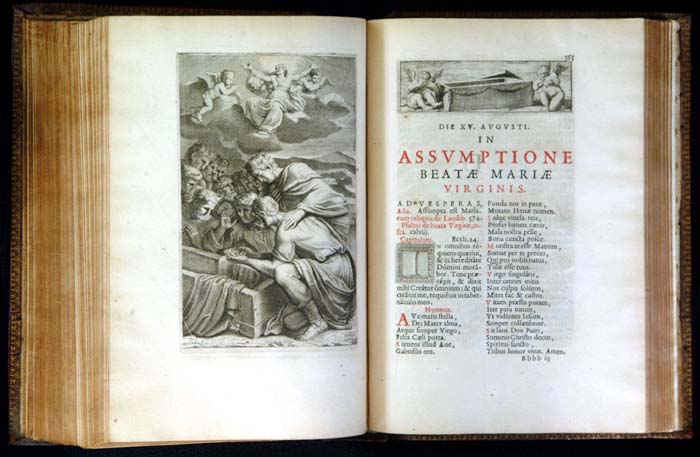
Lastly there is the liturgical question. Pope Paul stated explicitly in his bull Missale Romanum, which introduced the new ordinary of the Mass to the Roman rite of the Church, that this new praxis was the culmination of a renewal process which began under Pius XII. Given Montini's daily first hand knowledge of Papa Pacelli, one would be hard pressed to dispute this claim. Novelist Evelyn Waugh once wrote "many of the innovations, which many of us find so obnoxious, were introduced by Pius XII." Waugh's tone aside, he hits the "nail on the head" here. Evening Masses, vernacular Masses, people muddling through spoken responses, the new Holy Week, and other novelties came about with official approval from Pope Pius. He certainly was not a fan of other novel practices, like the lay offertory procession—which he condemned in Mediator Dei, but he did very little to stop other innovations such as Mass versus populum.
 
Depending on one's perspective, all of this could be good or could be bad, but, as the saying goes, you are entitled to your own opinion, not your own facts. Pope Francis is an enthusiast of Paul VI, the Pope of his seminary formation and early priesthood. He knows that Pius XII, far from being a 19th century stuff-shirt, was in fact a very modern Pope who set the stage for Council and the liturgical renovations of the 1960s and 1970s which formed the modern hierarchy. It is the Rad Trad's opinion that Pope Francis, God love him, may be seeking to canonize Pius XII for the same reason he intends to canonize John XXIII and John Paul II: to canonize the what people perceive as the changes associated with the Second Vatican Council.

Wednesday, August 21, 2013

Epistle and Gospel at Solemn Mass

 
In a previous post, "EF" Mass in 1964, we saw that the orientation and ceremonies of the traditional rites were already in a state of flux. Marko asked what traditional practice is supposed to be with regards to transferring the altar missal prior to the Gospel. The Rad Trad thinks this is a good opportunity to discuss the reading of the Epistle and Gospel at solemn Mass in the pre-Conciliar rites more generally.
 
The 1962 praxis for the Epistle, from the FSSP in Scotland
In the 1962 practice the celebrant and deacon, after the singing of the first—and usually only—collect, sit down and listen to the subdeacon chant the Epistle or lesson of the day. After he finishes the celebrant and deacon return to the missal, the celebrant blesses the subdeacon, reads the gradual, alleluia, and/or tract, and then sits again. At some point, normally at the beginning, of the alleluia the sacred ministers rise and return to the altar the "long" way (genuflecting before the altar rather than just walking up the side). The subdeacon moves the missal from the Epistle side to the "offertory" position (where the missal is from the Offertory through Communion) and the deacon receives the book of the Gospels from the M.C., places it on the altar, and assists the thurifer with the incense boat as the celebrant imposes, then blesses, incense. The deacon kneels, prays the Munda cor meum, rises, receives the celebrant's blessing, and joins the Gospel procession. We saw a variation in the 1964 Mass celebrated in the video earlier, in which the missal is transferred after the celebrant reads the gradual, alleluia, and/or tract and then everyone sits.

Fr. Wach reads the Gospel privately on Mandy Thursday.
Note that the Mass is during the day time. Source: icrsp.org
This stream of ceremony is actually a departure from the older, medieval way of doing the Fore-Mass, in which the celebrant reads all of the texts. Mozarabic rite of Toledo aside, the celebrant's reading of the Epistle and Gospel was very standard in the Latin Church by the time the Council of Trent convened. In the Roman rite as it has existed since the issuing of the 1570 Missal by St. Pius V the celebrant remains at the altar after the collects and, with the deacon by his side, reads the Epistle quietly as the subdeacon sings the text aloud. At the end of the celebrant's reading the deacon responds Deo gratias. The subdeacon then receives the celebrant's blessing. The sacred ministers return to the Introit position and the celebrant reads the gradual, alleluia and/or tract. Depending on the length of these texts the ministers may sit before taking the next step. If there is a sequence they will always sit and rise as some given verse (ex. at Requiem Masses the ministers rise at Qui Mariam absolvisti). The celebrant prays the Munda cor meum and the Jube, Domine benedicere at the center of the altar with the deacon to his right. The subdeacon moves the missal to the Gospel position, as at a low Mass or a sung Mass, and then the celebrant quietly reads the text with the subdeacon next to him. During all this the deacon is given the book of the Gospels by the M.C. and places said book on the altar. At the end of the celebrant's reading the subdeacon says Laus tibi, Christe and the celebrant imposes and blesses incense as normal. The subdeacon may move the missal to the offertory/Canon position or the deacon may do it himself during the Credo after bringing the burse to the altar. The deacon prays the Munda cor meum and the priest blesses him. Everything follows as normal.

Reading the gradual in the Dominican rite
One may wonder why this was once done. John XXIII eliminated the practice in 1960, a practice many saw as a useless repetition. "Doubling," the reading of texts by the celebrant that were sung by other ministers or the choir, was the bugaboo of many reformers. Yet doubling had its reasons. The celebrant is the one who celebrates the Mass and, although the deacon is the one charged with reading the Gospel, the celebrant, out of devotion, would read the Gospel himself. Ditto for the Epistle and other texts. It was a way for the celebrant to remain engaged with the liturgy even when he was not strictly doing his part. The Rad Trad once thought that the pre-1960 Roman practice was a low Mass intrusion because the celebrant does exactly the same things in the exact same places he would at low Mass. After some research into other rites the Rad Trad and gradations of Mass the Rad Trad has changed his mind about this opinion. In the various local rites of the Middle Ages, outside of Rome and similarly ancient rites like Milan, the wine and water were put into the chalice after the Epistle and during the gradual. These liturgies were also sung in large cathedrals and collegiate churches where the exact words of the subdeacon or deacon might be lost. Celebrants would therefor read the texts from the Epistle through the Gospel privately in order to be "up to date" on what was happening at Mass, after having performed other duties and perhaps having had difficulty paying attention to the exact words sung. In the Norman family of uses (which includes the Dominican and Sarum liturgies) the celebrant would read these texts at the sedilia. The celebrant might have read the Introit and Kyrie for the same reason, that he had been occupied with the prayers before the altar and the incensation when these prayer were initially sung by the choir. At a pontifical Mass, which is rooted in Papal Mass, the bishop reads these texts from the throne or faldstool. At Papal Mass there would be any number of interruptions which might require the celebrating Pope to read the texts he had missed; for instance, the Pope would say a certain prayer for himself in silence after the collect while the subdeacon had already gone on to the Epistle. The low Mass-like pre-1960 Roman practice may have been the result of, again, the fact that it is rooted in the 1474 curial Missal, which was used by bureaucratic officials in chapels rather than by diocesan clergy in cathedrals. The chapels of the Lateran Cathedral, St. Peter's Basilica, the Vatican, and the Sistine chapel do not have a sedilia, so the sacred ministers remained at the altar and read the related texts there. The Rad Trad sees no reason why this practice had to get axed, other than that it conflicted with the uber-communitarian approach of the reformers. Otherwise there is nothing harmful in it.

source: FSSP Roma
There was even a seasonal variation to the Roman practice. During Lent and Advent, as well as on Ember Days, the deacon and subdeacon wore vestments called "folded" chasubles, a very old custom descended directly from ancient times. When performing one's role the minister would remove his folded chasuble. In the above image the subdeacon has removed his to sing the Epistle (you can see it on his stool, along with the celebrant and deacon's birettas). After the Epistle the subdeacon resumes his folded chasuble for the gradual. While the celebrant reads the Gospel the deacon removes his folded chasuble and re-arranges it into a large stole called a "broad" stole and then gets the book of the Gospels as normal. He keeps the chasuble this way until the ablutions, at which point he returns it to its normal position. An excellent example of how this practice looked can be seen below, in a Mass from the first Sunday of Lent, 2008. The Mass was celebrated by Msgr. Angelo Amodeo (RIP), a liturgically-minded canon of the Milanese cathedral ordained by Archbishop Montini. Along with the "doubling" of the Epistle and Gospel, the folded chasuble, dating to a time before St. Gregory the Great, was axed in 1960.
 
source: orbiscatholicus.blogspot.com
 

Monday, May 27, 2013

Picking a Year....

...In praying the Divine Office!

Many readers probably pray all or part of the Divine Office. I myself pray Vespers and Compline daily, with Mattins and Lauds on, or the evening before, the majors feasts. For those not bound to praying a particular version it is good to be aware of what options are available and what differentiates certain versions. The major differences between versions will be:
  • The arrangement of the psalms: the older psalter was modified, or outright suppressed, by Papa Sarto in 1911. The psalter from 1911-1965, when the office of Prime was suppressed, is theoretically the same throughout, but other changes by Pius XII and John XXIII means it differs in practice. The pre-Pius X psalter prescribed 12 Mattins psalms on ferial days and 9 on feasts, using a consistent repertoire on feasts for Mattins, Lauds, and Vespers. The "little hours" would be the same daily. After Pius X the offices remained the same, but the psalter changed drastically, chopping psalms into roughly equal 15-verse bits and distributing them in order throughout the week. The little hours became fungible at this point.
  • The rubrics: the post-Pius X office has the odd practice of splitting semi-double and double feasts into halves, using the ferial psalms and antiphons, but with the festal hymns, collects, and canticle antiphons. Given the number of feasts in any calendar after the 17th century, this makes a daily difference.
  • Preces/suffrages: these delightful and moving intercessory prayers are prayed on semi-double, simple, and ferial days outside of octaves. They are most notable by their absence on feasts, reminding us that we are to rejoice on feasts, but most of our time ought to be spent in prayers for mercy and in penance. The Advent/Lenten Vespers suffrage is particularly powerful. The 1911-1913 reforms reduced the suffrages to one antiphon and collect, but on the whole kept the idea. At some point between 1955 and 1960 they went extinct.
  • The calendar: the ranking system was in principle the same from time immemorial through 1955, when Pius XII eliminated semi-double days and when John XXIII tossed the entire thing in favor of a numerical system, but the number of feasts in the calendar by 1910 and the rubrics governing Sundays and other special days in the post-1911 Office make each version substantially different in practice. Even 1568 and 1910, which use the same psalter and mostly the same rubrics are very different in practice due to the proliferation of double feasts. The Johannine calendar is very simple, but also has a narrower experience with its compressed rankings and commemoration system. Most noticeable, aside from feasts, is the disappearance of most octaves and vigils in 1955, a sad loss.
  • Assorted matter: many other things changed between 1568 and the mid-twentieth century. The scriptural readings at Mattins were altered and shortened a bit by Clement VIII. Pius IX introduced a new, and improved in my opinion, feast of the Immaculate Conception. Pius XII introduced a new Assumption feast. Urban VIII toyed with the hymns. There was the 1942 Common for Popes. A lot differs that is not structural, but I do not think these matters are as substantial as the structural differences.
The choices for praying the Divine Office have proliferated thanks to the internet, which has given us both resources to pray from online editions of the Roman Office or to purchase used copies on sites like Abe Books or eBay. I will narrow my comments on what one can pray from Divinum Officium, a very nice and informative website that allows one to pray any number of editions of the Office, more or less, including a theoretical reconstruction of a medieval monastic Office—which I will actually be ignoring in my comments along with the 1960 Office according to the Pauline calendar.
 
Here we go:
  • 1570: actually 1568, but it's "Tridentine" either way. Uses the original Roman psalter, including full-length psalms aside from the little hours. Over half the days are ferial, lending a strong awareness of the temporal cycle. The limited number of psalms used for festal offices and for octaves actually makes the feasts more special. I entered a state of shock by praying ferial Vespers tonight for the first time in a very long time, after having prayed the octaves the Ascension and Pentecost, followed by the Feast of the Holy Trinity. Simple feasts have the "splitting" structure I mentioned for most feasts in the Pian Office, but I do not mind it here, as most all the saints under the Simple category were local saints of the diocese of Rome, giving those offices a special and familiar character. My only real cavil with this edition is that St. Pius V eliminated the feasts of Ss. Joachim and Ann, the ancestors of our Lord. It has the suffrages and preces, which can be time consuming, particularly during Advent and Lent, but are very rich in their content during those seasons. This year is the most difficult, and in some sense the most brutal, to pray, but I find also the most rewarding. Saints feasts can supersede Sundays, but there are comparatively so few double feasts that one does not mind the break from the green days. Twelve psalms at ferial Mattins!
  • 1910: theoretically the same as above, but the multiplication of doubles severely curtails the praying of the psalter, especially considering that any feast with the word "double" in it has first Vespers. For instance next month, June, has four ferial days—two of them Saturdays of Our Lay—and three Simple days that will be observed. At none of them will the ferial Vespers be prayed, and at some of them there preces and suffrages will be omitted because of tomorrow's feast. In practice, this is a very different Office from 1570. Feasts replace the Sunday Office very often.
  • Divino Afflatu: while the name might give one the impression that this is the 1911 Office, it is not. It is basically 1954, meaning the Pian psalter, but with fewer psalms at ferial Mattins, the "splitting" of most feasts, and the ranking of octaves to clear up any ambiguity. If one had to read the rubrics of a breviary and decide how to pray the Office for the day, this would be the most confusing edition of all mentioned by far. The calendar is very balanced in this edition, but there is the reduced length of the psalms. Each major office and minor office, and even each nocturn at Mattins, is roughly the same size—very streamlined. This edition does have some pluses: octaves are observed, preces and suffrages are still there but curtailed, one goes through the entire psalter, full range of Mattins lessons, and not too time consuming if one wants to have a fuller experience of the Office in limited time. One should note that the little hours during Holy Week and Tenebrae during the Triduum will differ from the ancient version. Feasts replace the Sunday Office about as often as they do in 1570.
  • 1955: much of what I wrote above from Divino Afflatu still applies, but without most octaves (only Pascha, Pentecost, and Christmas live), with modifications to the Triduum per Pius XII's reforms, and the mixing of most semi-double days into Simples. Also, the antiphons, I believe, are now entirely doubled on every day, discarding the partial singing of the psalm antiphons to begin a psalm on ferias, Simples, and semi-doubles, consistent with their character. The effect is the blurring of feast days.
  • 1960: calendar is mostly third class days. Very few days have first Vespers. On all but a few days there is one nocturne a Mattins, and those days are almost never Sundays. First class feasts can still take precedence over Sunday, as can second class feasts of our Lord, but these occasions are rarer than ever. The overall use of patristic texts is lacking in this Office, as is the means of commemorating superseded offices. The ancient character of feasts of ancient Roman saints or ancient saints of universal fame is gone. First class days are mostly the same, as are some second class feasts of our Lord and Lady. On the whole, this is the least time-consuming Office, but also the oddest structurally and most impoverished textually.
I would first recommend the 1570 if one has the time, and then the Divino Afflatu edition. Why Divino Afflatu over 1910? Purists may disagree with me, but I hold the 1910 Office does not fully accomplish the purpose of the Office: to pray the psalms. Yes, everything else is intact, but in this sense everything else is less important. Was the reform of 1911 wise? I would respectfully say it was very unnecessary, as some calendar changes would have solved the problem. Still, I would prefer Divino Afflatu over 1910 if those were my two choices because one can pray the psalter and still go through the entire calendar. 1960 is very barren to me and 1955, while fuller in content, is clearly a transition.
 
My advice is to take things easy and begin by praying a little hour. I started with Compline in the Divino Afflatu form and soon adapted the older version, then took on Vespers. One advantage to starting with a minor hour like Compline or Sext or whatever in the 1570-1910 form is that it is more or less the same daily, but one finds small variations like the preces from day to day, allowing both familiarity with the calendar and stability with the general structure of that particular office. Perhaps something like Vespers of Lauds on Sundays and feasts could be added later.
 
Of course this is just my suggestion. Pray whatever you like and however you find your prayer effective. The purpose of this post was to help anyone praying the Office who is confused about versions clarify those matters and to aid anyone considering praying the Office in making an informed decision, given that person's time and desire to be immersed in the ancient prayer of the Church.
 
God bless,
The Rad Trad

Sunday, April 7, 2013

Reasons for the Reform of the Roman Rite Part III: Devotionalism


We have now come to the third part in our series on the causes for the twentieth century reforms of the Roman rite liturgy. Today's cause, what I have termed "Devotionalism," is the first that can be attributed to the laity rather than the clergy or clerical culture. What is meant by "Devotionalism?" Two things:
  1. A tendency to over-emphasize private devotions at the cost of liturgical prayer.
  2. Private devotions entering into the liturgical calendar of the Roman Church, such that the calendar loses its rhythm.
Let us consider these issues in the order above.

The two most popular anatomical devotions: the Immaculate Heart of Mary
and the Sacred Heart of Jesus
First, private piety. Private piety underwent a considerable change during the baroque period. Through the Middle Ages and Renaissance, and in the Eastern rites to this day, the demarcation between liturgical prayer and extra-liturgical devotional prayer did not seem as sharp as it is in the modern Roman Church. This is not to say private prayers that follow some particular meditation or formula, such as the Rosary, were foreign. But the Rosary was clearly a private prayer. There was such a thing as public devotion, which had a very liturgical expression. One immediate example is the Office of the Blessed Virgin Mary, a mini-Divine Office following Marian themes that would often be sung on low ranked days. The Byzantine rite Akathist sung at Compline on the days leading up to the Annunciation resound as a modern day example of public devotion. Before Masses in medieval cathedrals the clergy and laity would visit the altars of the various saints, honoring them in hymns and asking for their prayers. Northern Europeans "raised" the Cross before Mattins and Lauds of Easter Sunday, a reflection of the "deposition" from the Cross on Good Friday—East and ancient West.

Devotion could clearly be a public act of worship or a personal prayer. During the years after Trent most of this changed. Local customs often remained, although liturgical centralization reduced them in their variety (more on that in a later post). While customary public devotion diminished, private devotions proliferated. St. Pius V popularized the Rosary beyond the Dominican Order, the Sacred Heart appeared on the scene in the seventeenth century, as did many other "anatomical" devotions, such as the Precious Blood. The Lady of Mount Carmel devotion also became popular, as did the associated "Brown Scapular"—which is actually just a symbol of a full scapular.

A private oratory named for Our Lady of Sorrows. A statute
of Our Lady of Sorrows in visible above the altar.
source: newliturgicalmovement.org
The Church has never deemed these devotions necessary, only requiring attendance at Mass for the laity and the Office of the clergy. Yet the "low Mass culture" examined two days ago cultivated a church setting where one would simply be listening to a priest talk in Latin for 45-60 minutes, a setting which required very little other than attendance of the laity. The low Mass culture is not conducive to sung Offices, much less any of the extra-liturgical functions mentioned above. Private prayer and private meditation filled the void for the laity during Mass. Indeed, as mentioned in the previous post, many methods of "hearing Mass" centered around these devotions.

The names of churches in the last four or five centuries tell the story. How many post-Trent churches are named Blessed Sacrament, Our Lady of Sorrows, Our Lady of Mercy, Immaculate Conception, Sacred Heart, Divine Mercy etc? How many received conventional names like St. Mary's or St. Peter's?

Here we reach the second point, wherein Devotionalism becomes not just a private liturgical substitute, but actually took root in the liturgical calendar.

Private devotions held by the laity or private devotions Rome wished to popularize found themselves in the calendar, often affixed to certain Sundays rather than days of a given month. Some examples are the Holy Name (second Sunday after Epiphany), St. Joseph (third Sunday after Easter), the feast of the Precious Blood (first Sunday of July), St. Joachim (Sunday after Assumption), Our Lady of Sorrows (third Sunday of September), the Rosary (first Sunday of October), and others like the Sacred Heart (falls on third Friday after Pentecost). Fr. John Hunwicke once called these devotional days "lollipop" feasts.

There were two consequences to this phenomenon. The first is that the Sunday Mass given for the time after Epiphany or Pentecost was said perhaps half the time, while these devotional feasts and other Double-rank feasts (see first post in series) impeded them. The second consequence was that the Masses for the time after Epiphany and Pentecost, which recount Christ's teaching and His miracles more than His actions, were rarely observed. This contrasts with many Eastern Sundays such as the "Sunday of the Prodigal Son," the "Sunday of the Pharisee and the Publican," and the "Sunday of the Rich Man and Lazarus" to name a few. Each of these "green" Masses was a self-contained lesson on the teaching life of Christ, yet feasts based upon private devotions often won the ranking competition. If Holy Week recounts Christ's Passion, if Eastertide recounts the time after His Resurrection, and if Advent and Christmastide recount His birth, then these "green" Sundays recount His preaching career. Double-ranked feasts and devotional feasts lessened the significance of these Sundays. The inevitable result was the replacement of public devotion and public liturgical life with folk religion.
Fr Antonio Rosmini

Naturally, many early members of the Liturgical Movement or those who favored drastic reforms of the Roman liturgy wished to force people out of their private devotions and into communal liturgical participation. One motive for the adaptation of vernacular and for "simplified" ceremonies during the last period of the Liturgical Movement, during the Second Vatican Council, was the wish to pop people out of their private prayer bubbles during Mass. Pius XII, anticipating certain excesses, attempted to moderate these views by issuing Mystici Corporis and Mediator Dei, as well as implementing certain demands of the Movement under Papal authority, but eventually these changes were of no avail and actually accelerated the reform process.

Reformers such as Rosimini constantly called for more "simple" ceremonies, as if the Roman liturgy was not already very sparse compared to Eastern and other Latin liturgies. Indeed, in his Five Wounds of the Holy Church Rosmini caterwauls over the separation of the people from the clergy, from the scriptures, and of the overgrown liturgy which caused this. Rosmini saw Europe secularizing and partially blamed the compartmentalized relationship between the priest and people at Mass for it. Of note: in the first chapter of his Five Wounds, Fr. Rosmini suggests that while Latin has become a barrier between priest and laity, the abolition of Latin was not the answer. He demands further effort in helping the laity understand the Latin Mass and also admires the Eastern Churches' retention of their own sacred languages. Rosmini wrote of the problematic separation of the laity from worship:
"This worship, to which God united the grace to render men and women capable of practising the moral precepts they had received, was not simply a spectacle for the people to behold. The people were not to be present simply to look at what was happening without genuinely participating in this drama of religious worship."
St. Pius X, for all the criticisms possible of his psalter and breviary rubrics, presents an elegant solution to the intrusion of Devotionalism into the calendar. He assigned each devotional feast a particular day of a month (ex. Precious Blood moved from first Sunday of July to July 1st) and gave the option for the Mass of the feast to be repeated on the next Sunday, provided the feast was not observed at the main Mass of the day.

John XXIII's adjustments to the calendar go far beyond Papa Sarto's changes, a true predecessor to "Ordinary Time," an endless monotony of "green" Sundays well beyond that which would have been experienced even under the sparse local calendars of ancient Rome and monastic settings during the Middle Ages. Pope John's calendar compressed the liturgical rankings of various days and gave preference to "green" Sundays to the point where feasts of the Apostles except Ss. Peter and Paul, would be excluded from even a commemoration on Sundays. Oddly, these simplified rubrics, when they do permit other feasts to overtake the "green" Mass, rarely commemorate the "green" Mass. Pope Roncalli's changes also diminished the number of lessons read at Mattins by about two thirds. "Ordinary time" in the Pauline liturgy completes this shift. The Roman general calendar swung like a pendulum from one extreme peak to another, briefly passing a nice position midway through the shift.

To conclude the thesis of this post in our series: public devotion evolved into private Devotionalism, which introverted a large number of laity and obscured important features of the calendar. Reformers began to demand simplified ceremonies to engage the laity and to alter the calendar in such an extreme fashion that all but a few feasts could ever take precedence over Sunday "green" Masses.

We should be very aware that while vernacular certainly shook the laity out of their private prayers during Mass, as I mentioned in my previous post on the "low Mass culture," very few of the changes to the calendar or to the form of the Mass took place during the Second Vatican Council. Indeed, the seeds of this problem began in the baroque period and calls for change started a century before Vatican II and the changes themselves started 50 years prior to Pope John's council. You can see that we soon will be reading about the Liturgical Movement!

I hope I do not appear to be blaming the laity for their private piety, that is not my intention. As someone who prays the Rosary and recommends you all do as well, I value devotion, but all things have their proper place. The second most recent position paper from Una Voce published by Dr. Joseph Shaw on use of the older Holy Week considers the times of the older rites pastorally preferable because, among other reasons, parishes would have time for Stations of the Cross after the Mass of the Pre-Sanctified. Is this Devotionalism or is it a semi-liturgical public devotion, like those of Northern Europe in times gone by? At the very least, a conversation has been started about more fundamental concepts of liturgy by papers and conferences such as Dr. Shaw's.

Our next post, likely shorter than these past three, will investigate the separation of liturgy and doctrine, in its precedents and its consequences. Stay tuned! Happy Low Sunday and a blessed Easter season to all!

Friday, March 29, 2013

Good Friday: Mass of the Pre-Sanctified

I will endeavor to give a very brief explanation of the old, pre-1956, Good Friday "Mass of the Pre-Sanctified." The name is such because the structure, vestments, music, and prayers of this services, particularly towards the end, follow the structure of a Mass, although using a Host consecrated at yesterday's Mandy Thursday Mass.


The priest and his two deacons, who wear folded chasubles rather than dalmatics, prostrate themselves before the altar for enough time to pray psalm 50, the Miserere, in silence, while servers spread a cloth on the altar. Like at Mass, the crucifix and candles remain on the altar, though unlit.


A lector sings a prophecy of the prophet Osee (or Hosea, in the Hebrew spelling), which foretells the suffering, burial, and third day rising of Christ. Then the subdeacon sings chapter 12 of the book of Exodus, which recounts the manner in which the finest lambs were killed during the first Passover in Egypt. This sacrifice liberated the Israelites from the bondage of the Pharoah. The sacrifice of the perfect victim, Christ, liberated the world from the bondage of death. God does not want a sacrifice because He wants things to be destroyed. A true sacrifice is the gift of what is precious to one's self unto another. This was the intent of the Israelites in Egypt, and more so on the Cross. A tract, psalm 139, is sung: Eripe me Domine ab homine malo—"Deliver me, Oh Lord, from the wicked man!"


Three deacons then sing the Passion of our Lord Jesus Christ according to St. John, beginning with His arrest in the Garden and ending just after His death on the Cross. The deacon of the "Mass" removes his folded chasuble, as at Mass, and sings the burial of Christ as the Gospel, suggesting that this, not the general narrative, is the most important text of the day.


Priest and subdeacon listen to the Passion.


Then deacon, now wearing the "broad stole," returns to the other ministers. Returning to the epistle corner, the priest sings the Solemn Collects, some of the oldest continuously used prayers in the Church. Moreover, these prayers give us some indication as to what the structure of the Mass was like in the mid-first millennium and for what those Christians prayed. There is a preface to announce the prayer intention, followed by Oremus—"let us pray," Flectamus genua—"Let us kneel," and Levate—"Let us stand" before the actual prayer itself.


The prayer intentions were:
  • For the welfare of the Church universal
  • For the Pope
  • For the clergy, people in religious life, virgins, and widows
  • For the enlightenment of the catechumens and the remission of their sins
  • For the cleansing of the world of errors
  • For the rescue of heretics and schismatics
  • For the conversion of the Jews
  • For the end of idolatry and conversion of the pagans
No genuflection was made during the prayer for the Jews. A genuflection was added by Pope John XXIII in the revised rite of Holy Week in 1959, although John XXIII seems to have continued to celebrate the old Good Friday in the Sistine Chapel!


The ministers, probably for mobility in ancient times, remove their outer-most vestments and the deacon retrieves the veiled crucifix from the altar and gives it to the priest. The priest, beginning at the bottom of the epistle side, steps higher and towards the center of the altar, unveiling part of the crucifix and singing Ecce lignum crucis—"Behold the wood of the cross"—as he rises. The people respond In quo salus mundi pependit. Venite, adoremus!—"On which hung the salvation of the world. Come, let us adore!"

This happens three times, after which the entire crucifix is visible. It is then laid upon a pillow or cloth and adored by the people. First the priest, then the ministers of the service, then any other present clergy, and the servers. They all adore barefoot. Then the congregation adores, making three prostrations before their kiss of the cross.


Although the Mass of the Pre-Sanctified supposedly died in 1956 under Pope Pius XII, John XXIII continued to use it in the Sistine Chapel, as seen in this 1959 celebration.


Ecce lingum crucis, in quo salus mundi pependit.


Venite, adoremus!


Whilst the laity make their adoration, the altar is prepared for the Mass of the Pre-Sanctified and the choir sings the Reproaches, which includes the Trisagion.

The crucifix is then placed upon the altar, where it would normally go, and is reverenced with a genuflection for the rest of the day.


The clergy, and laity if they wish, process to the altar of repose, where the Blessed Sacrament has been over night.


The Sacrament is then incensed by the priest, who assumes the hummeral veil and takes the Sacrament back to the main altar.


This is a full Blessed Sacrament procession, with incense and the processional cross carried before the priest and the Sacrament. The great hymn Vexilla Regis is sung.


The procession returns to the main altar.


The deacon arranges the chalice and its veil, containing the Sacrament, as it would be at Mass.


The Blessed Sacrament is then incensed by the celebrant.


The subdeacon prepares the chalice with wine and water, as he would at Mass and the "Gifts" are incensed in the same way they would have been at a regular Mass. The priest turns to the people and says the Orate, fratres... ("Pray, brethren, that my sacrifice and yours....) as at Mass.

One English friend of mine always insisted that the Mass of the Pre-Sanctified is indeed an actual Mass. He had something of a point. Its prayers are those of a Mass. It is not a simple communion service. Although there is no consecration of the Host, the actions imitate those of a Mass in order to emphasize the relation between the Mass and Calvary, that they are one and the same sacrifice of Christ.


The celebrant then sings the Pater Noster, "Our Father," and elevates the Host for public adoration as he would after consecration at Mass. He then fractures the Host as at Mass and mingles a fragment of the Blessed Sacrament with wine. Liturgical reformers particularly disliked the pious medieval belief that the fragment consecrated the wine into the blood of Christ (which Eastern Catholics and Eastern Orthodox still believe).


The priest then says the communion prayers of Mass and consumes the Host as normal. He consumes the chalice's contents saying nothing, leaving some mystery as to whether consecration occurred or not!

The priest purifies his fingers and the subdeacon cleans the chalice as normal at Mass.

Vespers, the same as yesterday except for the addition of mortem autem crucis ("even unto death on a cross") to versicle, are chanted in a monotone immediately.

The clergy then leave in silence.

This marvelous rite was replaced with a general communion services. The revised rites, from 1956 until 1969, involved a maddening three changes of vestments. Prayers and readings, in both the 1956 rite and the Pauline rite, take place at the chair, the altar, at a podium, and any where else you can find. Odd.

A blessed Good Friday to you all.